



الصفحة 51
الصفحة 51

Humans-with-media and the reorganization of mathematical thinking : Information and communication technologies, modeling, visualization and experimentation
Offers a new conceptual framework for reflecting on the role of information and communication technology in mathematics education. Borba and Villarreal provide examples from research conducted at the level of basic and university-level education, developed by their research group based in Brazil, and discuss their findings in the light of the relevant literature. Arguing that different media reorganize mathematical thinking in different ways, they discuss how computers, writing and oral discourse transform education at an epistemological as well as a political level. Modeling and experimentation are seen as pedagogical approaches which are in harmony with changes brought about by the presence of information and communication technology in educational settings. Examples of research about on-line mathematics education courses, and Internet used in regular mathematics courses, are presented and discussed at a theoretical level. In this book, mathematical knowledge is seen as developed by collectives of humans-with-media.

Human-Like Biomechanics : A Unified Mathematical Approach to Human Biomechanics and Humanoid Robotics
The book contains six Chapters and an Appendix. The first Chapter is an Introduction, giving a brief review of mathematical techniques to be used in the text. The second Chapter develops geometrical basis of human-like biomechanics, while the third Chapter develops its mechanical basis, mainly from generalized Lagrangian and Hamiltonian perspective. The fourth Chapter develops topology of human-like biomechanics, while the fifth Chapter reviews related nonlinear control techniques. The sixth Chapter develops covariant biophysics of electro-muscular stimulation. The Appendix consists of two parts: classical muscular mechanics and modern path integral methods, which are both used frequently in the main text.

Humanizing modern medicine : An introductory philosophy of medicine
In this book the author explores the shifting philosophical boundaries of modern medical knowledge and practice occasioned by the crisis of quality-of-care, especially in terms of the various humanistic adjustments to the biomedical model. To that end he examines the metaphysical, epistemological, and ethical boundaries of these medical models. He begins with their metaphysics, analyzing the metaphysical positions and presuppositions and ontological commitments upon which medical knowledge and practice is founded. Next, he considers the epistemological issues that face these medical models, particularly those driven by methodological procedures undertaken by epistemic agents to constitute medical knowledge and practice.
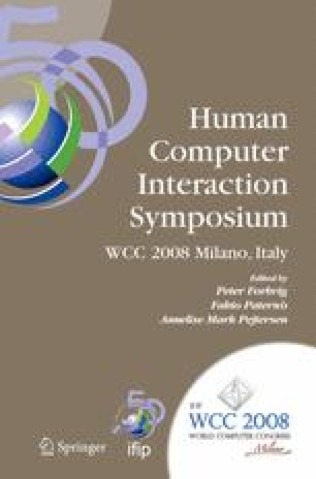
Human-computer interaction Symposium ; IFIP 20th World Computer Congress, Proceedings of the 1st TC 13 Human-Computer Interaction Symposium (HCIS 2008), September 7-10, 2008, Milano, Italy
The IFIP series publishes state-of-the-art results in the sciences and technologies of information and communication. The scope of the series includes: foundations of computer science; software theory and practice; education; computer applications in technology; communication systems; systems modeling and optimization; information systems; computers and society; computer systems technology; security and protection in information processing systems; artificial intelligence; and human-computer interaction. Proceedings and post-proceedings of refereed international conferences in computer science and interdisciplinary fields are featured.

Human–computer interaction ; International Workshop, HCI 2007 Rio de Janeiro, Brazil, October 20, 2007 Proceedings
Constitutes the refereed proceedings of the International Workshop on Human Computer Interaction, HCI 2007, held in Rio de Janeiro, Brazil, October 20, 2007. This book covers such topics as: Affective detection and recognition, Smart interfaces, Human motion tracking, Gesture recognition, and Multimedia data modeling and visualization.

Human-Computer Interaction : Interaction design and usability ; 12th International Conference, HCI International 2007, Beijing, China, July 22-27, 2007, Proceedings, Part I
The 12th International Conference on Human-Computer Interaction, HCI Inter- tional 2007, was held in Beijing, P.R. This volume, edited by Julie A. Jacko, contains papers in the thematic area of Human-Computer Interaction, addressing the following major topics: • Interaction Design: Theoretical Issues, Methods, Techniques and Practice • Usability and Evaluation Methods and Tools • Understanding Users and Contexts of Use • Models and Patterns in HCI

Human-computer interaction - HCI Intelligent Multimodal interaction environments ; 12th International Conference, HCI International 2007, Beijing, China, July 22-27, 2007, Proceedings, Part III
The 12th International Conference on Human-Computer Interaction, HCI Inter- tional 2007, was held in Beijing, P.R. This volume, edited by Julie A. Jacko, contains papers in the thematic area of Human-Computer Interaction, addressing the following major topics: • Multimodality and Conversational Dialogue • Adaptive, Intelligent and Emotional User Interfaces • Gesture and Eye Gaze Recognition • Interactive TV and Media.

Human-computer interaction - HCI : Applications and services ; 12th International Conference, HCI International 2007, Beijing, China, July 22-27, 2007, Proceedings, Part IV
The 12th International Conference on Human-Computer Interaction, HCI Inter- tional 2007, was held in Beijing, P.R. This volume, edited by Julie A. Jacko, contains papers in the thematic area of - man-Computer Interaction, addressing the following major topics: • Business Applications • Learning and Entertainment • Health Applications • Work and Collaboration Support • Web-Based and Mobile Applications and Services • Advanced Design and Development Support.

Human-centered software engineering - Integrating usability in the software development lifecycle
Human-CenteredSoftwareEngineering: BridgingHCI,UsabilityandSoftwareEngineering From its beginning in the 1980’s, the ?eld of human-computer interaction (HCI) has beende?nedasamultidisciplinaryarena. BythisImeanthattherehas beenanexplicit recognition that distinct skills and perspectives are required to make the whole effort of designing usable computer systems work well. Thus people with backgrounds in Computer Science (CS) and Software Engineering (SE) joined with people with ba- grounds in various behavioral science disciplines (e. g. , cognitive and social psych- ogy, anthropology) in an effort where all perspectives were seen as essential to creating usable systems. But while the ?eld of HCI brings individuals with many background disciplines together to discuss a common goal - the development of useful, usable, satisfying systems - the form of the collaboration remains unclear.

Human work interaction design : Designing for human work ; The 1st IFIP TC 13.6 WG Conference: Designing for Human Work, February 13-15, 2006, Madeira, Portugal
International Federation for Information Processing The IFIP series publishes state-of-the-art results in the sciences and technologies of information and communication. The scope of the series includes: foundations of computer science; software theory and practice; education; computer applications in technology; communication systems; systems modeling and optimization; information systems; computers and society; computer systems technology; security and protection in information processing systems; artificial intelligence; and human-computer interaction. Proceedings and post-proceedings of referred international conferences in computer science and interdisciplinary fields are featured. These results often precede journal publication and represent the most current research. The principal aim of the IFIP series is to encourage education and the dissemination and exchange of information about all aspects of computing.

Human reliability and error in transportation systems
Each year billions of dollars are being spent to develop, manufacture, and operate transportation systems such as aircraft, ships, trains, and motor vehicles throughout the world. During their operation thousands of lives are lost annually due to various types accidents. Needless to say, approximately 70 to 90 percent of transportation crashes are the result of human error to a certain degree. Moreover, it may be added that human errors contribute significantly to most transportation crashes across all modes of transportation. Human Reliability and Error in Transportation Systems is the first book to cover the subject of human reliability across all types of transportation systems. The material will be accessible to readers with no previous knowledge in the field, and is supported with a full explanation of the necessary mathematical concepts together with numerous examples and test problems.

Human motion : Understanding, modeling, capture and animation ; 2nd Workshop, HumanMotion 2007, Rio de Janeiro, Brazil, October 20, 2007, Proceedings
This LNCS volume contains the papers presented at the second Workshop on Human Motion Understanding, Modeling, Capture and Animation. The accepted papers re?ect the state of the art in the ?eld and cover various topicsrelatedto humanmotiontrackingandanalysis.Thepapersinthisvolume have been classi?ed into three categories based on the topics they cover: human motion capture and pose estimation, body and limb tracking and segmentation, and activity recognition.
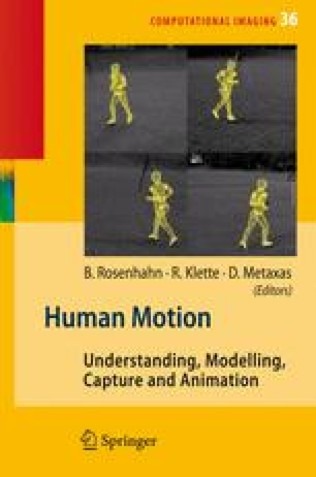
Human motion : Understanding, modeling, capture and animation
Edward Muybridge (1830–1904) is known as the pioneer in motion capt- ing with his famous experiments in 1887 called “Animal Locomotion”. Since then, the feld of animal or human motion analysis has grown in many dir- tions. However, research and results that involve human-like animation and the recovery of motion is still far from being satisfactory. Progress in human motion analysis depends on empirically anchored and grounded research in computer vision, computer graphics, and biomechanics. This book is based on a June 2006 workshop held in Dagstuhl, Germany. This workshop brought together for the frst time researchers from the afo- mentioned disciplines.

Human microbiome : Clinical implications and therapeutic interventions
The human microbiome refers to the complete microorganisms inhabiting the human body sites including skin, ear, nose, oral cavity, the genital, gastrointestinal and respiratory tracts, and body fluids such as breast milk, saliva, and urine. It is a significant and essential organ recognized for the body and has an established involvement in the host wellbeing, in terms of nutritional requirements and immunomodulation. Talks about how alteration and imbalance in the same can have clinical implications associated with a multitude of gastrointestinal, lifestyle-associated, and neurodegenerative disorders. How the proliferation of specific groups of bacteria and their metabolic activities, as a result of intestinal dysbiosis leads to the 'leaky gut' condition thereby influences brain activity via the bidirectional gut-brain axis. It also coves the importance of microbial seeding and how it can be influenced by the mode of delivery, nutrition, and medication. This book also provides various therapeutic interventions such as the establishment of stool banks and Faecal microbiota transplantation (FMT) that have recently proved promising in the treatment of ASD, Inflammatory Bowel Disease, and Ulcerative Colitis. This book provides a deeper understanding of the development of the human gut microbiome and the factors driving its dysbiosis. This book is a valuable read for health professionals, medical students, nutritionists, and scientific research communities who are eager to update themselves with recent trends in microbiome research. It will also aid gastroenterologists and nutritionists to make well-informed choices regarding therapeutic regimes.

Human Interaction with Machines ; Proceedings of the 6th International Workshop held at the Shanghai JiaoTong University, March 15-16, 2005
The International Workshop on “Human Interaction with Machines” is the sixth in a successful series of workshops that were established by Shanghai Jiao Tong University and Technische Universität Berlin. The goal of those workshops is to bring together researchers from both universities in order to present research results to an international community. The series of workshops started in 1990 with the International Workshop on “Artificial Intelligence” and was continued with the International Workshop on “Advanced Software Technology” in 1994.

Human Ecology : Biocultural Adaptations in Human Communities
Beginning with resource use and food procurement behaviour, the text examines major subsistence modes, the circumstances and dynamics of large-scale subsistence change, the effect of social differentiation on resource use and the effects of subsistence behaviour on population development and regulation.

Human Cytomegalovirus
The golden age of cytomegalovirus research was ushered in during the late 1970s and early 1980s by a set of powerful new technologies that included restriction enzymes, DNA cloning, DNA sequencing, and open reading frame prediction. The genetic manipulation and propagation of novel CMV strains was accelerated with the app- cation of bacterial artificial chromosome technology. Today, we still struggle to understand the full spectrum of disease associated with human CMV. To the molecular biologist, CMV is a master of regulation in the eukaryotic cell where it either replicates or remains latent. To the immunologist, CMV is a master of immune evasion with tools to escape both the innate and acquired immune responses. The use of animal models with non-human CMVs has become significantly more sophisticated and tied to a more certain understanding of the interrelationships of non-human and human CMV genes.

Human Biology
Accomplishes the goal of improving scientific literacy, while establishing a foundation of knowledge inhuman biology and physiology. It also integrates a tested, traditional learning system with modern digital and pedagogical approaches.

Hugo and Russell's pharmaceutical microbiology
Microbiology is one of the essential pharmaceutical sciences upon which the study and practice of pharmacy is built. It has a bearing on all aspects of the manufacture of medicines and sterile products, from their design and development to their delivery as quality products. Few interventions are more central to modern medicine than the treatment of infection, where antibiosis, vaccination and hygienic practices have essential roles to play. The COVID-19 pandemic, the appearance of new pathogens and the rise of antibiotic resistance have demonstrated most completely the need for pharmaceutical practitioners, researchers and industrial scientists to be fully conversant with this field. The 9th edition of Hugo and Russell’s Pharmaceutical Microbiology has been updated to meet this need. Having long served as the sole comprehensive textbook covering this subject, it has now been adapted to a critical new period in the advancement of medical and pharmaceutical research and development. Its experienced editors have incorporated contributions from subject experts and created a text which will serve the next generation of pharmacy students, pharmaceutical industry scientists and researchers.

How to Manage Projects : Essential Project Management Skills to Deliver On-time, On-budget Results
Provides a complete, jargon-free introduction to the principles and practices of project management, along with practical tools and checklists to use in real life / Is part of the bestselling Creating Success series, which has sold over 1.5 million copies and contains practical advice on essential and value-adding work skills to help you develop your career / Features practical, exercises, templates tools and checklists to use in real life
