



الصفحة 50
الصفحة 50

Conducting Quantitative Research In Education
provides a clear and straightforward guide for all those seeking to conduct quantitative research in the field of education, using primary research data samples. While positioned as less powerful and somehow inferior, non-parametric tests can be very useful where the research can only be designed to accommodate data structure which is ordinal, or scale but violates a normality assumption, which is required for parametric tests. Non-parametric data are a staple of educational research, and as such, it is essential that educational researchers learn how to work with these data with confidence and rigour.
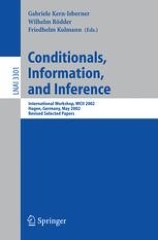
Conditionals, Information, and Inference
Conditionals are fascinating and versatile objects of knowledge representation. On the one hand, they may express rules in a very general sense, representing, for example, plausible relationships, physical laws, and social norms. On the other hand, as default rules or general implications, they constitute a basic tool for reasoning, even in the presence of uncertainty. In this sense, conditionals are intimately connected both to information and inference. Due to their non-Boolean nature, however, conditionals are not easily dealt with. They are not simply true or false — rather, a conditional “if A then B” provides a context, A, for B to be plausible (or true) and must not be confused with “A entails B” or with the material implication “not A or B.” This ill- trates how conditionals represent information, understood in its strict sense as reduction of uncertainty. To learn that, in the context A, the proposition B is plausible, may reduce uncertainty about B and hence is information. The ab- ity to predict such conditioned propositions is knowledge and as such (earlier) acquired information. The ?rst work on conditional objects dates back to Boole in the 19th c- tury, and the interest in conditionals was revived in the second half of the 20th century, when the emerging Arti?cial Intelligence made claims for appropriate formaltoolstohandle“generalizedrules.”Sincethen,conditionalshavebeenthe topic of countless publications, each emphasizing their relevance for knowledge representation, plausible reasoning, nonmonotonic inference, and belief revision.

Concurrent Zero-Knowledge : With Additional Background by Oded Goldreich
Zero-knowledge proofs are fascinating and extremely useful constructs. Their fascinating nature is due to their seemingly contradictory de?nition; ze- knowledge proofs are convincing and yet yield nothing beyond the validity of the assertion being proved. Their applicability in the domain of cryptography is vast; they are typically used to force malicious parties to behave according to a predetermined protocol. In addition to their direct applicability in cr- tography, zero-knowledge proofs serve as a good benchmark for the study of variousproblemsregardingcryptographicprotocols(e.g.,“securecomposition of protocols”).

Concurrency Theory : Calculi an Automata for Modelling Untimed and Timed Concurrent Systems
Concurrency Theory is a synthesis of one of the major threads of theoretical computer science research focusing on languages and graphical notations for describing collections of simultaneously evolving components that interact through synchronous communication. The main specification notation focused on in this book is LOTOS. An extensive introduction to this particular process calculus is given, highlighting how the approach differs from competitor techniques, such as CCS and CSP.

CONCUR 2008 - Concurrency Theory ; 19th International Conference, CONCUR 2008, Toronto, Canada, August 19-22, 2008. Proceedings
This book constitutes the refereed proceedings of the 19th International Conference on Concurrency Theory, CONCUR 2008, held in Toronto, Canada, August 19-22, 2008.

CONCUR 2007 – Concurrency Theory ; 18th International Conference, CONCUR 2007, Lisbon, Portugal, September 3-8, 2007, Proceedings
This book includes model checking, process calculi, minimization and equivalence checking, types, semantics, probability, bisimulation and simulation, real time, and formal languages.

CONCUR 2006 - Concurrency Theory ; 17th International Conference, CONCUR 2006, Bonn, Germany, August 27-30, 2006
This volume contains the proceedings of the 17th International Conference on Concurrency Theory (CONCUR) held in Bonn, Germany, August 27–30, 2006. The scope of CONCUR covers all areas of semantics, logics, and verification techniques for concurrent systems.

Concrete segmental bridges : Theory, design, and construction to AASHTO LRFD specifications
Presents comprehensive theory, design and key construction methods, with a simple design example based on the AASHTO LRFD Design Specifications for each of the main bridge types. It outlines design techniques and relationships between analytical methods, specifications, theory, design, construction and practice. It combines mathematics and engineering mechanics with the authors’ design and teaching experience.

CONCREEP 10 : Mechanics and physics of creep, shrinkage, and durability of concrete and concrete structures
Contains 187 papers invited on the basis of carefully peer-reviewed abstracts. It elucidates the intricacies of concrete, linking atomistic physics to real life civil engineering design. Topics include: microstructures and micromechanics; multiscale creep, shrinkage, fracture, and durability properties; constitutive and numerical modeling; simulation and design of concrete structures; molecular- to lab-scale simulations and characterization of concrete; macroscopic material testing; creep and shrinkage of concrete under extreme conditions; monitoring of concrete structures and exploitation of measurement data; and creep and shrinkage properties of new cementitious materials.

Conceptual Structures: Knowledge Architectures for Smart Applications ; 15th International Conference on Conceptual Structures, ICCS 2007, Sheffield, UK, July 22-27, 2007, Proceedings
Conceptual structures focus on the representation and analysis of concepts, events, actions and objects with applications in - search,softwareengineering,manufacturing and business.The book covers computer science, information technology,artificial int- ligence, philosophy and a variety of applied disciplines to explore novel ways that information technologies can be leveraged to assist human reasoning and interaction for tangible business or social benefits. Conceptual structures can be used to augment human intelligence by facilitating knowledge integration, desion making, the creation of intelligent software systems and the exploration of implicit structures.

Conceptual Landscapes : Fundamentals in the Beginning Design Process
Explores the dilemma faced in the early moments of design thinking through a gradient of work in landscape and environmental design media by both emerging and well-established designers and educators of landscape architecture. It questions where and, more importantly, how the process of design starts. Deconstructs the steps of conceptualizing design in order to reignite pedagogical discussions about timing and design fundamentals, and to reveal how the spark of an idea happens – from a range of unique perspectives. Through a careful arrangement of visual essays that integrate analog, digital, and mixed-media works and processes, the book highlights differences between diverse techniques and triggers debate between design, representation, technology, and creative culture in the field.

Concepts and Results in Chaotic Dynamics : A Short Course
The book is a good introduction to the field of dynamical systems with a particular emphasis on statistical properties and applications. In particular, the relations both with real experiments with numerical simulations are discussed. The book contains many figures that really help the understanding of the text. The book can be used as a text for an introductory course in dynamical systems

Conceptions of the Desirable : What Cities Ought to Know about the Future
Right in the heart of Graz, the second largest city in Austria, an entire city district had simply fallen into oblivion. The owners have taken up the search for answers: How, in future, do we wish to work and live? This title presents the results of a research by structuring its content into: Life, Work, Urbanity and Education.

Computing the Electrical Activity in the Heart
This book describes mathematical models and numerical techniques for simulating the electrical activity in the heart. The book gives an introduction to the most important models of the field, followed by a detailed description of numerical techniques for the models. Particular focus is on efficient numerical methods for large scale simulations on both scalar and parallel computers.

Computing and combinatorics ; Vol. 3595 ; 11th Annual International Conference, COCOON 2005, Kunming, China, August 16-19, 2005, Proceedings
The papers in this volume were presented at theEleventh Annual InternationalComputing and Combinatorics Conference(COCOON 2005), The topics cover most aspects of theoretical computerscience and combinatorics related to computing.Submissions to the conference this year were conducted electronically. A totalof 353 papers were submitted, of which 96 were accepted.
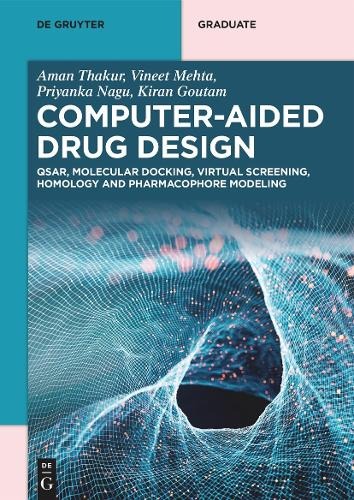
Computer-aided drug design
Computer-Aided Drug Design (CADD) is a comprehensive guide designed for both beginners and experienced users in CADD. Covers the fundamental principles and gradually delves into more advanced concepts and techniques, making it an invaluable resource to anyone interested in CADD. It begins by establishing a solid foundation, explaining the core concepts of CADD, the user interface and essential tools. It covers QSAR, molecular docking, homology modeling, virtual screening, pharmacophore modeling, ensuring that the reader can quickly become proficient in CADD. Provides in-depth insights into 3D modeling, rendering, and parametric design. The style of the book is simple, every topic begins from the very basics and explores advanced levels with clarity. Practical examples, step-by-step tutorials and hands-on exercises, are included for better understanding.

Computer-Aided Architectural Design Futures (CAADFutures) 2007 ; Proceedings of the 12th International CAADFutures Conference
This volume is the proceedings of the 12th International Conference of CAAD Futures, which took place in Sydney, Australia. The internationally refereed papers in this book present the state of the art in computer-aided architectural design research. The papers in this year's conference theme, Integrating Technologies for Computer-Aided Design, provide the technological foundation for new ways of thinking about using computers in designing and the use of computers in design itself as well as in the education of designers.

Computer Vision Systems ; 2nd International Workshop, ICVS 2001 Vancouver, Canada, July 7-8, 2001 Proceedings
Computer Vision has reached a level of maturity that allows us not only to p- form research on individual methods and system components but also to build fully integrated computer vision systems of signi cant complexity. This opens a number of new problems related to system architecture, methods for system synthesis and veri cation, active vision systems, control of perception and - tion, knowledge and system representation, context modeling, cue integration, etc. By focusing on methods and concepts for the construction of fully integrated vision systems, ICVS aims to bring together researchers interested in computer vision systems. Similar to the previous event in Las Palmas, ICVS 2001 was organized as a single-track workshop consisting of high-quality.

Computer vision / computer graphics collaboration Techniques ; 3rd International Conference on Computer Vision/Computer Graphics, MIRAGE 2007, Rocquencourt, France, March 28-30, 2007, Proceedings
This volume contains foundational, methodological, and application issues.

Computer Supported Cooperative Work in Design IV ; 11th International Conference, CSCWD 2007, Melbourne, Australia, April 26-28, 2007. Revised Selected Papers
This book constitutes the thoroughly refereed post-conference proceedings of the 11th International Conference on Computer Supported Cooperative Work in Design, CSCWD 2007, held in Melbourne, Australia, in April 2007.
