



الصفحة 5
الصفحة 5
Intelligent Paradigms for Assistive and Preventive Healthcare
Intelligent paradigms play a tremendous role in the field of Assistive and Preventive Healthcare (APH). This book presents some of the latest research in the field of APH by most prestigious researchers. The contributions include: Ubiquitous computing in APH Multimedia medical informatics in APH Virtual reality in APH Digital Talking books Electronic Locomotion Aids for the Blind Multimedia Communication System for the Blind Information Technology for Deaf People Gait Training System for Computer-Aided Rehabilitation

Innovations in rehabilitation sciences education : Preparing Leaders for the future
We are most fortunate to be housed in an institution that embraces risk taking and innovation in education. Part of the joy of working at McMaster University is the sense that you will be supported in your efforts to develop new ways of facilitating learning even if these are not always successful. We are privileged to work with a group of exceptional colleagues who embrace - novation and strive for ongoing excellence in education.
Injuries in Athletics : Causes and Consequences
This book focuses on both applied and conceptual issues regarding the classification of injuries, common coaches’ errors leading to injury, coaches and athletes’ viewpoints on injury, the development of psychological trauma in athletes, traumatic brain injuries and basic principles of rehabilitation. It is organized into five parts: - Foundations of injuries in athletics - Coaches and Athletes’ perspectives of injury - Psychological traumas in athletes - Concussion in athletics - Injury rehabilitation This reference book accumulates the latest developments in the science of athletes' training, from "injury-free" perspectives along with psychological analyses, evaluation, and management of sport-related injuries. It is an ideal resource for coaches, clinical practitioners, researchers and students interested in kinesiology, sport psychology and athletic training.

Inflammatory Arthritis in Clinical Practice
Inflammatory Arthritis in Clinical Practice is intended primarily as a concise practical handbook for general practitioners, rheumatology doctors in training and those in related specialties like orthopaedics. It will also be of interest to specialist nurses and allied health professionals working in the field. It covers all aspects of the diagnosis and management of rheumatoid arthritis and spondyloarthropathies

Improving Interagency Collaboration, Innovation and Learning in Criminal Justice Systems : Supporting Offender Rehabilitation
This book to improve collaboration between criminal justice and welfare services in order to help prepare offenders for life after serving a prison sentence. It examines the potential tensions between criminal justice agencies and other organisations which are involved in the rehabilitation and reintegration of offenders, most notably those engaged in mental health care or third sector organisations

Implants and Oral Rehabilitation of the Atrophic Maxilla : Advanced Techniques and Technologies
Covers the most suitable techniques for the rehabilitation of patients experiencing tooth loss, trauma or other situations resulting in bone atrophy. The book discusses current technologies, from diagnosis to treatment and surgery, applied to atrophic jaws using innovative tools and new PSI (patient specific implant) approaches.

Imaging of Orthopedic Sports Injuries ; 2nd ed.
This book, now in a revised and updated second edition, provides a review of imaging abnormalities in orthopedic sports injuries. The first part of the book includes background information on relevant basic science and general imaging principles in sports traumatology, while the second part discusses the topography of various sports injuries. Each chapter highlights the merits of different imaging techniques, focusing on a specific clinical problem. The third part then examines natural history and monitoring. Several new chapters have been added, including a chapter on postoperative joint imaging in the sports patient as well as image-guided interventions in sports injuries.

Il Parlagioco : Uno strumento per comunicare attraverso il gioco = he Parlagioco: A tool for communicating through play
Il Parlagioco nasce da un'esperienza riabilitativa con un bambino autistico, il cui linguaggio aveva bisogno di regole comunicative. Per questo è stato creato un gioco di carte per realizzare uno scambio interattivo attraverso il desiderio di comunicare giocando. Il Parlagioco è servito anche a ridurre l'iperselettività tipica dell'autismo, orientando l'attenzione del bambino verso gli elementi esaustivi, ignorando i dettagli insignificanti allo scopo di cogliere i nessi di un insieme necessari a una comprensione globale. Da questa esperienza il Parlagioco è stato ulteriormente sviluppato per promuovere la pragmatica della comunicazione e le regole del linguaggio in ambito clinico. La sua applicazione nei disturbi specifici del linguaggio permette di ampliare il lessico, la comprensione di nuovi vocaboli e la produzione di richieste. Quando il disturbo del linguaggio è invece associato a ritardo mentale nelle malattie genetiche o neurologiche, esso consente delle facilitazioni nel proporre compiti specifici di riabilitazione linguistica. La presentazione grafica allettante e la proposta ludica fannno si' che esso sia facilmente applicabile anche in ambito scolastico e familiare.
I disturbi della consapevolezza nelle malattie neuropsichiatriche = Disturbances of awareness in neuropsychiatric diseases
Aims to outline the set of current international knowledge on disease awareness in various neuropsychiatric conditions (hemiplegia resulting from brain damage, psychosis, dementia and mood disorders), with particular reference to anosognosia and 'insight. The comparison between different conceptualizations and the variety of clinical manifestations gives rise to a very complex picture that requires a multidimensional approach, especially as regards the diagnostic moment. To this end, the authors propose an integration of various contributions on the pathogenetic level, based on neuroanatomical evidence and supported by the most recent neuroimaging techniques. In addition, the use of a complex diagnostic battery is suggested, capable of analyzing the different aspects of the phenomenon, and distinguishing it from the psychological defensive mechanism of denial. Research in this field is also essential to promote rehabilitation and compliance with treatment, as well as the enrichment of knowledge on the processes underlying consciousness and awareness in the human being.
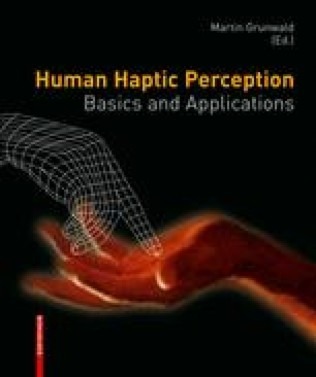
Human Haptic Perception : Basics and Applications
Active touch perception – also known as haptic perception – is of primary importance for the planning, direction and execution of everyday actions. This most complex of human sensory systems is gaining ever more importance for various scientific disciplines as well as practical industrial applications.In this book an international team of 80 authors presents a comprehensive collection of writings on both aspects of research on human haptic perception. After a theoretical and historical introduction, the chapters are dedicated to neurophysiological basics as well as the psychological, clinical and neuropsychological aspects of haptic perception. Results of studies into human haptic perception in the fields of virtual haptics and robotics are also included. In the final section, contributions from the applied and industrial sectors illustrate the practical uses of knowledge about the human sense of touch.

Handbook of Homework Assignments in Psychotherapy : Research, Practice, and Prevention
The Handbook of Homework in Psychotherapy is the first resource for the practicing clinician that addresses the role of homework across major therapeutic paradigms and complex clinical problems. It opens with a series of practice-orientated chapters on the role of homework in different psychotherapies (acceptance and commitment, client-centered, constructivist, cognitive-behavioral, experiential, family, interpersonal, psychodynamic) written by an international team of expert psychotherapy practitioner-researchers. Then, experienced practitioners present strategies, examples, and formulated assignments for use with different populations (couples, families, older adults) and complex problems (chronic depression, chronic pain, eating disorders, obsessions and compulsions, personality disorders, psychosis, sexual dysfunction, substance abuse, traumatic brain injury). The Handbook closes with three chapters by leading psychotherapy theoreticians, researchers, and practitioners that critique the available research evidence for homework, integrate the recommendations for using homework in practice, and also provide directions for homework's role in prevention.

Handbook of Complex Occupational Disability Claims : Early Risk Identification, Intervention, and Prevention
A book that synthesizes so many diverse viewpoints has the potential to influence both policy and practice across disciplines and cut through politicization of these still poorly understood conditions with evidence. The Handbook is important reading for all clinicians, professionals, and members of rehabilitation and disability management teams, across healthcare, occupational and compensation settings.

Handbook of Behavioral and Cognitive Therapies with Older Adults
The book enhances the professional’s understanding of the learning and self regulating capacities of older adults. Its consistent and easy-access format features empirical reviews, recommended cognitive and behavioral interventions specific to the problem, instructive case studies, and salient diversity issues. In their choice of topics, the editors have assembled the Handbook to fit the unique challenges of both older individuals and the practitioners working with them.

Hand transplantation
This book presents the global experimental and clinical experience on hand transplantation and all types of other composite tissue allografts so far performed. A complete review of all aspects of these innovative and ground-breaking procedures is clearly presented in 15 different sections. They include the experimental basis of hand transplantation, strategies for selecting ideal candidates and preparing successful hand transplantation programmes, surgical techniques, most effective immunosuppressive drug regimes, analysis of the unique immunological behaviour of these transplants and rehabilitation protocols to achieve optimal sensory and motor recovery. Each section is dedicated to a special issue, such as psychological and medicolegal implications, brain remodelling after hand transplantation and introduction of a new scoring system for overall comprehensive outcome evaluation. A complete list of composite tissues allografts currently carried out around the world is reported in detail, including the face, abdominal wall, uterus, larynx and knee joint.

Growing Plantation Forests
Plantation forests are grown to supply wood and to provide environmental benefits, such as waste disposal, rehabilitation of degraded sites, enhancement of regional biodiversity and reduction of logging in native forests. In a highly readable fashion, this book describes the scientific principles which are used throughout the world to ensure rapid, healthy plantation growth. It is written for a world-wide audience, from forestry professionals and scientists through to small plantation growers, to describe how plantations may be grown responsibly and profitably.

Graftless solutions for the edentulous patient
Explains the rationale and technique for the rehabilitation of fully edentulous patients utilizing traditional graftless concepts as well as zygomatic implant strategies when posterior support cannot be achieved by the former means.

Geotechnical Engineering for Disaster Mitigation and Rehabilitation ; Proceedings of the 2nd International Conference GEDMAR08, Nanjing, China 30 May – 2 June, 2008
"Geotechnical Engineering for Disaster Mitigation and Rehabilitation" presents the latest developments and case studies in the field. All contributions to this proceedings were rigorously reviewed to cover the newest developments in disasters related to earthquakes, landslides and slopes, soil dynamics, risk assessment and management, disaster mitigation and rehabilitation, and others.

Fundamentals of Geriatric Medicine : A Case-Based Approach
This handbook addresses the complexity of disease prevention and presentation in elderly patients, as well as geriatric pharmacology. Medicare and Medicaid, and conditions common to elderly patients, including depression, dementia, and hypertension, are also covered. Numerous graphs and tables are included throughout the book to assist the reader in processing the information presented and incorporating it into clinical practice. This practical guide is an essential resource for all those caring for the elderly.

Fundamentals of biomechanics
The book presents a comprehensive review of the major concepts of biomechanics and summarizes them in nine principles of biomechanics. Throughout the text are numerous examples of applying these principles to the work of kinesiology professionals. Specific case studies are presented in four application chapters: physical education, coaching, strength and conditioning, and sports medicine.

Foundations of Sport-Related Brain Injuries
A major take-home point from this book should be the assumption that symptom resolution does not necessarily mean injury resolution. As can be seen by research focusing on global metabolic cascades and neural activity of the brain, long-standing dysfunctional pathways continue to exist for extended periods of time even after a minor concussion. Until we completely understand the consequences of short-term perturbations and long-term residual brain dysfunctions, concussions must be treated with respect and given a higher priority for continued research activity.
