



الصفحة 5
الصفحة 5
Biotechnology for the Future
One area that has attracted much attention is the use of cell factories for the production of a wide range of chemicals. This area illustrates very well the definition of biochemical engineering , and it has therefore been chosen as the focus of this volume. The use of cell factories for production of chemicals dates back to the production of penicillin, ethanol, acetone–butanol, glycerol and further to enzymes and other antibiotics. All these products were traditionally produced by cell factories that naturally produce these compounds. With the introduction of genetic engineering it has,This volume therefore contains chapters on concepts of metabolic engineering on detailed modeling of cellular systems
Biosensing : International Research and Development
The goal of this book is to disseminate information on the worldwide status and trends in biosensing R&D to government decisionmakers and the research community. The contributors critically analyze and compare biosensing research in the United States with that being pursued in Japan, Europe and other major industrialized countries.

Biopharmaceutical drug design and development
Biopharmaceutical Drug Design and Development, Second Edition, updates the widely successful first edition, published in 1999. This new, expanded edition investigates the dozens of new biopharmaceutical drugs that have become available since the publication of the first edition. Among the drugs discussed are ones in the categories of monoclonal antibodies for in-vivo use, cytokines, growth factors, enzymes, immunomodulators, thrombolytics, and immonotherapies including vaccines. Additionally, the volume examines new and emerging technologies, such as bioinformatics, DNA microarrays, transgenics, therapeutic gene delivery, stem cells, nucleic acid-based therapeutics, and macromolecular drug delivery. Authors also study pharmacogenetics in the clinic and changes in biologic drug approval at the FDA. Biopharmaceutical Drug Design and Development, Second Edition, is a worthy sequel in the discussion on the dynamic, exciting field of biotechnology.

Bioorganometallic Chemistry
Bioorganometallic Chemistry has become a mature area of science and is comprehensively covered by leading experts in this book. Naturally occuring bioorganometallic complexes, such as vitamin B12 and recently discovered iron and nickel hydrogenases, including a possible role of the latter in the geochemical theory of the origin of life, are considered.
Biology of Inositols and Phosphoinositides
This volume describes the current status of the biology of inositols and phosphoinositides with an emphasis on the development in the area since the publication of volume 26 in 1996 in this series. The progress made in dissecting the genetics, structure and evolution of the seminal enzyme for synthesis of inositol in the biological system has driven the understanding of the enzyme forward. With the current genomic and proteomic tools in place the new role of inositols, inositol phosphates and phosphoinositides in cell signaling or stress response has been explored. These advances are described.

Biological nitrogen fixation, sustainable agriculture and the environment ; Proceedings of the 14th International nitrogen fixation congress
Covers aspects of fundamental and applied nitrogen-fixation research, from biochemistry and chemistry through genetics, regulation and physiology to agricultural practice and environmental impact. This work describes progress on studies of potential catalysts for nitrogen fixation; how the N2-fixing process is regulated in living cells; and more.

Biological nitrogen fixation : Towards poverty alleviation through sustainable agriculture ; Proceedings of the 15th International nitrogen fixation congress and the 12th International Conference of the African Association for Biological Nitrogen Fixation
This volume covers recent developments in both fundamental and applied research in biological nitrogen fixation. It emphasizes the application of biological nitrogen fixation for sustainable agriculture, which should lead to poverty alleviation, environmental protection, and good agricultural practices generally. The roles of, and advances in, plant breeding, plant molecular biology, nodule physiology, and symbiotic and associative interactions between plants and microbes in sustaining agricultural productivity and soil fertility are described. The evolution of symbioses and nitrogen fixation are also covered in this volume. To ensure high agricultural productivity, while protecting the environment (both soil and water resources), requires plant cultivars that also respond to beneficial microbes.
Bioinorganic electrochemistry
Interfacial electrochemistry of redox metalloproteins and DNA-based molecules is presently moving towards new levels of structural and functional resolution. This is the result of powerful interdisciplinary efforts. Underlying fundamentals of biological electron and proton transfer is increasingly well understood although with outstanding unresolved issues. Comprehensive bioelectrochemical studies have mapped the working environments for bioelectrochemical electron transfer, supported by the availability of mutant proteins and other powerful biotechnology. Introduction of surface spectroscopy, the scanning probe microscopies, and other solid state and surface physics methodology has finally offered exciting new fundamental and technological openings in interfacial bioelectrochemistry of both redox proteins and DNA-based molecules.

Biofuels
In line with the current focus on a sustainable economy, bioethanol and other biofuels have received tremendous attention, making many headlines. Being produced in steadily growing volumes has made it necessary to consider production of biofuels from renewable raw materials that are not currently used. Therefore, the production of biofuels is at the gateway of moving from traditional raw materials to others such as lignocellulosic materials. However, sucha transfer requires new production processes that are economically feasible.This volume addresses and discusses the current status of biofuels, covering aspects from enabling technologies to different technology and processes options, as well as economical and policy perspectives.
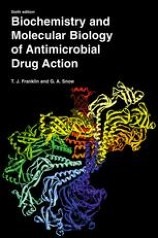
Biochemistry and molecular biology of antimicrobial drug action
This stimulating new edition of the well-respected title Biochemistry and Molecular Biology of Antimicrobial Drug Action primarily covers medically important antimicrobial agents, but also includes some compounds not in current medical use which have been invaluable as research tools in biochemistry.

Biochemistry
Biochemistry and the organization of cells -- Water : the solvent for biochemical reactions -- Amino acids and peptides -- The three-dimensional structure of proteins -- Protein purification and characterization techniques -- The behavior of proteins : enzymes -- The behavior of proteins : enzymes, mechanisms, and control -- Lipids and proteins are associated in biological membranes -- Nucleic acids : how structure conveys information -- Biosynthesis of nucleic acids : replication -- Transcription of the genetic code : the biosynthesis of RNA -- Protein synthesis : translation of the genetic message -- Nucleic acid biotechnology techniques -- Viruses, cancer, and immunology -- The importance of energy changes and electron transfer in metabolism -- Carbohydrates -- Glycolysis

Bioactive Heterocycles III
Bioactive Heterocycles III provides readers with a comprehensive overview of the most recent breakthroughs in the ?eld of heterocycles. This volume contains 8 chapters written by experts in their respective ?elds from all over the world. The chapters summarize years of extensive research in each area, and providein sight in the new themesofnaturalproduct research.Manyofthe contributors illustrate their laboratory experiences. It's obvious that readers will gain exciting and essential information fromthe volume. In the ?rst chapter, Kayser et al. describe the chemistry, biosynthesis and biological activities of artemisinin, one of the most promising antimalarial molecules, and its related natural peroxides.

Bioactive components of milk
Of all food products dairy foods have the most potential concerning functional foods. Therefore, there is a tremendous amount of interest in value-added milk products and the identification of components in food which have health benefits. Bioactive Components of Milk provides an overview of these derived components and their diverse activities including: the stimulation of beneficial microflora, alerting the immune system to the presence of potential pathogens and allergens, binding and eliminating toxins, etc. The book is divided into four parts. The first part focuses on bioactive milk lipid components, which very widely among mammalian species. The second part describes different aspects of biological active colostrums and milk proteins and their derivatives, with special concern on species specific effects. The third part reviews the production of recombinant human proteins in the milk of livestock animals - including ethical issues - and the aims of altering milk composition for the benefit of both the animals themselves and the consumers. The final part focuses on the influence of ruminants nutrition on the biological activity of milk.

Bee products : Chemical and biological properties
Presents an updated discussion on the chemical composition and biological properties of the main bee products, which until now have been presented separately in different editions This book scoops out studies about bee products most used in marketing and in traditional medicine such as honey, royal jelly, propolis, bee pollen and bee venom Discusses chemical composition and biological function of the different bee products on topics such as nutrition, aging and age-related diseases, cancer, neurodegenerative diseases and pathogen infections Bee products are rich in several essential nutrients and non essential nutrients, as sugars, minerals, proteins, free amino acids, vitamins, enzymes and polyphenols, that seem to be closely related to their biological functions. The effects of these products in nutrition, aging and age-related diseases, cancer, neurodegenerative diseases and pathogen infections are discussed.

Basic methods for the biochemical lab
Covers : quantitative methods (proteins, nucleic acids, phospholipids and carbohydrates), electrophoresis (several polyacrylamide and agarose systems, 2D-PAGE, detection methods and affinity electrophoresis), chromatographic protocols (thin-layer chromatography, GPC, IEC, affinity chromatography, HPLC), immunochemical protocols (hapten-carrier and enzyme conjugation, immunization and antibody purification, immune affinity chromatography, ELISA), centrifugation (differential and density gradient centrifugation for cells and cellular fractions), radioactivity (labeling and counting), buffers (buffer properties and compositions).
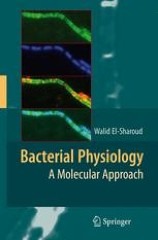
Bacterial Physiology : A Molecular Approach
The application of new molecular methodologies in the study of bacterial behaviour and cell architecture has enabled new revolutionary insights and discoveries in these areas. While this has also raised a number of scientific mysteries about bacteria, it certainly improved our understanding of these organisms as complex and adaptive entities rather than just simple tiny buckets of enzymes. The value of this recent knowledge in bacterial physiology is not only restricted to fundamental biology, but it also extends to biotechnology and drug-discovery disciplines where understanding cell behaviour and structure is essential for better exploitation of useful bacteria and effective eradication of harmful ones. This makes a new text accommodating recent developments in bacterial physiology highly relevant to a wide range of readership including those interested in basic and applied knowledge.
Associative and endophytic nitrogen-fixing bacteria and cyanobacterial associations
Associative and Endophytic Nitrogen-fixing Bacteria and Cyanobacterial Associations This book is part of the seven-volume series that was launched a few years ago with the ambitious objectives of reviewing the field of nitrogen fixation from its earliest beginnings through the millennium change and of consolidating the relevant information - from fundamental to agricultural and environmental aspects – all in one place. Volume 5 covers the biology of bacteria that associate with n- leguminous plants. The subject matter includes a wide range of associations; it covers the bacterial species that associate either with the surface or within the tissues of grasses (often referred as plant growth-promoting rhizobacteria) and also the symbiotic associations that cyanobacteria form with fungi, algae, and both lower and higher plants. This volume does not deal with the Frankia-actinorhizal plant associations, which is the topic of Volume 6

Aromatase Inhibitors
Many breast tumours are dependent upon oestrogen for their development and continued growth. Over the last 25 years hormone therapy has progressed from the irreversible destruction of endocrine glands to the use of drugs that reversibly suppress oestrogen synthesis or action. The inhibition of oestrogen synthesis is most readily achieved by inhibiting the final step in the pathway of oestrogen biosynthesis, the reaction which transforms androgens into oestrogens by creating an aromatic ring in the steroid molecule (hence the enzyme's trivial name, aromatase). Whereas the first aromatase inhibitors to be used therapeutically could be shown to produce drug-induced inhibition of the enzyme and therapeutic benefits in patients with breast cancer, they were not particularly potent and lacked specificity. However, second-generation drugs were developed and most recently third-generation inhibitors have evolved which possess remarkable specificity and potency. Initial results from clinical trials suggest that these agents will become the cornerstones of future endocrine therapy.
Applications of cell immobilisation biotechnology
Cell Immobilisation Biotechnology" is divided into the two book volumes, FOBI 8A and FOBI 8B. The FOBI 8A volume, Fundamentals of Cell Immobilisation Biotechnology, is dedicated to fundamental aspects of cell immobilisation while the present volume, FOBI 8B, Applications of Cell Immobilisation Biotechnology, deals with diverse applications of this technology.
Application of microbes in environmental and microbial biotechnology
Discusses the innovative approaches and investigation strategies, as well as provides a broad spectrum of the cutting-edge research on the processing, properties and technological developments of microbial products and their applications. Microbes finds very important applications in our lives including industries and food processing. They are widely used in the fermentation of beverages, processing of dairy products, production of pharmaceuticals, chemicals, enzymes, proteins and biomaterials / conversion of biomass into fuel, fuel cell technology, health and environmental sectors. Some of these products are produced commercially, while others are potentially valuable in biotechnology. Microorganisms are considered invaluable in research as model organisms. This is a useful compilation for students and researchers in microbiology, biotechnology and chemical industries.
