



الصفحة 5
الصفحة 5

Nanostructured Coatings
Controlling the performance of structures and components of all sizes and shapes through the use of engineered coatings has long been a key strategy in materials processing and technological design. The ever-increasing sophistication of en- neered coatings and the rapid trend toward producing increasingly smaller devices with greater demands on their fabrication, properties and performance have led to signicant progress in the science and technology of coatings, particularly in the last decade or two. Nanostructured coatings constitute a major area of sci- ti?c exploration and technological pursuit in this development.Nanostructured coatings demand study in a highly interdisciplinary research arena which encompasses: surface and interface science study of defects modern characterization methodologies cutting-edge experimental developments to deposit.

Nanostructured and advanced materials for applications in sensor, optoelectronic and photovoltaic technology ; Proceedings of the NATO Advanced Study Institute on nanostructured and advanced materials for applications in sensors, optoelectronic and photovoltaic technology ; Sozopol, Bulgaria, 6-17 September 2004
Nanotechnology is an emerging scientific field receiving significant worldwide attention. On a nanometer scale, materials or structures may possess new and unique physical properties. Some of these are now known to the scientific community, but there may well be many properties not yet known to us, rendering it as a fascinating area of research and a suitable subject for a NATO ASI. Yet another aspect of the field is the possibility for creating meta-stable phases with unconventional properties and the ultra-miniaturization of current devices, sensors, and machines. Such nanotechnological and related advanced materials have an extremely wide range of potential applications, viz. nanoscale electronics, sensors, optoelectronics, photonics, nano-biological systems, na- medicine, energy storage systems, etc. This is a wide-ranging subject area and therefore requires the formation of multi-disciplinary teams of physicists, chemists, materials scientists, engineers, molecular biologists, pharmacologists, and others to work together on the synthesis and processing of materials and structures, the understanding of their physical properties, the design and fabrication of devices.

Nanoscience : Nanotechnologies and Nanophysics
Nanotechnologies and nanosciences are a fast-developing field of research, which sit at the point of convergence of several disciplines (physics, chemistry, biology, mechanics, etc.). This practically-oriented overview is designed to provide students and researchers with essential information on both the tools of manufacture and specific features of the nanometric scale, as well as applications within the most active fields (electronics, magnetism, information storage, biology).

Nanoscale Devices - Fundamentals and Applications
This book contains a collection of papers giving insight into the fundamentals and applications of nanoscale devices. The main focus is on the synthesis and characterization of nanoscale magnetic materials, the fundamental physics and materials aspects of solid-state nanostructures, the development of novel device concepts and design principles for nanoscale devices, as well as on applications in electronics with special emphasis on defence against the threat of terrorism.

Nanoscale Assembly : Chemical Techniques
Recent advances have pushed the limits of lithography firmly into the sub-100 nm domain, with smallest feature sizes around 10 nm. However, compared to living organisms, devices fabricated using nanolithography are not nearly as complex, as they are essentially 2D and contain only a limited number of chemical elements. For centuries, Nature has been a major inspiration for science. First of all to learn how Life functions at cellular level, but increasingly, as a blueprint for designing non-natural devices where the building blocks and their assembly are inspired by biological examples. The key tool in translating these examples into the domain of engineering, has been self-assembly or self-organization. This book gathers a spectrum researchers who have not only furthered our knowledge of self-assembly using small molecules, polymers and colloidal particles as building blocks, but who have also shown it to be a practical tool in the assembly of an astonishing variety of devices, ranging from molecular electronics to biosensors.

Nanoparticles in Biomedical Imaging : Emerging Technologies and Applications
Fundamental Biomedical Technologies features titles in multidisciplinary, technology-driven areas, providing the foundations for breakthrough advances in medicine and biology. The term technology refers, in a vigorously unrestrictive sense, to a broad array of engineering disciplines, the sciences of computation and informatics, mathematical models exploiting and advancing methods of mathematical physics, and the development of novel, experimental discovery devices. Titles in this series are designed and selected to provide high-level visionary input for specialists, while presenting overviews of emerging fields for those in related areas. Volumes in this series aim to provide technologists with the material to gain competent entry into biomedical research and biomedical researchers to understand and embrace novel technological foundations and tools.

Nanoparticle-based cancer vaccines
Reviews the fundamentals of cancer vaccines, explores the role of nanotechnology in improving vaccine design and delivery, and evaluates current clinical applications, challenges, and regulatory considerations, highlighting the potential of nanoparticle-based cancer vaccines in future cancer treatment.

Nanometer technology designs high-quality delay tests
Nanometer Technology Designs: High-Quality Delay Tests discusses these challenges in detail and proposes new techniques and methodologies to improve the overall quality of the delay test for nanotechnology designs

Nanomaterials for Application in Medicine and Biology
This volume contains research reports presented during the NATO Advanced Research Workshop (ARW) “Materials for Application in Medicine and Biology” held in Bonn, Germany, from October 4 to 6, 2006 at the center of advanced european studies and research (caesar). The application of nanomaterials in medicine and biology can be understood as the gathering and use of our current knowledge on nanoscale features of b- logical systems in order to learn how to design nanodevices for biomedical uses.

Nanoinformatics
Brings out the state of the art on how informatics-based tools are used and expected to be used in nanomaterials research. There has been great progress in the area in which “big-data” generated by experiments or computations are fully utilized to accelerate discovery of new materials, key factors, and design rules. Data-intensive approaches play indispensable roles in advanced materials characterization. "Materials informatics" is the central paradigm in the new trend. "Nanoinformatics" is its essential subset, which focuses on nanostructures of materials such as surfaces, interfaces, dopants, and point defects, playing a critical role in determining materials properties. There have been significant advances in experimental and computational techniques to characterize individual atoms in nanostructures and to gain quantitative information. The collaboration of researchers in materials science and information science is growing actively and is creating a new trend in materials science and engineering.

Nanoformulations in Human Health: Challenges and Approaches
This book is an amalgamation of knowledge, experience, and expertise in various aspects of nanotechnology, by experts who are proficient in designing novel nanoformulations that are used in the treatment of various challenging and prevalent diseases. It is an exhaustive compilation of the multi-faceted arena of nanoformulations and the healthcare system that caters to the needs of academicians, scholars, researchers, etc. The most important aspect of the book covers various types of nanoformulations and their applications in the treatment of communicable and non-communicable diseases. Each chapter focuses on a particular nanoformulation as well as a disease including the pathophysiology of the disease, the current treatment modalities of diseases, the role of nanoformulation in treatment and other future aspects and directions for further work. Coverage includes neuropathic pain, colon targeting, nose-to-brain drug delivery, cancer, arthritis and tuberculosis.
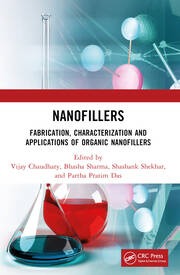
Nanofillers : Fabrication, characterization and applications of organic nanofillers
Explores the modifying effects of various nanofillers on mechanical and physical properties of polymer nanocomposites. Looking at the four basic aspects of processing, characterization, properties, and applications, it analyzes how their features can allow for innovative multifunction within industry. Covering design, production, and manufacture, this book focuses on meeting end-use requirements and the fabrication of materials. The importance of mindful design and the use of an appropriate synthesis method is the primary lens through which theory and practice are discussed. This volume looks at the various synthesis methods available for organic nanofillers and what characterizes them. Properties including mechanical, thermal, electrical, and tribological are thoroughly examined, along with the various computational techniques used to determine them. With important sustainable properties, nanofillers are essential to meeting the increasing demand for biodegradable and environmentally friendly materials. This book details the role nanofillers have to play in sustainability, alongside economic factors such as efficient manufacturing processes.

Nanoelectronics and Photonics : From Atoms to Materials, Devices, and Architectures
Nanoelectronics and Photonics: From Atoms to Materials, Devices, and Architectures provides a description of the core elements and challenges of advanced and future information technology. By linking the materials physics and chemistry at the atomic scale with device and circuit design and performance requirements, tutorial chapters from leaders in the field present a coherent picture of theoretical and experimental research efforts and technology development in this highly interdisciplinary area.

Nanocatalysis
Nanocatalysis is one of the most exciting subfields to have emerged from nanoscience. Its central aim is the control of chemical reactions by changing the size, dimensionality, chemical composition and morphology of the reaction center and by changing the kinetics using nanopatterning of the reaction centers. This approach opens up new avenues for atom-by-atom design of nanocatalysts with distinct and tunable chemical activity, specificity, and selectivity. This book is intended to give a pedagogical and methodological overview of this exciting and growing field and to highlight specific examples of current research. In this way, it serves both as an instructive introduction for graduate students who plan to enter the field and as a reference work for scientists already active in this and related areas.
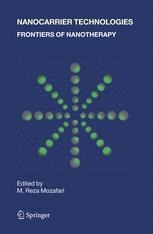
Nanocarrier Technologies : Frontiers of Nanotherapy
Nanobiotechnology is one of the key technologies of the 21st century. It is a combination of nanoscience and biotechnology and covers areas ranging from gene transfer and nanoencapsulation to food technology. Nanocarriers are a leading nanobiotechnology tool with the ability to provide protection, site-specific delivery, enhanced bioavailability and controlled release of pharmaceuticals, genetic material, imaging agents, nutraceuticals and cosmetics to name a few. For this reason, the study of nanocarriers, their properties and applications has attracted a great deal of interest over recent years. Designed as an advanced survey of the field, this book describes the key research parameters of nanocarrier technologies including their preparation methods, evaluation of their safety and efficiency, their interaction with biologicals and their application in biotechnology, drug delivery, gene therapy and food technology areas.

NanoBiotechnology : BioInspired Devices and Materials of the Future
NanoBioTechnology: BioInspired Devices and Materials of the Future is a groundbreaking text that will assist scientists and students in learning the fundamentals and cutting-edge nature of this new and emerging science. Focusing on materials and building blocks for nanotechnology, leading scientists from around the world share their knowledge and expertise in this authoritative volume. The volume is broken into five sections. The first section presents an overview of nanotechnology and describes the many aspects of the field. Section 2 details biological materials serving as nanotemplates for bottom-up fabrication. Section 3 covers the use of biological macromolecules for electron transfer and computation. Section 4 presents a brief overview of the extensive and rapidly growing field of nanomedicine. Finally, Section 5 details de-novo designed structures and the various approaches different scientific groups take with molecular level training and language

Nanobiosensors : From design to applications
Nanobiosensors - From Design to Applications covers several aspects of biosensors beginning from the basic concepts to advanced level research. It will help to bridge the gap between various aspects of biosensors development technology and applications. It covers biosensors related material in broad spectrum such as basic concepts, biosensors & their classification, biomarkers & their role in biosensors, nanostructures-based biosensors, applications of biosensors in human diseases, drug detection, toxins, and smart phone based biosensors.

Nano physical pharmaceutics
Nanomedicine is an emerging and rapidly evolving field, which could significantly help in early disease diagnosis, therapeutic improvement, novel therapeutic modality development, and medical expenditure reduction. The challenge remains, however, that the specially designed and carefully synthesized nanomedicines function poorly in animal verification despite great performance in vitro. A deeper understanding of the physicochemical properties of nanomedicine is the key. This book applies physical theories and models to determine the parameters for controlling the physicochemical properties of nanomedicines, including micelles, liposomes, and inorganic nanoparticles. Qualitative and quantitative relationships are established to provide guidance for nanomedicine design, characterization, and analysis. The text also compiles cutting-edge research in nanomedicine from the interdisciplinary team of the Department of Nanomedicine at Naval Medical University, China, which is currently establishing the characteristic discipline called Nano Physical Pharmaceutics. Edited by Wei Li, a prominent nanotechnology researcher, this book will appeal to anyone involved in nanotechnology, medicine, macromolecular science, biology, chemistry, and especially those with an interest in drug delivery or cancer therapy.

Musical Haptics
This Open Access book offers an original interdisciplinary overview of the role of haptic feedback in musical interaction. Divided into two parts, part I examines the tactile aspects of music performance and perception, discussing how they affect user experience and performance in terms of usability, functionality and perceived quality of musical instruments. Part II presents engineering, computational, and design approaches and guidelines that have been applied to render and exploit haptic feedback in digital musical interfaces.Musical Haptics introduces an emerging field that brings together engineering, human-computer interaction, applied psychology, musical aesthetics, and music performance.

Museum of the future
متحف المستقبل هو معلم ثقافي وتقني يهدف إلى استكشاف مستقبل الابتكار والتكنولوجيا والتصميم ويعتبر منصة لعرض الأفكار والمشاريع التي تساهم في تشكيل المستقبل. يعرض المتحف أحدث الابتكارات في مجالات الذكاء الاصطناعي، الروبوتات والتقنيات المستدامة. يعكس المتحف رؤية مستقبلية تسعى إلى أن تكون رائدة في مجالات التكنولوجيا والابتكار.
