



الصفحة 5
الصفحة 5

Pro Apache Tomcat 6
Pro Apache Tomcat 6 is ideal for Tomcat administrators and others who want to configure Tomcat. It covers only Tomcat 6 and doesn't get bogged down trying to overexplain tasks from each older version of the server. The book examines the entire installation, including file system, database, and web server, and provides you with security and performance tips.

Pro Active Record : Databases with Ruby and Rails
Pro Active Record helps you take advantage of the full power of your database engine from within your Ruby programs and Rails applications. ActiveRecord, part of the magic that makes the Rails framework so powerful and easy to use, is the model element of the Rails Model-View-Controller framework. It's an object-relational mapping library enabling you to interact with databases from both Ruby and Rails applications.

Privacy in Statistical Databases; CENEX-SDC Project International Conference, PSD 2006, Rome, Italy, December 13-15, 2006, Proceedings
Privacy in statistical databases is a discipline whose purpose is to provide - lutions to the con?ict between the increasing social, political and economical demand of accurate information, and the legal and ethical obligation to protect the privacy of the individuals and enterprises to which statistical data refer. - yond law and ethics, there are also practical reasons for statistical agencies and data collectors to invest in this topic: if individual and corporate respondents feel their privacyguaranteed,they arelikelyto providemoreaccurateresponses.

Privacy in Statistical Databases ; UNESCO Chair in Data Privacy International Conference, PSD 2008, Istanbul, Turkey, September 24-26, 2008. Proceedings
Constitutes the refereed proceedings of the International Conference on Privacy in Statistical Databases, PSD 2008, held in September 2008 in Istanbul, Turkey, under the sponsorship of the UNESCO chair in Data Privacy.The 27 revised full papers presented were carefully reviewed and selected from 37 submissions. The papers are organized in topical sections on tabular data protection; microdata protection; online databases and remote access; privacy-preserving data mining and private information retrieval; and legal issues.

Principles of Data Mining
This book explains and explores the principal techniques of Data Mining: for classification, generation of association rules and clustering. It is written for readers without a strong background in mathematics or statistics and focuses on detailed examples & explanations of the algorithms given.

Practical Pathology Informatics : Demystifying informatics for the practicing anatomic pathologist
Practical Pathology Informatics introduces and demystifies a variety of topics in the broad discipline of pathology informatics with a focus on issues of particular relevance to the practicing anatomic pathologist. Early chapters contain basic information about computers and databases which is applicable to any discipline, with the later chapters containing more anatomic pathology specific topics.

Practical Go : Building Scalable Network and Non-Network Applications
In Practical Go - Building Scalable Network + Non-Network Applications, you will learn to use the Go programming language to build robust, production-ready software applications. You will learn just enough to building command line tools and applications communicating over HTTP and gRPC. This practical guide will cover: Writing command line applications Writing a HTTP services and clients / Writing RPC services and clients using gRPC / Writing middleware for network clients and servers / Storing data in cloud object stores and SQL databases / Testing your applications using idiomatic techniques / Adding observability to your applications / Managing configuration data from your applications

Plant Metabolomics
This volume comprehensively covers plant metabolomics for the first time. The chapters offer cutting-edge information on analytical technology, bioinformatics and applications. They were all written by leading researchers who have been directly involved in plant metabolomics research throughout the world. Up-to-date information and future developments are described, thereby producing a volume which is a landmark of plant metabolomics research and a beneficial guideline to graduate students and researchers in academia, industry, and technology transfer organizations in all plant science fields.

Pixelization Paradigm ; Visual Information Expert Workshop, VIEW 2006, Paris, France, April 24-25, 2006, Revised Selected Papers
The pixelization paradigm states as a postulate that pixelization methods are rich and are worth exploring as far as possible. In fact, we think that the strength of these methods lies in their simplicity, in their high-density way of information representation property and in their compatibility with neurocognitive processes.

Pine Wilt Disease : A Worldwide Threat to Forest Ecosystems
The pinewood nematode (PWN), Bursaphelenchus xylophilus, the causal agent of pine wilt disease (PWD), is a serious pest and pathogen of forest tree species, Despite the dedicated and concerted actions of government agencies, this disease continues to spread. Very recently (2006), in Portugal, forestry and phytosanitary authorities (DGRF and DGPC) have announced a new strategy for the control and ultimately the erradication of the nematode, under the coordination of the national program for the control of the pinewood nematode (PROLUNP). Research regarding the bioecology of the nematode and insect as well as new detection methods, e.g., involving real-time PCR, has progressed since 1999. International agreements (GATT, WTO) and sharing of scientific information is of paramount importance to effectively control the nematode and its vector, and thus protect our forest ecosystems and forest economy.

Pharmaceutical chemistry: Drugs and their biological targets
Pharmaceutical chemistry (PC) represents a dynamic field of research that plays a pivotal role in the development of life-saving pharmaceuticals. PC is a precise science: One needs to rely on the accuracy of previous discoveries that have provided massive amount of precious information and databases as a solid foundation to move forward. PC is also an art where the artist uses a subtle mixture of knowledge, experimental learning, creativity, intuition, boldness, and serendipity to paint the right canvas. Nature often serves as a stimulus for pharmaceutical chemists. Many drugs are derived from natural compounds found in plants, fungi, or microorganisms. Chemists study these natural sources, seeking inspiration to design synthetic molecules that mimic the therapeutic properties of the originals while optimizing their characteristics. Francis Collins, geneticist and expert in the pharmaceutical industry, explains that the molecular cause of 4,000 diseases is no longer a secret to humanity, but there are only treatments available for 250 of them. Therefore, the world requires more professionals who can produce better medicines and solve more needs.

Pervasive Computing : Innovations in Intelligent Multimedia and Applications
This useful volume provides up-to-date and state-of-the-art coverage of the diverse topics related to pervasive computing and intelligent multimedia technologies. The use of different computational intelligence-based approaches to various problems in pervasive computing are examined, including video streaming, intelligent behavior modeling and control for mobile manipulators, tele-gaming, indexing video summaries for quick video browsing, web service processes, virtual environments, ambient intelligence, and prevention and detection of attacks to ubiquitous databases.

Perspectives of Systems Informatics ; 6th International Andrei Ershov Memorial Conference, PSI 2006, Novosibirsk, Russia, June 27-30, 2006, Revised Papers
This volume contains the ?nal proceedings of the Sixth International Andrei Ershov Memorial Conference on Perspectives of System Informatics (PSI 2006), held in Akademgorodok (Novosibirsk, Russia), June 27-30, 2006. The conference was held to honour the 75th anniversary of a member of the Russian Academy of Sciences Andrei Ershov (1931–1988) and his outsta- ing contributions towards advancing informatics.

Perception-based data processing in acoustics : Applications to music information retrieval and psychophysiology of hearing
The objective of the monograph is to provide novel insights into cognitive mechanisms underlying processing of sound and music in different environments. A solid understanding of these mechanisms is vital for numerous technological applications.

Pattern Recognition in Bioinformatics ; International Workshop, PRIB 2006, Hong Kong, China, August 20, 2006, Proceedings
Presents the proceedings of Workshop PRIB 2006 held in Hong Kong, China, on August 20, 2006. It includes 19 technical contributions that were selected by the Program Committee from 43 submissions. We give a brief introduction to pattern recognition in bioinformatics in the first paper. The rest of the volume consists of three parts. Part 1: signal and motif detection, and gene selection. Part 2: models of DNA, RNA, and protein structures. Part 3: biological databases and imaging.

Partial Order in Environmental Sciences and Chemistry
Partial Order? - Never heard of it! This comment will be heard no more, when the broadness of this mathematical concept has been explained. Many internationally renowned authors assist the reader in understanding what partial order is and where, why and how this concept can be used. Since all the authors have teaching experience, partial order is explained step by step. Mathematical formalism is avoided as far as ever possible. The book begins with some basics, considers applications in different fields and ends with some historical notes.

Parallel and Distributed Logic Programming : Towards the Design of a Framework for the Next Generation Database Machines
Povides a clear introduction to parallel and distributed approach to logic programming. It examines the existing models of distributed logic programming, analyses the pros and cons of these models, and proposes an alternative framework for distributed logic programming using extended Petri nets. The book attempts to explore the scope of Petri net models in designing deductive database machines of the next generation.

Open Source Approaches in Spatial Data Handling
The role open-source geospatial software plays in data handling within the spatial information technology industry is the overarching theme of the book. It also examines new tools and applications for those already using OS approaches to software development.

Open Semantic Technologies for Intelligent System ; 10th International Conference, OSTIS 2020, Minsk, Belarus, February 19–22, 2020, Revised Selected Papers
Constitutes the refereed proceedings of the 10th International Conference on Open Semantic Technologies for Intelligent System, OSTIS 2020, held in Minsk, Belarus, in February 2020. The 14 revised full papers and 2 short papers were carefully reviewed and selected from 62 submissions. The papers mainly focus on standardization of intelligent systems and cover wide research fields including knowledge representation and reasoning, semantic networks, natural language processing, temporal reasoning, probabilistic reasoning, multi-agent systems, intelligent agents.
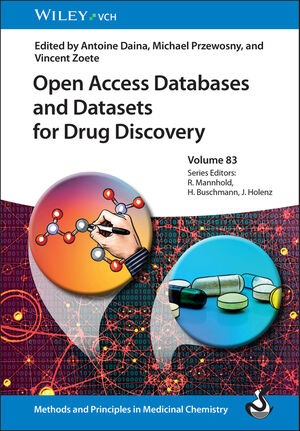
Open access databases and datasets for drug discovery
With an overview of 90 freely accessible databases and datasets on all aspects of drug design, development, and discovery, Open Access Databases and Datasets for Drug Discovery is a comprehensive guide to the vast amount of “free data” available to today’s pharmaceutical researchers. The applicability of open-source data for drug discovery and development is analyzed, and their usefulness in comparison with commercially available tools is evaluated. The most relevant databases for small molecules, drugs and druglike substances, ligand design, protein 3D structures (both experimental and calculated), and human drug targets are described in depth, including practical examples of how to access and work with the data. The first part is focused on databases for small molecules, followed by databases for macromolecular targets and diseases. The final part shows how to integrate various open-source tools into the academic and industrial drug discovery and development process.
