



الصفحة 5
الصفحة 5
Database : Enterprise, skills and innovation; 22nd British national conference on databases, BNCOD 22, Sunderland, UK, July 5-7, 2005, Proceedings
The British National Conference on Databases (BNCOD) was established in 1980 as a forum for research into the theory and practice of databases. The original conference in the series took place at the University of Aberdeen. To be precise, this conference was in fact entitled ICOD which stood for International Conference on Databases. It was the intention, when the series began, that an ICOD would take place every two years, whilst a BNCOD would run in the years in between. As the record shows ICOD was only held in 1980 and 1983. The more junior conference has managed to acquire a lifetime much longer than that of its senior relative! If truth wereknown,however,BNCOD has,overthe years,growninto ICOD and although the conference is still titled “British National,” it is, in fact, an international conference that takes place on a yearly basis. Proof of this can be obtained simply by looking at the table of contents of these proceeding which clearlyshowthatthe majorityofpaperspresentedatthis year’sconferencecame from contributors whose a?liations are outside the UK. Despitetherangeofpapersono?er,BNCODstillretainsitsuniquelyBritish ?avor. The Programme Committee is drawn from UK academics and the c- ference is always held at a British university (or in earlier years a polytechnic!).

Data Mining in Bioinformatics
8. 1. 1 Protein Subcellular Location The life sciences have entered the post-genome era where the focus of biological research has shifted from genome sequences to protein functionality. Withwhole-genomedraftsofmouseandhumaninhand,scientistsareputting more and more e?ort into obtaining information about the entire proteome in a given cell type. The properties of a protein include its amino acid sequences, its expression levels under various developmental stages and in di?erent tissues, its3Dstructure and activesites,its functionalandstructural binding partners, and its subcellular location. Protein subcellular location is important for understanding protein function inside the cell. For example, the observation that the product of a gene is localized in mitochondria will support the hypothesis that this protein or gene is involved in energy metabolism. Proteins localized in the cytoskeleton are probably involved in intracellular tra?cking and support.

Data Management. Data, Data Everywhere ; 24th British National Conference on Databases, BNCOD 24, Glasgow, UK, July 3-5, 2007, Proceedings
One of the most pressing challenges is to ?nd ways of evolving database technology to cope with its new role in underpinning the massively distributed and heterogeneous applications built on top of the Internet. This has afiected both the ways in which data has been accessed and the ways in which it is represented, with XML data management becoming an important issue and, as such, heavily represented at this conference. It has also brought back issues of performance that might have been considered largely solved by the improvements in hardware, since data now has to be managed on devices of low power and small memory as well as on standard client and powerful server machines. We therefore invited papers on all aspects of data management, particularly related to how dataisused in the ubiquitous environment of the modern Internet by complex distributed and scientific applications.

Data Management in Grids ; 1st VLDB Workshop, DMG 2005, Trondheim, Norway, September 2-3, 2005, Revised Selected Papers
This book constitutes the thoroughly refereed post-proceedings of the First International Workshop on Data Management in Grids, DMG 2005, held in Trondheim, Norway in September 2005 in conjunction with VLDB 2005. papers address all current research activities in relation to data management in dynamic, heterogeneous and cross-organizational environments, i.e. grids. They show unique expertise in the management of very large, widely distributed databases.

Data Integration in the Life Sciences ; Vol. 4075 ; 3rd International Workshop, DILS 2006, Hinxton, UK, July 20-22, 2006, Proceedings
Data management and data integration are fundamental problems in the life sciences. Advances in molecular biology and molecular medicine are almost u- versallyunderpinned by enormouse?orts in data management,data integration, automatic data quality assurance, and computational data analysis. Many hot topics in the life sciences, such as systems biology, personalized medicine, and pharmacogenomics, critically depend on integrating data sets and applications producedby di?erent experimentalmethods, in di?erent researchgroups,andat di?erent levels of granularity.

Data Engineering Issues in E-Commerce and Services ; 2nd International Workshop, DEECS 2006, San Francisco, CA, USA, June 26, 2006
The purpose of the DEECS workshop is to provide an annual forum for exchange of state-of-the-art research and development in e-commerce and services. Since the increasing demand on e-commerce and services, we are witnessing a continuing growth of interest in the workshop. The increased number of submissions this year includes a record number from Asia.

Data and Text Processing for Health and Life Sciences
This book is a step-by-step introduction on how shell scripting can help solve many of the data processing tasks that Health and Life specialists face everyday with minimal software dependencies. The examples presented in the book show how simple command line tools can be used and combined to retrieve data and text from web resources, to filter and mine literature, and to explore the semantics encoded in biomedical ontologies. To store data this book relies on open standard text file formats, such as TSV, CSV, XML, and OWL, that can be open by any text editor or spreadsheet application.

Data and applications security XX ; 20th Annual IFIP WG 11.3 Working Conference on data and applications security, Sophia Antipolis, France, July 31-August 2, 2006, Proceedings
For 20 years, the IFIP WG 11. 3 Working Conference on Data and Appli- tions Security (DBSEC) has been a major forum for presenting originalresearch results, practical experiences, and innovative ideas in data and applications - curity.Like the previous conference, the 20th DBSEC has proved to be up to this challenge. DBSEC 2006 received 56 submissions, out of which the program committee selected22 high-qualitypaperscoveringanumber of diverseresearchtopicssuch as access control, privacy, and identity management.

Current trends in database technology - EDBT 2004 Workshops ; EDBT 2004 Workshops PhD, DataX, PIM, P2P&DB, and ClustWeb, Heraklion, Crete, Greece, March 14-18, 2004, Revised Selected Papers
This volume comprises papers from the following ?ve workshops that were part of the complete program for the International Conference on Extending Database Technology (EDBT) held in Heraklion, Greece, March 2004: • ICDE/EDBT Joint Ph. D. Workshop (PhD) • Database Technologies for Handling XML-information on the Web (DataX) • Pervasive Information Management (PIM) • Peer-to-Peer Computing and Databases (P2P&DB) • Clustering Information Over the Web (ClustWeb) Together, the ?ve workshops featured 61 high-quality papers selected from appr- imately 180 submissions.

Creating Flash Widgets with Flash CS4 and ActionScript 3.0
Creating Flash Widgets with Flash CS4 and ActionScript 3.0 is an introduction to developing widgets for the Internet using the features of Flash CS4 and ActionScript 3.0. Many social-networking sites, blogs, and personal home pages have adopted the use of widgets and Flash developers can create and distribute their own widgets for others to use. A step-by-step example demonstrates how to design and develop your own Flash widgets and integrate them with XML. In addition, publishing, promoting, and capitalizing on your Flash widgets is discussed.
Coordination models and languages ; Vol.4038 ; 8th International Conference, COORDINATION 2006, Bologna, Italy, June 14-16, 2006, Proceedings
This book constitutes the refereed proceedings of the 8th International Conference on Coordination Models and Languages, COORDINATION 2006, held in Bologna, Italy, June 2006. The 17 revised full papers presented were carefully reviewed and selected from 50 submissions. Among the topics addressed are component connectors, negotiation in service-oriented computing, process algebraic specification, workflow patterns, reactive XML, ubiquitous coordination, type systems, ad-hoc network coordination, choreography, communication coordination, and distributed embedded systems.

Conceptual Modeling - ER 2007 ; 26th International Conference on Conceptual Modeling, Auckland, New Zealand, November 5-9, 2007, Proceedings
Conceptual modeling is fundamental to the development of complex systems, because it provides the key communication means between systems developers, end-users and customers.Conceptua lmodeling provides languages,methods and tools to understand and represent the application domain;to elicitate,concepalize and formalize system requirements and user needs;to communicate systems designs to all stakeholders; to formally verify and validate system designs on high levels of abstractions; and to minimize ambiguities in system development. Initially, conceptual modeling mainly addressed data-intensive information s- tems and contributed to data modeling and database application engineering. The area of conceptual modeling has now matured to encompass all kinds of application areas such as e-applications (including e-business and e-learning), web-based systems (including the semantic web and ubiquitous systems), life science and geographic applications.

Computational Science - ICCS 2006 ; Vol. 3991 ; 6th International Conference, Reading, UK, May 28-31, 2006, Proceedings, Part I
The four-volume set LNCS 3991-3994 constitutes the refereed proceedings of the 6th International Conference on Computational Science, ICCS 2006, held in Reading, UK, in May 2006. The papers span the whole range of computational science.
Long-Term Preservation of Digital Documents : Principles and Practices
Key to our culture is that we can disseminate information, and then maintain and access it over time. While we are rapidly advancing from vulnerable physical solutions to superior, digital media, preserving and using data over the long term involves complicated research challenges and organization efforts. Uwe Borghoff and his coauthors address the problem of storing, reading, and using digital data for periods longer than 50 years. They briefly describe several markup and document description languages like TIFF, PDF, HTML, and XML, explain the most important techniques such as migration and emulation, and present the OAIS (Open Archival Information System) Reference Model. To complement this background information on the technology issues the authors present the most relevant international preservation projects, such as the Dublin Core Metadata Initiative, and experiences from sample projects run by the Cornell University Library and the National Library of the Netherlands. A rated survey list of available systems and tools completes the book.
LINQ for Visual C# 2008
Every C# programmer needs to learn about LINQ (Language–Integrated Query), Microsoft's breakthrough technology for simplifying and unifying data access from any data source. With LINQ, you can write more elegant and flexible code—not just to access databases and files, but to manipulate data structures and XML. This book is a short, yet comprehensive guide to the major features of LINQ and the significant enhancements introduced with .NET 3.5. There is no better source for getting a head–start on the future of these technologies than this book.
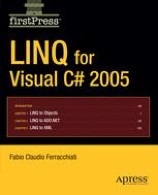
LINQ for Visual C# 2005
LINQ for Visual C# 2005 is a short, yet comprehensive guide to the major features of LINQ. It thoroughly covers LINQ to Objects, LINQ to SQL, LINQ to DataSet, and LINQ to XML. It also details significant enhancements to C#, .NET, and ADO.NET.

Knowledge science, engineering and management ; 1st International Conference, KSEM 2006, Guilin, China, August 5-8, 2006, Proceedings
Here are the refereed proceedings of the First International Conference on Knowledge Science, Engineering and Management, KSEM 2006, held in Guilin, China in August 2006 in conjunction with PRICAI 2006. The book presents 51 revised full papers and 57 revised short papers together with 4 invited talks, reporting a wealth of new ideas and current research results in the broad areas of knowledge science, knowledge engineering, and knowledge management.
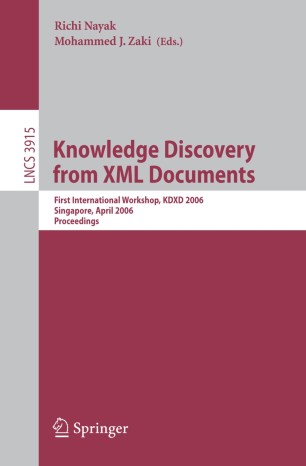
Knowledge Discovery from XML Documents ; 1st International Workshop, KDXD 2006, Singapore, April 9, 2006, Proceedings
The KDXD 2006 (Knowledge Discovery from XML Documents) workshop is the ?rst international workshop running this year in conjunction with the 10th Pacific-Asia Conference on Knowledge Discovery and Data Mining, PAKDD 2006. The workshop provided an important forum for the dissemination and exchange of new ideas and research related to XML data discovery and retrieval. The eXtensible Markup Language (XML) has become a standard language for data representation and exchange. With the continuous growth in XML data sources,the ability to manage collections of XML documents and discover knowledge from them for decision support becomes increasingly important. Due to the inherent ?exibility ofXML, in both structure and semantics, inferring important knowledge from XML data is faced with new challenges as well as bene?ts. The objective of the workshop was to bring together researchers and practitioners to discuss all aspects of the emerging XML data management challenges.
JDBC Recipes : A Problem-Solution Approach
JDBC Recipes provides easy-to-implement, usable solutions to problems in relational databases that use JDBC. You will be able to integrate these solutions into your web-based applications, such as Java servlets, JavaServer Pages, and Java server-side frameworks. This handy book allows you to cut and paste the solutions without any code changes. This book focuses on topics that have been ignored in most other JDBC books, such as database and result set metadata. It will help you develop database solutions, like adapters, connectors, and frameworks using Java/JDBC. The insightful solutions will enable you to handle all data types, including large binary objects. A unique feature of the book is that it presents JDBC solutions (result sets) in XML.
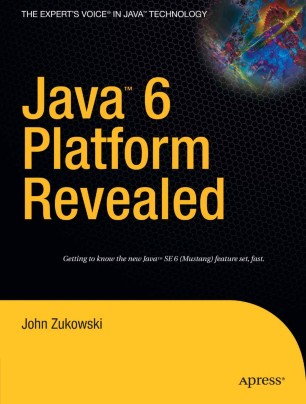
Java 6 Platform Revealed
New editions of the platform don't happen that frequently, but when they do, there is a lot to learn about quickly. If you want to come up to speed on the feature set as quickly as possible, Java 6 Platform Revealed will place you well ahead of the pack. You'll find 10 chapters of how to use the JSR implementations and library improvements that are now a part of Mustang. You'll learn about the scripting features of AWT and Swing, like splash screens, system tray access, and table sorting and filtering and lots more. What you won't find in Java 6 Platform Revealed is a "getting started with Java" tutorial. Come prepared with a good working knowledge of Java 5 platform for best results.
