



الصفحة 5
الصفحة 5

Deformable Models : Biomedical and Clinical Applications
Deformable Models: Biomedical and Clinical Applications is the first entry in the two-volume set which provides a wide cross-section of the methods and algorithms of variational and Partial-Differential Equations (PDE) methods in biomedical image analysis. The chapters of Deformable Models: Biomedical and Clinical Applications are written by the well-known researchers in this field, and the presentation style goes beyond an intricate abstraction of the theory into real application of the methods and description of the algorithms that were implemented. As such these chapters will serve the main goal of the editors of these two volumes in bringing down to earth the latest in variational and PDE methods in modeling of soft tissues.

Defect-Oriented Testing for Nano-Metric CMOS VLSI Circuits
Failures of nano-metric technologies owing to defects and shrinking process tolerances give rise to significant challenges for IC testing. As the variation of fundamental parameters such as channel length, threshold voltage, thin oxide thickness and interconnect dimensions goes well beyond acceptable limits, new test methodologies and a deeper insight into the physics of defect-fault mappings are needed. In Defect-Oriented Testing for Nano-Metric CMOS VLSI Circuits state of the art of defect-oriented testing is presented from both a theoretical approach as well as from a practical point of view. Step-by-step handling of defect modeling, defect-oriented testing, yield modeling and its usage in common economics practices enables deeper understanding of concepts.

Data Assimilation : The Ensemble Kalman Filter
Data Assimilation comprehensively covers data assimilation and inverse methods, including both traditional state estimation and parameter estimation. This text and reference focuses on various popular data assimilation methods, such as weak and strong constraint variational methods and ensemble filters and smoothers. It is demonstrated how the different methods can be derived from a common theoretical basis, as well as how they differ and/or are related to each other, and which properties characterize them, using several examples.It presents the mathematical framework and derivations in a way which is common for any discipline where dynamics is merged with measurements. The mathematics level is modest, although it requires knowledge of basic spatial statistics, Bayesian statistics, and calculus of variations. Readers will also appreciate the introduction to the mathematical methods used and detailed derivations, which should be easy to follow, are given throughout the book. The codes used in several of the data assimilation experiments are available on a web page.The focus on ensemble methods, such as the ensemble Kalman filter and smoother, also makes it a solid reference to the derivation, implementation and application of such techniques. Much new material, in particular related to the formulation and solution of combined parameter and state estimation problems and the general properties of the ensemble algorithms, is available here for the first time.

Cross-linguistic Variation in Sentence Processing : Evidence From R C Attachment Preferences in Greek
This book argues in favour of cross-linguistic variation in sentence processing by providing empirical data from ambiguity resolution in Greek as L1 and L2. It is maintained that in highly inflected languages, like Greek, initial parsing decisions are determined by the interaction of morphological and lexical cues rather than by universal parsing principles. During the initial parse, discourse-level information is constrained by lexical considerations, which indicates that the human sentence processor is a multi-stage mechanism.

Convex Functions and their Applications : A Contemporary Approach ; 1st ed.
Convex functions play an important role in many branches of mathematics, as well as other areas of science and engineering. The present text is aimed to a thorough introduction to contemporary convex function theory, which entails a powerful and elegant interaction between analysis and geometry. A large variety of subjects are covered, from one real variable case (with all its mathematical gems) to some of the most advanced topics such as the convex calculus, Alexandrov’s Hessian, the variational approach of partial differential equations, the Prékopa-Leindler type inequalities and Choquet's theory.

Convex Functional Analysis
This volume is dedicated to the fundamentals of convex functional analysis. It presents those aspects of functional analysis that are extensively used in various applications to mechanics and control theory. The purpose of the text is essentially two-fold. On the one hand, a bare minimum of the theory required to understand the principles of functional, convex and set-valued analysis is presented. Numerous examples and diagrams provide as intuitive an explanation of the principles as possible. On the other hand, the volume is largely self-contained. Those with a background in graduate mathematics will find a concise summary of all main definitions and theorems.

Control Theory in Physics and other Fields of Science : Concepts, Tools, and Applications
This book covers systematically and in a simple language the mathematical and physical foundations of controlling deterministic and stochastic evolutionary processes in systems with a high degree of complexity. Strong emphasis is placed on concepts, methods and techniques for modelling, assessment and the solution or estimation of control problems in an attempt to understand the large variability of these problems in several branches of physics, chemistry and biology as well as in technology and economics. The main focus of the book is on a clear physical and mathematical understanding of the dynamics and kinetics behind several kinds of control problems and their relation to self-organizing principles in complex systems. The book is a modern introduction and a helpful tool for researchers, engineers as well as post-docs and graduate students interested in an application oriented control theory and related topics.

Constrained optimization and image space analysis ; Vol.1 : Separation of sets and optimality conditions
Constrained Optimization and Image Space Analysis unites his results and presents optimization theory and variational inequalities in their light.It presents a new approach to the theory of constrained extremum problems, including Mathematical Programming, Calculus of Variations and Optimal Control Problems. Such an approach unifies the several branches: Optimality Conditions, Duality, Penalizations, Vector Problems, Variational Inequalities and Complementarity Problems. The applications benefit from a unified theory.

Conception optimale de structures = Optimal structural design
Optimal Structural Design deals with all aspects of shape optimization, parametric, geometric and topological, and gives a large place to numerical algorithms, gradient methods and stochastic methods (with an original contribution by Marc Schoenauer for this last point). In particular, most of the structural optimization algorithms have been implemented in the FreeFem ++ finite element software and the programs are freely available on the web. Optimal structural design is devoted to structural or shape optimization and is intended for a mixed audience of applied mathematicians and mechanicians. It discusses parametric, geometric and topology optimization and gives deterministic and stochastic numerical algorithms (implemented in the FreeFem ++ finite element software).

Color Atlas of Gross Placental Pathology
Careful evaluation of the placenta can often give much insight into disorders of pregnancy in the mother and fetus. The techniques of gross placental examination are not difficult, but a systematic approach is necessary to be complete. It is designed to aid in the careful and thorough gross examination of the placenta by providing an illustrated manual of examination that includes normal variations, abnormal findings, as well as unusual pathology. This Atlas contains 186 illustrations, 154 in color.

Cloud-Resolving Modeling of Convective Processes
Introduces the framework of cloud-resolving model, methodologies for analysis of modeling outputs, and validation of simulations with observations. The book details important scientific findings in the aspects of surface rainfall processes, precipitation efficiency, dynamic and thermodynamic processes associated with tropical convection, diurnal variations, radiative and cloud microphysical processes associated with development of cloud clusters, air-sea coupling on convective scales, climate equilibrium states, and remote sensing applications.
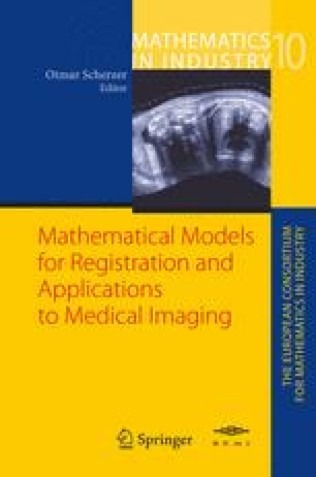
Mathematical Models for Registration and Applications to Medical Imaging
Image registration is an emerging topic in image processing with many applications in medical imaging, picture and movie processing. The classical problem of image registration is concerned with ?nding an appropriate transformation between two data sets. This fuzzy de?nition of registration requires a mathematical modeling and in particular a mathematical speci?cation of the terms appropriate transformations and correlation between data sets. Depending on the type of application, typically Euler, rigid, plastic, elastic deformations are considered. The variety of similarity p measures ranges from a simpleL distance between the pixel values of the data to mutual information or entropy distances. This goal of this book is to highlight by some experts in industry and medicine relevant and emerging image registration applications and to show new emerging mathematical technologies in these areas. Currently, many registration application are solved based on variational prin- ple requiring sophisticated analysis, such as calculus of variations and the theory of partial differential equations, to name but a few. Due to the numerical compl- ity of registration problems ef?cient numerical realization are required. Concepts like multi-level solver for partial differential equations, non-convex optimization, and so on play an important role. Mathematical and numerical issues in the area of registration are discussed by some of the experts in this volume.

Mathematical methods for engineers and scientists 3 : Fourier analysis, partial differential equations and variational methods
Pedagogical insights gained through 30 years of teaching applied mathematics led the author to write this set of student oriented books. Topics such as complex analysis, matrix theory, vector and tensor analysis, Fourier analysis, integral transforms, ordinary and partial differential equations are presented in a discursive style that is readable and easy to follow.
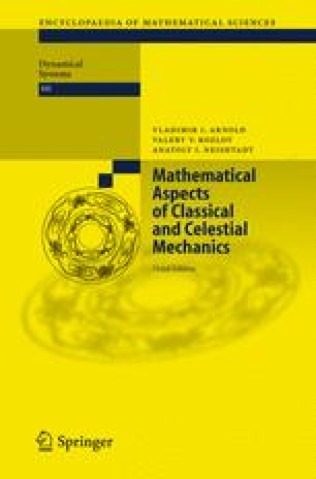
Mathematical Aspects of Classical and Celestial Mechanics
In this book we describe the basic principles, problems, and methods of clssical mechanics. Our main attention is devoted to the mathematical side of the subject. Although the physical background of the models considered here and the applied aspects of the phenomena studied in this book are explored to a considerably lesser extent, we have tried to set forth first and foremost the “working” apparatus of classical mechanics. This apparatus is contained mainly in Chapters 1, 3, 5, 6, and 8. Chapter 1 is devoted to the basic mathematical models of classical - chanics that are usually used for describing the motion of real mechanical systems. Special attention is given to the study of motion with constraints and to the problems of realization of constraints in dynamics. In Chapter 3 we discuss symmetry groups of mechanical systems and the corresponding conservation laws. We also expound various aspects of ord- reduction theory for systems with symmetries, which is often used in appli- tions. Chapter 4 is devoted to variational principles and methods of classical mechanics. They allow one, in particular, to obtain non-trivial results on the existence of periodic trajectories. Special attention is given to the case where the region of possible motion has a non-empty boundary. Applications of the variational methods to the theory of stability of motion are indicated.
Mathematical and Computational Models for Congestion Charging
This book presents rigorous treatments of issues related to congestion pricing. The chapters describe recent advances in areas such as mathematical and computational models for predicting traffic congestion, determining when, where, and how much to levy tolls, and analyzing the impact of tolls on transporation systems. The analyses and methodologies developed in this book provide Mechanisms that aid in determining and comparing congestion pricing schemes; Methodologies for evaluating the efficiency of existing and proposed congestion pricing schemes; A means to predict the impact of pricing on urban transporation systems; and Information essential to the financial and political success of congestion pricing programs.
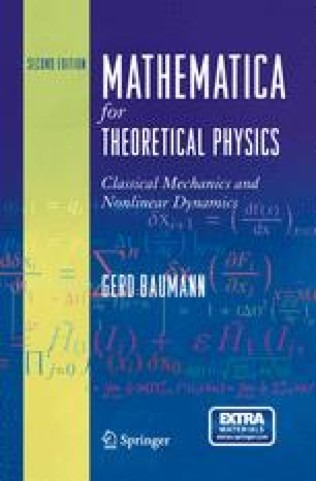
Mathematica for Theoretical Physics : Classical Mechanics and Nonlinear Dynamics
Mathematica for Theoretical Physics: Classical Mechanics and Nonlinear Dynamics This second edition of Baumann's Mathematica® in Theoretical Physics shows readers how to solve physical problems and deal with their underlying theoretical concepts while using Mathematica® to derive numeric and symbolic solutions. Each example and calculation can be evaluated by the reader, and the reader can change the example calculations and adopt the given code to related or similar problems. The second edition has been completely revised and expanded into two volumes: The first volume covers classical mechanics and nonlinear dynamics. Both topics are the basis of a regular mechanics course. The second volume covers electrodynamics, quantum mechanics, relativity, and fractals and fractional calculus. New examples have been added and the representation has been reworked to provide a more interactive problem-solving presentation. This book can be used as a textbook or as a reference work, by students and researchers alike. A brief glossary of terms and functions is contained in the appendices.

Managing Measurement Risk in Building and Civil Engineering
Managing Measurement Risk in Building and Civil Engineering will help all those who use measurement in their work or deal with the output from the measurement process, to understand not only the ‘ins and outs’ of measuring construction work but also the relationship that measurement has with contracts, procurement, claims and post-contract control in construction. The book is for quantity surveyors, engineers and building surveyors but also for site engineers required to record and measure events on site with a view to establishing entitlement to variations, extras and contractual claims.

Magnetic Resonance of Myelination and Myelin Disorders
The book has been extensively revised and expanded to do justice to the rapid advances in MR technology, molecular biochemistry, and genetics and the discovery of new disease entities with prominent white matter involvement. Forty chapters have been added, and the number of illustrations has risen considerably. The ability to confirm the presence of genetic alterations in a number of disorders allows more advantageous presentation of the phenotypic variation as expressed in differ.
Machine Learning in Computer Vision
The goal of this book is to address the use of several important machine learning techniques into computer vision applications. An innovative combination of computer vision and machine learning techniques has the promise of advancing the field of computer vision, which contributes to better understanding of complex real-world applications. The effective usage of machine learning technology in real-world computer vision problems requires understanding the domain of application, abstraction of a learning problem from a given computer vision task, and the selection of appropriate representations for the learnable (input) and learned (internal) entities of the system. In this book, we address all these important aspects from a new perspective: that the key element in the current computer revolution is the use of machine learning to capture the variations in visual appearance, rather than having the designer of the model accomplish this. As a bonus, models learned from large datasets are likely to be more robust and more realistic than the brittle all-design models.

Low-Power High-Level Synthesis for Nanoscale CMOS Circuits
Low-Power High-Level Synthesis for Nanoscale CMOS Circuits addresses the need for analysis, characterization, estimation, and optimization of the various forms of power dissipation in the presence of process variations of nano-CMOS technologies. The authors show very large-scale integration (VLSI) researchers and engineers how to minimize the different types of power consumption of digital circuits.
