



الصفحة 5
الصفحة 5

Critical Graphicacy : Understanding Visual Representation Practices in School Science
we are concerned in this book with better understanding the reading and interpretation practices related to visual materials—here referred to as inscriptions—that accompany texts. Our overarching questions included: ‘What practices are required for reading inscriptions?’ and ‘Do textbooks allow students to develop levels of graphicacy required to critically read scientific texts?’ Some of the more specific questions included: ‘What are the practices of relating inscriptions, captions, and main text?,’ and ‘What practices are required to read inscriptions in school textbooks?’ That is, we are interested not only in understanding what it takes to interpret, read, and understand visual materials (i.e., inscriptions), but also in understanding what it takes to engage inscriptions in a critical way. It is only when citizens can critically engage with language (texts, speech) and inscriptions that they become knowledgeable users of television, newspapers, and magazines, who can choose or leave aside particular expressions as part of the particular politics that they participate in.

Crime detection camera
This paper presents a comprehensive crime detection system that uses a combination of hardware and software to monitor homes and communities in real time. The system consists of a Raspberry Pi 4B, a Raspberry Pi Camera V2, a flame sensor, an MQ-6 gas sensor, and a microphone, which are all connected to a database management system powered by MySQL. The data collected from these devices is analyzed by machine learning algorithms to detect crimes, such as theft or robbery, as well as fires and gas leaks. The system also includes a mobile app, ‘Safe Home’ which provides live video monitoring and real-time notifications to users, and an employee dashboard to monitor all statistics and manage all implemented systems.

Create and deliver a killer product demo : Tips and tricks to wow your customers
Shows interviews are presented with professionals who are giving killer product demos in several types of businesses today. The strategies taught in this book are based on the analysis of product demos that made history and brought millions to their companies (Apple, Intel, Microsoft, Tesla, and more). Every day thousands of companies give demos to sell their products. In pre-sales for enterprise software a bad demo can make your product look too complex to the point where decision makers won't buy it. In software-as-a-service (SaaS) you need to quickly convert signups into active and paying users. At a product launch event you want a perfect demo that is both persuasive and memorable.

Courthouse Architecture, Design and Social Justice
Interrogates relationships between court architecture and social justice, from consultation and design to the impact of material (and immaterial) forms on court users, through the lenses of architecture, law, socio-legal studies, criminology, anthropology, and a former senior federal judge.

Cost Accounting for Shared IT Infrastructures
Distributed client/server architectures are the technological backbone of today’s data centres. A usage-based allocation of infrastructure costs to business processes or users is often not possible as the necessary resource consumption measurements incur too much overhead. Reinhard Brandl proposes a method to derive estimates for the expected resource consumption of customer-oriented services during standard load tests. This facilitates the determination of usage-based cost allocation keys significantly. He implements the concept in a software tool kit and evaluates it successfully in a set of experiments with multi-tier database applications. In particular, he uses the determined consumption estimates as input parameters for Queuing Network Models which lead to highly accurate performance predictions. Finally, he analyzes how the method can be integrated into existing IT processes at the BMW Group.

Coordinated Multiuser Communications
Many communications systems, such as cellular mobile radio and wireless local area networks, are subject to multiple-access interference, caused by a multitude of users sharing a common transmission medium. The performance of receiver systems in such cases can be greatly improved by the application of joint detection and decoding methods. Multiuser detection and decoding not only improve system reliability and capacity, they also simplify the problem of resource allocation. Emphasis is placed on practical implementation aspects and modern iterative processing techniques for systems both with, and without integrated error control coding.

Cooperative Information Agents XI ; Matthias Klusch, Koen V. Hindriks, Mike P. Papazoglou, Leon Sterling
In today’s world of ubiquitously connected heterogeneous information systems and computing devices, the intelligent coordination and provision of relevant added-value information at any time, anywhere is of key importance to a va- ety of applications. This challenge is envisioned to be coped with by means of appropriate intelligent and cooperative information agents. An information agent is a computational software entity that has access to one or multiple heterogeneous and geographically dispersed data and infor- tion sources. It pro-actively searches for and maintains information on behalf of its human users, or other agents preferably just in time. In other words, it is managing and overcoming the di?culties associated with information overload in open, pervasive information and service landscapes. Each component of a modern cooperative information system is represented by an appropriate intelligent information agent capable of resolving system and semantic heterogeneities in a given context on demand. Cooperative infor- tion agents are supposed to accomplish both individual and shared joint goals depending on the actual user preferences in line with given or deduced limits of time, budget and resources available.

Content based social platform optimization “Fashion Platform"
The purpose of this project is to design a platform that concentrates on Fashion in addition to assisting users with gathering an informative feedback, as well as linking local stores to those users. This platform will be delivered as a mobile application that is available to any user who is interested in expressing and sharing his/her prevailing taste in fashion simply by posting photos, interacting with other people’s posts and leaving comments for them. The app will also provide some features in an attempt to push the users to be more enthusiastic and to be more encouraged about trying and continuously using this app. Moreover, this platform will incorporate a Shop section, which will be the actual local stores that are connected to it, so the user can buy an item that he/she is fond of.

Concrete floors and slabs ; Proceedings of the International Seminar held at the University of Dundee, Scotland, UK on 5–6 September 2002
Concrete is a global material that underwrites commercial wellbeing and social development. There is no substitute that can be used on the same engineering scale and its sustainability, expolitation and further development are imperatives to creating and maintaing a healthy economy and environment worldwide. The pressure for change and improvement of performance is relentless and necessary. Concrete must keep evolving to satisfy the increasing demands of all its users.

Conceptual Modeling - ER 2007 ; 26th International Conference on Conceptual Modeling, Auckland, New Zealand, November 5-9, 2007, Proceedings
Conceptual modeling is fundamental to the development of complex systems, because it provides the key communication means between systems developers, end-users and customers.Conceptua lmodeling provides languages,methods and tools to understand and represent the application domain;to elicitate,concepalize and formalize system requirements and user needs;to communicate systems designs to all stakeholders; to formally verify and validate system designs on high levels of abstractions; and to minimize ambiguities in system development. Initially, conceptual modeling mainly addressed data-intensive information s- tems and contributed to data modeling and database application engineering. The area of conceptual modeling has now matured to encompass all kinds of application areas such as e-applications (including e-business and e-learning), web-based systems (including the semantic web and ubiquitous systems), life science and geographic applications.
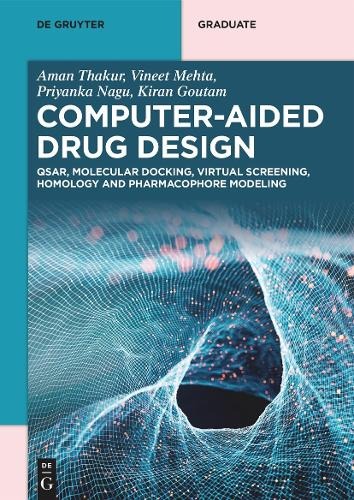
Computer-aided drug design
Computer-Aided Drug Design (CADD) is a comprehensive guide designed for both beginners and experienced users in CADD. Covers the fundamental principles and gradually delves into more advanced concepts and techniques, making it an invaluable resource to anyone interested in CADD. It begins by establishing a solid foundation, explaining the core concepts of CADD, the user interface and essential tools. It covers QSAR, molecular docking, homology modeling, virtual screening, pharmacophore modeling, ensuring that the reader can quickly become proficient in CADD. Provides in-depth insights into 3D modeling, rendering, and parametric design. The style of the book is simple, every topic begins from the very basics and explores advanced levels with clarity. Practical examples, step-by-step tutorials and hands-on exercises, are included for better understanding.

Computer-Aided Design of User Interfaces V ; Proceedings of the 6th International Conference on Computer-Aided Design of User Interfaces CADUI '06 (6-8 June 2006, Bucharest, Romania)
Today, the development life cycle of 3D User Interfaces (UIs) mostly remains an art more than a principled-based approach. Several methods [1,3,7,8,9,10,11,15,17,18,19] have been introduced to decompose this life cycle into steps and sub-steps, but these methods rarely provide the design knowledge that should be typically used for achieving each step. In addition, the development life cycle is more focusing directly on the programming - sues than on the design and analysis phases. This is sometimes reinforced by the fact that available tools for 3D UIs are toolkits, interface builders, r- dering engines, etc. When there is such a development life cycle defined, it is typically structured into the following set of activities: 1. The conceptual phase is characterized by the identification of the content and interaction requests. The meta-author discusses with the interface designer to take advantage of the current interaction technology. The int- face designer receives information about the content. The result of this phase is the production of UI schemes (e. g. , written sentences, visual schemes on paper) for defining classes of interactive experiences (e. g. , class Guided tour). Conceptual schemes are produced both for the final users and the authors. The meta-author has a deep knowledge of the c- tent domain and didactic skills too. He/she communicates with the final user too, in order to focus on didactic aspects of interaction. 2.

Computer safety, reliability, and security ; Vol. 4166 ; 25th International Conference, SAFECOMP 2006, Gdansk, Poland, September 27-29, 2006, Proceedings
The conference focuses on the state of the art, expe- ence and new trends in the areas of safety, security and reliability of critical IT systems and applications and serves as a platform for knowledge and technology transfer for researchers, industry (suppliers, operators, users), regulators and certi?ers of such systems. SAFECOMP provides ample opportunity to exchange insights and experiences on emerging methods, approaches and practical so- tions to safety, security and reliability problems across the borders of di?erent application domains and technologies.

Computer Insecurity : Risking the System
Security is one of the most significant issues facing the owners and users of computer systems in the Internet age, and recent years have convincingly illustrated that the problem is increasing in both scale and cost. Computer Insecurity: Risking the System approaches its topic from the perspective of vulnerability – how can your system be attacked? Covering technical issues and human factors, the comprehensively researched text makes reference to numerous real-life security incidents, which help to provide persuasive practical evidence of the problems and the impacts that result. Key issues covered include: • the problem of computer insecurity • the need to raise security awareness • common failings that compromise protection • the attack and exploitation of systems • considerations in responding to the threats

Computer and Information Science
The purpose of the 7th IEEE/ACIS International Conference on Computer and Information Science (ICIS 2008) and the 2nd IEEE/ACIS International Workshop on e-Activity (IWEA 2008) is to bring together scientists, engineers, computer users, and students to share their experiences and exchange new ideas and research results about all aspects (theory, applications and tools) of computer and information science; and to discuss the practical challenges encountered along the way and the solutions adopted to solve them.

Computer algebra in scientific computing ; Vol. 3718 ; 8th International workshop, CASC 2005, Kalamata, Greece, September 12-16, 2005, Proceedings
This volume contains the proceedings of the CASC 2005 continued a tradition — started in 1998 — of international con-ferences on the latest advances in the application of computer algebra systems(CASs) and methods to the solution of various problems in scientific computing.The methods of scientific computing play an important role in research andengineering applications in the natural and the engineering sciences. The signif-icance and impact of computer algebra methods and computer algebra systemsfor scientific computing has increased considerably in recent times. Nowadays,such general-purpose computer algebra systems as Maple, Magma, Mathematica,MuPAD, Singular, CoCoA and others enable their users to solve the followingthree important tasks within a uniform framework:(a) symbolic manipulation;(b) numerical computation;(c) visualization. The result of this job is reflected in this volume, which contains revised versionsof the accepted papers. The collection of papers included in the proceedingscovers various topics of computer algebra methods, algorithms, and softwareapplied to scientific computing:

Computer Aided Engineering Design
This book goes into mathematical foundations and the core subjects of CAED without allowing itself to be overshadowed by computer graphics. It is written in a logical and thorough manner for use mainly by senior and graduate level students as well as users and developers of CAD software. The book covers (a) The fundamental concepts of geometric modeling so that a real understanding of designing synthetic surfaces and solid modeling can be achieved. (b) A wide spectrum of CAED topics such as CAD of linkages and machine elements, finite element analysis, optimization. (c) Application of these methods to real world problems.

Computer aided architectural design futures 2005 ; Proceedings of the 11th International CAAD futures Conference held at the Vienna University of Technology, Vienna, Austria, on June 20-22, 2005
MARTENS Bob and BROWN Andre Co-conference Chairs, CAAD Futures 2005 Computer Aided Architectural Design is a particularly dynamic field that is developing through the actions of architects, software developers, researchers, technologists, users, and society alike. CAAD tools in the architectural office are no longer prominent outsiders, but have become ubiquitous tools for all professionals in the design disciplines. At the same time, techniques and tools from other fields and uses, are entering the field of architectural design. This is exemplified by the tendency to speak of Information and Communication Technology as a field in which CAAD is embedded. Exciting new combinations are possible for those, who are firmly grounded in an understanding of architectural design and who have a clear vision of the potential use of ICT. CAAD Futures 2005 called for innovative and original papers in the field of Computer Aided Architectural Design, that present rigorous, high-quality research and development work. Papers should point towards the future, but be based on a thorough understanding of the past and present.

Computational Science -- ICCS 2005 ; Vol. 3516 ; 5th International Conference, Atlanta, GA, USA, May 22-25, 2005, Proceedings, Part III
This book constitutes the refereed proceedings of the Fifth International Conference on Computational Science (ICCS 2005) held in Atlanta, Georgia, USA, 2005, Computational science is rapidly maturing as a mainstream discipline. It is central to an ever-expanding variety of ?elds in which computational methods and tools enable new discoveries with greater accuracy and speed. The primary objectives of this conference were to discuss problems and solutions in allareas,toidentifynewissues,toshapefuturedirectionsofresearch,andtohelp users apply various advanced computational techniques. The event highlighted recent developments in algorithms, computational kernels, next generation c- puting systems, tools, advanced numerical methods, data-driven systems, and emerging application ?elds, such as complex systems, ?nance, bioinformatics, computational aspects of wireless and mobile networks, graphics, and hybrid computation.

Computational Science -- ICCS 2005 ; Vol. 3515 ; 5th International Conference, Atlanta, GA, USA, May 22-25, 2005, Proceedings, Part I
This book constitutes the refereed proceedings of the Fifth International Conference on Computational Science (ICCS 2005) held in Atlanta, Georgia, USA, 2005, Computational science is rapidly maturing as a mainstream discipline. It is central to an ever-expanding variety of ?elds in which computational methods and tools enable new discoveries with greater accuracy and speed. The primary objectives of this conference were to discuss problems and solutions in allareas,toidentifynewissues,toshapefuturedirectionsofresearch,andtohelp users apply various advanced computational techniques. The event highlighted recent developments in algorithms, computational kernels, next generation c- puting systems, tools, advanced numerical methods, data-driven systems, and emerging application ?elds, such as complex systems, ?nance, bioinformatics, computational aspects of wireless and mobile networks, graphics, and hybrid computation.
