



الصفحة 5
الصفحة 5

Computational intelligence in information assurance and security
The global economic infrastructure is becoming increasingly dependent upon information technology, with computer and communication technology being essential and vital components of Government facilities, power plant systems, medical infrastructures, financial centers and military installations to name a few. Finding effective ways to protect information systems, networks and sensitive data within the critical information infrastructure is challenging even with the most advanced technology and trained professionals. This volume provides the academic and industrial community with a medium for presenting original research and applications related to information assurance and security using computational intelligence techniques. The included chapters communicate current research on information assurance and security regarding both the theoretical and methodological aspects, as well as various applications in solving real world information security problems using computational intelligence.

Clinical Trials in Osteoporosis
A practical handbook on clinical trials in the growing field of osteoporosis. Topics covered include study design, technical issues, data collection, quality assurance, data analysis and presentation. It takes the user through the process step-by-step from start to finish, also providing a background on regulatory guidelines, ethical implications, endpoints, current therapies and the ideal drug to use.

Mathematical Modeling of Concrete Mixture Proportioning
It puts together an understanding of the appropriate principles of ensuring performance and sustainability of concrete. Broadly subdivided into three parts, first part contains the fundamental aspects introducing the constituent materials, the concepts of concrete mixture designs and the mathematical formulations of the various parameters involved in these designs. The second part is dedicated to discussing approaches and recommendations of American, British and European bodies related to mathematical modelling. Lastly, it discusses perceptions and prescriptions towards both the performance assessment and insurance of the resulting concrete compositions.
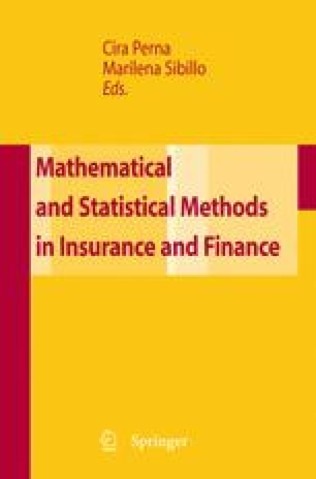
Mathematical and Statistical Methods in Insurance and Finance
The interaction between mathematicians and statisticians reveals to be an effective approach to the analysis of insurance and financial problems, in particular in an operative perspective. The Maf2006 conference, held at the University of Salerno in 2006, had precisely this purpose and the collection here published gathers some of the papers presented at the conference and successively worked out to this aim. They cover a wide variety of subjects in insurance and financial fields, all treated in light of the successful cooperation between the two quantitative methods.

Materials Handbook : A Concise Desktop Reference
The unique and practical Materials Handbook (second edition) provides quick and easy access to data on the physical and chemical properties of all classes of materials. The second edition has been much expanded to include whole new families of materials while many of the existing families are broadened and refined with new material and up-to-date information. Particular emphasis is placed on the properties of common industrial materials in each class.
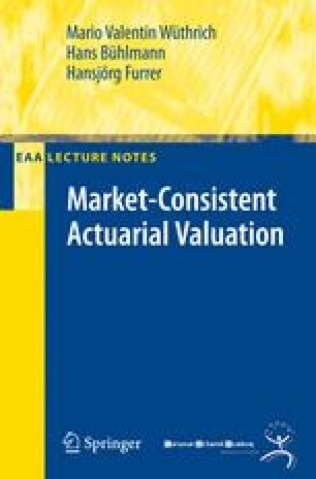
Market-Consistent Actuarial Valuation
It is a challenging task to read the balance sheet of an insurance company. This derives from the fact that different positions are often measured by different yardsticks. Assets, for example, are mostly valued at market prices whereas liabilities are often measured by established actuarial methods. Market-Consistent Actuarial Valuation presents powerful methods to measure liabilities and assets in the same way. The mathematical framework that leads to market-consistent values for insurance liabilities is explained in detail by the authors. Topics covered are Stochastic discounting, Valuation portfolio in life and non-life insurance, Asset and liability management, Financial risks, Insurance technical risks, and Solvency.
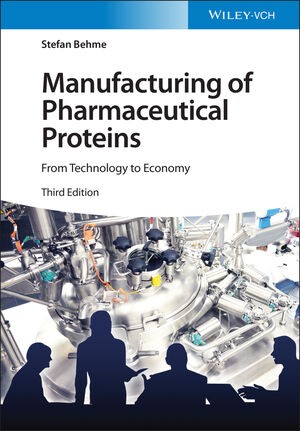
Manufacturing of Pharmaceutical Proteins: From Technology to Economy
Manufacturing of Pharmaceutical Proteins: From Technology to Economy, renowned chemical engineer Dr. Stefan Behme delivers a comprehensive text covering all aspects of biopharmaceutical manufacturing, including legal and regulatory considerations, production facility design, quality assurance, supply chain management, emerging market regulations, and cost control.
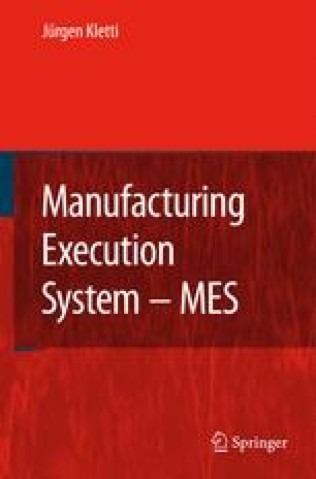
Manufacturing Execution Systems - MES
The production plants of today develop into modern service centers. Economic efficiency of modern added value is not a property of products alone but of the process. Decisive potential in business now is a question of process capability, rather than production capability. Process capability in business requires real-time systems for optimization. Business-IT needs to be developed from telecommunications and ERP to real time services, which are not offered by the prevailing ERP systems. Today, only modern Manufacturing Execution Systems (MES) offer real-time applications. They generate current as well as historic mappings of production facilities and thus they can be used as basis for optimizations. It is important to map the supply chain in real time. Increasing complexity in production requires an integrated view of the production and service facilities: detailed scheduling, status collection, quality, performance analysis, tracing of material and so on have to be recorded and displayed in an integrated way.

Managing Weather and Climate Risks in Agriculture
In many parts of the world, weather and climate are one of the biggest production risks and uncertainty factors impacting on agricultural systems performance and management. Both structural and non-structural measures can be used to reduce the impacts of the variability (including extremes) of climate resources on crop production. While the structural measures include strategies such as irrigation, water harvesting, windbreaks etc., the non-structural measures include use of seasonal to interannual climate forecasts, improved application of medium-range weather forecasts and crop insurance. This book based on an International Workshop held in New Delhi, India should be of interest to all organizations and agencies interested in improved risk management in agriculture.
Malware Detection
Malware Detection, based on the Special ARO/DHS Workshop on Malware Detection at Rosslyn, VA, in 2005, captures the state of the art research in the area of malicious code detection, prevention and mitigation.

Machines, Computations, and Universality ; 5th International Conference, MCU 2007, Orleans, France, September 10-13, 2007, Proceedings
The 18 revised full papers presented together with nine invited papers cover Turing machines, register machines, word processing, cellular automata, tiling of the plane, neural networks, molecular computations, BSS machines, infinite cellular automata, real machines, and quantum computing.

Maaloula Tourist Resort
Maaloula resort is a resort An integrated tourist in the town Maaloula The project consists of: 5-star hotel simulates Malual nature Chalets and terraces And restaurants overlooking the mountain Entertainment and event areas. Providing such Enterprise helps on the boom the tourist side for the country. Revitalize area tourism. lighting on traces area and its nature.

Loss and Damage from Climate Change : Concepts, Methods and Policy Options
Provides an authoritative insight on the Loss and Damage discourse by highlighting state-of-the-art research and policy linked to this discourse and articulating its multiple concepts, principles and methods. Written by leading researchers and practitioners, it identifies practical and evidence-based policy options to inform the discourse and climate negotiations. With climate-related risks on the rise and impacts being felt around the globe has come the recognition that climate mitigation and adaptation may not be enough to manage the effects from anthropogenic climate change.
Lead-free Soldering
The push toward lead-free soldering in computers, cell phones and other electronic and electrical devices has taken on a greater urgency as laws have been passed or are pending in the United States, the European Union and Asia which ban lead-bearing solder. These new restrictions on hazardous substances are changing the way electronic devices are assembled, and specifically affect process engineering, manufacturing and quality assurance. Lead-Free Soldering offers in a single volume a broad collection of practical techniques for lead-free soldering design and manufacture, which up to now have been scattered in difficult-to-find scholarly sources. The book includes the latest information on proposed changes to lead-free standards, and up-to-date analysis of government and legislative activities and regulations in North America, Europe and Asia.
Le raisonnement bayésien : Modélisation et inférence = Bayesian reasoning : Modeling and inference
Describes in detail the practice of the Bayesian statistical approach using many examples chosen for their educational interest. The first part gives the general principles of statistical modeling making it possible to supervise but also to come to the aid of the imagination of the apprentice modeler. By examining examples of increasing difficulty, the reader forges the keys to building their own model. The second part presents the most useful calculation algorithms for estimating the unknowns of the model. Each inference method is presented and illustrated by numerous application cases.
Lapproccio e la gestione per processi in pneumologia = The process-based approach and management in pulmonology
The topics covered are highly relevant to the application of the methods and tools outlined in quality improvement programs. This is in an effort to enhance the specific skills of the pulmonologist, thus making him an effective and independent liaison with the relevant strategic management. With great sensitivity, the SIMeR (Italian Society of Respiratory Medicine) has chosen to sponsor this edition, the only one to date in the field of Pulmonology, whose contents are based on the proposals and work of the leaders of one of its most recently established Study Groups, the "Continuous Quality Improvement in Pulmonology" Study Group.

Landslide risk assessment
Over the past decade there has been a gradual shift away from simply relying on engineering solutions to individual landslide problems, to the use of a variety of strategies to manage the problems over a broad area. Such alternative strategies include the use of building codes, land use planning controls, preventing water leakage, early warning systems and insurance schemes. This book addresses these developments and provides a multidisciplinary perspective on landslide management.

Laboratory Guide to the Methods in Biochemical Genetics
This manual deals specifically with laboratory approaches to diagnosing inborn errors of metabolism. The key feature is that each chapter is sufficiently detailed so that any individual can adopt the described method into their own respective laboratory.

Laboratory control system operations in a GMP environment
In Laboratory Control System Operations in a GMP Environment, readers are given the guidance they need to implement a CGMP compliant Laboratory Control System (LCS) that fits within Global Regulatory guidelines. Using the Quality Systems Approach, regulatory agencies like the FDA and the European Medicine Agency have developed a scheme of systems for auditing pharmaceutical manufacturing facilities which includes evaluating the LCS.

IT Security Controls : A Guide to Corporate Standards and Frameworks
Gives an overview of the major standards and frameworks, and a proposed architecture to meet them. The book identifies and describes the necessary controls and processes that must be implemented in order to secure your organization's infrastructure. The book proposes a comprehensive approach to the implementation of IT security controls with an easily understandable graphic implementation proposal to comply with the most relevant market standards (ISO 27001, NIST, PCI-DSS, and COBIT) and a significant number of regulatory frameworks from central banks across the World (European Union, Switzerland, UK, Singapore, Hong Kong, India, Qatar, Kuwait, Saudi Arabia, Oman, etc.). You will learn: Understand corporate IT security controls, including governance, policies, procedures, and security awareness Know cybersecurity and risk assessment techniques such as penetration testing, red teaming, compliance scans, firewall assurance, and vulnerability scans Understand technical IT security controls for unmanaged and managed devices, and perimeter controls Implement security testing tools such as steganography, vulnerability scanners, session hijacking, intrusion detection, and more
