


تحسين النتائح
ترتيب حسب
من
الى

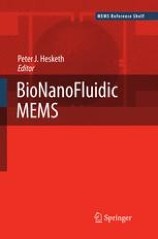
BioNanoFluidic MEMS explains nanofabrication and nanomaterials synthesis suitable for the development of biosensors. The fundamentals initiate an awareness for engineers and scientists who would like to develop and implement novel biosensors for various applications. In addition, the material covered includes: BioNanoFluidic MEMS connection between the interdisciplinary nature of BioNanoFluidics and MEMS BioNanoFluidics and sensor technology including Micro-Mechanical Sensors and Chemical Sensor Technologies ands-on steps for implementation of biosensor fabrication including a discussion of the clean room lithography process and etching, microsensor systems lamination, PDMS moulding, parylene deposition, and others Interconnection between the interdisciplinary nature of BioNanoFluidics and MEMS BioNanoFluidics and sensor technology including Micro-Mechanical Sensors and Chemical Sensor Technologies
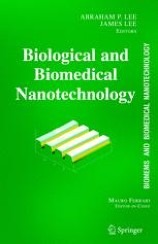
Abe Lee has been working on micro/ and nanotechnology for biomedical and biotech applications since 1992. His recent research focuses on the development of integrated micro and nano fluidic chip processors for the following applications: point-of-care diagnostics, "smart" nanomedicine for early detection and treatment, stem cell biology and therapeutics, the synthesis of novel and pure materials, and biosensors to detect environmental and terrorism threats. Jim Lee's research interest includes BioMEMS/NEMS, and polymer micro/nanotechnology. In the last 4 years, he has over 20 refereed journal publications, 2 book chapters, and 5 patents in these areas. He is now leading an NSF Nanoscale Science and Engineering Center for Affordable Nanoengineering of Polymer Biomedical Devices at OSU.
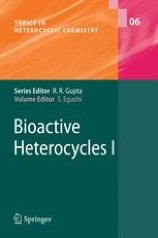
Bioactive Heterocycles I is a continuation of critical accounts about heterocyclic compounds within the series Topics in Heterocyclic Chemistry. The present volume provides comprehensive reviews of the chemistry and bioactivity of selected groups of heterocycles and natural products. … Overall, this book covers in detail several classes of bioactive heterocyclic compounds including selected natural products. The focus is on the most recent advances, and the clarity of the presentation is very good. It should be of interest to individuals interested in the discovery and synthesis of bioactive small molecules, including research scientists in academia and industry.
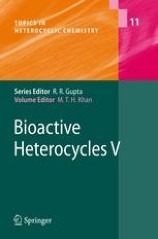
This volume contains 10 chapters. The contributions are from researchers famous in their respective fields and the chapters contain high quality reviews on topics related to the chemo-biological studies of several different heterocyclic groups. The first chapter from Saracoglu reviews the functionalization of indoles and the pyrroles via Michael additions, as these compounds have potential for their biological activities. In second chapter Men ́endez reviews the chemistry of the welwitindolinones. Topcu and Demirkiran, in the third chapter, describe the chemistry and biological studies of lignans from Taxus species, including their biosynthesis and recent strategies for the synthesis of lignans.
This volume contains nine more contributions from expert researchers of the?eld, providing readers with in depth and current research results regarding therespective topics. In the?rst chapter, Flemming et al. review the chemistry, biosynthesis, metabolism and biological activities of tetrahydrocannabinol and its deri- tives. Hansch and Verma contribute to the quantitative structure-activity re- tionship (QSAR) analysis of heterocyclic topoisomerase I and II inhibitors. These inhibitors, knowntoinhibit either enzyme, actasantitumoragentsand are currently used in chemotherapy and in clinicaltrials. In the third chapter, Khan reviews some aspects of molecular modeling studies on biologically active alkaloids.
Bioactive Heterocycles III provides readers with a comprehensive overview of the most recent breakthroughs in the ?eld of heterocycles. This volume contains 8 chapters written by experts in their respective ?elds from all over the world. The chapters summarize years of extensive research in each area, and providein sight in the new themesofnaturalproduct research.Manyofthe contributors illustrate their laboratory experiences. It's obvious that readers will gain exciting and essential information fromthe volume. In the ?rst chapter, Kayser et al. describe the chemistry, biosynthesis and biological activities of artemisinin, one of the most promising antimalarial molecules, and its related natural peroxides.
As part of the series Topics in Heterocyclic Chemistry, this volume titled Bio- tive Heterocycles II presents comprehensive and up-to-date reviews on selected topics regarding synthetic as well as naturally occurring bioactive heterocycles. The frst chapter, "High Pressure Synthesis of Heterocycles Related to Bio- tive Molecules" by Kiyoshi Matsumoto, presents a unique high-pressure s- thetic methodology in heterocyclic chemistry. Basic principles and fruitful examples for pericyclic reactions, such as Diels-Alder reactions, 1,3-dipolar reactions, and also for ionic reactions, such as S and addition reactions, are N discussed.

Devoted to heterocyclizations of aliphatic and aromatic, -unsaturated carbonyls with various binucleophiles leading to three-, five-, six and seven-membered partially hydrogenated nitrogen-containing heterocycles. During the last decade interest in these classes of organic c- pounds has been experiencing a scientific renaissance owing to their significant role in biological processes in living cells and diverse effects on physiological activities. In addition, such compounds are also more prevalent from the vi- point of ''classical'' problems of organic chemistry, among them reactivity, chemo- and regioselectivity, tautomerism, conformational analysis and features of their electronic structure. The character of these problems in the case of partially hydrogenated heterocycles differs sufficiently from that for hetero- omatized and perhydrogenated heterocyclic compounds and investigations in this field very often lead to interesting and unusual results. Extensively characterized cyclocondensations of, -unsaturated carbonyls, their synthetic equivalents and their precursors are the most widespread, facile and generally valid pathway to dihydroazaheterocycles.
Applied Quantitative Finance (2nd edition) provides a comprehensive and state-of-the-art treatment of cutting-edge topics and methods. It provides solutions to and presents theoretical developments in many practical problems such as risk management, pricing of credit derivatives, quantification of volatility and copula modelling. The synthesis of theory and practice supported by computational tools is reflected in the selection of topics as well as in a finely tuned balance of scientific contributions on practical implementation and theoretical concepts. This linkage between theory and practice offers theoreticians insights into considerations of applicability and, vice versa, provides practitioners comfortable access to new techniques in quantitative finance.
This book provides detailed insights into recent works dealing with a large spectrum of issues in system-on-chip design, namely: assertion-based design, mapping on network-on-chip architectures, use of C/C++/SystemC design methodologies, hardware/software integration, mixing heterogeneous models of computation, analog/mixed-signal/mixed-technology system design and verification, UML/XML-based synthesis of analog and mixed-signal systems, UML to VHDL mapping, UML-based performance modeling, model transformation and formal verification, real-time system models, and Model Driven Architecture.
"This book … covers many different aspects of the origin, chemistry, and biosynthesis of one of the oldest but most important classes of anticancer agents. … In summary, the book is nicely produced, very well edited, and should serve as a valuable source of information … . This book will serve as an inspiration for scientists and students in the areas of chemistry, drug discovery, and biological evaluation. It should be an essential addition to institutional library collections … ."
Analysis, Synthesis, and Perception of Musical Sounds contains a detailed treatment of basic methods for analysis and synthesis of musical sounds, including the phase vocoder method, the McAulay-Quatieri frequency-tracking method, the constant-Q transform, and methods for pitch tracking with several examples shown. Various aspects of musical sound spectra such as spectral envelope, spectral centroid, spectral flux, and spectral irregularity are defined and discussed. One chapter is devoted to the control and synthesis of spectral envelopes. Two advanced methods of analysis/synthesis are given: "Sines Plus Transients Plus Noise" and "Spectrotemporal Reassignment" are covered. Methods for timbre morphing are given. The last two chapters discuss the perception of musical sounds based on discrimination and multidimensional scaling timbre models.
Starting with simple examples showing the relevance of cutting and pasting logics, the monograph develops a mathematical theory of combining and decomposing logics, ranging from propositional and first-order based logics to higher-order based logics as well as to non-truth functional logics. The theory covers mechanisms for combining semantic structures and deductive systems either of the same or different nature (for instance, two Hilbert calculi or a Hilbert calculus and a tableau calculus). The important issue of preservation of properties is extensively addressed. For instance, sufficient conditions are provided for a combined logic to be sound and complete when the original component logics are known to be sound and complete.
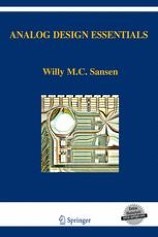
The book starts with elementary stages in building up operational amplifiers. The synthesis of opamps is covered in great detail, such that lowest power consumption is always guaranteed. Many examples are included, operating at low supply voltages. Chapters on noise, distortion, filters, ADC/DACs and oscillators follow. These are all based on the extensive amount of teaching that the author has carried out both at universities and companies world-wide. All chapters have been drawn up specifically for self-study. They aim, however, at different levels of understanding. All start with elementary material. Most chapters also contain advanced material, especially from Chapter 9 onwards.
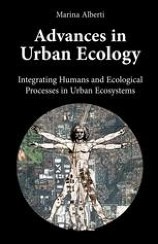
The future of Earth’s ecosystems is increasingly influenced by the pace and patterns of urbanization. One of the greatest challenges for natural and social scientists is to understand how urbanizing regions evolve through the complex interactions between humans and ecological processes. Questions and methods of inquiry specific to our traditional disciplinary domains yield partial views that reflect different epistemologies and understandings of the world. In order to achieve the level of synthesis required to see the urban ecosystem as a whole we must change the way we pose questions and search for answers. Cities are the result of human and ecological processes occurring simultaneously in time and in space and the legacy of the simultaneous processes of the past. Urban ecology is the study of the co-evolution of human-ecological systems. Scholars of both urban systems and ecology must challenge the assumptions and world views within their disciplines and work towards a hybrid theory that builds on multiple world views.

"Advanced Topics in Control Systems Theory" contains selected contributions written by lecturers at the third (annual) Formation d’Automatique de Paris (FAP) (Graduate Control School in Paris). Following on from the lecture notes from the second FAP (Volume 311 in the same series) it is addressed to graduate students and researchers in control theory with topics touching on a variety of areas of interest to the control community such as nonlinear optimal control, observer design, stability analysis and structural properties of linear systems. The reader is provided with a well-integrated synthesis of the latest thinking in these subjects without the need for an exhaustive literature review. The internationally known contributors to this volume represent many of the most reputable control centers in Europe.

Advanced Topics in Control Systems Theory contains selected contributions written by lecturers at the second (annual) Formation dAutomatique de Paris (FAP) (Graduate Control School in Paris). It is addressed to graduate students and researchers in control theory with topics touching on a variety of areas of interest to the control community such as cascaded systems, flatness, optimal control, and Hamiltonian and infinite-dimensional systems. The reader is provided with a well-integrated synthesis of the latest thinking in these subjects without the need for an exhaustive literature review.
The different techniques described throughout the book are particularly attractive for industrial applications not only in aeronautical or space domains but also in the context of biological systems domain. Such methods are well suited for the development of tools that help engineers to solve analysis and synthesis problems in the context of control systems with input and output constraints
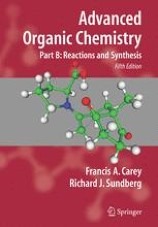
Since its original appearance in 1977, Advanced Organic Chemistry has maintained its place as the premier textbook in the field, offering broad coverage of the structure, reactivity and synthesis of organic compounds. As in the earlier editions, the text contains extensive references to both the primary and review literature and provides examples of data and reactions that illustrate and document the generalizations. While the text assumes completion of an introductory course in organic chemistry, it reviews the fundamental concepts for each topic that is discussed.
Advanced Organic Chemistry Part A provides a close look at the structural concepts and mechanistic patterns that are fundamental to organic chemistry. It relates those mechanistic patterns, including relative reactivity and stereochemistry, to underlying structural factors. Understanding these concepts and relationships will allow students to recognize the cohesive patterns of reactivity in organic chemistry. Part A: Structure and Mechanism and Part B: Reaction and Synthesis - taken together - are intended to provide the advanced undergraduate or beginning graduate student in chemistry with a foundation to comprehend and use the research literature in organic chemistry

سوريا - اتستراد درعا - غباغب
+963-15 2050 - 15 860 380 /1/2/3 - 11 662 3900