



الصفحة 5
الصفحة 5

Modern Actuarial Risk Theory : Using R
"The book gives a comprehensive survey of non-life insurance mathematics. … Originally written for use with the actuarial science programs at the Universities of Amsterdam and Leuven, it is now in use at many other universities as well as for the non-academic actuarial education program organized by the Dutch Actuarial Society. The methods presented can not only be used in non-life insurance, but also in other branches of actuarial science, as well as in actuarial practice. (Pavel Stoynov, Zentralblatt MATH, Vol. 1148, 2008). This book gives an introduction to non-life insurance mathematics. … Throughout the book, the software R is used for the implementation of the techniques presented. One finds also many exercises with hints for their solution in an appendix.
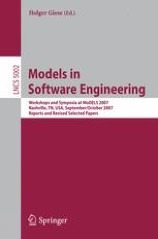
Models in Software Engineering ; Workshops and Symposia at MoDELS 2007, Nashville, TN, USA, September 30 - October 5, 2007, Reports and Revised Selected Papers
This book constitutes the thoroughly refereed post-workshop proceedings of 10 internationl workshops and 2 symposia held as satellite events of the 10th International Conference on Model Driven Engineering Languages and Systems, MoDELS 2007, in Nashville, TN, USA, in September/October 2007 (see LNCS 4735).The 29 revised full papers were carefully selected for inclusion in the book and are presented along with a doctoral and an educators' symposium section. The papers are organized in topical sections representing the various workshops: aspect-oriented modeling (AOM 2007), language engineering (ATEM2007), model driven development of advanced user interfaces (MDDAUI 2007), model size metrics (MSM 2007).

Models for Polymeric and Anisotropic Liquids
Models should be as simple as possible, but no simpler. For the physics of polymeric liquids, whose relevant lengths and time scales are out of reach for first principles calculations, this means that we have to choose a minimum set of sufficiently detailed descriptors such as architecture (linear, ring, branched), connectivity, semiflexibility, stretchability, excluded volume, and hydrodynamic interaction. These 'universal' fluids allow the prediction of material properties under external flow- or electrodynamic fields, the results being expressed in terms of reference units, specific for any particular chosen material. This book provides an introduction to the kinetic theory and computer simulation methods needed to handle these models and to interpret the results. Also included are a number of sample applications and computer codes.

Models for computer aided tolerancing in design and manufacturing ; Selected conference papers from the 9th CIRP International Seminar on Computer-aided tolerancing, held at Arizona State University, Tempe, Arizona, USA, 10-12 April, 2005
Computer Aided Tolerancing (CAT) is an important topic in any field of design and production where parts move relative to one another and/or are assembled together. Geometric variations from specified dimensions and form always occur when parts are manufactured. Improvements in production systems can cause the amounts of the variations to become smaller, but their presence does not disappear. To shorten the time from concept to market of a product, it has been increasingly important to take clearances and the tolerancing of manufacturing variations into consideration right from the beginning, at the stage of design. Hence, geometric models are defined that represent both the complete array of geometric variations possible during manufacture and also the influence of geometry on the function of individual parts and on assemblies of them.

Modelling, Monitoring and Diagnostic Techniques for Fluid Power Systems
Modelling, Monitoring and Diagnostic Techniques for Fluid Power Systems covers the background theory of fluid power and indicates the range of concepts necessary for a modern approach to condition monitoring and fault diagnosis in a readable and understandable fashion. The theory is constantly leavened by 15 years' worth of practical measurements by the author, working in association with major fluid power companies, and real industrial case studies – hot-strip-mill monitoring in conjunction with Corus p.l.c. being just one example. Comprising four parts, it provides: • an introduction to component behaviour. • a guide to the modelling methods employed for circuit analysis. • methods for doing condition monitoring. • common faults and breakdowns.

Modelling Land-Use Change : Progress and Applications
land-use change simulation modelling is a relatively new and dynamic field of study and this book provides a full overview of the topic, a wide range of applications (both geographically and thematically), a mix of theory and practice, a synthesis of recent research progress, and educational material for students and teachers.

Modelling in Mechanical Engineering and Mechatronics : Towards Autonomous Intelligent Software Models
Modelling in Mechanical Engineering and Mechatronics presents a model-centred approach focusing on distributed development and use of autonomous intelligent software models, particularly the efficiency of the models, and their interaction and integration into distributed autonomous intelligent systems. In order to systematise the available knowledge, a domain ontology is presented; a subset of which is used to create a modelling theory based on knowledge and experience in the areas of software engineering, mechanical engineering and mechatronics. This holistic view of modelling explains the purpose and the essence of modelling, as well as the benefits that are to be expected. It discusses the relations to other branches of engineering and science and as a result, it demonstrates strategies, methods and tools for unleashing the full power of modelling.
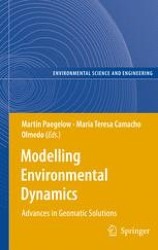
Modelling Environmental Dynamics : Advances in Geomatic Solutions
Modelling environmental dynamics is critical to understanding and predicting the evolution of the environment in response to the large number of influences including urbanisation, climate change and deforestation. Simulation and modelling provide support for decision making in environmental management.

Modelling and simulation of discrete-event systems
Allows engineers to study and analyze complex systems. Discrete-event system (DES)-M&S is used in modern management, industrial engineering, computer science, and the military. As computer speeds and memory capacity increase, so DES-M&S tools become more powerful and more widely used in solving real-life problems.

Modelling and Simulation : Exploring Dynamic System Behaviour
Modelling and Simulation: Exploring Dynamic System Behaviour provides the reader with a balanced and integrated presentation of the modelling and simulation activity for both Discrete Event Dynamic Systems (DEDS) and Continuous Time Dynamic Systems (CTDS). This book presents the fundamentals necessary to understand the many important facets of the modeling and simulation methodology.
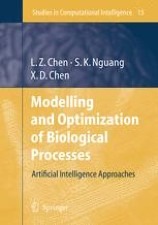
Modelling and Optimization of Biotechnological Processes : Artificial Intelligence Approaches
The book begins with a historical introduction to the field of bioprocess control based on artificial intelligence approaches, followed by two chapters covering the optimization of fed-batch culture using genetic algorithms. Online biomass soft-sensors are constructed in Chapter 4 using recurrent neural networks. The bioprocess is then modelled in Chapter 5 by cascading two soft-sensor neural networks. Optimization and validation of the final product are detailed in Chapters 6 and 7. The general conclusions are drawn in Chapter 8.

Modélisation et statistique spatiales = Spatial modeling and statistics
Spatial statistics are undergoing significant development due to their use in many fields: earth sciences, environment and climatology, epidemiology, econometrics, image analysis, etc. This book presents the main spatial models used as well as their statistics for the three types of data: geostatistics (observation on a continuous domain), data on a discrete network, point data. The objective is to present in a concise but mathematically complete way the most classical models (second order and variogram; software model and Gibbs-Markov field; point processes) as well as their simulation by MCMC algorithm. Then comes the presentation of statistical tools useful for their study.

Modeling, Simulation and Optimization of Complex Processes HPSC 2018 ; Proceedings of the 7th International Conference on High Performance Scientific Computing, Hanoi, Vietnam, March 19-23, 2018
The contributions cover a broad, interdisciplinary spectrum of scientific computing and showcase recent advances in theory, methods, and practical applications. Subjects covered include numerical simulation, methods for optimization and control, machine learning, parallel computing and software development, as well as the applications of scientific computing in mechanical engineering, airspace engineering, environmental physics, decision making, hydrogeology, material science and electric circuits.

Modeling, Simulation and Optimization of Complex Processes ; Proceedings of the Third International Conference on High Performance Scientific Computing, March 6–10, 2006, Hanoi, Vietnam
This proceedings volume contains a selection of papers presented at the Third International Conference on High Performance Scientific Computing held at the Hanoi Institute of Mathematics, Vietnamese Academy of Science and Technology (VAST), March 6-10, 2006. The conference has been organized by the Hanoi Institute of Mathematics, Interdisciplinary Center for Scientific Computing (IWR), Heidelberg, and its International PhD Program ``Complex Processes: Modeling, Simulation and Optimization'', and Ho Chi Minh City University of Technology. The contributions cover the broad interdisciplinary spectrum of scientific computing and present recent advances in theory, development of methods, and applications in practice. Subjects covered are mathematical modelling, numerical simulation, methods for optimization and control, parallel computing, software development, applications of scientific computing in physics, chemistry, biology and mechanics, environmental and hydrology problems, transport, logistics and site location, communication networks, production scheduling, industrial and commercial problems.

Modeling, Simulation and Optimization of Complex Processes ; Proceedings of the International Conference on High Performance Scientific Computing, March 10-14, 2003, Hanoi, Vietnam
This proceedings volume contains a selection of papers presented at the symposium "International Conference on High Performance Scientific Computing'' held at the Hanoi Institute of Mathematics of the Vietnam National Center for Natural Science and Technology (NCST). The contributions cover the broad interdisciplinary spectrum of scientific computing and present recent advances in theory, development of methods, and applications in practice. Subjects covered are mathematical modelling, numerical simulation, methods for optimization and optimal control, parallel computing, symbolic computing, software development, applications of scientific computing in physics, chemistry, biology and mechanics, environmental and hydrology problems, transport, logistics and site location, communication networks, production scheduling, industrial and commercial problems.

Modeling, Control and Implementation of Smart Structures : A FEM-State Space Approach
This monograph presents an introductory overview of smart structures, their concepts, their active involvement in the vibration control, their applications and the extensive research work done on it so far. The modelling of flexible beams using two types of beam theories, viz., the Euler-Bernoulli theory and the Timoshenko beam theory is presented, including a new concept of finite element modeling of the flexible structures using Timoshenko beam theory with the inclusion of the shear both in the piezo-patches as well as in the host structure. It presents the design of the periodic output feedback control system for smart structure systems, the design of the FOS controllers for active vibration control and the design of Discrete Sliding Mode controllers using multirate output feedback technique.

Modeling Uncertainty : An Examination of Stochastic Theory, Methods, and Applications
Modeling Uncertainty: An Examination of Stochastic Theory, Methods, and Applications, is a volume undertaken by the friends and colleagues of Sid Yakowitz in his honor. Fifty internationally known scholars have collectively contributed 30 papers on modeling uncertainty to this volume. Each of these papers was carefully reviewed and in the majority of cases the original submission was revised before being accepted for publication in the book. The papers cover a great variety of topics in probability, statistics, economics, stochastic optimization, control theory, regression analysis, simulation, stochastic programming, Markov decision process, application in the HIV context, and others. There are papers with a theoretical emphasis and others that focus on applications. A number of papers survey the work in a particular area and in a few papers the authors present their personal view of a topic. It is a book with a considerable number of expository articles, which are accessible to a nonexpert - a graduate student in mathematics, statistics, engineering, and economics departments, or just anyone with some mathematical background who is interested in a preliminary exposition of a particular topic. Many of the papers present the state of the art of a specific area or represent original contributions which advance the present state of knowledge. In sum.
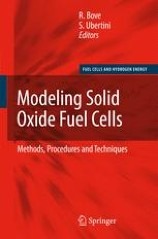
Modeling Solid Oxide Fuel Cells : Methods, Procedures and Techniques
The volume is structured in two parts. Part one presents the basic theory, and the general equations describing SOFC operation phenomena. Part two deals with the application of the theory to practical examples, where different SOFC geometries, configurations (from single cells to hybrid systems), operating conditions (steady-state and dynamic), and different phenomena (e.g. performance, temperature and chemical species, and mechanical stress distribution) are analyzed in detail.

Modeling of metal forming and machining processes : By finite element and soft computing methods
The physics of metal forming and metal removing is normally expressed using non-linear partial differential equations which can be solved using the finite element method (FEM). However, when the process parameters are uncertain and/or the physics of the process is not well understood, soft computing techniques can be used with FEM or alone to model the process.

Modeling of Biological Materials
This interdisciplinary collection of surveys highlights the central role played by the mathematical modeling of mechanical properties having an effect on the biology, chemistry, and physics of living matter. One of the main goals of the book is to present—in a single, self-contained resource—topics that are widely scattered across the literature in a variety of journals having mutually nonintersecting communities of readers, such as applied mathematicians, engineers, biologists, and physicians. Readers coming from diverse backgrounds are provided with basic modeling ideas and tools to address important problems in the medical and health sciences. Presented are appropriate models as well as their implementation through numerical and computer simulations, which may lead to potential technological innovations useful in medicine.
