



الصفحة 5
الصفحة 5
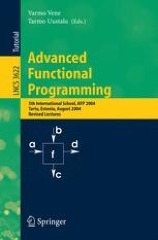
Advanced functional programming ; 5th International School, AFP 2004, Tartu, Estonia, August 14-21, 2004, Revised Lectures
Contains the revised lecture notes corresponding to nine of thelecture courses presented at the 5th International School on Advanced Functional Programming, AFP 2004, held in Tartu, Estonia, August 14–21, 2004. The goal of the AFP schools is to inform the wide international communitiesof computer science students and software production professionals about thenew and important developments in the area of functional programming. The schools put a special emphasis on practical applications of advanced techniques.
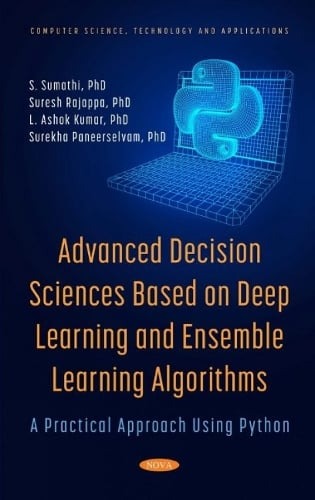
Advanced Decision Sciences Based on Deep Learning and Ensemble Learning Algorithms : A Practical Approach Using Python
Describes the deep learning models and ensemble approaches applied to decision-making problems. The authors have addressed the concepts of deep learning, convolutional neural networks, recurrent neural networks, and ensemble learning in a practical sense providing complete code and implementation for several real-world examples. The authors of this book teach the concepts of machine learning for undergraduate and graduate-level classes and have worked with Fortune 500 clients to formulate data analytics strategies and operationalise these strategies.
Acute Promyelocytic Leukemia : Molecular Genetics, Mouse Models and Targeted Therapy
Over the past 10 years, work on acute promyelocytic leukemia (APL) has become the paradigm of translational research that began with the discovery of a recurrent chromosomal translocation, followed by the identification of the genes and proteins involved, finding their molecular functions in transcriptional control, establishing mouse models and culminating in the development of targeted therapy.
Abeta Peptide and Alzheimers Disease : Celebrating a Century of Research
Abeta Peptide and Alzheimer’s Disease summarizes current knowledge of beta-amyloid peptide (Aß) and its role as the major culprit in Alzheimer’s Disease (AD), shown by recent advances in genetics and brain biochemistry.the book covers fundamental biochemical studies on the Aß peptide, the genetic impact on Aß expression and processing, and various AD therapeutic strategies that target Aß. Although specifically focusing on Aß and AD, there is also some discussion on the similarity and differences of this peptide and AD with other amyloidogenic diseases.
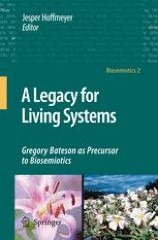
A Legacy for Living Systems : Gregory Bateson as Precursor to Biosemiotics
This book represents a major attempt to revise this deficiency. Scholars from ecology, biochemistry, evolutionary biology, cognitive science, anthropology and philosophy discuss how Bateson's thinking might lead to a fruitful reframing of central problems in modern science. Most important perhaps, Bateson's bioanthropology is shown to play a key role in developing the set of ideas explored in the new field of biosemiotics. The idea that organismic life is indeed basically semiotic or communicative lies at the heart of the biosemiotic approach to the study of life.The only book of its kind, this volume provides a key resource for the quickly-growing substratum of scholars in the biosciences, philosophy and medicine who are seeking an elegant new approach to exploring highly complex systems.

A Course on Mathematical Logic
This is a short, distinctive, modern, and motivated introduction to mathematical logic for senior undergraduate and beginning graduate students in mathematics and computer science. Any mathematician who is interested in knowing what logic is concerned with and who would like to learn Gödel’s incompleteness theorems should find this book particularly convenient. The treatment is thoroughly mathematical, and the entire subject has been approached like a branch of mathematics. Serious efforts have been made to make the book suitable for the classroom as well as for self-reading. The book does not strive to be a comprehensive encyclopedia of logic. Still, it gives essentially all the basic concepts and results in mathematical logic. The book prepares students to branch out in several areas of mathematics related to foundations and computability such as logic, axiomatic set theory, model theory, recursion theory, and computability.

A Concise Introduction to Mathematical Logic
This book is unique in that it is more concise than most others; the material is treated in a streamlined fashion. This allows the lecturer to select the material for a one-semester course on a topic more easily. These initial chapters cover just the material for an introductory course on mathematical logic combined with the necessary material from set theory. Chapter 3 is partly of a descriptive nature, providing a view towards decision problems, automated theorem proving, non-standard models and related subjects. The other chapters contain material on logic programming for computer scientists, model theory, recursion theory, Gödel's Incompleteness Theorems, and applications of mathematical logic. Philosophical and foundational problems of mathematics are discussed where appropriate.
