



الصفحة 5
الصفحة 5

Drug target selection and validation
Focuses on the computational aspects of early drug discovery, drug target identification, and validation. It revises current classical paradigms in target and phenotypic-based drug design with still ingrained approximations and concepts and discusses the research in the new network approach concept that include kinetic selectivity and metabolic analysis. Many often-overlooked approximations and concepts in drug discovery are fully covered. Drug Target Selection and Validation includes both introductory sections and research-based sections to be of use to both students and research scientists in drug discovery, design, kinetics and metabolic analysis. Pharmaceutical scientists, pharmaceutics, drug developers, pharmacologists, biomedical researchers in computer science, medicinal chemists, and precision medicine developers benefit from the information provided. The book concludes with a chapter on chemical and structural databases.

Drug safety evaluation : Methods and protocols
Focuses on the most recent advances in the field of drug safety evaluation. Divided into seven parts, chapters detail specific aspects related to the experimental design of preclinical studies conducted to support the safety of pediatric and combination drugs, necropsy and histopathology evaluation, mass spectrometry imaging, genetic toxicology protocols including the Pig-a mutation assay, safety pharmacology methods such as automatization of patch-clamp procedures, target safety assessment for investigative toxicology, screening assays for developmental toxicology, and methods to characterize novel translational safety biomarkers like microRNAs. Written in the highly successful Methods in Molecular Biology series format, chapters include introductions to their respective topics, lists of the necessary materials and reagents, step-by-step, readily reproducible laboratory protocols, and tips on troubleshooting to avoid known pitfalls.

Drug Delivery Systems
Expands on the previous editions with a discussion of new and updated methods used to study drug delivery. Chapters cover topics such as drug delivery in cancer and intrathecal delivery of analgesics in humans. The increasing role of nanobiotechnology is reflected in eight of the sixteen chapters that include synthesis of gold nanoparticles; targeted siRNA delivery; and lipid nanocarriers. Written in the highly successful Methods in Molecular Biology series format, chapters include introductions to their respective topics, lists of the necessary materials and reagents, step-by-step, readily reproducible laboratory protocols, and tips on troubleshooting and avoiding known pitfalls.

Drug Addiction : From Basic Research to Therapy
Drug Addiction: From Basic Research to Therapy provides a comprehensive overview of physiological, biochemical, genetic and behavioral pathways underlying drug addiction. Focusing on fundamental neurophysiological processes that overlap between drug addiction and other CNS disorders, this volume covers the translation of basic research into novel therapies, not only of drug addiction but a spectrum of related CNS disorders, including pain. Chapters are written by leading scientists with widely ranging expertise in synthetic and computational chemistry, molecular biology, genetics, neurosciences, drug discovery and development, drug targeting, and quantitative therapeutics, providing an unprecedented overview of a complex field of high societal signficance.

Double-stranded RNA : Methods and protocols
Examines classical and cutting-edge methods involving double-stranded RNA (dsRNA), specifically regarding isolation, visualization, characterization, production, and application. Many protocols, such as co-immunoprecipitation-based isolation of double-stranded RNA-associated protein complexes, identification of mycoviruses by dsRNA extraction, application of dsRNA for fungi disease management (Sclerotinia sclerotiorum and Botrytis cin), and production of double-stranded RNA in plants by plant viral vectors for gene silencing, can also be easily adapted for identification of viruses from other organisms, control of other pathogens, and fundamental research. Written for the highly successful Methods in Molecular Biology series, chapters include introductions to their respective topics, lists of the necessary materials and reagents, step-by-step and readily reproducible laboratory protocols, as well as tips for troubleshooting and avoiding known pitfalls.

DNA vaccines : Methods and protocols
Details practical procedures on the latest DNA vaccine technology. Chapters guide readers through methods and protocols on DNA vaccine design, the adjuvant influence, production and purification methodologies, delivery systems, and approaches of the influence of DNA vaccines in the immunological response performance and in the cancer immunotherapy. Written in the highly successful Methods in Molecular Biology series format, chapters include introductions to their respective topics, lists of the necessary materials and reagents, step-by-step, readily reproducible laboratory protocols, and tips on troubleshooting and avoiding known pitfalls.

DNA Methylation : Development, Genetic Disease and Cancer
It has become apparent that the genomes of many organisms are characterized by unique patterns of DNA methylation which can differ from genome segment to genome segment and cell type to cell type. These patterns can be instrumental in determining cell type and function. Thus, it is not surprising that studies on the role of DNA methylation now occupy center stage in many fields of biology and medicine such as developmental biology, genetic imprinting, genetic disease, tumor biology, gene therapy, cloning of organisms and others. Once again, basic research in molecular biology has provided the essential foundation for investigations of biomedical problems.

DNA damage detection : Methods and protocols
Explores techniques in DNA damage analysis, important not only for understanding cellular health after exposure to genotoxic agents but also for assessing cellular ability of genome maintenance. The book explores traditional DNA damage measurement methods, as well as modern fluorescence-based analysis and high throughput automatic analysis methods. Written for the highly successful Methods in Molecular Biology series, chapters include introductions to their respective topics, lists of the necessary materials and reagents, step-by-step and readily reproducible laboratory protocols, and tips on troubleshooting and avoiding known pitfalls.
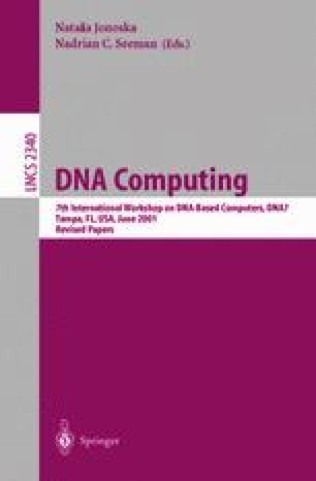
DNA Computing ; 7th International Workshop on DNA-Based Computers, DNA7, Tampa, FL, USA, June 10-13, 2001, Revised Papers
Constitutes the post-proceedings of the 7th International Workshop on DNA-Based Computers, held in Florida in 2001. The 26 papers cover experimental tools, theoretical tools, probabilistic computational models, computer simulation and sequence design, algorithms, experimental solutions and more.

DNA and RNA origami : methods and protocols
Detials diverse methodological approaches on the assembly and applications of DNA origami assemblies. Chapters guide readers through different synthetic and computational methods, isolation and structural characterization of 2D and 3D DNA origami nanoarchitectures, nanophotonics, drug delivery, biophysics, and synthetic biology.Written in the successful Methods in Molecular Biology series format, chapters include introductions to their respective topics, lists of the necessary materials and reagents, step-by-step, readily reproducible protocols, and notes on troubleshooting and avoiding known pitfalls.

Dictyostelium discoideum : Methods and protocols
Discusses the latest advancements and techniques used to study Dictyostelium discoideum. The chapters in this book cover topics such as cytokinesis, membrane function and damage, and nutrient/bacterial processing; autophagy activation and function; protein localization, interaction, and activation; cell migration and contact guidance for quantification of cytoskeletal dynamics; and global mutational screening, transcriptome analyses, and proteomics that apply to all stages of the Dictyostelium life cycle and that may generalize to human disease models. Written in the highly successful Methods in Molecular Biology series format, chapters include introductions to their respective topics, lists of the necessary materials and reagents, step-by-step, readily reproducible laboratory protocols, and tips on troubleshooting and avoiding known pitfalls.

Defects of Secretion in Cystic Fibrosis
This book brings together physicians, physiologists, and other scientists involved in basic research, from molecular biology to drug design and introduces novel investigative and therapeutic aspects of secretion disorders relevant in cystic fibrosis and related diseases. This book will be of interest to Molecular biologists, physiologists, scientists working in pharmaceutical research and drug developement, physicians and researchers in Cystic fibrosis and related diseases.
Data Integration in the Life Sciences ; Vol. 4075 ; 3rd International Workshop, DILS 2006, Hinxton, UK, July 20-22, 2006, Proceedings
Data management and data integration are fundamental problems in the life sciences. Advances in molecular biology and molecular medicine are almost u- versallyunderpinned by enormouse?orts in data management,data integration, automatic data quality assurance, and computational data analysis. Many hot topics in the life sciences, such as systems biology, personalized medicine, and pharmacogenomics, critically depend on integrating data sets and applications producedby di?erent experimentalmethods, in di?erent researchgroups,andat di?erent levels of granularity.

Cytogenetics and molecular cytogenetics
Genomic technologies provide the means of diagnosis and management of many human diseases. Without insights from cytogenetics, correct interpretation of modern high-throughput results is difficult, if not impossible. This book summarizes applications of cytogenetics and molecular cytogenetics for students, clinicians and researchers in genetics, genomics and diagnostics. The book combines the state-of-the-art knowledge and practical expertise from leading researchers and clinicians and provides a comprehensive overview of current medical and research applications of many of these technologies.

Ctenophores : Methods and protocols
Explores emerging approaches and methods inspired by recent research using ctenophores or placozoans, facilitating the study of these enigmatic species and ancient animal lineages. Practical protocols are integrated with introductory chapters about general biology, summarizing the diversity, evolution, genomics, development, and neurobiology of these organisms. Special chapters outline strategies and applications for culturing, microscopy, physiology, electrical synapses, and bioluminescence, molecular and single-cell biology, transcription factors, as well as gene and protein expression analyses. The book also contains bioinformatics and computational chapters covering peptidomics and epigenomics. Written for the highly successful Methods in Molecular Biology series, chapters include detailed implementation advice that leads to dependable results in the laboratory.

Crimean-Congo Hemorrhagic Fever : A Global Perspective
Crimean-Congo hemorrhagic fever (CCHF) is a tick-borne disease associated with severe hemorrhagic manifestations. CCHF has been referred to as the "Asian Ebola." However, in fact, the disease is one of the most widely distributed tick-borne diseases in the world, occurring in Africa, Asia, Europe, and the Middle East. This volume covers major aspects of this important disease and the virus which causes it. Chapters are written by leading experts in their fields and detail historical, public health, epidemiological, and clinical aspects of CCHF and the genetics and molecular biology of the virus. Additional chapters focus on disease control, tick vectors and infection among animals, both natural and experimental.

Coronaviruses with Special Emphasis on First Insights Concerning SARS
This book series focuses on relevant and trending topics in microbiology and infectious diseases with emphasis on emerging pathogens and related diseases.This interdisciplinary series presents latest advances and new approaches in molecular biology as well as insights into human and veterinary clinical medicine. Furthermore, matters in epidemiology, disease management, hygiene and prevention of infectious diseases are discussed. Emerging or novel pathogens are a grand challenge in medical science. Therefore, we focused the first volume of this series on the outbreak of SARS. The advent of SARS is a threat for people around the globe. Our modern technologies in communication and mobility have figuratively transformed the world into a village. This traffic, however, reprensents a new opportunity to spread diseases, particularly such of infectious nature from tiny villages throughout the entire world. In-depth knowledge of a novel pathogen's characteristics will help to manage or event prevent pandemias.

Coronaviruses : Methods and Protocols
Aims to describe a variety of techniques that reflects the wide range of research currently performed in the field of coronavirology, and begins with an overview of current understandings of coronavirus replication and pathogenesis to introduce specialists and non-specialists to the field. The rest of the book is divided into several sections of chapters beginning with those that describe identification, diagnosis, and study of the evolution of coronaviruses. The next few chapters discuss the preparation of cells and organ cultures useful in propagating coronaviruses and titration techniques, as well as techniques for analyzing virus functions that require purification of the viruses. The next chapters describe two commonly used reverse genetics techniques for coronaviruses, and techniques detailing identification of cellular receptors, binding profiles of viral attachment proteins, and virus-cell fusion. The final chapters cover a broad spectrum of techniques to identify virus-host protein-protein interactions, confirm the functional role of these proteins in virus replication, study host cell responses through genome-wide or pathway-specific approaches, and visualize virus replication complexes. Written in the highly successful Methods in Molecular Biology series format, the chapters include the kind of detailed description and implementation advice that is crucial for getting optimal results in the laboratory.
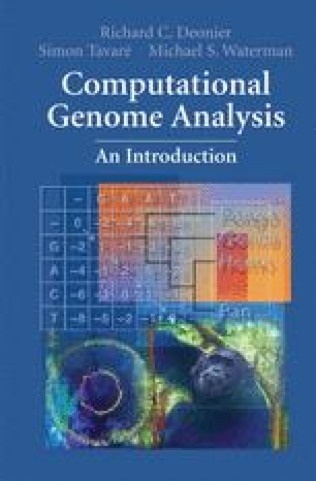
Computational genome analysis : An introduction
Computational Genome Analysis: An Introduction presents the foundations of key problems in computational molecular biology and bioinformatics. It focuses on computational and statistical principles applied to genomes, and introduces the mathematics and statistics that are crucial for understanding these applications. The book is appropriate for a one-semester course for advanced undergraduate or beginning graduate students, and it can also introduce computational biology to computer scientists, mathematicians, or biologists who are extending their interests into this exciting field.

Combinatorial pattern matching ; Vol.4009) ; 17th Annual Symposium, CPM 2006, Barcelona, Spain, July 5-7, 2006, Proceedings
The book presents 33 revised full papers together with 3 invited talks, organized in topical sections on data structures, indexing data structures, probabilistic and algebraic techniques, applications in molecular biology, string matching, data compression, and dynamic programming
