



الصفحة 5
الصفحة 5

Modern Biogeochemistry : Environmental Risk Assessment
At present, quantitative ecological risk assessment is widely used in different contexts, however very often without an understanding of the natural mechanisms that drive the processes of environmental and human risk. Its application is often accompanied by high uncertainty about risk values. On the other hand, the sustainability of modern technoecosystems is known because of their natural biogeochemical cycling that has been transformed to various extents by anthropogenic studies. Accordingly our understanding of the principal mechanisms that drive the biogeochemical food webs allows us to present a quantitative ecological risk assessment and to propose technological solutions for management of various ERA enterprises. It also enables us to devise a powerful mechanism for ecological insurance, to assign responsibilities and protect rights while managing the control of damage from natural and anthropogenic accidents and catastrophes.

Modern Aspects of Spin Physics
The volume investigates central aspects of modern spin physics in the form of extensive lectures on semiconductor spintronics, the spin-pairing mechanism in high- temperature semiconductors, spin in quantum field theory and the nucleon spin.

Modern Anesthetics
Some important constraints of anesthesia must be taken into consideration when the pharmacological properties of modern anesthetics are discussed. The most imp- tant of these could be that the target effect be achieved preferably within seconds, at most within a few minutes. Similarly, offset of drug action should be achieved within minutes rather hours. The target effects, such as unconsciousness, are pot- tially life-threatening, as are the side effects of modern anesthetics, such as respi- tory and cardiovascular depression. Finally, the patient’s purposeful responses are not available to guide drug dosage, because, either the patient is unconscious, or more problematically, the patient is aware but unable to communicate pain because of neuromuscular blockade. in this book the very mechanism of anesthetic action at the biophase” was discussed within the theoretical framework of the “u- tary theory of narcosis”.

Modeling of Soft Matter
Soft matter plays a role in a wide variety of important processes and application. For example, gel swelling and dynamics are an essential part of many biological and individual processes, such as motility mechanisms in bacteria and the transport and absorption of drugs. Ferroelectrics, liquid crystals, and elastomers are being used to design ever faster switching devices. Experimental studies, such as scattering, optical and electron microscopy, have provided a great deal of detailed information on structures. But the integration of mathematical modeling and analysis with experimental approaches promises to greatly increase our understanding of structure-property relationships and constitutive equations. The workshop on Modeling of Soft Matter has taken such an integrated approach.

Model Based Learning and Instruction in Science
This book describes new, model based teaching methods for science instruction. It presents research that describes these new methods in a very diverse group of settings: middle school biology, high school physics, and college chemistry classrooms. Mental models in these areas such as understanding the structure of the lungs or cells, molecular structures and reaction mechanisms in chemistry, or causes of current flow in electricity are notoriously difficult for many students to learn. Yet these lie at the core of conceptual understanding in these areas. The studies focus on a variety of teaching strategies such as discrepant questioning, analogies, animations, model competition, and hands on activities.

Mobile and Wireless Communications Networks ; IFIP TC6 / WG6.8 Conference on Mobile and Wireless Communication Networks (MWCN 2004) October 25-27, 2004 Paris, France
Mobile Ad hoc NETworks (MANETs) has attracted great research interest in recent years. A Mobile Ad Hoc Network is a self-organizing multi-hop wireless network where all hosts (often called nodes) participate in the routing and data forwarding process. The dependence on nodes to relay data packets for others makes mobile ad hoc networks extremely susceptible to various malicious and selfish behaviors. This point is largely overlooked during the early stage of MANET research. Many works simply assume nodes are inherently cooperative and benign. However, experiences from the wired world manifest that the reverse is usually true; and many works [3] [10] [9] [8] [12] [19] have pointed out that the impact of malicious and selfish users must be carefully investigated. The goal of this research is to address the cooperation problem and related security issues in wireless ad hoc networks. As a rule of thumb, it is more desirable to include security mechanisms in the design phase rather than continually patching the system for security breaches. As pointed out in [2] [1], there can be both selfish and malicious nodes in a mobile ad hoc network. Selfish nodes are most concerned about their energy consumption and intentionally drop packets to save power. The purpose of malicious nodes, on the other hand, is to attack the network using various intrusive techniques. In general, nodes in an ad hoc network can exhibit Byzantine behaviors.

Minimally invasive glaucoma surgery
This book covers all aspects of minimally invasive glaucoma surgery (MIGS) and provides detailed information on each MIGS device, including its mechanism of action; patient selection; implantation techniques; post-operative management; and a review of the existing literature. Step-by-step descriptions are provided for the surgical technique used in implanting each MIGS device, accompanied by clear photographs of each surgical stage. Other areas covered include intra-operative gonioscopy (with tips on optimising the view of the anterior chamber angle) and the management of the intra-operative and post-operative complications. Essential information on the anatomy and physiology of the different aqueous outflow pathways is also included.

Mild Stress and Healthy Aging : Applying hormesis in aging research and interventions
Stress is a double edged sword. Whereas chronic stress has well known harmful effects, recent research shows that intermittent exposure of cells and organisms to mild stress can improve various biological parameters, including severe stress tolerance, health span and longevity. Mild stress-induced hormesis is potentially a powerful tool in gerontological research and interventions. This book brings together some of the world leaders in this area of research who present a critical analysis of the ongoing research with respect to the effects and mechanisms of action of various types of mild stress, such as irradiation, heat, physical exercise, hypergravity, pro-oxidants and nutritional components, on a variety of biological systems ranging from fruitflies to human cells and bodies. Their separate chapters and a final collective chapter open up a whole new world of possibilities for future research in aging, successful aging, and health span extension.

Migraine
Migraine is a chronic paroxysmal neurological disorder characterised by multiphase attacks of head pain and a myriad of neurological symptoms. The underlying genetic and biological underpinnings and neural networks involved are coming sharply into focus. This progress in the fundamental understanding of migraine has led to novel, mechanism-based and disease-specific therapeutics. In this Seminar, the clinical features and neurobiology of migraine are reviewed, evidence to support available treatment options is provided, and emerging drug, device, and biological therapies are discussed.

Migraine
Migraine is one of the most common diseases of the present era, it ranked sixth in the world for neurological diseases, it’s severity varies from person to person and may interfere with daily activities in our article ,we will discuss the mechanisms of migraine occurrence, it’s traditional treatments and the modern treatment used internationally it is also possible that the migraine is a symptom or a predictor of serious diseases which we will learn about in this research.

Microprocessor 4 : Core concepts - software aspects
Addresses the software aspects of this component. Coding of an instruction, addressing modes and the main features of the Instruction Set Architecture (ISA) of a generic component are presented. Futhermore, two approaches are discussed for altering the flow of execution using mechanisms of subprogram and interrupt. A comprehensive approach is used, with examples drawn from current and past technologies that illustrate theoretical concepts, making them accessible.
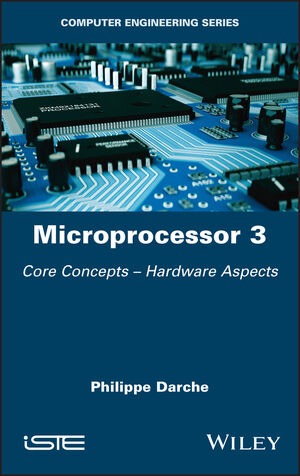
Microprocessor 3 : Core concepts - hardware aspects
Calculation is the main function of a computer. The central unit is responsible for executing the programs. The microprocessor is its integrated form. This component, since the announcement of its marketing in 1971, has not stopped breaking records in terms of computing power, price reduction and integration of functions (calculation of basic functions, storage with integrated controllers). It is present today in most electronic devices. Knowing its internal mechanisms and programming is essential for the electronics engineer and computer scientist to understand and master the operation of a computer and advanced concepts of programming.

Microprocessor 2 : Communication in a digital system
Focuses more particularly on the first generations of microprocessors, that is to say those that handle integers in 4 and 8-bit formats. The first chapter presents the calculation function and reminds the memory function. The following is devoted to notions of calculation model and architecture. The concept of bus is then presented. Chapters 4 and 5 can then address the internal organization and operation of the microprocessor first in hardware and then software. The mechanism of the function call, conventional and interrupted, is more particularly detailed in a separate chapter. The book ends with a presentation of architectures of the first microcomputers for a historical perspective. The knowledge is presented in the most exhaustive way possible with examples drawn from current and old technologies that illustrate and make accessible the theoretical concepts. Each chapter ends if necessary with corrected exercises and a bibliography. The list of acronyms used and an index are at the end of the book.

Microcirculation in Cardiovascular Diseases
This book offers an extensive review of the most recent data on the pathophysiological role of structural and functional alterations in the microcirculation, particularly focusing on hypertension and diabetes. It covers several relevant and innovative aspects, including the possible mechanisms involved in the development of microvascular remodeling and rarefaction, the technical approaches available for the detection of microvascular alterations, including non-invasive evaluations, the prognostic role of changes in small resistance artery structure, the possibility of preventing or regressing such alterations with appropriate treatment, and the potential clinical advantages of such intervention.

Microbial Root Endophytes
Plant roots may not only be colonized by mycorrhizal fungi, but also by a myriad of bacterial and fungal root endophytes that are usually not considered by the investigators of classic symbioses. This is the first book dedicated to the interactions of non-mycorrhizal microbial endophytes with plant roots. The phenotypes of these interactions can be extremely plastic, depending on environmental factors, nutritional status, genetic disposition and developmental stages of the two partners. The book deals with diversity, life history strategies, interactions, applications in agriculture and forestry, methods for isolation, cultivation, and both conventional and molecular methods for identification and detection of these endophytes. The comprehensive reviews demonstrate the high diversity of interactions and will provoke further studies to better understand the mechanisms which determine whether a plant-microbial interaction remains asymptomatic, leads to disease or to a mutualistic interaction.

Microbes and oral squamous cell carcinoma : A network spanning infection and inflammation
Helps in understanding the relationship between microorganisms and oral carcinogenesis, and the possible oncogenic mechanisms enhancing the association. The book highlights the association between oral cancer, primarily oral squamous cell carcinoma (OSCC), a major global health problem with high incidence and low survival rates with infection and inflammation. Establishing the association of the oral microbiome with cancer risk may lead to significant advances in the understanding cancer etiology, potentially opening a new research paradigm for cancer prevention.

Metric Driven Design Verification : An Engineer's and Executive's Guide to First Pass Success
A metric based flow is described that focuses on the four steps of: 1. Planning: Defining what needs to be done and the automatically trackable metrics that will be used to measure progress. 2. Execution: Implementing verification environments and then extensively exercising the device under verification utilizing comprehensive, massively parallel regression strategies. 3. Measurement: Automatically capturing the metrics defined in planning to provide objective data with which to manage the verification project. Custom tailoring those metrics through an automated reporting framework to provide all stakeholders a real-time meaningful view of project status. 4. Response: Utilizing the returned metrics to effectively adapt to changing project conditions. Making use of automated response mechanisms to automate engineering processed and management response to streamline project management processes

Methods in Modern Biophysics
Incorporating recent dramatic advances, this textbook presents a fresh and timely introduction to modern biophysical methods. An array of new, faster and higher-power biophysical methods now enables scientists to examine the mysteries of life at a molecular level. This innovative text surveys and explains the ten key biophysical methods, including those related to biophysical nanotechnology, scanning probe microscopy, X-ray crystallography, ion mobility spectrometry, mass spectrometry, proteomics, and protein folding and structure. Incorporating much information previously unavailable in tutorial form, Nölting employs worked examples and 267 illustrations to fully detail the techniques and their underlying mechanisms.

Metal-Catalysed Reactions of Hydrocarbons
This unique book, drawing on the author’s lifetime experience, critically evaluates the extensive literature on the field of Metal-Catalysed Reactions of Hydrocarbons. Emphasis is placed on reaction mechanisms involving hydrogenation, hydrogenolysis, skeletal and positional isomerisation, and exchange reactions. The motivation for fundamental research in heterogeneous catalysis is to identify the physicochemical characteristics of active centres for the reaction being studied, to learn how these may be modified or manipulated to improve the desired behavior of the catalyst, and to recognize and control those aspects of the catalyst's structure that limit its overall performance. By restricting the subject of the book to hydrocarbons, Bond has progressively developed the subject matter to include areas of importance both to researchers and to those working in the industry.

Mesoscale Analysis of Hydraulics
Presents a series of complicated hydraulic phenomena and related mechanism of high-speed flows in head-head dam. According to the basic hydraulic theory, detailed experiments and numerical simulations, microscopic scale analysis on cavitation bubbles, air bubbles, turbulent eddy vortices and sand grains are examined systemically. These investigations on microscopic fluid mechanics, including cavitation erosion, aeration protection, air–water flow, energy dissipation and river-bed scouring, allow a deep understanding of hydraulics in high-head dams. This book provides reference for designers and researchers in hydraulic engineering, environment engineering and fluid mechanics.
