



الصفحة 5
الصفحة 5

Location- and Context-Awareness ; Vol. 3987 ; 2nd International Workshop, LoCA 2006, Dublin, Ireland, May 10-11, 2006, Proceedings
Contain the papers presented at the 2 International Workshop on Location- and Context-Awareness in May of 2006. As computing moves increasingly into the everyday world, the importance of location and context knowledge grows. The range of contexts encountered while sitting at a desk working on a computer is very limited compared to the large variety of situations experienced away from the desktop. For computing to be relevant and useful in these situations, the computers must have knowledge of the user’s activity, resources, state of mind, and goals, i.e., the user’s context, of which location is an important indicator. This workshop was intended to present research aimed at sensing, inferring, and using location and context data in ways that help the user.
Linear Algebra Thoroughly Explained
Linear Algebra Thoroughly Explained provides a comprehensive introduction to the subject suitable for adoption as a self-contained text for courses at undergraduate and postgraduate level. The clear and comprehensive presentation of the basic theory is illustrated throughout with an abundance of worked examples. The book is written for teachers and students of linear algebra at all levels and across mathematics and the applied sciences, particularly physics and engineering.
Leveraging Data Science for Global Health
Explores ways to leverage information technology and machine learning to combat disease and promote health, especially in resource-constrained settings. It focuses on digital disease surveillance through the application of machine learning to non-traditional data sources.

Landslides in research, theory and practice ; Proceedings of the 8th International Symposium on Landslides held in Cardiff on 26–30 June 2000
Contains vital information from throughout the world on landslide and slope instability problems. Every four years the worlds leading scientists and engineers dealing with landslides, have the opportunity to meet up and engage in the exchange of ideas and experiences at a symposium run under the auspices of ISSMGE Technical Committee 11. These volumes, taken from the 8th symposium in the series, detail investigations into landslide causes, mechanisms and hazards, together with accounts of monitoring and mapping.
Knowledge Sharing in the Integrated Enterprise : Interoperability Strategies for the Enterprise Architect
The IFIP series publishes state-of-the-art results in the sciences and technologies of information and communication. The scope of the series includes: foundations of computer science; software theory and practice; education; computer applications in technology; communication systems; systems modeling and optimization; information systems; computers and society; computer systems technology; security and protection in information processing systems; artificial intelligence; and human-computer interaction. Proceedings and post-proceedings of referred international conferences in computer science and interdisciplinary fields are featured. These results often precede journal publication and represent the most current research. The principal aim of the IFIP series is to encourage education and the dissemination and exchange of information about all aspects of computing.

Knowledge Management for Educational Innovation ; IFIP WG 3.7 7th Conference on Information Technology in Educational Management (ITEM), Hamamatsu, Japan, July 23-26, 2006
The IFIP series publishes state-of-the-art results in the sciences and technologies of information and communication. The principal aim of the IFIP series is to encourage education and the dissemination and exchange of information about all aspects of computing.
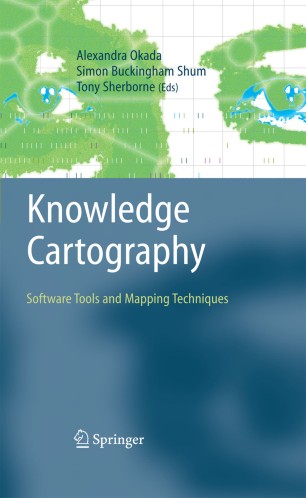
Knowledge Cartography : Software Tools and Mapping Techniques
The authors see mapping software as a set of visual tools for reading and writing in a networked age. In an information ocean, the primary challenge is to find meaningful patterns around which we can weave plausible narratives. Maps of concepts, discussions and arguments make the connections between ideas tangible and disputable.With 17 chapters from the leading researchers and practitioners, the reader will find the current state–of-the-art in the field. Part 1 focuses on educational applications in schools and universities, before Part 2 turns to applications in professional communities.
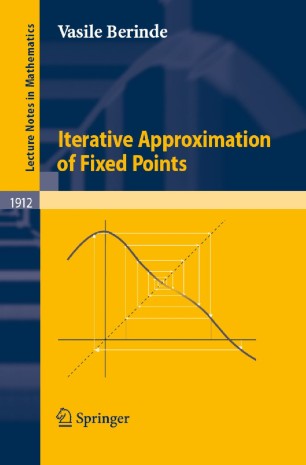
Iterative Approximation of Fixed Points
The aim of this monograph is to give a unified introductory treatment of the most important iterative methods for constructing fixed points of nonlinear contractive type mappings. It summarizes the most significant contributions in the area by presenting, for each iterative method considered (Picard iteration, Krasnoselskij iteration, Mann iteration, Ishikawa iteration etc.), some of the most relevant, interesting, representative and actual convergence theorems. Applications to the solution of nonlinear operator equations as well as the appropriate error analysis of the main iterative methods, are also presented.

Complex Analysis with Applications to Number Theory
The book discusses major topics in complex analysis with applications to number theory.It 's including the theory of several finitely and infinitely complex variables, hyperbolic geometry, two- and three-manifolds, and number theory. In addition to solved examples and problems, the book covers most topics of current interest, such as Cauchy theorems, Picard’s theorems, Riemann–Zeta function, Dirichlet theorem, Gamma function, and harmonic functions.

Classical Electromagnetic Theory
This book stresses the unity of electromagnetic theory with electric and magnetic fields developed in parallel. SI units are used throughout and considerable use is made of tensor notation and the Levi-Cevita symbol. To more closely display the parallelism, extensive use is made of the scalar magnetic potential particularly in dealing with the Laplace and Poisson equation. 85 worked problems illustrate the theory. Conformal mappings are dealt with in some detail. Relevant mathematical material is provided in appendices.

Cereals and millets
Genome Mapping and Molecular Breeding in Plants presents the current status of the elucidation and improvement of plant genomes of economic interest. The focus is on genetic and physical mapping, positioning, cloning, monitoring of desirable genes by molecular breeding and the most recent advances in genomics. The series comprises seven volumes: Cereals and Millets; Oilseeds; Pulses, Sugar and Tuber Crops; Fruits and Nuts; Vegetables; Technical Crops; and Forest Trees.

Catheter Ablation of Cardiac Arrhythmias : A Practical Approach
Catheter ablation of cardiac arrhythmias is an important field of interventional cardiology. This comprehensive overview is a practical guide for exact diagnosis of cardiac arrhythmias, mapping of cardiac arrhythmias with newest 3D technology and catheter ablation of various arrhythmias from WPW syndrome to atrial fibrillation.

Case-based reasoning research and development ; 6th International conference on case-based reasoning, ICCBR 2005, Chicago, IL, USA, August 23-26, 2005, Proceedings
This book constitutes the refereed proceedings of the 6th International Conference on Case-Based Reasoning, ICCBR 2005, held in Chicago, IL, USA, in August 2005. The 19 revised full research papers and 26 revised poster papers presented together with the abstracts of 3 invited talks were carefully reviewed and selected from 74 submissions. The papers address all current foundational, theoretical and research aspects of case-based reasoning as well as advanced applications either with innovative commercial deployment or practical, social, environmental or economic significance.
Cancer Informatics in the Post Genomic Era : Toward Information-Based Medicine
Medical information science requires analytic tools. This is achieved by developing and assessing methods and systems for the acquisition, processing, and interpretation of patient data, aided by scientific discovery. Cancer Informatics in Post-Genomic Era provides both the necessary methodology and practical information tools.Key challenges include integrating research and clinical care, sharing data, and establishing partnerships within and across sectors of patient diagnosis and treatment.Addressing important clinical questions in cancer research will benefit from expanding computational biology.

Business process management Workshops ; Vol. 4103 : BPM 2006 International Workshops, BPD, BPI, ENEI, GPWW, DPM, semantics4ws, Vienna, Austria, September 4-7, 2006, Proceedings
BPM 2006 was the fourth in a conference series that provides a forum for - searchers and practitioners in all areas of business process management. In c- junction with BPM 2006, a series of workshops were held. They were meant to facilitate the exchange of ideas and experiences between active researchers, and to stimulate discussions on new and emerging topics in line with the conference topics. We see the workshops as a necessary extension to the main conference. BPM has established itself rapidly as a high quality conference with a highly competitive selection process.

Business agility and information technology diffusion ; IFIP TC8 WG 8.6 International working Conference, May 8-11, 2005, Atlanta, Georgia, USA
Addresses issues related to business agility and the diffusion of Information Technology (IT). Success, even survival, in today's business environment has been made complex and difficult by technologically-based competitive pressure. One promising strategy is to be agile and ready to adapt quickly to changes in the environment or market. Such strategy takes shape as an agile software development, agile manufacturing, agile modeling and agile iterations. In contrast, successful IT diffusion is known to be a process that takes time and careful effort. Many IT projects that succeeded in developing a product have subsequently failed in changing the behavior of the target group when diffusion just didn't happen. Therefore this volume responds to the question: What is the relationship between agility and IT diffusion? The book's scope will cover information systems and technology issues, as well as organizational and managerial issues, related to agility and IT diffusion. The planned perspectives include topics such as diffusion of agile methods, enabling business agility with IT, creating agile environments that facilitate diffusion of IT, theories and frameworks for understanding diffusion and agility issues, best practices relating to business agility and IT diffusion, software process improvement and agility, diffusion studies of specific agile technologies, and impacts of diffusion of IT agile methods.

Braid Groups
Braids and braid groups have been at the heart of mathematical development over the last two decades. Braids play an important role in diverse areas of mathematics and theoretical physics. The special beauty of the theory of braids stems from their attractive geometric nature and their close relations to other fundamental geometric objects, such as knots, links, mapping class groups of surfaces, and configuration spaces. In this presentation the authors thoroughly examine various aspects of the theory of braids, starting from basic definitions and then moving to more recent results. The advanced topics cover the Burau and the Lawrence--Krammer--Bigelow representations of the braid groups, the Alexander--Conway and Jones link polynomials, connections with the representation theory of the Iwahori--Hecke algebras, and the Garside structure and orderability of the braid groups.

Boundary value problems, Weyl Functions, and differential operators
This book presents a comprehensive survey of modern operator techniques for boundary value problems and spectral theory, employing abstract boundary mappings and Weyl functions.
Biomimetic neural learning for intelligent robots : Intelligent systems, cognitive robotics, and neuroscience
This book presents research performed as part of the EU project on biomimeticmultimodal learning in a mirror neuron-based robot (MirrorBot) and contribu-tions presented at the International AI-Workshop on NeuroBotics. The over-all aim of the book is to present a broad spectrum of current research intobiomimetic neural learning for intelligent autonomous robots. In this book we show the development of newtechniques using cell assemblies, associative neural networks, and Hebbian-typelearning in order to associate vision, language and motor concepts. We havedeveloped biomimetic multimodal learning and language instruction in a robotto investigate the task of searching for objects. As well as the research performedin this area for the MirrorBot project, the second part of this book incorporatessignificant contributions from other research in the field of biomimetic robotics.This second part of the book concentrates on the progress made in neuroscienceinspired robotic learning approaches (in short: NeuroBotics). We hope that this book stimulates and encourages new research in this in-teresting and dynamic area.

Biomedical Image Registration ; 3rd International Workshop, WBIR 2006, Utrecht, The Netherlands, July 9-11, 2006, Proceedings
This book constitutes the thoroughly refereed post-proceedings of the Third International Workshop on Biomedical Image Registration. The 20 revised full papers and 18 revised poster papers presented were carefully reviewed and selected for inclusion in the book. The papers cover all areas of biomedical image registration; methods of registration, biomedical applications, and validation of registration.
