



الصفحة 5
الصفحة 5
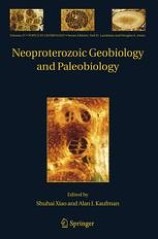
Neoproterozoic Geobiology and Paleobiology
The Neoproterozoic Era (1000-542 million years ago) is a geological period of dramatic climatic change and important evolutionary innovations. Repeated glaciations of unusual magnitude occurred throughout this tumultuous interval, and various eukaryotic clades independently achieved multicellularity, becoming more complex, abundant, and diverse at its termination. Animals made their first debut in the Neoproterozoic too. The intricate interaction among these geological and biological events is a centrepiece of Earth system history, and has been the focus of geobiological investigations in recent decades. The purpose of this volume is to present a sample of views and visions among some of the growing numbers of Neoproterozoic workers. The contributions represent a cross section of recent insights into the field of Neoproterozoic geobiology.

Neonatal Cranial Ultrasonography
It provides important information on brain maturation in the (preterm) neonate and enables the detection of frequently occurring brain anomalies in both preterm and full term neonates. Furthermore, it can be repeated as often as is necessary. In this edition of Neonatal Cranial Ultrasonography, the focus is on the basics of the technique, from patient preparation through to screening strategies and the classification of abnormalities. Many new ultrasound images have been included to reflect the improvements in image quality since the first edition. Essential information is provided about both the procedure itself and the normal ultrasound anatomy. Standard technique using the anterior fontanelle as the acoustic window is described and illustrated, but emphasis is also placed on the value of supplementary acoustic windows.

Neo-Liberalism, State Power and Global Governance
Part One explores the pattern of national differences in the exercise of state power in a variety of industrialized and developing economies, despite the pressure to converge towards the dominant neo-liberal paradigm. Part Two analyses a variety of trans-national policy prescriptions for neo-liberalism and state power. Part Three explores whether the governance of labour markets is a special case in the global economy. Part Four sets out the need for institutional reform of the neo-liberal order in trade and finance. The volume concludes that there is the prospect of a more plural approach to state power and global governance, and one that recognizes the importance of the public domain of citizenship for delivering the global public goods of security, prosperity and environmental sustainability in the twenty-first century.

Neo-Liberalism, Globalization and Human Capital Learning : Reclaiming Education for Democratic Citizenship
Throughout the world, neoliberalism functions to decouple learning from the most important elements of civic education, transforming education into training and students into consumers. Neoliberalism, Globalization, and Human Capital Learning is an enormously important book that reveals in painstaking detail how neoliberal ideology destroys critical education. But it does much more. It also provides the insights and tools for educators to both overcome the market-based attack on critical education and address schooling as a democratic public sphere and the classroom as a laboratory for the nurturing of critical agency and social responsibility. This dynamic book should stir a public outcry among concerned citizens and educators through out the globe.
Nature-Based Solutions to Climate Change Adaptation in Urban Areas : Linkages between Science, Policy and Practice
This book is open access under a CC BY 4.0 license.This book brings together research findings and experiences from science, policy and practice to highlight and debate the importance of nature-based solutions to climate change adaptation in urban areas. Emphasis is given to the potential of nature-based approaches to create multiple-benefits for society

Natural poisons and venoms: Plant toxins : Polyketides, phenylpropanoids and further compounds
Biogenic toxins are fascinating natural products characterized by an enormous diversity of chemical structures and pharmacological activities. They not only pose hazards to humans and animals, but they are important components in the interplay of substances and living beings in nature and, moreover, important sources for new drugs.

Natural poisons and venoms : Animal toxins
Biogenic toxins are fascinating natural products characterized by an enormous diversity of chemical structures and pharmacological activities. They not only pose hazards to humans and animals, but they are important components in the interplay of substances and living beings in nature and, moreover, important sources for new drugs.

Natural poisons and venom : Plant toxins : Terpenes and steroids
Biogenic toxins are fascinating natural products characterized by an enormous diversity of chemical structures and pharmacological activities. They not only pose hazards to humans and animals, but they are important components in the interplay of substances and living beings in nature and, moreover, important sources for new drugs.

Natural Compounds as Drugs ; Vol. II
This book highlights new trends and aspects in natural products research. It discusses the biodiversity-driven approaches which are now of eminent importance in natural products research, addressing the question why natural products display such a complex chemical information, what makes them often unique and what their characteristics are. Practical questions such as supply of natural substances and production optimization strategies are also covered.

Natural Compounds as Drugs ; Vol. I
This book highlights new trends and aspects in natural products research. It discusses the biodiversity-driven approaches which are now of eminent importance in natural products research, addressing the question why natural products display such a complex chemical information, what makes them often unique and what their characteristics are. Practical questions such as supply of natural substances and production optimization strategies are also covered.

NATO and terrorism catastrophic terrorism and first responders : Threats and mitigation
In this important new book a group of experts represents the current knowledge on the various terrorism threats to first responders resulting from the novel use of conventional weapons, as well radiological, nuclear, biological and chemical weapons. Also, the current situation in selected countries of different sizes and practical experience with terrorism countermeasures (Austria, Israel, Slovenia, Russia, U.S.) is reviewed, focusing on the national operational logistics and the individual needs for improving the present situation. Finally, this book offers innovative solutions to strengthen the level of protection of the first responders, culminating in fifty-one practically applicable recommendations

National Constitutions in European and Global Governance : Democracy, Rights, the Rule of Law: National Reports
It offers important insights into three areas. First, it explores how constitutions reflect the transfer of powers from domestic to European and global institutions. Secondly, it revisits substantive constitutional values, such as the protection of constitutional rights, the rule of law, democratic participation and constitutional review, along with constitutional court judgments that tackle the protection of these rights and values in the transnational context, e.g. with regard to the Data Retention Directive, the European Arrest Warrant, the ESM Treaty, and EU and IMF austerity measures. The responsiveness of the ECJ regarding the above rights and values, along with the standard of protection, is also assessed. Thirdly, challenges in the context of global governance in relation to judicial review, democratic control and accountability are examined. On a broader level, the contributors were also invited to reflect on what has increasingly been described as the erosion or ‘twilight’ of constitutionalism, or a shift to a thin version of the rule of law, democracy and judicial review in the context of Europeanisation and globalisation processes.

Narrowing the Achievement Gap : Strategies for Educating Latino, Black, and Asian Students
This volume is an important and impressive collection of scholarship that addresses one of the more intractable education problems of our times--ensuring that ALL children receive a quality education." -- Gloria Ladson-Billings, Kellner Family Professor in Urban Education University of Wisconsin at Madison, and 2005-2006 President of AERA "A major contribution to the field, the in-depth analyses provided by the chapter authors should be of substantial appeal to a wide audience because of its interdisciplinary approach and orientation to theory, research, and practice." -- Stanley Sue, Distinguished Professor of Psychology and Asian American Studies University of California at Davis "In considering the broad problems and in recommending solutions, the book provides breadth, concision, and unique organization." -- Edmund W. Gordon, John M.

Napoleonic Governance in the Netherlands and Northwest Germany : Conquest, Incorporation, and Integration
This Palgrave Pivot explores the ways in which French Emperor Napoleon tried to integrate the present-day Netherlands and Northwest Germany into his Empire, by replacing traditional institutions and governing practices with French ones ('Napoleonic governance'). The northern periphery of the Napoleonic Empire continues to be overlooked by the bulk of historians; this study shows that a transregional approach can yield important findings. In a broader sense, the study does not deal with these regions alone, but also with the difficulties that are inherent to European integration.
Nanotechnology in endodontics : Current and potential clinical applications
Provides detailed information on the emerging applications of nanomaterials and nanoparticles within endodontics, highlighting the exciting potential clinical impact of nanotechnology in the field. The range of applications covered is diverse, encompassing drug and gene delivery, tissue engineering, antibacterial strategies, dentin tissue stabilization, dentin pulp regeneration and use in restorative and endodontic materials. Important scientific background information relating to each application is provided, with clear coverage of basic principles. In addition, potential pitfalls are identified and explained. The cytotoxicity of nanomaterials and nanoparticles is also addressed in a separate chapter. The book will be of value both for endodontic practitioners and for all scientists and graduate students who are interested in the application of nanotechnology in endodontics.

Nanotechnology : Assessment and Perspectives
A new definition of Nanotechnology by the authors is used as an anchor for the various sections of the book. This leads to an integrated text reflecting the multidimensional challenges occurring around Nanotechnology. The most important results of the study are transferred into acting recommendations concerning scientific progress, industrial relevance, economic potential, educational needs, potential adverse health effects and philosophical aspects of Nanotechnology.

Nanopharmaceuticals : Vol.3 : Principles and applications
Focuses on the recent advances of nanopharmaceuticals in cancer, dental, dermal and drug delivery applications and presents their safety, toxicity and therapeutic efficacy. The book also includes the transport phenomenon of nanomaterials and important pathways for drug delivery applications. It goes on to explain the toxicity of nanoparticles to different physiological systems and methods used to assess this for different organ systems using examples of in vivo systems.

Nanopharmaceutical advanced delivery systems
Provides a single volume covering detailed descriptions about various delivery systems, their principles and how these are put in use for the treatment of multiple diseases. It is divided into four sections where the first section deals with the introduction and importance of novel drug delivery system. Deals with the most advanced drug delivery systems like microbubbles, dendrimers, lipid-based nanoparticles, nanofibers, microemulsions etc., describing the major principles and techniques of the preparations of the drug delivery systems. Elaborates on the treatments of diverse diseases like cancer, topical diseases, tuberculosis etc.

Nanoformulations in Human Health: Challenges and Approaches
This book is an amalgamation of knowledge, experience, and expertise in various aspects of nanotechnology, by experts who are proficient in designing novel nanoformulations that are used in the treatment of various challenging and prevalent diseases. It is an exhaustive compilation of the multi-faceted arena of nanoformulations and the healthcare system that caters to the needs of academicians, scholars, researchers, etc. The most important aspect of the book covers various types of nanoformulations and their applications in the treatment of communicable and non-communicable diseases. Each chapter focuses on a particular nanoformulation as well as a disease including the pathophysiology of the disease, the current treatment modalities of diseases, the role of nanoformulation in treatment and other future aspects and directions for further work. Coverage includes neuropathic pain, colon targeting, nose-to-brain drug delivery, cancer, arthritis and tuberculosis.
Nanofillers : Fabrication, characterization and applications of organic nanofillers
Explores the modifying effects of various nanofillers on mechanical and physical properties of polymer nanocomposites. Looking at the four basic aspects of processing, characterization, properties, and applications, it analyzes how their features can allow for innovative multifunction within industry. Covering design, production, and manufacture, this book focuses on meeting end-use requirements and the fabrication of materials. The importance of mindful design and the use of an appropriate synthesis method is the primary lens through which theory and practice are discussed. This volume looks at the various synthesis methods available for organic nanofillers and what characterizes them. Properties including mechanical, thermal, electrical, and tribological are thoroughly examined, along with the various computational techniques used to determine them. With important sustainable properties, nanofillers are essential to meeting the increasing demand for biodegradable and environmentally friendly materials. This book details the role nanofillers have to play in sustainability, alongside economic factors such as efficient manufacturing processes.
