



الصفحة 5
الصفحة 5

Computer Vision Beyond the Visible Spectrum
Recently, there has been a dramatic increase in the use of sensors in the non-visible bands. As a result, there is a need for existing computer vision methods and algorithms to be adapted for use with non-visible sensors, or for the development of completely new methods and systems. Computer Vision Beyond the Visible Spectrum is the first book to bring together state-of-the-art work in this area. It presents new & pioneering research across the electromagnetic spectrum in the military, commercial, and medical domains. By providing a detailed examination of each of these areas, it focuses on the development of state-of-the-art algorithms and looks at how they can be used to solve existing & new challenges within computer vision. Essential reading for academics & industrial researchers working in the area of computer vision, image processing, and medical imaging, it will also be useful background reading for advanced undergraduate & postgraduate students.

Computer vision approaches to medical image analysis ; 2nd International ECCV Workshop, CVAMIA 2006, Graz, Austria, May 12, 2006, Revised Papers
This was the second time that a satellite workshop,solely devoted to medical image analysis issues, was held in conjunction with the European Conference on Computer Vision (ECCV). We received 38 full-length paper submissions to the second Computer Vision Approaches to Medical Image Analysis (CVAMIA) Workshop, out of which 10 were accepted for oral and 11 for poster presentation after a rigorous peer-review process. In addition, the workshop included three invited talks.

Computer vision and graphics ; International Conference, ICCVG 2020, Warsaw, Poland, September 14–16, 2020, Proceedings
This book constitutes the refereed proceedings of the International Conference on Computer Vision and Graphics, ICCVG 2020, held in Warsaw, Poland, in September 2020. The 20 full papers were selected from 49 submissions. The contributions cover topics such as: modelling of human visual perception; computational geometry; geometrical models of objects and scenes; illumination and reflection models and methods; image formation; image and video coding; image filtering and enhancement; biomedical image processing; biomedical graphics; colour image processing; multispectral image processing; pattern recognition in image processing

Computer vision / computer graphics collaboration Techniques ; 3rd International Conference on Computer Vision/Computer Graphics, MIRAGE 2007, Rocquencourt, France, March 28-30, 2007, Proceedings
This volume contains foundational, methodological, and application issues.

Computer Vision - ACCV 2006 ; Vol. 3851 ; 7th Asian Conference on Computer Vision, Hyderabad, India, January 13-16, 2006, Proceedings, Part I
proceedings. ACCV has been making its rounds through the Asian landscape and came to India this year. Interest in computer vision is increasing and ACCV 2006 attracted about 500 submission. The evaluation team consisted of 27 experts serving as Area Chairs and about 270 reviewers in all. The whole process was conducted electronically in a double-blind manner,a ?rstfor ACCV.

Computer Analysis of Images and Patterns ; 11th International Conference, CAIP 2005, Versailles, France, September 5-8, 2005, Proceedings
This volume presents the proceedings of the 11th International Conference on Computer Analysis of Images and Patterns (CAIP 2005). This conference - ries started about 20 years ago in Berlin. Initially, the conference served as a forum for meetings between scientists from Western and Eastern-block co- tries. Nowadays, the conference attracts participants from all over the world. The conference gives equal weight to posters and oral presentations, and the selected presentation mode is based on the most appropriate communication medium. The program follows a single-track format, rather than parallel s- sions.

Computational Textile
This edited book collects a number of representative applications of computational techniques in textile and garment industry. These applications cover the following issues: Textile quality assessment by image analysis, Modeling and simulation of textile structures, Computer aided garment design, Computerized textile management and textile Supply Chain, Textile quality subjective and objective evaluation; Computational thermal bioengineering of textiles and clothing; Computational biomechanical engineering of textiles and clothing.

Computational Techniques for Dental Image Analysis
With the technology innovations dentistry has witnessed in all its branches over the past three decades, the need for more precise diagnostic tools and advanced imaging methods has become mandatory across the industry. Recent advancements to imaging systems are playing an important role in efficient diagnoses, treatments, and surgeries. Provides innovative insights into computerized methods for automated analysis. The research presented within this publication explores pattern recognition, oral pathologies, and diagnostic processing.

Computational intelligence for remote sensing
This book is a composition of different points of view regarding the application of Computational Intelligence techniques and methods to Remote Sensing data and applications. The book covers a broad range of topics, starting from the hardware design of hyperspectral sensors, and data handling problems, namely data compression and watermarking issues, as well as autonomous web services.

Combinatorial Image Analysis ; Vol.4040 : 11th International Workshop, IWCIA 2006, Berlin, Germany, June 19-21, 2006, Proceedings
Constitutes the refereed proceedings of the 11th International Workshop on Combinatorial Image Analysis, IWCIA 2006, held in Berlin, June 2006. The book presents 34 revised full papers together with two invited papers, covering topics including combinatorial image analysis; grammars and models for analysis and recognition of scenes and images; combinatorial topology and geometry for images; digital geometry of curves and surfaces; algebraic approaches to image processing, and more.

Combinatorial Image Analysis ; 12th International Workshop, IWCIA 2008, Buffalo, NY, USA, April 7-9, 2008. Proceedings
This volume contains the proceedings of the 12th International Workshop on Combinatorial Image Analysis. Coverage includes digital geometry, curves and surfaces, applications of computational geometry, as well as medical imaging and biometrics.

Combinatorial image analysis ; 10th International Workshop, IWCIA 2004, Auckland, New Zealand, December 1-3, 2004, Proceedings
This volume presents the proceedings of the 10th International Workshop on Combinatorial Image Analysis,held 2004, in Auckland, New Zealand. For this workshop we received 86 submitted papers from 23 countries. We selected 55 papers for the conference. completed the program. Conference papers are presented in this volume under the following topical part titles: discrete tomography (3 papers), combinatorics and computational models (6), combinatorial algorithms (6), combinatorial mathematics (4), d- ital topology (7), digital geometry (7), approximation of digital sets by curves and surfaces (5), algebraic approaches (5), fuzzy image analysis (2), image s- mentation (6), and matching and recognition (7). These subjects are dealt with in the context of digital image analysis or computer vision.

Cloud-Based Benchmarking of Medical Image Analysis
Presents the VISCERAL project benchmarks for analysis and retrieval of 3D medical images (CT and MRI) on a large scale, which used an innovative cloud-based evaluation approach where the image data were stored centrally on a cloud infrastructure and participants placed their programs in virtual machines on the cloud. The book presents the points of view of both the organizers of the VISCERAL benchmarks and the participants.
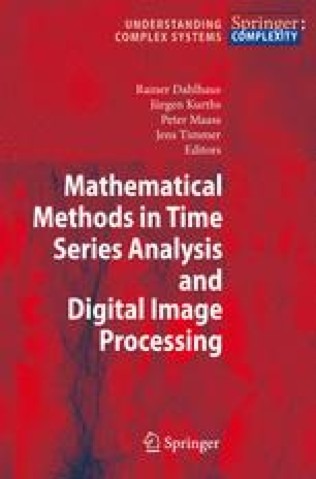
Mathematical Methods in Time Series Analysis and Digital Image Processing
The aim of this volume is to bring together research directions in theoretical signal and imaging processing developed rather independently in electrical engineering, theoretical physics, mathematics and the computer sciences. In particular, mathematically justified algorithms and methods, the mathematical analysis of these algorithms, and methods as well as the investigation of connections between methods from time series analysis and image processing are reviewed. An interdisciplinary comparison of these methods, drawing upon common sets of test problems from medicine and geophysical/enviromental sciences, is also addressed.

Machine Learning, Image Processing, Network Security and Data Sciences ; 2nd International conference, MIND 2020, Silchar, India, July 30 - 31, 2020, Proceedings, Part II
This two-volume set (CCIS 1240-1241) constitutes the refereed proceedings of the Second International Conference on Machine Learning, Image Processing, Network Security and Data Sciences, MIND 2020, held in Silchar, India. Due to the COVID-19 pandemic the conference has been postponed to July 2020. The 79 full papers and 4 short papers were thoroughly reviewed and selected from 219 submissions. The papers are organized according to the following topical sections: data science and big data; image processing and computer vision; machine learning and computational intelligence; network and cyber security.

Machine learning, image processing, network security and data sciences ; 2nd International conference, MIND 2020, Silchar, India, July 30 - 31, 2020, Proceedings, Part I
This two-volume set (CCIS 1240-1241) constitutes the refereed proceedings of the Second International Conference on Machine Learning, Image Processing, Network Security and Data Sciences, MIND 2020, held in Silchar, India. Due to the COVID-19 pandemic the conference has been postponed to July 2020. The 79 full papers and 4 short papers were thoroughly reviewed and selected from 219 submissions. The papers are organized according to the following topical sections: data science and big data; image processing and computer vision; machine learning and computational intelligence; network and cyber security.

Machine Learning in Document Analysis and Recognition
The objective of Document Analysis and Recognition (DAR) is to recognize the text and graphicalcomponents of a document and to extract information. With ?rst papers dating back to the 1960’s, DAR is a mature but still gr- ing research?eld with consolidated and known techniques. Optical Character Recognition (OCR) engines are some of the most widely recognized pr- ucts of the research in this ?eld, while broader DAR techniques are nowadays studied and applied to other industrial and o?ce automation systems. In the machine learning community, one of the most widely known - search problems addressed in DAR is recognition of unconstrained handwr- ten characters which has been frequently used in the past as a benchmark for evaluating machine learning algorithms, especially supervised classi?ers.

Machine learning for cyber security ; 3rd International Conference, ML4CS 2020, Guangzhou, China, October 8–10, 2020, Proceedings, Part III
Constitutes the proceedings of the Third International Conference on Machine Learning for Cyber Security, ML4CS 2020, held in Xi’an, China in October 2020. The 118 full papers and 40 short papers presented were carefully reviewed and selected from 360 submissions. The papers offer a wide range of the following subjects: Machine learning, security, privacy-preserving, cyber security, Adversarial machine Learning, Malware detection and analysis, Data mining, and Artificial Intelligence.
Machine learning and deep learning in medical data analytics and healthcare applications
Introduces and explores a variety of schemes designed to empower, enhance, and represent multi-institutional and multi-disciplinary machine learning (ML) and deep learning (DL) research in healthcare paradigms. Serving as a unique compendium of existing and emerging ML/DL paradigms for the healthcare sector, this book demonstrates the depth, breadth, complexity, and diversity of this multi-disciplinary area. It provides a comprehensive overview of ML/DL algorithms and explores the related use cases in enterprises such as computer-aided medical diagnostics, drug discovery and development, medical imaging, automation, robotic surgery, electronic smart records creation, outbreak prediction, medical image analysis, and radiation treatments.

Computational and Statistical Approaches to Genomics
Computational and Statistical Approaches to Genomics, 2nd Edition, aims to help researchers deal with current genomic challenges. During the three years after the publication of the first edition of this book, the computational and statistical research in genomics have become increasingly more important and indispensable for understanding cellular behavior under a variety of environmental conditions and for tackling challenging clinical problems. In the first edition, the organizational structure was: data à analysis à synthesis à application. In the second edition, the same structure remains, but the chapters that primarily focused on applications have been deleted.
