



الصفحة 5
الصفحة 5
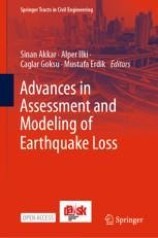
Advances in Assessment and Modeling of Earthquake Loss
Originates from an international workshop organized by Turkish Natural Catastrophe Insurance Pool (TCIP) in November 2019 that gathered renown researchers from academia, representatives of leading international reinsurance and modeling companies as well as government agencies responsible of insurance pricing in Turkey. The book includes chapters related to post-earthquake damage assessment, the state-of-art and novel earthquake loss modeling, their implementation and implication in insurance pricing at national, regional and global levels, and the role of earthquake insurance in building resilient societies and fire following earthquakes. The rich context encompassed in the book makes it a valuable tool not only for professionals and researchers dealing with earthquake loss modeling but also for practitioners in the insurance and reinsurance industry.
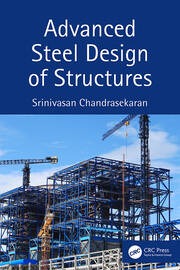
Advanced Steel Design of Structures
Examines the design principles of steel members under special loads and covers special geometric forms and conditions not typically presented in standard design books. It explains advanced concepts in a simple manner using numerous illustrative examples and MATLAB® codes.
Advanced Earthquake Engineering Analysis
The purpose of the book is to review the fundamentals of displacement based methods, starting from engineering seismology, earthquake geotechnical engineering, to focus on design, analysis and testing of structures with emphasis on buildings and bridges.

Advanced computational methods and geomechanics
Helps readers comprehensively grasp the intrinsic features of typical advanced computational methods. These methods are created in recent three decades for the understanding of the post-failure of geo-materials accompanied with discontinuous and finite deformation/dislocation, as well as the violent fluid-structure interaction accompanied with strong distortion of water surface. The strong points and weak points of the formalisms for governing equations, the discretization schemes, the nodal interpolation /approximation of field variables, and their connectivity (via support domains, covers, or enrichments), the basic algorithms, etc., are clarified.
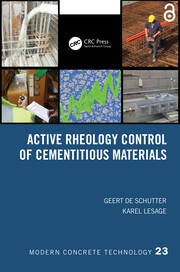
Active Rheology Control of Cementitious Materials
The research presented here develops a new method of actively controlling the rheology of fresh concrete during casting operations by incorporating specially designed responsive components. This results in real-time changes to the rheological behaviour of the cementitious material, allowing the user to intervene actively after the cementitious material has left the mixing phase. This newly gained agility contributes to increased processing speed and placement reliability in the case of traditional casting methods and can also facilitate advanced 3D concrete printing. The different routes followed to achieve this Active Rheology Control are explained within.
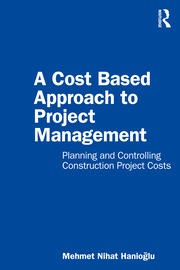
A cost based approach to project management : Planning and controlling construction project costs
Illustrates the principles of project management and the essentials of cost planning and control with easy-to-understand examples from the construction industry. Includes step-by-step details of project planning, cost estimating, and management processes. Offers clear, cost-based methods for defining scope, preparing bids, and planning for contingencies, as well as monitoring progress and determining when to take remedial action. Contains a user-friendly guide to project management acronyms and terminology. Provides sample construction schedules, budgets, and progress report forms
