



الصفحة 5
الصفحة 5
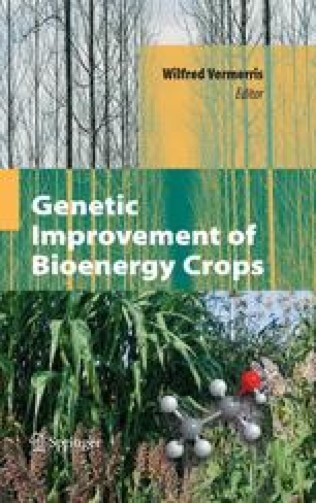
Genetic Improvement of Bioenergy Crops
This book presents an overview of the major bioenergy crops that can be used for the production of biomass and ethanol, with a focus on their genetic improvement. In order to maintain focus, biodiesel and the genetic improvement of oil crops are not covered. The available genetic resources are largely untapped and offer major opportunities to significantly enhance the contribution of bioenergy, while addressing many of the economic and ecological concerns.

Genetic Engineering : Principles and Methods
Genetic Engineering: Principles and Methods presents state-of-the-art discussions in modern genetics and genetic engineering. Recent volumes have covered gene therapy research, genetic mapping, plant science and technology, transport protein biochemistry, and viral vectors in gene therapy, among many other topics.

Genetic Engineering
Genetic Engineering: Principles and Methods presents state-of-the-art discussions in modern genetics and genetic engineering. Recent volumes have covered gene therapy research, genetic mapping, plant science and technology, transport protein biochemistry, and viral vectors in gene therapy, among many other topics.

Genetic Basis for Respiratory Control Disorders
The objective of the book is to supply state-of-the-art contributions about all aspects of respiratory control genetics, from the molecular to the system level. The book aims to review the full spectrum of available knowledge, which starts with early physiological studies in health and disease in humans and studies in rodents that suggested a hereditary component to respiratory control. The spectrum extends to recent work elucidating crucial molecular aspects of respiratory control development, from early embryonic specifications in the neural tube to the function of respiratory rhythm generators.

Genes, development, and cancer : The life and work of Edward B. Lewis
Edward B. Lewis' science is the bridge linking experimental genetics as conducted in the first half of the twentieth century, and the powerful molecular genetic approaches that revolutionized the field in its last quarter. For the first time Lewis' key publications in the fields of genetics, developmental biology, radiation and cancer are compiled within one volume.

Gene Therapy and Gene Delivery Systems
Advances in Biochemical Engineering/Biotechnology reviews actual trends in modern biotechnology. Its aim is to cover all aspects of this interdisciplinary technology where knowledge, methods and expertise are required for chemistry, biochemistry, micro-biology, genetics, chemical engineering and computer science

GDPR and biobanking : Individual rights, Public interest and research regulation across Europe
This book focuses on the discrepancies in biobank research regulations that are among the most significant hurdles to effective research collaboration.

Galactose Regulon of Yeast : From Genetics to Systems Biology
The galactose regulon of yeast is one of the best studied regulons. It is an ideal paradigm for demonstrating fundamental and evolving concepts in biology and is used in this book as a model system to explain various facets of conventional and modern biology. The book starts with a brief historical overview on yeast research, i.e. early observations in enzyme adaptation, classical genetics, formulating hypotheses based on genetic inference. This is followed by molecular genetics of the galactose regulon, isolation of genes and testing of the hypotheses. The power of mutational analysis in deciphering molecular mechanisms is conveyed. Further, contemporary topics such as genomics, evolution, single cell analysis of transcriptional switching, binary and graded responses, biological consequences of feed back regulation in genetic circuits, and stochasticity are addressed.

Future approaches for safe and effective pain management
Pain is defined as an unpleasant sensory and emotional experience that is associated with actual or potential tissue damage or described in terms of such damage. It is subjective and considered an important physiological mechanism by which humans prevent themselves from developing tissue injury. However, pain patients do not respond to treatment in the same way, which makes it challenging to issue a consistent treatment for all pain conditions. Excessive pain can markedly increase psychological health problems and decrease health‐related quality of life; therefore, pain should be managed appropriately by analgesics. Analgesics act in various ways on the peripheral and central pain pathways and are regarded as one of the most valuable but equally dangerous groups of medications. Individual variability in pain perception and differences in the efficacy of analgesic drugs are complex phenomena and are partly genetically predetermined. Pain severities as well as responses to analgesics, can also be very variable among sufferer.

Frontiers in periodontology: new directions and emerging therapies
Offers a comprehensive overview of emerging advancements in the management of periodontal and peri-implant diseases, providing crucial insights for clinicians and researchers alike. It explores the potential of probiotics in restoring oral microbiome balance and investigates the future applications of epigenetics and stem cell therapies in periodontal regeneration. The book highlights innovative technologies. Emphasizing minimally invasive, non-surgical treatments and novel non-invasive indices for evaluation, this volume advocates for safer and more effective approaches to periodontal care.

From Melanocytes to Malignant Melanoma: The Progression to Malignancy
Melanoma offers an excellent model for cancer biology and an opportunity to understand the progression of a normal skin cell-the melanocyte-to malignancy. In From Melanocytes to Melanoma: The Progression to Malignancy, leading researchers and clinicians join forces to explain how skin cancer develops from its benign precursor cell type.

Forensic Genetics in the Governance of Crime
This book uses a critical sociological perspective to explore contemporary ways of reformulating the governance of crime through genetics. Through the lens of scientific knowledge and genetic technology, Machado and Granja offer a unique perspective on current trends in crime governance. They explore the place and role of genetics in criminal justice systems, and show how classical and contemporary social theory can help address challenges posed by social processes and interactions generated by the uses, meanings, and expectations attributed to genetics in the governance of crime

Food Biotechnology in Ethical Perspective
Agrifood biotechnology—the genetic transformation of plants and animals through recombinant means—has created controversy in the food system for more than twenty years. The new edition reflects lessons from the hotly contested debates over those issues in the intervening decade, and includes wholly new discussions on ethical issues associated with livestock cloning, the Precautionary Principle, and the transatlantic debate between United States and European perspectives on biotechnology.
Flower Breeding and Genetics : Issues, Challenges and Opportunities for the 21st Century
This book provides a unique and valuable resource on the many issues and challenges facing flower breeders, as well as the industry at-large. In this volume, the first comprehensive assemblage of its kind, a team of 32 international authorities has contributed to make this book a ‘must-have’ reference to research and develop flower crops for the 21st century consumers. Part 1 of this book (flower breeding program issues) contains unique features of interest to horticultural professionals and students, include coverage of plant protection strategies, cultivar trialing methodology, germplasm collection/preservation, preventing invasiveness, and other timely topics. The collective body of knowledge for 24 flower crops (Part 2: Crop-specific Breeding and Genetics) represents the in-depth science and art of breeding technology available for bedding plants, flowering potted plants, cut flowers, and herbaceous perennials. Each author provides crop-specific history, evolution, biology, taxonomy, state-of-the-art breeding/genetics, classical/molecular technologies, species traits, interspecific hybridization, and directions for future development/enhancement.

Experimental Glycoscience : Glycobiology
The aim of this book is to provide experimental protocols covering many aspects of glycobiology, glycotechnology, and chemistry: biochemistry, molecular and cellular biology, genetics, physiology, and medicine. The protocols are all self-contained descriptions of the equipment and reagents needed, followed by details of the experimental procedure.

Experimental Glycoscience : Glycobiology
The aim of this book is to provide experimental protocols covering many aspects of glycobiology, glycotechnology, and chemistry: biochemistry, molecular and cellular biology, genetics, physiology, and medicine. The protocols are all self-contained descriptions of the equipment and reagents needed, followed by details of the experimental procedure.

Exogenous and endogenous factors affecting happiness, happy mind, happy life
Emotions are the language of the soul. Our brain is the emotional center where every emotion is produced including happiness. Happiness underlying factors are considerable from two dimensions: endogenous factors and exogenous factors Therefore, this research aimed to consider biological factors that underlie happiness. The research is divided into several sub-groups (brain, genetics, neurotransmitters, endocrinology, hormones, drugs, diseases, and other exogenous factors). In spite of difficulties in finding special genes, several genes distributed to emotion and mood. Neuroscience studies showed that some part of brain (e.g. amygdala, hipocamp and limbic system) and neurotransmitters (e.g. dopamine, serotonin, norepinefrine and endorphin) play a role in control of happiness. A few studies pointed to the role of cortisol and adrenaline (adrenal gland) and oxitocin (pituitary gland) in controlling happiness.

Evolutionary Genomics : Statistical and Computational Methods
This book addresses the challenge of analyzing and understanding the evolutionary dynamics of complex biological systems at the genomic level, and elaborates on some promising strategies that would bring us closer to uncovering of the vital relationships between genotype and phenotype. After a few educational primers, the book continues with sections on sequence homology and alignment, phylogenetic methods to study genome evolution, methodologies for evaluating selective pressures on genomic sequences as well as genomic evolution in light of protein domain architecture and transposable elements, population genomics and other omics, and discussions of current bottlenecks in handling and analyzing genomic data. Written for the highly successful Methods in Molecular Biology series, chapters include the kind of detail and expert implementation advice that lead to the best results.
Evolutionary computation, machine learning and data mining in bioinformatics ; 6th European Conference, EvoBIO 2008, Naples, Italy, March 26-28, 2008. Proceedings
The feld of bioinformatics has two main objectives: the creation and main- nance of biological databases, and the discovery of knowledge from life sciences data in order to unravel the mysteries of biological function, leading to new drugs and therapies for human disease. Life sciences data come in the form of biological sequences, structures, pathways, or literature. One major aspect of discovering biological knowledge is to search, predict, or model specifc infortioninagivendatasetinorderto generate new in teresting knowledge.Computer science methods such as evolutionary computation, machine learning, and data mining all have a great deal to ofer the feld of bioinformatics.

Evolutionary computation, machine learning and data mining in bioinformatics ; 5th European Conference, EvoBIO 2007, Valencia, Spain, April 11-13, 2007, Proceedings
This book Covers brings together experts in computer science with experts in bioinformatics and the biological sciences. It presents contributions on fundamental and theoretical issues along with papers dealing with different applications areas.
