



الصفحة 5
الصفحة 5

Data Mining in Bioinformatics
8. 1. 1 Protein Subcellular Location The life sciences have entered the post-genome era where the focus of biological research has shifted from genome sequences to protein functionality. Withwhole-genomedraftsofmouseandhumaninhand,scientistsareputting more and more e?ort into obtaining information about the entire proteome in a given cell type. The properties of a protein include its amino acid sequences, its expression levels under various developmental stages and in di?erent tissues, its3Dstructure and activesites,its functionalandstructural binding partners, and its subcellular location. Protein subcellular location is important for understanding protein function inside the cell. For example, the observation that the product of a gene is localized in mitochondria will support the hypothesis that this protein or gene is involved in energy metabolism. Proteins localized in the cytoskeleton are probably involved in intracellular tra?cking and support.
Data Mining for Biomedical Applications ; PAKDD 2006 Workshop, BioDM 2006, Singapore, April 9, 2006, Proceedings
This book constitutes the refereed proceedings of the International Workshop on Data Mining for Biomedical Applications, BioDM 2006, held in Singapore in conjunction with the 10th Pacific-Asia Conference on Knowledge Discovery and Data Mining (PAKDD 2006). The 14 revised full papers presented together with 1 keynote talks were carefully reviewed and selected from 35 submissions. The papers are organized in topical sections on protein-protein interactions, database and search, bio data clustering, and in-silico diagnosis.

Data Integration in the Life Sciences ; Vol. 4075 ; 3rd International Workshop, DILS 2006, Hinxton, UK, July 20-22, 2006, Proceedings
Data management and data integration are fundamental problems in the life sciences. Advances in molecular biology and molecular medicine are almost u- versallyunderpinned by enormouse?orts in data management,data integration, automatic data quality assurance, and computational data analysis. Many hot topics in the life sciences, such as systems biology, personalized medicine, and pharmacogenomics, critically depend on integrating data sets and applications producedby di?erent experimentalmethods, in di?erent researchgroups,andat di?erent levels of granularity.
Data Integration in the Life Sciences ; 4th International Workshop, DILS 2007, Philadelphia, PA, USA, June 27-29, 2007, Proceedings
it cover a wide spectrum of theoretical and practical issues including scienti?c work?ows, - notation in data integration, mapping and matching techniques, and modeling of life science data. It presenting research on new models, methods, or algorithms and 6 papers presenting imp- mentation of systems or experience with systems in practice.

Current Themes in Theoretical Biology : A Dutch Perspective
The present volume originated in 2001 when we, together with our publishing editors at (then) Kluwer Academic Publishers, realized that the th following year the 50 volume of our journal Acta Biotheoretica would see the light. We felt that this milestone should not pass unnoticed and that the appropriate way to mark it would be the publication of a special volume of papers on theoretical biology. While editing this book during 2003 and early 2004, we realized that another milestone was not far off: in 2005 it will be 70 years ago that the journal was founded. We hope that the book lying before you will serve well to mark both events. The papers collected here have been written on invitation by representatives of the theoretical biology community in The Netherlands. They are intended to reflect the entire spectrum of topics on which Acta Biotheoretica publishes, ranging from philosophy of biology on one end to mathematical biology on the other. All chapters (except our own introductory one) have been peer reviewed according to the standards that are maintained with respect to regular submissions to Acta Biotheoretica.

Coronaviruses : Methods and Protocols
Aims to describe a variety of techniques that reflects the wide range of research currently performed in the field of coronavirology, and begins with an overview of current understandings of coronavirus replication and pathogenesis to introduce specialists and non-specialists to the field. The rest of the book is divided into several sections of chapters beginning with those that describe identification, diagnosis, and study of the evolution of coronaviruses. The next few chapters discuss the preparation of cells and organ cultures useful in propagating coronaviruses and titration techniques, as well as techniques for analyzing virus functions that require purification of the viruses. The next chapters describe two commonly used reverse genetics techniques for coronaviruses, and techniques detailing identification of cellular receptors, binding profiles of viral attachment proteins, and virus-cell fusion. The final chapters cover a broad spectrum of techniques to identify virus-host protein-protein interactions, confirm the functional role of these proteins in virus replication, study host cell responses through genome-wide or pathway-specific approaches, and visualize virus replication complexes. Written in the highly successful Methods in Molecular Biology series format, the chapters include the kind of detailed description and implementation advice that is crucial for getting optimal results in the laboratory.

Coronavirus Replication and Reverse Genetics
This book contains information on virus genome structure, mechanism of replication and transcription, and the development of tools that make possible reverse genetic studies to understand virus-host interactions and the molecular basis of virus pathogenesis. The book also provides essential information for the development of classical and recombinant vaccines to control coronavirus infections.

Conditional Mutagenesis : An Approach to Disease Models
Leading experts provide timely and comprehensive information on methods for conditional mutagenesis in the mouse (part 1) and their application to model human physiology and pathophysiology (part 2). It illustrates how sophisticated genetic manipulations of the mouse genome are employed to model human diseases and to identify underlying molecular mechanisms. Finally the book considers the development of new drugs to treat them.

Computational Life Sciences ; Vol. 4216 ; 2nd International Symposium, CompLife 2006, Cambridge, UK, September 27-29, 2006, Proceedings
This book constitutes the refereed proceedings of the Second International Symposium on Computational Life Sciences, CompLife 2006. The papers are organized in topical sections on genomics, data mining, molecular simulation, molecular informatics, systems biology, biological networks/metabolism, and computational neuroscience.

Computational Life Sciences ; Vol. 3695 ; 1st International Symposium, CompLife 2005, Konstanz, Germany, September 25-27, 2005, Proceedings
This book constitutes the refereed proceedings of the First International Symposium on Computational Life Sciences, CompLife 2005, held in Konstanz, Germany in September 2005. The integration of knowledge in the life sciences is continuing apace with ev- increasingimportancebeing placedoncomputer-basedmethodsofdata capture, analysis, and knowledge representation. Today, our many di?erent sciences are providing us with a sea of information: it is the handling of this in?ux that is becoming a key discovery and regulatory question. The solutions to these problems will result in advancements to all of the involved sciences and will be highly in?uential both in the selection of the areas scientists seek to investigate and also on their success. For this to happen, it is crucial to establish an open and lively exchange between computer scientists, biologists, and chemists. To encourage precisely this type of exchange, crossing the borders of the sciences, we organized the 1st Symposium on Computational Life Science in Konstanz, Germany(September 25 27,2005).

Computational Intelligence in Medical Informatics
This book deals with the application of computational intelligence in medical informatics. Addressing the various issues of medical informatics using different computational intelligence approaches is the novelty of this edited volume.

Computational intelligence in bioinformatics
This book deals with the application of computational intelligence in bioinformatics. Addressing the various issues of bioinformatics using different computational intelligence approaches is the novelty of this edited volume.

Computational intelligence and bioinformatics ; International conference on intelligent computing, ICIC 2006, Kunming, China, August 16-19, 2006, Proceedings, Part III
The International Conference on Intelligent Computing (ICIC) was formed to provide an annual forum dedicated to the emerging and challenging topics in artificial intelligence, machine learning, bioinformatics, and computational biology, etc. It aims to bring together researchers and practitioners from both academia and industry to share ideas, problems and solutions related to the multifaceted aspects of intelligent computing.the theme for this conference was “Emerging Intelligent Computing Technology and Applications”. Papers related to this theme were especially solicited, including theories, methodologies, and applications in science and technology.
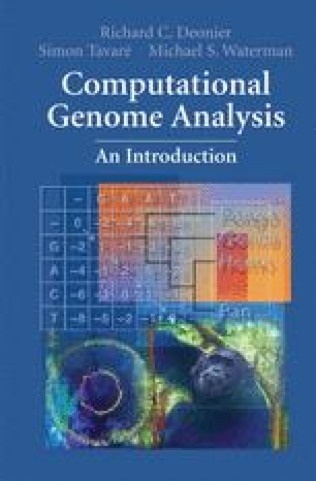
Computational genome analysis : An introduction
Computational Genome Analysis: An Introduction presents the foundations of key problems in computational molecular biology and bioinformatics. It focuses on computational and statistical principles applied to genomes, and introduces the mathematics and statistics that are crucial for understanding these applications. The book is appropriate for a one-semester course for advanced undergraduate or beginning graduate students, and it can also introduce computational biology to computer scientists, mathematicians, or biologists who are extending their interests into this exciting field.

Computational genetics and genomics : Tools for understanding disease
The authors introduce a new computational approach that makes it possible to identify the genetic basis for differences in physiological or pathological responses among inbred mouse strains, thus facilitating more rapid genetic discovery

Computational Discovery of Scientific Knowledge : Introduction, Techniques, and Applications in Environmental and Life Sciences
Advances in technology have enabled the collection of data from scientific observations, simulations, and experiments at an ever-increasing pace. For the scientist and engineer to benefit from these enhanced data collecting capabilities, it is becoming clear that semi-automated data analysis techniques must be applied to find the useful information in the data. Computational scientific discovery methods can be used to this end: they focus on applying computational methods to automate scientific activities, such as finding laws from observational data. In contrast to mining scientific data, which focuses on building highly predictive models, computational scientific discovery puts a strong emphasis on discovering knowledge represented in formalisms used by scientists and engineers, such as numeric equations and reaction pathways. This state-of-the-art survey provides an introduction to computational approaches to the discovery of scientific knowledge and gives an overview of recent advances in this area, including techniques and applications in environmental and life sciences.

Combinatorial pattern matching ; Vol.4009) ; 17th Annual Symposium, CPM 2006, Barcelona, Spain, July 5-7, 2006, Proceedings
The book presents 33 revised full papers together with 3 invited talks, organized in topical sections on data structures, indexing data structures, probabilistic and algebraic techniques, applications in molecular biology, string matching, data compression, and dynamic programming

Combinatorial pattern matching ; Vol. 3537 ; 16th Annual Symposium, CPM 2005, Jeju Island, Korea, June 19-22, 2005, Proceedings
This volume presents the proceedings of The 16th Annual Symposium on Combinatorial Pattern Matching was heldon Jeju Island, Korea on June 19–22, 2005. the Program Committee accepted 37 of the submissionsto be presented at the conference. This collection of papers offers original research contributionsin combinatorial pattern matching and its applications.In addition to the selected papers

Combinatorial pattern matching ; 18th Annual Symposium, CPM 2007, London, Canada, July 9-11, 2007, Proceedings
This book presented original research contri- tions on computational pattern matching and analysis, data compression and compressed text processing, sufix arrays and trees, and computational biology. Combinatorial Pattern Matching addresses issues of searching and matching strings and more complicated patterns such as trees, regular expressions, graphs, point sets, and arrays.The goal is to derive non-trivial combinatorial properties of such structures and to exploit these properties in order to either achieve superior performance for the corresponding computational problems or pinpoint conditions under which searches cannot be performed eficiently.

Marine bioactive molecules for biomedical and pharmacotherapeutic application
Explores cutting-edge research on the discovery and application of marine bioactive molecules for biomedical and pharmacotherapeutic purposes. The book begins by delving into the bioprospection of marine sponge microbiomes for bioactive metabolites using advanced metagenomics tools. It then explores metagenome mining approaches for the discovery of marine microbial natural products. The use of marine-derived fungi as a source of anticancer secondary metabolites is also discussed. The book then turns to the biomedical applications of marine-derived biomaterials, including marine biopolymers in tissue engineering and regenerative medicine. Marine-derived pharmaceuticals and polymeric nanostructures for cancer treatment are also examined.
