



الصفحة 5
الصفحة 5

Computational Contact Mechanics
This is the second edition of the valuable reference source for numerical simulations of contact mechanics suitable for many fields like civil engineering, car design, aeronautics, metal forming, or biomechanics. Boundary value problems involving contact are of great importance in industrial applications in engineering such as bearings, metal forming processes, rubber seals, drilling problems, crash analysis of cars, rolling contact between car tires and the road, cooling of electronic devices... Other applications are related to biomechanical engineering design where human joints, implants or teeth are of consideration. Due to this variety, contact problems are today combined either with large elastic or inelastic deformations including time dependent responses. Thermal coupling also might have to be considered. Even stability behaviour has to be linked to contact.

Mathematical modeling of the human brain : From magnetic resonance images to finite element simulation
This book bridges common tools in medical imaging and neuroscience with the numerical solution of brain modelling PDEs. The connection between these areas is established through the use of two existing tools, FreeSurfer and FEniCS, and one novel tool, the SVM-Tk, developed for this book. The reader will learn the basics of magnetic resonance imaging and quickly proceed to generating their first FEniCS brain meshes from T1-weighted images.

Mathematical Methods for Mechanics : A Handbook with MATLAB Experiments
The interaction between mathematics and mechanics is a never ending source of new developments. Today, challenging problems like space flight, gyroscope motions and tidal currents, can be studied on a laptop, feats that people still in the 1950’s dreamed of accomplishing. The present textbook addresses such problems and moreover, a wide-ranging spectrum of topics from bifurcation theory, optimization and control to rigid-body motion and continuum mechanics of elastic bodies and fluids. It fully encompasses the provision of mathematical tools up to their technical application. Because verifiability is a main element of science and numerical mathematics remain lackluster without demonstrations, a portion of the book is dedicated purely to computations.
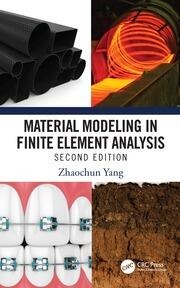
Material Modeling in Finite Element Analysis
Presents some specific problems including the metal-forming process, combustion room, Mullins effect of rubber tires, viscoelasticity of liver soft tissues, small punch test, tunnel excavation, slope stability, concrete slump test, orthodontic wire, and piezoelectric microaccelerometer.
Machining: Fundamentals and Recent Advances
Machining is one of the most important manufacturing processes. Parts manufactured by others processes often require further operations before the product is ready for application. Machining is the broad term used to describe the removal of material from a work-piece. Machining processes can be applied to work metallic and non-metallic materials such as polymers, wood, ceramics and composites.
Linear Partial Differential Equations for Scientists and Engineers
This significantly expanded fourth edition is designed as an introduction to the theory and applications of linear PDEs. The authors provide fundamental concepts, underlying principles, a wide range of applications, and various methods of solutions to PDEs. In addition to essential standard material on the subject, the book contains new material that is not usually covered in similar texts and reference books, including conservation laws, the spherical wave equation, the cylindrical wave equation, higher-dimensional boundary-value problems, the finite element method, fractional partial differential equations, and nonlinear partial differential equations with applications.

Large-Scale Scientific Computing ; 6th International Conference, LSSC 2007, Sozopol, Bulgaria, June 5-9, 2007. Revised Papers
The 6th International Conference on Large-Scale Scienti?c Computations (LSSC 2007) was held in Sozopol, Bulgaria, June 5–9, 2007. The conference was organized by the Institute for Parallel Processing at the Bulgarian Academy of Sciences in cooperation with SIAM (Society for Industrial and Applied Ma- ematics). Partial support was also provided from project BIS-21++ funded by the European Commission in FP6 INCO via grant 016639/2005. The conference was devoted to the 60th anniversary of Richard E. Professor Ewing is internati- ally well known with his contributions in applied mathematics, mathematical modeling, and large-scale scientific computations.
IUTAM symposium on topological design optimization of structures, machines and materials ; Status and perspectives
Contains the refereed and edited versions of papers presented at the IUTAM Symposium on Topological Design Optimization of Structures. The IUTAM Symposium provided a forum for the exchange of ideas for - ture developments in the area of topological design optimization. This enc- passed the application to ?uid-solid interaction problems, acoustics problems, and to problems in biomechanics, as well as to other multiphysics problems.
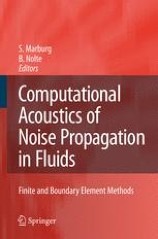
Computational Acoustics of Noise Propagation in Fluids - Finite and Boundary Element Methods
Among numerical methods applied in acoustics, the Finite Element Method (FEM) is normally favored for interior problems whereas the Boundary Element Method (BEM) is quite popular for exterior ones. That is why this valuable reference provides a complete survey of methods for computational acoustics, namely FEM and BEM. It demonstrates that both methods can be effectively used in the complementary cases. The chapters by well-known authors are evenly balanced: 10 chapters on FEM and 10 on BEM. An initial conceptual chapter describes the derivation of the wave equation and supplies a unified approach to FEM and BEM for the harmonic case. A categorization of the remaining chapters and a personal outlook complete this introduction. In what follows, both FEM and BEM are discussed in the context of very different problems.
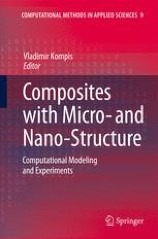
Composites with micro- and nano-structure : Computational modeling and experiments
The book contains atomistic and continuum numerical methods and experimental validation for composite materials reinforced with particles or fibres, porous materials, homogenization and other important topics for research in this field.
Composites for building assembly : connections, members and structures
Pesents buildings developed using modular assembly approaches based on lightweight and corrosion-resistant fiber reinforced polymer (FRP) composites. Construction methods and the choice of building materials offer great opportunities for more productive and environmentally friendly solutions. This book includes valuable experimental data on large-scale structural components (beams, slabs, amd columns), connections (shear connections, wall stud connections, beam-column connections, column-column connections) and structures (composite floor system, structural sandwich assemblies, and full-scale structural demonstrations), supported with detailed numerical modelling and analytical methods.
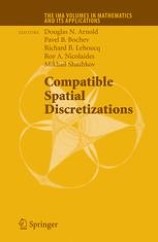
Compatible Spatial Discretizations
Compatible spatial discretizations are those that inherit or mimic fundamental properties of the PDE such as topology, conservation, symmetries, and positivity structures and maximum principles. It offer a snapshot of the current trends and developments in compatible spatial discretizations. The reader will find valuable insights on spatial compatibility from several different perspectives and important examples of applications compatible discretizations in computational electromagnetics, geosciences, linear elasticity, eigenvalue approximations and MHD. The contributions collected in this volume will help to elucidate relations between different methods and concepts and to generally advance our understanding of compatible spatial discretizations for PDEs.
Characteristics Finite Element Methods in Computational Fluid Dynamics
This book details a systematic characteristics-based finite element procedure to investigate incompressible, free-surface and compressible flows. The fluid dynamics equations are derived from basic thermo-mechanical principles and the multi-dimensional and infinite-directional upstream procedure is developed by combining a finite element discretization of a characteristics-bias system with an implicit Runge-Kutta time integration. For the computational solution of the Euler and Navier Stokes equations, the procedure relies on the mathematics and physics of multi-dimensional characteristics. As a result, the procedure crisply captures contact discontinuities, normal as well as oblique shocks, and generates essentially non-oscillatory solutions for incompressible, subsonic, transonic, supersonic, and hypersonic inviscid and viscous flows.

Bone remodeling and osseointegration of implants
Provides an insight into the latest advances in bone fracture healing and remodeling algorithm and their incorporation into patient-specific finite element models and the use of machine learning and artificial intelligence to predict the bone regeneration and osseointegration process with a certain degree of accuracy. It also examines the applications of numerical models to simulate the fracture healing process, which may prove to be advantageous in determining the optimal mechanical-based treatment or reconstruction after an accident or illness.
Biomedical Simulation; 4th International Symposium, ISBMS 2008, London, UK, July 7-8, 2008 Proceedings
This book constitutes the refereed proceedings of the 4th International Symposium on Biomedical Simulation, ISBMS 2008, held in London, UK, in July 2008.

Basics of fluid mechanics and introduction to computational fluid dynamics
Brings together the theoretical basics of fluid dynamics with a systemaic overview of the appropriate numerical and computational methods for solving the problems presented in the book. Also, effective codes for a majority of the examples are included.
Axial flux permanent magnet brushless machines
This book deals with the analysis, construction, design, control and applications of AFPM machines. The authors present their own research results, as well as significant research contributions made by others.
Applicazioni ed esercizi di modellistica numerica per problemi differenziali = Applications and exercises in numerical modeling for differential problems
Contains a collection of exercises related to typical topics in a course on analytical and numerical methods offered in a degree program in Engineering or Mathematics. Starting with exercises in functional analysis and approximation theory, the text develops problems related to the numerical resolution of elliptic, parabolic, and hyperbolic partial differential equations, scalar or vector, in one or more spatial dimensions. Pure diffusion and pure convection problems are therefore addressed, alongside diffusion-transport problems and problems in compressible and incompressible fluid dynamics. Particular emphasis is given to the finite element method for the spatial discretization of the problems considered, although exercises on the finite difference and finite volume methods are also included.
Application of the Finite Element Method in Implant Dentistry
Part of the new series, Advanced Topics in Science and Technology in China, this book is designed to give the necessary theoretical foundation to new users of the finite element method in implant dentistry, and show how both the implant dentist and designer can benefit from finite element analysis.
An Introduction to Scientific Computing : Twelve Computational Projects Solved with MATLAB
This book provides twelve computational projects aimed at numerically solving problems from a broad range of applications including Fluid Mechanics, Chemistry, Elasticity, Thermal Science, Computer Aided Design, Signal and Image Processing. For each project the reader is guided through the typical steps of scientific computing from physical and mathematical description of the problem, to numerical formulation and programming and finally to critical discussion of numerical results. Considerable emphasis is placed on practical issues of computational methods. The last section of each project contains the solutions to all proposed exercises and guides the reader in using the MATLAB scripts.
