



الصفحة 5
الصفحة 5

Directions in strong motion instrumentation ; Proceedings of the NATO SFP Workshop on Future Directions in Instrumentation for Strong Motion and Engineering Seismology, Kusadasi, Izmir, May 17-21, 2004
This book, which contains papers by invited authorities, represents a unique interaction between seismologists and earthquake engineers who examine issues of mutual concern in an overlapping area of major interest. The papers have been grouped around three major areas. -Seismic Hazard and Extreme Motions -Engineering Uses of Strong Motion Seismograms -Arrays and Observations.

Digital Excellence ; University Meets Economy
Digital economic modernization is a crucial element of progress in both OECD countries and newly industrialized countries. The contributions to this book explore the technological and economic dynamics of information and communication technology (ICT) and focus on several innovative software applications which aim at solving standard and new problems more efficiently. They particularly emphasize the point that innovation within an economic context does not solely concern companies and their customers; integrating research institutions and universities enhances the scope of creativity to not only produce concrete innovative ideas and projects, but also to develop procedures and techniques for putting them into practice. This book provides companies with both insights into new approaches and immediate access to innovative concepts.

Development of geopolymer from pond ash-thermal power plant waste : Novel constructional materials for civil engineers
Demonstrates how to utilize fly ash/pond ash (waste materials from thermal power plants) to produce a novel material called 'Geopolymer' (GP). Red mud, slags, etc., are mixed with fly ash to produce GP with enhanced strength. As shown in a few European countries, GP can replace cement, and some permanent structures constructed with GP are now appearing in a few advanced countries. GP, and geopolymer concrete, is considered suitable for the construction of roads, buildings, etc., and will eventually, fully or partially, replace cement.

Designing sustainable cities
Emphasizes new ways of designing for a sustainable city and urban environment. From several angles the future of our urbanism is illuminated. From a philosophical point of view, the city is seen as an organism, following complex ecosystemic principles, shining light on indigenous perspectives to become beneficial for sustainable design and core questions are asked whether current architectural practice is really sustainable. Simultaneously concrete practices are presented for cities in transformation, focusing on green infrastructure, smart city principles and health.

Designers' guide to EN1991-1-2, EN1992-1-2, EN1993-1-2 and EN1994-1-2 : Handbook for the fire design of steel, composite and concrete structures to the Eurocodes
The nature of the loading must first be understood before applying the structural engineering principles set out in the Eurocodes. For this reason this book is meant as a guide to four separate documents, EN1991 Part 1.2, EN1992 Part 1.2, EN1993 Part 1.2 and EN1994 Part 1.2 with reference where appropriate to the Eurocode covering the basis of design, EC06.

Designers' guide to EN 1994-2 Eurocode 4 : Design of steel and composite structures ; Part 2 : General rules and rules for bridges
It is an authoritative guide to the technical background and practical aspects of this European code of practice that will supersede corresponding national codes in the countries that are members of the European Standardisation Organisation - CEN (Comite Europeen de Normalisation). This book provides guidance on the interpretation and use of EN 1994-2 and presents worked examples. It deals with the issues that are encountered in typical steel and concrete composite bridge designs, and explains the relationships between EN 1994-1-1, EN 1994-2 and the other Eurocodes.

Designers' guide to EN 1993-2 Eurocode 3: Design of Steel Structures: Part 2: Steel Bridges
Describes the principles and requirements for safety, serviceability and durability of concrete bridges. This Designers' Guide provides the user with guidance on the interpretation and use of EN 1993-2 and also the relevant provisions in EN 1993-1-1, EN 1993-1-5, EN 1993-1-8, EN 1993-1-9, EN 1993-1-10 and EN 1993-1-11. Worked examples are provided to illustrate the use of the rules. It also explains the relationship with other Eurocode parts to which it refers (ENs 1990, 1991).

Designers' guide to EN 1992-2 Eurocode 2 : Design of concrete structures : Part 2: Concrete bridges
Describes the principles and requirements for safety, serviceability and durability of concrete bridges. It provides the user with guidance on the interpretation and use of EN 1992-2 and the relevant provisions of the general rules ofEN 1992-1-1. Worked examples are provided to illustrate the use of the rules. It also explains the relationship with the other Eurocode parts to which if refers (ENs 1990, 1991).

Design of structural elements : Concrete, steelwork, masonry and timber designs to Eurocodes
Topics include the philosophy of design, sustainable development, basic structural concepts, and material properties. After an overview of structural design, the book contains self-contained chapters with numerous diagrams and worked examples on design in reinforced concrete, structural steelwork and steel/concrete composites, masonry and timber based on EN 1990-1997. Elements considered cover reinforced concrete and composite floors, isolated foundation, cantilever retaining wall, load-bearing and panel walls, stud wall and connections.

Design of steel-concrete composite structures using high-strength materials
Design of Steel-Concrete Composite Structures Using High Strength Materials provides guidance on the design of composite steel-concrete structures using combined high-strength concretes and steels. The book includes a database of over 2,500 test results on composite columns to evaluate design methods, and presents calculations to determine critical parameters affecting the strength and ductility of high-strength composite columns. Finally, the book proposes design methods for axial-moment interaction curves in composite columns. This allows a unified approach to the design of columns with normal- and high-strength steel concrete materials.

Design of residential tower in Swaida city
The project is a concrete design of residential tower located in Swaida city. Consisting of basement containing shelter, car parking, warehouses, guard room & service rooms such as boilers and pumps, ground floor containing four apartments, repeated eight floors each floor contains four apartments, ground tank & two upper tanks.

Design of Reinforced Concrete Sections Under Bending and Axial Forces : Tables and Charts According to EUROCODE 2
Contains auxiliary calculation tools to facilitate the safety assessment of reinforced concrete sections. Essential parameters in the design to the ultimate limit state of resistance such as the percentage of reinforcement and the position of the neutral axis in concrete cross-sections, as well as the control of the maximum stresses in service limit states are provided by these tools.

Design of reinforced concrete residential building in Damascus
Our project consists of a reinforced residential building in the Damascus. It is made of thirteen stories including basement, and we have two water tanks on top of the stairwell. The basement consists two shelters.
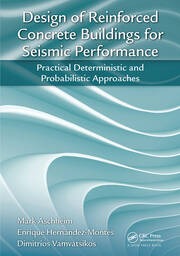
Design of Reinforced Concrete Buildings for Seismic Performance : Practical Deterministic and Probabilistic Approaches
Presents an elegant, simple and theoretically coherent design framework. Required strength is determined on the basis of an estimated yield displacement and desired limits of system ductility and drift demands. A simple deterministic approach is presented along with its elaboration into a probabilistic treatment that allows for design to limit annual probabilities of failure. The design method allows the seismic force resisting system to be designed on the basis of elastic analysis results, while nonlinear analysis is used for performance verification. Detailing requirements of ACI 318 and Eurocode 8 are presented. Students will benefit from the coverage of seismology, structural dynamics, reinforced concrete, and capacity design approaches, which allows the book to be used as a foundation text in earthquake engineering.

Design of industrial structures : Reinforced cement concrete and steel
Bridges the gap between academic and professional field pertaining to design of industrial reinforced cement concrete and steel structures. It covers pertinent topics on contracts, specifications, soil survey and design criteria to clarify objectives of the design work. Further, it gives out guiding procedures on how to proceed with the construction in phases at site, negotiating changes in equipment and design development. Safety, quality and economic requirements of design are explained with reference to global codes. Latest methods of analysis, design and use of advanced construction materials have been illustrated along with a brief on analysis software and drafting tool.

Design of Hybrid Structures : Where Steel Profiles Meet Concrete
Focuses on design approaches for concrete structures reinforced in an unconventional way by steel profiles. It explains force transfer mechanisms of steel profiles and oncrete interfaces, and an analysis of the characteristics of hybrid structures, including slendercomponents. Several types of hybrid designs are addressed: walls and columns with several embedded steel profiles, connections strengthened by steel profiles between steel and composite or reinforced concrete components, including the specific case of shear keys connecting deep beams or flat slabs to columns. The transition zones in partly reinforced concrete and partly composite columns are also covered.
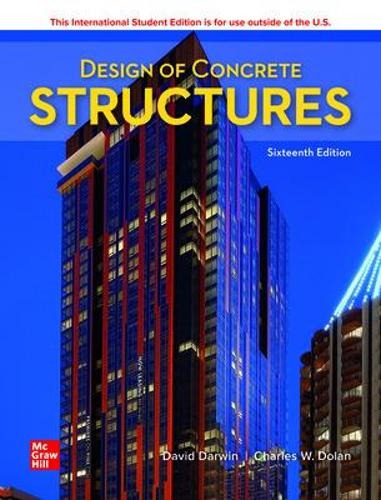
Design of Concrete Structures
Presents the basic mechanics of structural concrete and methods for the design of individual members subjected to bending, shear, torsion, and axial forces. It additionally addresses in detail applications of the various types of structural members and systems, including an extensive presentation of slabs, beams, columns, walls, footings, retaining walls, and the integration of building systems

Design for a concrete residential building in Swaida city
Our project in Sweida city. A concrete residential building consist from ten typical floors with a basement. The structural system to resist earthquakes is shear walls in both directions. All calculations based on the Arab Syrian code.

Design examples for high strength steel reinforced concrete columns : A Eurocode 4 approach
SRC column subjected to axial compression -- SRC column with normal strength material -- SRC column with high strength concrete -- SRC column with high strength steel -- SRC column with high strength concrete and steel -- SRC column subjected to combined compression and bending -- SRC column with normal strength material -- SRC column with high strength concrete -- SRC column with high strength steel -- SRC column

Design a govermental reinforced concrete building in damascus
This calculation sheet is done to study 5 story building by using reinforced concrete, this sheet analysis the building according to horizontal loads and vertical by slabs ripped and solid beams dropped or hidden shear walls and columns stairs and elevators core and as an foundation system this sheet will analysis 3type pad and strip and also a partial rafter. In this build it has a shelter in its basement and it should be surrounded by walls work as rati9ng wall.
