



الصفحة 5
الصفحة 5

Handbook of Mathematical Models in Computer Vision
In this edited volume we present the most prominent mathematical models that are considered in computational vision. To this end, tasks of increasing complexity are considered and we present the state-of-the-art methods to cope with such tasks. The volume consists of six thematic areas that provide answers to the most dominant questions of computational vision: Image reconstruction, Segmentation and object extraction, Shape modeling and registration, Motion analysis and tracking, 3D from images, geometry and reconstruction Applications in medical image analysis
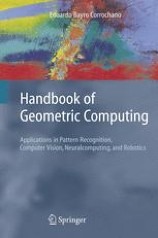
Handbook of Geometric Computing : Applications in Pattern Recognition, Computer Vision, Neuralcomputing, and Robotics
Many computer scientists, engineers, applied mathematicians, and physicists use geometry theory and geometric computing methods in the design of perception-action systems, intelligent autonomous systems, and man-machine interfaces. This handbook brings together the most recent advances in the application of geometric computing for building such systems, with contributions from leading experts in the important fields of neuroscience, neural networks, image processing, pattern recognition, computer vision, uncertainty in geometric computations, conformal computational geometry, computer graphics and visualization, medical imagery, geometry and robotics, and reaching and motion planning. For the first time, the various methods are presented in a comprehensive, unified manner.

Handbook of Face Recognition
This authoritative handbook is the first to provide complete coverage of face recognition, including major established approaches, algorithms, systems, databases, evaluation methods, and applications. After a thorough introductory chapter from the editors, 15 chapters address the sub-areas and major components necessary for designing operational face recognition systems. Each chapter focuses on a specific topic, reviewing background information, reviewing up-to-date techniques, presenting results, and offering challenges and future directions.

Handbook of Digital Face Manipulation and Detection: From DeepFakes to Morphing Attacks
Provides the first comprehensive collection of studies dealing with the hot topic of digital face manipulation such as DeepFakes, Face Morphing, or Reenactment. It combines the research fields of biometrics and media forensics including contributions from academia and industry. Appealing to a broad readership, introductory chapters provide a comprehensive overview of the topic, which address readers wishing to gain a brief overview of the state-of-the-art. Subsequent chapters, which delve deeper into various research challenges, are oriented towards advanced readers. Moreover, the book provides a good starting point for young researchers as well as a reference guide pointing at further literature. Hence, the primary readership is academic institutions and industry currently involved in digital face manipulation and detection. The book could easily be used as a recommended text for courses in image processing, machine learning, media forensics, biometrics, and the general security area.

Handbook of biomedical image analysis ; Vol.2 : Segmentation models ; Part B
Handbook of Biomedical Image Analysis: Segmentation Models (Volume II) is dedicated to the segmentation of complex shapes from the field of imaging sciences using different mathematicaltechniques. This volume is aimed at researchers and educators in imaging sciences, radiological imaging, clinical and diagnostic imaging, physicists covering different medical imaging modalities, as well as researchers in biomedical engineering, applied mathematics, algorithmic development, computer vision, signal processing, computer graphics and multimedia in general, both in academia and industry.

Handbook of biomedical image analysis : Vol.3: Registration models
Handbook of Biomedical Image Analysis: Registration Models (Volume III) is dedicated to the algorithms for registration of medical images and volumes. This volume is aimed at researchers and educators in imaging sciences, radiological imaging, clinical and diagnostic imaging, biomedical engineering, physicists covering different medical imaging modalities and researchers in applied mathematics, algorithmic development, computer vision, signal processing, computer graphics and multimedia in general, both in academia and industry.

Handbook of biomedical image analysis : Vol.1 : Segmentation bodels ; Part A
Handbook of Biomedical Image Analysis: Segmentation Models (Volume I) is dedicated to the segmentation of complex shapes from the field of imaging sciences using different mathematical techniques. This volume is aimed at researchers and educators in imaging sciences, radiological imaging, clinical and diagnostic imaging, physicists covering different medical imaging modalities, as well as researchers in biomedical engineering, applied mathematics, algorithmic development, computer vision, signal processing, computer graphics and multimedia in general, both in academia and industry .

Green, pervasive, and cloud computing ; 15th International conference, GPC 2020, Xi'an, China, November 13–15, 2020, Proceedings
This book constitutes the refereed proceedings of the 15th International Conference on Green, Pervasive, and Cloud Computing, GPC 2020, held in Xi'an, China, in November 2020. The 30 full papers presented in this book together with 8 short papers were carefully reviewed and selected from 96 submissions. They cover the following topics: Device-free Sensing; Machine Learning; Recommendation Systems; Urban Computing; Human Computer Interaction; Internet of Things and Edge Computing; Positioning; Applications of Computer Vision; CrowdSensing; and Cloud and Related Technologies.

Graphics Recognition. Recent Advances and New Opportunities ; 7th International Workshop, GREC 2007, Curitiba, Brazil, September 20-21, 2007. Selected Papers
This book constitutes the thoroughly refereed post-proceedings of the 7th International Workshop on Graphics Recognition, GREC 2007, held in Curitiba, Brazil in September 2007.The 30 revised full papers presented together with a panel discussion report were carefully selected and improved during two rounds of reviewing and revision. The papers are organized in topical sections on technical documents, maps and diagrams understanding; symbol and shape description and recognition; information retrieval, indexing and spotting; sketching interfaces and on-line processing; feature and primitive analysis and segmentation; performance evaluation and ground truthing.

Graph-based representations in pattern recognition ; 5th IAPR International Workshop, GbRPR 2005, Poitiers, France, April 11-13, 2005, Proceedings
Many vision problems have to deal with di?erent entities (regions, lines, line junctions, etc.) and their relationships. These entities together with their re- tionships may be encoded using graphs or hypergraphs. The structural inf- mation encoded by graphs allows computer vision algorithms to address both the features of the di?erent entities and the structural or topological relati- ships between them. Moreover, turning a computer vision problem into a graph problem allows one to access the full arsenal of graph algorithms developed in computer science. The Technical Committee (TC15, http://www.iapr.org/tcs.html) of the IAPR (International Association for Pattern Recognition) has been funded in order to federate and to encourage research work in these ?elds. Among its - tivities, TC15 encourages the organization of special graph sessions at many computer vision conferences and organizes the biennial workshop GbR.

Geometric Properties for Incomplete Data
Computer vision and image analysis require interdisciplinary collaboration between mathematics and engineering. This book addresses the area of high-accuracy measurements of length, curvature, motion parameters and other geometrical quantities from acquired image data. It is a common problem that these measurements are incomplete or noisy, such that considerable efforts are necessary to regularise the data, to fill in missing information, and to judge the accuracy and reliability of these results. This monograph brings together contributions from researchers in computer vision, engineering and mathematics who are working in this area.

Geometric Modeling and Processing - GMP 2006 ; 4th International Conference, GMP 2006, Pittsburgh, PA, USA, July 26-28, 2006, Proceedings
This book constitutes the refereed proceedings of the 4th International Conference on Geometric Modeling and Processing, GMP 2006, held in Pittsburgh, PA, USA in July 2006. The 36 revised full papers and 21 revised short papers presented were carefully reviewed and selected from a total of 84 submissions. All current issues in the area of geometric modeling and processing are addressed and the impact in such areas as computer graphics, computer vision, machining, robotics, and scientific visualization is shown. The papers are organized in topical sections on shape reconstruction, curves and surfaces, geometric processing, shape deformation, shape description, shape recognition, geometric modeling, subdivision surfaces, and engineering applications.

Generative adversarial text to image synthesis
Synthesizing high-quality images from text descriptions is a challenging problem in computer vision and has many practical applications. Samples generated by existing text-to-image approaches can roughly reflect the meaning of the given descriptions, but they fail to contain necessary details and vivid object parts. In order to make the project more specialized, it was approved that the project be dedicated to fashion image generation, we present an effective approach for generating new clothing through generative adversarial learning. Generative Adversarial Networks (GANs) successfully show the capability of synthesizing sharper images compared to other generative models.

Fuzzy systems and knowledge discovery ; Vol. 3614 ; 2nd International Conference, FSKD 2005, Changsha, China, August 27-29, 2005, Proceedings, Part II
This book and its sister volume, LNAI 3613 and 3614, constitute the proce- ings of the Second International Conference on Fuzzy Systems and Knowledge Discovery (FSKD 2005), jointly held with the First International Conference on Natural Computation (ICNC 2005, LNCS 3610, 3611, and 3612) from - gust 27–29, 2005 in Changsha, Hunan, China. FSKD 2005 successfully attracted 1249 submissions from 32 countries/regions (the joint ICNC-FSKD 2005 received 3136 submissions). After rigorous reviews, 333 high-quality papers, i. e. , 206 long papers and 127 short papers, were included in the FSKD 2005 proceedings, r- resenting an acceptance rate of 26. 7%. The ICNC-FSKD 2005 conference featured the most up-to-date research - sults in computational algorithms inspired from nature, including biological, e- logical, and physical systems. It is an exciting and emerging interdisciplinary area in which a wide range of techniques and methods are being studied for dealing with large, complex, and dynamic problems. The joint conferences also promoted cross-fertilization over these exciting and yet closely-related areas, which had a signi?cant impact on the advancement of these important technologies. Speci?c areas included computation with words, fuzzy computation, granular com- tation, neural computation, quantum computation, evolutionary computation, DNA computation, chemical computation, information processing in cells and tissues, molecular computation, arti?cial life, swarm intelligence, ants colony, arti?cial immune systems, etc. , with innovative applications to knowledge d- covery, ?nance, operations research, and more.

Fuzzy systems and knowledge discovery ; Vol. 3613 ; 2nd International Conference, FSKD 2005, Changsha, China, August 27-29, 2005, Proceedings, Part I
This book and its sister volume, LNAI 3613 and 3614, constitute the proce- ings of the Second International Conference on Fuzzy Systems and Knowledge Discovery (FSKD 2005), jointly held with the First International Conference on Natural Computation (ICNC 2005, LNCS 3610, 3611, and 3612) from - gust 27–29, 2005 in Changsha, Hunan, China. FSKD 2005 successfully attracted 1249 submissions from 32 countries/regions (the joint ICNC-FSKD 2005 received 3136 submissions). After rigorous reviews, 333 high-quality papers, i. e. , 206 long papers and 127 short papers, were included in the FSKD 2005 proceedings, r- resenting an acceptance rate of 26. 7%. The ICNC-FSKD 2005 conference featured the most up-to-date research - sults in computational algorithms inspired from nature, including biological, e- logical, and physical systems. It is an exciting and emerging interdisciplinary area in which a wide range of techniques and methods are being studied for dealing with large, complex, and dynamic problems. The joint conferences also promoted cross-fertilization over these exciting and yet closely-related areas, which had a signi?cant impact on the advancement of these important technologies. Speci?c areas included computation with words, fuzzy computation, granular com- tation, neural computation, quantum computation, evolutionary computation, DNA computation, chemical computation, information processing in cells and tissues, molecular computation, arti?cial life, swarm intelligence, ants colony, arti?cial immune systems, etc. , with innovative applications to knowledge d- covery, ?nance, operations research, and more.

Fuzzy sets and their extensions : Representation, aggregation and models : Intelligent systems from decision making to data mining, web intelligence and computer vision
This book presents an up-to-date state of current research in the use of fuzzy sets and their extensions, paying attention to foundation issues and to their application to four important areas where fuzzy sets are seen to be an important tool for modelling and solving problems.

Fuzzy Models and Algorithms for Pattern Recognition and Image Processing
Fuzzy Models and Algorithms for Pattern Recognition and Image Processing presents a comprehensive introduction of the use of fuzzy models in pattern recognition and selected topics in image processing and computer vision. Unique to this volume in the Kluwer Handbooks of Fuzzy Sets Series is the fact that this book was written in its entirety by its four authors. A single notation, presentation style, and purpose are used throughout. The result is an extensive unified treatment of many fuzzy models for pattern recognition. The main topics are clustering and classifier design, with extensive material on feature analysis relational clustering, image processing and computer vision. Also included are numerous figures, images and numerical examples that illustrate the use of various models involving applications in medicine, character and word recognition, remote sensing, military image analysis, and industrial engineering.

Future data and security engineering : Big data, security and privacy, smart city and industry 4.0 applications ; 7th International Conference, FDSE 2020, Quy Nhon, Vietnam, November 25–27, 2020, Proceedings
This book constitutes the proceedings of the 7th International Conference on Future Data and Security Engineering, FDSE 2020, held in Quy Nhon, Vietnam, in November 2020.* The 29 full papers and 8 short were carefully reviewed and selected from 161 submissions. The selected papers are organized into the following topical headings: big data analytics and distributed systems; security and privacy engineering; industry 4.0 and smart city: data analytics and security; data analytics and healthcare systems; machine learning-based big data processing; emerging data management systems and applications; and short papers: security and data engineering.

Fundamentals of Robotic Mechanical Systems : Theory, Methods, and Algorithms
Fundamentals of Robotic Mechanical Systems, Third Edition addresses robots at large - such as multi-fingered hands, walking machines, flight simulators, and machine tools - that rely on mechanical systems to perform their tasks. The author establishes the foundations on which the design, control, and implementation of the underlying mechanical subsystems are based. The treatment assumes familiarity with some calculus, linear algebra, and elementary mechanics; however, the elements of rigid-body mechanics and linear transformations are reviewed in the first chapters, making the presentation self-contained.
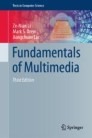
Fundamentals of multimedia ; 3rd ed.
Addresses real issues commonly faced in the workplace. The essential concepts are explained in a practical way to enable students to apply their existing skills to address problems in multimedia. Fully revised and updated, this new edition now includes coverage of such topics as 3D TV, social networks, high-efficiency video compression and conferencing, wireless and mobile networks, and their attendant technologies.
