



الصفحة 5
الصفحة 5

Concrete composite columns : Behavior and design
Moves beyond existing resources, to study the relationship between existing composite structures and design methods for the sectional form of concrete composite structure. Chapters cover the failure criteria of concrete; confined concrete types; models including axial stress prediction, analysis oriented constitutive, and design-oriented constitutive models; the design and analysis of section form; double confined concrete; seismic behaviors of concrete composite columns; and the seismic design of concrete composite columns.

Concrete - filled steel tubular arch bridges
Discusses the features of composite materials and arch structures. Providing an in-depth fundamental and practical guide to the field, it systemically addresses all aspects of concrete-filled steel tubular (CFST) arch bridges, including a comprehensive overview on technical developments, structural systems, structural detailing, design and analysis, construction technology, and maintenance.

Computational Plasticity
The different chapters of this book present recent progress and future research directions in the field of computational plasticity. A common line of many contributions is that a stronger interaction between the phenomenological and micromechanical modelling of plasticity behaviour is apparent and the use of inverse identification techniques is also more prominent. The development of adaptive strategies for plasticity problems continues to be a challenging goal, while it is interesting to note the permanence of element modelling as a research issue. Industrial forming processes, geomechanics, steel and concrete structures form the core of the applications of the different numerical methods presented in the book.

Computational Mechanics of Composite Materials : Sensitivity, Randomness and Multiscale Behaviour
The Engineering Materials and Processes series focuses on all forms of materials and the processes used to synthesise and formulate them as they relate to the various engineering disciplines. The series deals with a diverse range of materials: ceramics; metals (ferrous and non-ferrous); semiconductors; composites, polymers biomimetics etc. Each monograph in the series will be written by a specialist and will demonstrate how enhancements in materials and the processes associated with them can improve performance in the field of engineering in which they are used.

Color science and shade selection in operative dentistry : Essential elements for clinical success
Presents all the theory and clinical guidance required in order to achieve consistent clinical success. The book opens by reviewing color and its dimensions and discussing color perception, drawing attention to the various phenomena that impact upon it. Shade selection in Operative Dentistry is then explained in detail with the aid of copious illustrations. The coverage encompasses shade selection methods for resin-based composite restorations and for bleaching procedures, with presentation of the latest evidence on their accuracy and reliability.

Materials for Springs
“Materials for springs” is basically intended for engineers related to spring materials and technologies who graduated from metallurgical or mechanical engineering courses in technical high school, or in other higher engineering schools, as well as those who are related to the purchase or sales of spring materials. The first chapter introduces into the fundamental selection processes of spring materials including the information sources on materials database. It is followed by the basic mechanisms and theories of spring failures such as fatigue fracture, creep/stress relaxation and stress corrosion cracking of metallic materials.

Machining: Fundamentals and Recent Advances
Machining is one of the most important manufacturing processes. Parts manufactured by others processes often require further operations before the product is ready for application. Machining is the broad term used to describe the removal of material from a work-piece. Machining processes can be applied to work metallic and non-metallic materials such as polymers, wood, ceramics and composites.

Laser in restorative dentistry
The application of lasers in restorative dentistry has revolutionized dental treatments, offering enhanced precision, reduced discomfort, and improved clinical outcomes. Lasers have become a valuable tool in procedures such as cavity preparation, caries removal, tooth whitening, and composite resin curing. Their ability to selectively target diseased tissue while preserving healthy structures minimizes trauma and promotes faster healing. Moreover, lasers offer a less invasive alternative to traditional mechanical methods, often eliminating the need for anesthesia. This technology's versatility allows for its use in both hard and soft tissue treatments, including gingival recontouring and managing peri-implant diseases. As laser technology continues to advance, its integration into restorative dental practices offers significant potential for improved patient care, greater procedural efficiency, and long-term durability of restorations. Future developments in laser applications are expected to expand their role, making them an indispensable asset in modern dentistry.

Java Design Patterns : A Hands-On Experience with Real-World Examples
Covers classical design patterns with the latest editions of Java and Eclipse Includes implementation of the Java design patterns in real-world applications Each chapter has a Q&A section to help you understand the pros and cons of each design pattern
IUTAM Symposium on Multiscale Modelling of Damage and Fracture Processes in Composite Materials ; Proceedings of the IUTAM Symposium held in Kazimierz Dolny, Poland, 23-27 May 2005
This volume constitutes the Proceedings of the IUTAM Symposium. The main aim of the Symposium was to discuss the basic principles of damage growth and fracture processes in different types of composites: ceramic, polymer and metal matrix composites, cement and bituminous composites and wood. Nowadays, it is widely recognized that important macroscopic properties like the macroscopic stiffness and strength, are governed by processes that occur at one to several scales below the level of observation starting from nanoscale.
Issues in Theoretical Diversity : Persistence, Composition, and Time
Our world is full of composite objects that persist through time: dogs, persons, chairs and rocks. But in virtue of what do a bunch of little objects get to compose some bigger object, and how does that bigger object persist through time? This book aims to answer these questions, but it does so by looking at accounts of composition and persistence through a new methodological lens. It asks the question: what does it take for two theories to be genuinely different, and how can we know whether what seems like metaphysical disagreement is really just semantic disagreement
Composites with micro- and nano-structure : Computational modeling and experiments
The book contains atomistic and continuum numerical methods and experimental validation for composite materials reinforced with particles or fibres, porous materials, homogenization and other important topics for research in this field.
Composites for building assembly : connections, members and structures
Pesents buildings developed using modular assembly approaches based on lightweight and corrosion-resistant fiber reinforced polymer (FRP) composites. Construction methods and the choice of building materials offer great opportunities for more productive and environmentally friendly solutions. This book includes valuable experimental data on large-scale structural components (beams, slabs, amd columns), connections (shear connections, wall stud connections, beam-column connections, column-column connections) and structures (composite floor system, structural sandwich assemblies, and full-scale structural demonstrations), supported with detailed numerical modelling and analytical methods.
Composite Systems Decisions
Composite decisions consist of interconnected parts or subdecisions and correspond to a composite (composable, modular, decomposable) system. Composite Systems Decisions describes an educational approach that is based on systems engineering and considered modular design of composite decisions. Divided into four parts, this book contains descriptions of basic systems approaches and examines basic ‘technological’ problems for composite systems, including: modular hierarchical design; multistage design; multistage planning; redesign/improvement/adaptation; evaluation; and, combinatorial evolution/development.
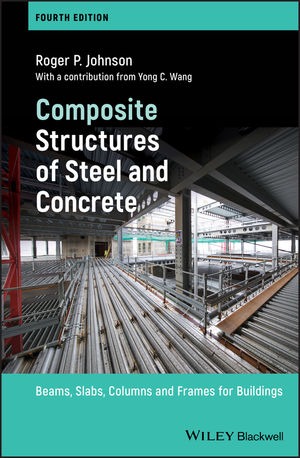
Composite structures of steel and concrete : Beams, slabs, columns and frames for buildings
Provides an introduction to the theory and design of composite structures of steel and concrete. Material applicable to both buildings and bridges is included, with more detailed information relating to structures for buildings. Throughout, the design methods are illustrated by calculations in accordance with the Eurocode for composite structures, EN 1994, Part 1-1, 'General rules and rules for buildings' and Part 1-2, 'Structural fire design', and their cross-references to ENs 1990 to 1993.
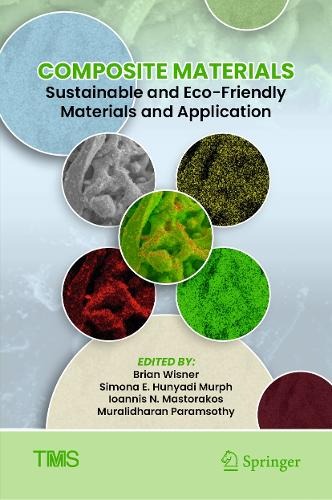
Composite materials : sustainable and eco-friendly materials and application
Covers innovations in the field of composite materials with a specific focus on eco-friendly and environmentally sustainable systems. All composite fields are explored, including polymer, metal, and ceramic matrix composites with an emphasis on sourcing raw materials in a sustainable way as well as the development of composite materials for environmental sustainability.
Composite Materials : Properties as Influenced by Phase Geometry
This book deals with the mechanical and physical behavior of composites as influenced by composite geometry. This monograph provides a comprehensive introduction for researchers and students to modern composite materials research with a special emphasis on the influence of geometry to materials properties. Composite Materials enables the reader to a better understanding of the behavior of natural composites, improvement of such materials, and design of new materials with prescribed properties.
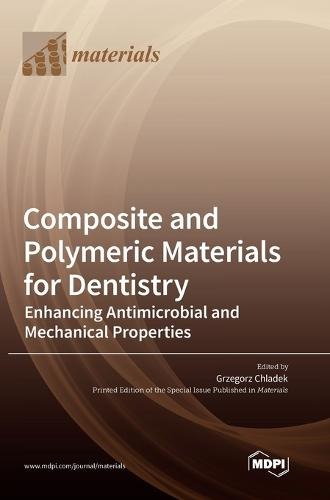
Composite and polymeric materials for dentistry: enhancing antimicrobial and mechanical properties
Focuses on enhancing antimicrobial and mechanical properties of polymeric materials and composites for dentistry. In recent years, special attention has been focused on the possibility of giving materials new or improved properties by the introduction of nano or submicron size additives, fibers or whiskers. Another area of research is the application of antibacterial monomers, which can be copolymerized in resins to kill oral pathogenic microflora. In addition, we are currently looking for new data regarding colonization of dental materials by pathogenic microbes and their influence on the other properties. Further, there are many new commercially available materials which should be investigated to verify their properties, which is important from the point of view of clinical practice. Original new research and reviews related to any of the topics mentioned above indicate the current directions of development of dental materials.

Clinical guide to principles of fiber-reinforced composites in dentistry
Fiber-reinforced composites (FRCs) are a novel group of dental materials characterized by fibrous fillers that are being increasingly used in place of traditional prosthodontic materials. They allow fabrication of minimally invasive, lightweight, durable and biocompatible restorations. This book will provide clinicians and students with theoretical and clinical guidelines to use the FRCs for dental applications. The book begins with an introduction to the fundamentals of FRCs in dentistry. Further chapters cover the treatment possibilities, fabrication and application procedures of FRCs, followed by information on care and maintenance.
Chitosan-based nanocomposite materials : fabrication, characterization and biomedical applications
Discovery in the use of chitosan-based nanocomposites in biomedical applications, including the scope to which these novel materials have been incorporated by the community. It provides an exceptional insight into the strategies for the synthesis and chemical modifications of chitosan, characterization techniques, their use as anticancer agents, antimicrobial, antiviral, and antifungal agents, their role in the biomedical field, and applications in drug delivery, gene therapy, dentistry, orthopedics, etc. This book will also emphasize the challenges with previous signs of progress and way for further research, details relating to the current pioneering technology, and future perspectives with a multidisciplinary approach. Furthermore, it presents up-to-date information on the economics, toxicity, and regulations related to these novel materials.
