



الصفحة 5
الصفحة 5

Emissions Trading and Business
Emissions trading challenges the management of companies in an entirely new manner. It does not only allow for a bigger flexibility in management decisions concerning emission issues like other marked based environmental policy instruments. Furthermore it changes the code by which environmental policy steers management decisions from hierarchical to monetary information.

eIoT : The Development of the Energy Internet of Things in Energy Infrastructure
This book explores the collision between the sustainable energy transition and the Internet of Things (IoT). In that regard, this book’s arrival is timely. Not only is the Internet of Things for energy applications, herein called the energy Internet of Things (eIoT), rapidly developing but also the transition towards sustainable energy to abate global climate is very much at the forefront of public discourse. It is within the context of these two dynamic thrusts, digitization and global climate change, that the energy industry sees itself undergoing significant change in how it is operated and managed. The goal of this book is to provide a single integrated picture of how eIoT can come to transform our energy infrastructure. This book links the energy management change drivers mentioned above to the need for a technical energy management solution. It, then, describes how eIoT meets many of the criteria required for such a technical solution.

Education to Build Back Better : What Can We Learn from Education Reform for a Post-pandemic World
This book examines the implications of the COVID-19 Pandemic for education systems and argues that major education reforms will be necessary, particularly in the Global South, to address the learning loss caused by the pandemic. To inform those reforms, knowledge about the implementation reforms in the Global South is necessary, and such knowledge is seriously lacking as the existing literature on the implementation of educational change focused principally in reforms in countries in the Global North. This book contributes to address this gap by examining five major education reforms in India, Egypt, Taiwan, Vietnam, and Senegal, and by presenting two novel approaches to climate change education using a bottoms up strategy of reform.

Education and Climate Change : The Role of Universities
This book draws on a multidimensional model of educational change, the book reviews the field of climate change education and identifies some of the areas in which past efforts have fallen short in supporting effective pedagogical change at scale.

Ecosystem-Based Management, Ecosystem Services and Aquatic Biodiversity : Theory, Tools and Applications
Aquatic ecosystems are rich in biodiversity and home to a diverse array of species and habitats, providing a wide variety of benefits to human beings. Many of these valuable ecosystems are at risk of being irreversibly damaged by human activities and pressures, including pollution, contamination, invasive species, overfishing and climate change. Such pressures threaten the sustainability of these ecosystems, their provision of ecosystem services and ultimately human well-being.

Ecosystem Services for Well-Being in Deltas : Integrated Assessment for Policy Analysis
Answers key questions about environment, people and their shared future in deltas. It develops a systematic and holistic approach for policy-orientated analysis for the future of these regions. It does so by focusing on ecosystem services in the world’s largest, most populous and most iconic delta region, that of the Ganges-Brahmaputra delta in Bangladesh. The book covers the conceptual basis, research approaches and challenges, while also providing a methodology for integration across multiple disciplines, offering a potential prototype for assessments of deltas worldwide.

Economics and Management of Climate Change : Risks, Mitigation and Adaptation
Climate change is one of the biggest challenges for mankind. Although there is increasing evidence that climate change is already occurring, there is neither sufficient knowledge as to what extent climate change poses risks to societies and companies, nor about adequate strategies to cope with these risks. Bringing together an international group of scholars from environmental economics, political science and business, this book describes, analyses and evaluates climate change risks and responses of societies and companies. The book contributes to the question of how climate change can be mitigated by discussing efficient and effective design of mitigation measures, in particular emissions trading and clean development mechanism (CDM). Placing special emphasis on the impact of climate change risks on business, the book investigates in which way selected sectors of the economy are affected and what measures they can undertake to adapt to climate change risks.
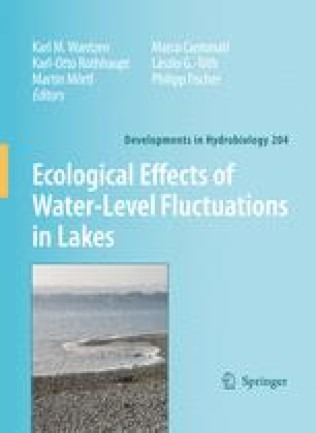
Ecological Effects of Water-Level Fluctuations in Lakes
It presents selected papers on the ecological effects of WLF in lakes, resulting from a workshop at the University of Konstanz in winter 2005. Issues addressed here include the extent of WLF, and analyses of their effects on different groups of biota from microorganisms to vertebrates. Applied issues include recommendations for the hydrological management of regulated lakes to reduce negative impacts, and a conceptual framework is delivered by an extension of the floodpulse concept for lakes. Current impacts on water use, including increasing demands on drinking and irrigation water, hydropower etc., and climate change effects on WLF make this book an essential resource for aquatic ecologists, engineers, and decision-makers dealing with the management of lake ecosystems and their catchments.

Eco-and ground bio-engineering : The use of vegetation to improve slope stability ; Proceedings of the 1st International Conference on Eco-Engineering 13-17 September 2004
In an era where climate change, natural catastrophes and land degradation are major issues, the conservation of soil and vegetation in mountainous or sloping regions has become an international priority. How to avoid substrate mass movement through landslides and erosion using sustainable and ecologically sound techniques is rapidly becoming a scientific domain where knowledge from many different fields is required. These proceedings bring together papers from geotechnical and civil engineers, biologists, ecologists and foresters, who discuss current problems in slope stability research, and how to address those problems using ground bio- and eco-engineering techniques.

Earth System Science in the Anthropocene : Emerging Issues and Problems
Earth System Science in the Anthropocene aims to provide an in-depth perspective and update on special topics in Global Environmental Change in relation to Human Security. It gives an overview on the new Joint Projects of the four International Global Change Programmmes and on research efforts in Germany. It is also an up-to-date report on emerging necessities in Global Environmental Change research as well as suggestions for its future development.

Earth Sciences and Mathematics ; Vol.1
This volume contains papers addressing different topics as deformation modelling applied to natural hazards, inverse gravimetric problem to determine 3D density structure, advanced differential SAR interferometry, climate change, geomagnetic field, Earthquake statistics, meteorological studies using satellite images, climate energy balance models, study of soils properties, and multifractal data sets.
Earth observation science and applications for risk reduction and enhanced resilience in Hindu Kush Himalaya Region : A decade of experience from SERVIR
This book is a consolidation of lessons learnt and experiences gathered from our efforts to utilise Earth observation (EO) science and applications to address environmental challenges in the Hindu Kush Himalayan region.

Dynamical Oceanography
This textbook provides a mathematical introduction to the theory of large-scale ocean circulation and is accessible for readers with an elementary knowledge of mathematics and physics, including continuum mechanics and solution methods for ordinary differential equations. The book consists of four parts. Part I (chapters 1 - 4) is a very brief introduction to ocean circulation and the mathematical formulation of the governing equations of ocean flows. In addition, concepts are introduced that are necessary to describe and understand large-scale ocean currents. In part II (chapters 5 - 10), the theory of mid-latitude wind-driven ocean circulation is presented. Part III (chapters 11 - 12) focuses on the understanding of equatorial currents and El Nino. In the last part IV, chapters 13 - 16, the theory of planetary scale flows is presented, covering topics such as the thermocline problem, the Antarctic Circumpolar Current, the stability of the thermohaline circulation and the Arctic Ocean circulation.

Desertification in the Mediterranean Region : A security issue ; Proceedings of the NATO Mediterranean Dialogue Workshop, held in Valencia, Spain, 2-5 December 2003
This book focuses on two basic concepts: security and desertification in the Mediterranean Region and their linkages. Desertification is recognized as a process of land degradation in arid, semi-arid, and dry sub-humid areas of the world that is the result of natural phenomena (e.g. climate variation) and anthropogenic factors. The outcome of this type of degradation has typically been considered to be either a reduction or a loss of both biological and economic productivity. The scope of the book includes the identification of the physical processes of desertification specific to both the north and south Mediterranean Region. Additionally, it specifically questions how changing environmental conditions may potentially reduce stability and peace in the world and thus affect "environmental security."

Demystifying Climate Models : A Users Guide to Earth System Models
This book demystifies the models we use to simulate present and future climates, allowing readers to better understand how to use climate model results. In order to predict the future trajectory of the Earth’s climate, climate-system simulation models are necessary. When and how do we trust climate model predictions? The book offers a framework for answering this question. It provides readers with a basic primer on climate and climate change, and offers non-technical explanations for how climate models are constructed, why they are uncertain, and what level of confidence we should place in them. It presents current results and the key uncertainties concerning them. Uncertainty is not a weakness but understanding uncertainty is a strength and a key part of using any model, including climate models.

Deltas in the Anthropocene
The Anthropocene is the human-dominated modern era that has accelerated social, environmental and climate change across the world in the last few decades. This open access book examines the challenges the Anthropocene presents to the sustainable management of deltas, both the many threats as well as the opportunities.

Deformation and Gravity Change : Indicators of Isostasy, Tectonics, Volcanism, and Climate Change
During the last decades, measurements of various geodynamic processes have gained ever increasing importance. Temporal variations of the deformation and gravity fields monitored by geodetic measuring techniques reflect isostatic, tectonic or volcanic processes in the earth’s interior.Recordings of hydrologic or oceanographic phenomena allow conclusions on surface processes. This volume reflects the major developments during recent years in these areas of research.Most of the papers in this book were presented at the workshop on"Deformation and Gravity Change: Indicators of Isostasy, Tectonics, Volcanism and Climate Change", which took place at the Casa de los Volcanes on Lanzarote,Spain, 2005.

Debris-flow Hazards and Related Phenomena
Debris Flow Hazards and Related Phenomena is set to become the standard reference on debris flows, debris avalanches and related phenomena. The editors provide a complete treatment of all aspects of debris flow and debris avalanche research whilst making the book a useful tool for experts, researchers and students. Case studies are provided on a global basis which will illustrate graphically the real problems and real solutions associated with this devastating phenomena. The number of published articles in journals on landslides is literally exploding and where climate change is beginning to affect landslide activity, this book will be a much needed and long sought addition to the literature currently available.

Creating Resilient Futures : Integrating Disaster Risk Reduction, Sustainable Development Goals and Climate Change Adaptation Agendas
This excellent text recognises that efforts towards improving development outcomes must work in concert with strategies which promote planetary health and support the transition to a sustainable and climate-resilient future.

Counteracting Urban Heat Island Effects in a Global Climate Change Scenario
Urban Heat Islands (UHIs) are a microclimatic phenomenon which manifests as a significant increase in the temperature of cities compared to their surrounding areas. Recently the phenomenon has been enforced by the tendency to climate change and in particular by extreme climate events. This book presents and analyzes the results of a project to develop and apply mitigation and adaptation strategies and measures for counteracting the global urban heat islands phenomenon, supported by the EU’s Central Europe Regional Development Fund.
