



الصفحة 5
الصفحة 5

Introductory Statistics with R
R is an Open Source implementation of the S language. It works on multiple computing platforms and can be freely downloaded. R is now in widespread use for teaching at many levels as well as for practical data analysis and methodological development. This book provides an elementary-level introduction to R, targeting both non-statistician scientists in various fields and students of statistics. The main mode of presentation is via code examples with liberal commenting of the code and the output, from the computational as well as the statistical viewpoint. A supplementary R package can be downloaded and contains the data sets.

Introductory Lectures on Fluctuations of Lévy Processes with Applications
Lévy processes are the natural continuous-time analogue of random walks and form a rich class of stochastic processes around which a robust mathematical theory exists. Their mathematical significance is justified by their application in many areas of classical and modern stochastic models including storage models, renewal processes, insurance risk models, optimal stopping problems, mathematical finance and continuous-state branching processes.The book aims to be mathematically rigorous while still providing an intuitive feel for underlying principles. The results and applications often focus on the case of Lévy processes with jumps in only one direction.

Introduction to wine laboratory practices and procedures
winemaking was a romanticized notion of putting grape juice into a barrel and allowing time to perform its magic as you sat on the veranda watching the sunset on a Tuscan landscape. For some small wineries, this notion might still ring true, but for the majority of wineries commercially producing quality wines, the reality of winemaking is far more complex. The persistent evolution of the wine industry demands continual advan- ments in technology and education to sustain and promote quality winem- ing. The sciences of viticulture, enology, and wine chemistry are becoming more intricate and sophisticated each year. Wine laboratories have become an integral part of the winemaking process, necessitating a knowledgeable staff possessing a multitude of skills. Science incorporates the tools that new-age winemakers are utilizing to produce some of the best wines ever made in this multibillion dollar trade. A novice to enology and wine chemistry can find these subjects daunting and intimidating. Whether you are a home winemaker, a new winemaker, an enology student, or a beginning-to-intermediate laboratory technician, p- ting all the pieces together can take time.

Introduction to Wave Scattering, Localization and Mesoscopic Phenomena
Waves represent a classic topic of study in physics, mathematics, and engineering. Many modern technologies are based on our understanding of waves and their interaction with matter. In the past thirty years there have been some revolutionary developments in the study of waves. The present volume is the only available source which details these developments in a systematic manner, with the aim of reaching a broad audience of non-experts. It is an important resource book for those interested in understanding the physics underlying nanotechnology and mesoscopic phenomena, as well as for bridging the gap between the textbooks and research frontiers in any wave related topic. A special feature of this volume is the treatment of classical and quantum mechanical waves within a unified framework, thus facilitating an understanding of similarities and differences between the two.

Introduction to Reconfigurable Computing : Architectures, Algorithms, and Applications
“Introduction to Reconfigurable Computing” provides a comprehensive study of the field Reconfigurable Computing. It provides an entry point to the novice willing to move in the research field reconfigurable computing, FPGA and system on programmable chip design. The book can also be used as teaching reference for a graduate course in computer engineering, or as reference to advance electrical and computer engineers. It provides a very strong theoretical and practical background to the field of reconfigurable computing, from the early Estrin’s machine to the very modern architecture like coarse-grained reconfigurable device and the embedded logic devices.

Introduction to Partial Differential Equations: A Computational Approach
Mathematics is playing an ever more important role in the physical and biological sciences, provoking a blurring of boundaries between scientific disciplines and a resurgence of interest in the modern as well as the cl- sical techniques of applied mathematics. This renewal of interest, both in research and teaching, has led to the establishment of the series: Texts in Applied Mathematics (TAM). The development of new courses is a natural consequence of a high level of excitement on the research frontier as newer techniques, such as numerical and symbolic computer systems, dynamical systems, and chaos mix with and reinforce the traditional methods of applied mathematics. Thus, the purpose of this textbook series is to meet the current and future needs of these advances and encourage the teaching of new courses.

Introduction to Optics
Since the discovery of the laser in 1960 and optical fibers in 1970, optics has undergone dramatic changes that accentuate its multi-disciplinary character. This text covers essential concepts and reports the key developments and progress in current knowledge in the field. Inspired by the style of Richard Feynman, the method of presentation emphasizes "telling" optics, rather than deducing it from fundamental laws, as well as tactfully using mathematical tools so as not to obscure the physical phenomena of interest. For its excellent teaching approach, the book received the Arnulf-Francon Award of the French Optical Society. The concepts are formulated in a way such that the necessary mathematical tools do not hinder comprehension of the phenomena. Global in vision, the book can also be used as a reference. In addition to the traditional aspects of optics, it includes the tools and methods currently used by researchers and engineers, as well as explanation and implications of the most recent developments.
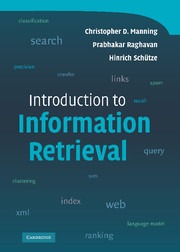
Introduction to information retrieval
Teaches classical and web information retrieval, including web search and the related areas of text classification and text clustering from basic concepts. It gives an up-to-date treatment of all aspects of the design and implementation of systems for gathering, indexing, and searching documents; methods for evaluating systems; and an introduction to the use of machine learning methods on text collections. All the important ideas are explained using examples and figures, making it perfect for introductory courses in information retrieval for advanced undergraduates and graduate students in computer science.

Introduction to Computational Biology : An Evolutionary Approach
Molecular biology has changed dramatically over the past two decades. Until the early 1990s genes were studied one at a time by small teams of researchers; today entire genomes are sequenced by internationally collaborating laboratories. In the bygone gene-centered era the accumulation of data was the rate-limiting step in research. Now that step is often data interpretation. This is increasingly dependent on computational methods and as a consequence, computational biology has emerged in the past decade as a new subdiscipline of biology. This introduction to computational biology is centered on the analysis of molecular sequence data. There are two closely connected aspects to biological sequences: (i) their relative position in the space of all other sequences, and (ii) their movement through this sequence space in evolutionary time. Accordingly, the first part of the book deals with classical methods of sequence analysis: pairwise alignment, exact string matching, multiple alignment, and hidden Markov models. In the second part evolutionary time takes center stage and phylogenetic reconstruction, the analysis of sequence variation, and the dynamics of genes in populations are explained in detail. In addition, the book contains a computer program with a graphical user interface that allows the reader to experiment with a number of key concepts developed by the authors.

Introduction to biologic and biosimilar product development and analysis
Gives a concise introduction to development and analysis of pharmaceutical biologics for those in the pharmaceutical industry who are switching focus from small molecules to biologics processing, analysis, and delivery. In order to maintain a limited focus, Introduction to Biologic and Biosimilar Product Development and Analysis, will deal only with peptides, proteins and monoclonal antibodies.

Introduction to applied mathematics for environmental science
Introduction to Mathematics for Environmental Science evolved from the author’s 30 years’ experience teaching mathematics to graduate and advanced undergraduate students in the environmental sciences. Its basic purpose is to teach various types of mathematical structures and how they can be applied in a broad range of environmental science subfields. Derivatives and integrals, ordinary and partial differential equations, and linear and non-linear algebraic equations are the basic kinds of structures (types of mathematical models) discussed.
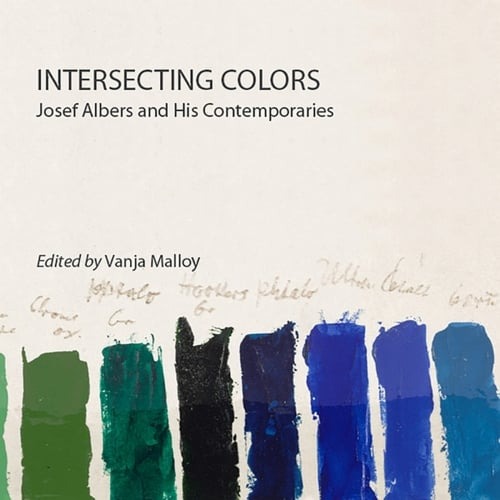
Intersecting colors : Josef Albers and his contemporaries
Offers a timely reappraisal of the immense impact of Albers's thinking, writing, teaching, and art on generations of students. It shows the formative influence on his work of non-scientific approaches to color (notably the work of Johann Wolfgang von Goethe) and the emergence of Gestalt psychology in the first decades of the twentieth century. The work also shows how much of Albers's approach to color-dismissed in its day by a scientific approach to the study and taxonomy of color driven chiefly by industrial and commercial interests-ultimately anticipated what neuroscience now reveals about how we perceive this most fundamental element of our visual experience.
Internationalizing Higher Education : Critical Explorations of Pedagogy and Policy
Globalization is a multifaceted phenomenon, and one of its major components is the internationalization of education. The Increasing pace and complexity of global knowledge flows, and the accelerating exchange of educational ideas, practices and policies, are important drivers of globalization. Higher Education is a key site for these flows and exchanges. This book casts a critical eye on the internationalization of higher education. It peels back taken-for-granted practices and beliefs, explores the gaps and silences in current pedagogy and practices, and addresses the ambiguities, tensions and contradictions in internationalization. In this volume, scholars from a range of disciplines and regions critically examine the co modification of higher education, teaching and support for international students, international partnerships for aid and trade, and the impacts on academics’ work.

Internationalisation and Globalisation in Mathematics and Science Education
This book aims to: Develop theoretical frameworks of the phenomena of internationalisation and globalisation and identify related ethical, moral, political and economic issues facing mathematics and science educators. Provide a venue for the publication of results of international comparisons on cultural differences and similarities rather than merely on achievement and outcomes. Provide a forum for critical discussion of the various models and forms of international projects and collaborations. Provide a representation of the different voices and interests from around the world rather than consensus on issues.

International reflections on the Netherlands didactics of mathematics : Visions on and experiences with realistic mathematics education
This book, inspired by the ICME 13 Thematic Afternoon on “European Didactic Traditions”, takes readers on a journey with mathematics education researchers, developers and educators in eighteen countries, who reflect on their experiences with Realistic Mathematics Education (RME), the domain-specific instruction theory for mathematics education developed in the Netherlands since the late 1960s. Authors from outside the Netherlands discuss what aspects of RME appeal to them, their criticisms of RME and their past and current RME-based projects.

International Perspectives on teachers and lecturers in technical and vocational education
This book provides insight into the history and current status of teaching in technical and vocational education across a broad range of countries. It contains studies of the profiles of teachers and lecturers and their educational practices in: Germany, Brazil, Denmark, China, France, Japan, Norway, Turkey, the UK and the USA. All chapters follow a common structure making it easy for the reader to focus on specific aspects. An overarching introduction embeds the content of the book into the current global context of Technical and Vocational Education and Training.
International Handbook of English Language Teaching
This two-volume handbook provides a comprehensive examination of policy, practice, research, and theory related to English language teaching (ELT) in international contexts. Nearly 70 chapters highlight the research foundation for the best practices, frameworks for policy decisions, and areas of consensus and controversy in the teaching and development of English as a second and/or additional language for kindergarten through to adult speakers of languages other than English.

Intermediate German : A Grammar and Workbook
Intermediate German: A Grammar and Workbook is designed for learners who have achieved basic proficiency and now wish to progress to more complex language. Each of the units combines concise grammar explanations with examples and exercises to help build confidence and fluency.

Interior design visual presentation : A guide to graphics, models and presentation methods ; 5th ed.
A newly updated and comprehensive guide to all aspects of visual design From doing a quick sketch to producing a fully rendered model, the ability to create visual representations of designs is a critical skill for every designer. Interior Design Visual Presentation, Fifth Edition offers thorough coverage of interior design communication used throughout the design process, complete with a broad range of real-world examples.

Interior Design Illustrated
Introduces complex design concepts in a visually stunning format; from defining the space and using the elements of design, to planning building systems and incorporating sustainable materials, this volume embodies the idea that beauty and function are not separate entities, but two parts of a whole. This new fourth edition has been updated to reflect the latest building codes and design practices, with discussion of new materials related to acoustics, lighting, and sustainable furnishings. Renewed attention to sustainability includes new information on energy conservation, design for longevity and adaptive reuse of existing buildings, as well as an updated discussion on LED lighting, workplace design, use of color, and computer modeling software to provide a well-rounded view of how interior design firms are working today. This classic text brings the elements and principles of design to life, giving students the practical skills they need to transition from idea to concept. Understand the latest building codes and how to integrate them into your design Explore new advances in materials, lighting, and wireless technology Design from a perspective of sustainability, longevity, and energy efficiency Delve into BIM, including software for modeling lighting, acoustics, and more
