



الصفحة 5
الصفحة 5

Nanotechnology in therapeutics : Basics and trends
Nanotechnology delivers a unique approach, which promises higher drug efficacy, targeted drug delivery, on demand delivery, biocompatibility, etc. For example, nanotechnology-based delivery systems can protect drugs from degradation and help reduce the number of doses required, make treatment a better experience and reduce treatment expenses and a number of nano-based systems allow delivery of insoluble drugs, allowing the use of previously rejected drugs or drugs which are difficult to administer.
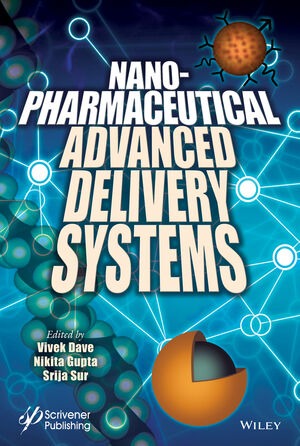
Nanopharmaceutical advanced delivery systems
Provides a single volume covering detailed descriptions about various delivery systems, their principles and how these are put in use for the treatment of multiple diseases. It is divided into four sections where the first section deals with the introduction and importance of novel drug delivery system. Deals with the most advanced drug delivery systems like microbubbles, dendrimers, lipid-based nanoparticles, nanofibers, microemulsions etc., describing the major principles and techniques of the preparations of the drug delivery systems. Elaborates on the treatments of diverse diseases like cancer, topical diseases, tuberculosis etc.

Nanoparticle-Based Drug Delivery in Cancer Treatment
Discusses nanotechnological developments of interfering RNA-based nanoparticles, delivery vehicles, and validated therapeutic RNAi–molecular target interactions and explains the results of clinical and preclinical trials. The book also gives strategies for universal methods of constructing hybrid organic–inorganic nanomaterials that can be widely applied in the biomedical field. Focuses on : Recent advances of nanoparticle-mediated siRNA delivery systems and their application in clinical trials for cancer therapy Material platforms that establish NPs and both localized and controlled gene silencing The most promising systems for clinical application Surveys progress in nanoparticle-based nanomedicine in cancer treatment The most advanced of the nonviral nanocarriers for delivery of oligonucleotides to malignant blood cancer cells

Nanoparticle-based cancer vaccines
Reviews the fundamentals of cancer vaccines, explores the role of nanotechnology in improving vaccine design and delivery, and evaluates current clinical applications, challenges, and regulatory considerations, highlighting the potential of nanoparticle-based cancer vaccines in future cancer treatment.

Nanomedicine : Innovations, applications, and breakthroughs in the quest for health and medicine's future
Revolutionizing healthcare, by providing innovative solutions to some of the most challenging issues in medicine. This book provides an in-depth overview of nanoscale materials and devices that are advancing diagnostics, therapeutics, and personalized care in medical field. It focuses on nanomedicine’s impact on vaccine efficacy as well as innovative diagnosis and therapy for various type of cancer while addressing concerns about safety and toxicity. It examines how nanotechnology is enhancing drug delivery by precisely targeting medicines to specific cells or tissues, thereby increasing treatment efficacy with reduced side effects. Explores how nanoparticles are advancing medical imaging for earlier and more accurate disease detection, and how nanosensors allow real-time biomarker monitoring for faster and more reliable diagnoses. Additionally, it explores nanomedicine's role in managing cardiovascular diseases, improving bone health through nano-extracellular vesicles, and regenerative medicine, including ongoing clinical trials and ethical considerations.

Nanomaterials in clinical therapeutics : Synthesis and applications
Nanotechnology-based applications is a rapidly growing field encompassing a diverse range of disciplines that impact our daily lives. Nanotechnology is being used to carry out large-scale reactions in practically every field of biotechnology and healthcare. The incredible progress being made in these applications is particularly true for the healthcare sector, where they are used in cancer detection and treatment, medical implants, tissue engineering, and so forth. Expansions in this discipline are expected to continue in the future, resulting in the creation of a variety of life-saving medical technology and treatment procedures.

Nanomaterials and Nanochemistry
Nanomaterials are a fast developing field of research and applications lie in many separate domains, such as in hi-tech (optics, electronics, biology, aeronautics), but also in consumer industries (automotive, concrete, surface treatments (including paints), cosmetics, etc.).

Nanoformulations in Human Health: Challenges and Approaches
This book is an amalgamation of knowledge, experience, and expertise in various aspects of nanotechnology, by experts who are proficient in designing novel nanoformulations that are used in the treatment of various challenging and prevalent diseases. It is an exhaustive compilation of the multi-faceted arena of nanoformulations and the healthcare system that caters to the needs of academicians, scholars, researchers, etc. The most important aspect of the book covers various types of nanoformulations and their applications in the treatment of communicable and non-communicable diseases. Each chapter focuses on a particular nanoformulation as well as a disease including the pathophysiology of the disease, the current treatment modalities of diseases, the role of nanoformulation in treatment and other future aspects and directions for further work. Coverage includes neuropathic pain, colon targeting, nose-to-brain drug delivery, cancer, arthritis and tuberculosis.

Myelodysplastic Syndromes
This book summarizes our current knowledge of MDS, from very basic aspects to the clinical management. It provides guidance to the diagnosis, an understanding of disease mechanisms, and a discussion of treatment strategies.

Multivalency: Concepts, Research and Applications
Multivalency: Concepts, Research & Applications is divided into three parts. Part one provides background knowledge on various aspects of multivalency and cooperativity and presents practical methods for their study. Fundamental aspects such as thermodynamics, kinetics and the principle of effective molarity are described, and characterisation methods, experimental methodologies and data treatment methods are also discussed. Parts two and three provide an overview of current systems in which multivalency plays an important role in chemistry and biology, with a focus on the design rules, underlying chemistry and the fundamental principles of multivalency.

Multiscale Optimization Methods and Applications
One general strategy for dealing with a large or difficult problem is to partition it into smaller ones, which are hopefully much easier to solve, and then work backwards towards the solution of original problem, using a solution from a previous level as a starting guess at the next level.The topics of the chapters selected for this volume are focused on the development of new solution methodologies, including general multilevel solution techniques, for tackling difficult, large-scale optimization problems that arise in science and industry. Applications presented in the book include but are not limited to the circuit placement problem in VLSI design, a wireless sensor location problem, optimal dosages in the treatment of cancer by radiation therapy, and facility location.

Multiscale Biomechanics and Tribology of Inorganic and Organic Systems : In memory of Professor Sergey Psakhie
This book gathers authoritative contributions concerning multiscale problems in biomechanics, geomechanics, materials science and tribology. It is written in memory of Sergey Grigorievich Psakhie to feature various aspects of his multifaceted research interests, ranging from theoretical physics, computer modeling of materials and material characterization at the atomic scale, to applications in space industry, medicine and geotectonics, and including organizational, psychological and philosophical aspects of scientific research and teaching as well

Multiple Sclerosis: Autoimmunity and Management
Multiple sclerosis (MS) is an immune-mediated inflammatory disease that attacks myelinated axons in the central nervous system, destroying the myelin and the axon in variable degrees and producing significant physical disability within 20–25 years in more than 30% of patients. The hallmark of MS is symptomatic episodes that occur months or years apart and affect different anatomic locations. Also, see the Autoimmune Disorders: Making Sense of Nonspecific Symptoms slideshow to help identify several diseases that can cause a variety of nonspecific symptoms. MS is diagnosed on the basis of clinical findings and supporting evidence from ancillary tests. Treatment consists of immunomodulatory therapy for the underlying immune disorder and management of symptoms, as well as nonpharmacologic treatments, such as physical and occupational therapy. Disease-modifying therapies have shown beneficial effects in patients with relapsing MS, including reduced frequency and severity of clinical attacks. These agents appear to slow the progression of disability and the reduce accumulation of lesions within the brain and spinal cord.

Multiobjective Evolutionary Algorithms and Applications
Multiobjective Evolutionary Algorithms and Applications provides comprehensive treatment on the design of multiobjective evolutionary algorithms and their applications in domains covering areas such as control and scheduling. Emphasizing both the theoretical developments and the practical implementation of multiobjective evolutionary algorithms, a profound mathematical knowledge is not required. Written for a wide readership, engineers, researchers, senior undergraduates and graduate students interested in the field of evolutionary algorithms and multiobjective optimization with some basic knowledge of evolutionary computation will find this book a useful addition to their book case.

Multimodal Concepts for Integration of Cytotoxic Drugs
The first part of this book summarizes the rationale and the preclinical data for combined treatment with ionizing radiation and pharmaceutical agents. Individual chapters focus on different forms of combined treatment, with due consideration being given to a range of drugs and to emerging combinations with small molecules and antibodies, derived from recent advances in molecular oncology. The second part of the book comprises a series of disease-specific chapters in which the clinical results of combined modality treatment are presented. In addition, the topics of acute and late toxicity, supportive treatment and tolerance in elderly patients are reviewed.

Mucosal Immunology and Virology
Mucosal Immunology and Virology is designed to provide the clinician with a thorough and yet approachable textbook describing the relationships between immunology, virology and the disease process. It includes a vast wealth of information and illustrations to enable the reader to become familiar with the clinical presentation of these diseases, the tests needed to establish the diagnosis, and the treatment of the disease including specific antiviral agents. Suitable for residents and clinicians in immunology, infectious diseases, internal medicine and dermatology the book reviews the systematic manifestations of mucosal viral infections, including those involving the mouth, gastrointestinal tract, respiratory system, anogenital mucosa and ocular infections

Motion Planning in Medicine : Optimization and Simulation Algorithms for Image-Guided Procedures
The monograph written by Ron Alterovitz and Ken Goldberg combines ideas from robotics, physically-based modeling, and operations research to develop new motion planning and optimization algorithms for image-guided medical procedures. A challenge clinicians commonly face is compensating for errors caused by soft tissue deformations that occur when imaging devices or surgical tools physically contact soft tissue. A number of methods are presented which can be applied to a variety of medical procedures, from biopsies to anaesthesia injections to radiation cancer treatment. They can also be extended to address problems outside the context of medical robotics, including nonholonomic motion planning for mobile robots in field or manufacturing environments.

Mosby's Orthodontic Review
Offers a concise review of orthodontic concepts, diagnosis, treatment planning, and clinical treatment all in a question-and-answer format that is ideal for certification and re-certification exam prep, as well as for clinical practice. Plus, clinical case reports allow you to apply your knowledge to real patient scenarios. This is the only review book designed specifically for orthodontics, making it a must-have for students, residents, general dentists, and orthodontists.
Morse Theoretic Methods in Nonlinear Analysis and in Symplectic Topology
It covered an ample spectrum of subjects which are re ected in the present volume: Morse theory and related techniques in in nite dim- sional spaces, Floer theory and its recent extensions and generalizations, Morse and Floer theory in relation to string topology, generating functions, structure of the group of Hamiltonian difieomorphisms and related dynamical problems, applications to robotics and many others. We thank all our main speakers for their stimulating lectures and all p- ticipants for creating a friendly atmosphere

Molecular Targeting in Oncology
In Molecular Targeting in Oncology, authors present an overview of the development of targeted therapies for the treatment of cancer with an emphasis on clinical application. The volume covers the complexity of the rapidly developing area of targeted therapies for the treatment of patients with cancer and is structured in a way so readers may begin with chapters that most interest them and work through the rest of the chapters in the order of their choice. The volume is divided into five sections that cover the most important elements of drug development. The first section focuses on approaches using targeted therapies to inhibit cell growth. The second section describes how clinicians are evaluating targeted therapies in specific organ systems. The third section illustrates how various classes of pharmacologic and immunologic agents are developed for individual molecular targets. The fourth section details new drugs that have novel mechanisms of action. The final section looks to the future of targeted therapeutics and includes chapters on appropriate patient selection, use of combination therapy, dealing with tumor cell resistance, and more. Comprehensive and cutting-edge, Molecular Targeting in Oncology is an essential reference for those working in the field.
