



الصفحة 48
الصفحة 48
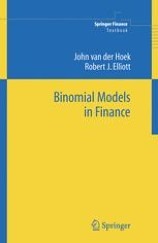
Binomial models in finance
This book deals with many topics in modern financial mathematics in a way that does not use advanced mathematical tools and shows how these models can be numerically implemented in a practical way. The book is aimed at undergraduate students, MBA students, and executives who wish to understand and apply financial models in the spreadsheet computing environment.The basic building block is the one-step binomial model where a known price today can take one of two possible values at the next time. In this simple situation, risk neutral pricing can be defined and the model can be applied to price forward contracts, exchange rate contracts, and interest rate derivatives.

BIM for design firms : Data rich architecture at small and medium scales
Expands on Building Information Modeling, showing its applicability to a range of design-oriented projects. It emphasizes the full impact that a data modeling tool has on design processes, systems, and the high level of collaboration required across the design team. It also explains the quantitative analysis opportunities that BIM affords for sustainable design and for balancing competing design agendas, while highlighting the benefits BIM offers to designing in 3D for construction. The book concludes with a deep look at the possible future of BIM and digitally-enhanced design.
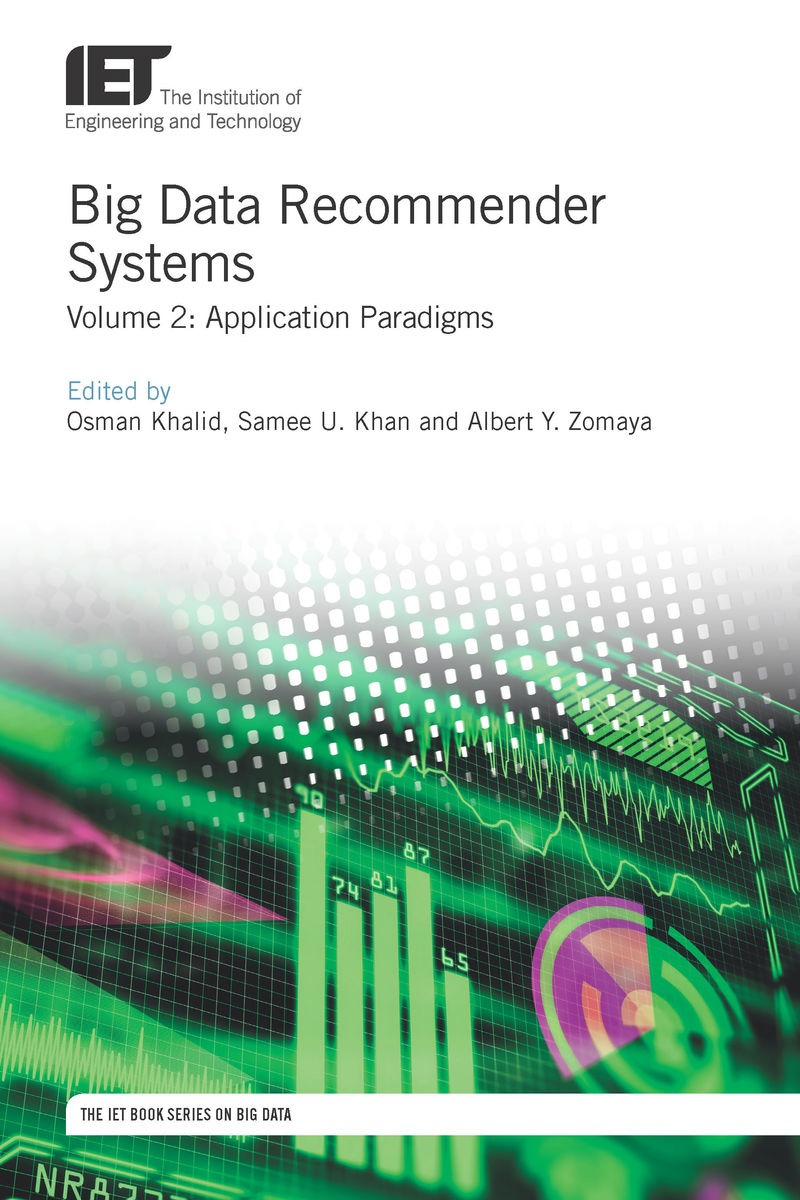
Big Data Recommender Systems ; Vol.2 : Application Paradigms
Combines experimental and theoretical research on big data recommender systems to help computer scientists develop new concepts and methodologies for complex applications. It includes original scientific contributions in the form of theoretical foundations, comparative analysis, surveys, case studies, techniques and tools. First designed to generate personalized recommendations to users in the 90s, recommender systems apply knowledge discovery techniques to users’ data to suggest information, products, and services that best match their preferences. In recent decades, we have seen an exponential increase in the volumes of data, which has introduced many new challenges. recommender systems. Volume 2 covers a broad range of application paradigms for recommender systems over 22 chapters
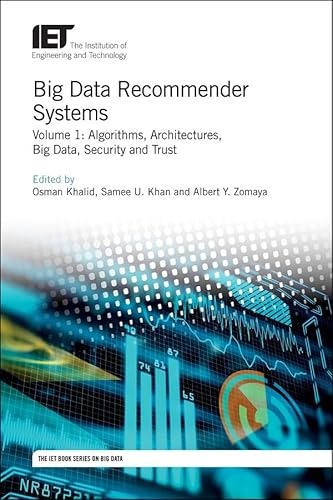
Big Data Recommender Systems ; Vol.1 : Algorithms, Architectures, Big Data, Security and Trust
Combines experimental and theoretical research on big data recommender systems to help computer scientists develop new concepts and methodologies for complex applications. It includes original scientific contributions in the form of theoretical foundations, comparative analysis, surveys, case studies, techniques and tools.
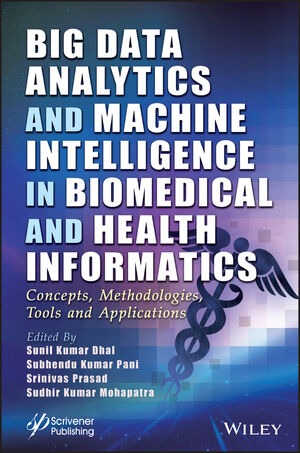
Big data analytics and machine intelligence in biomedical and health informatics : Concepts, methodologies, tools and applications
Provides coverage of developments and state-of-the-art methods in the broad and diversified data analytics field and applicable areas such as big data analytics, data mining, and machine intelligence in biomedical and health informatics. Covers the latest advances and developments in health informatics, data mining, machine learning, and artificial intelligence. They have been organized with respect to the similarity of topics addressed, ranging from issues pertaining to the Internet of Things (IoT) for biomedical engineering and health informatics, computational intelligence for medical data processing, and Internet of Medical Things??(IoMT).
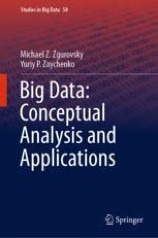
Big Data : Conceptual Analysis and Applications
The book is devoted to the analysis of big data in order to extract from these data hidden patterns necessary for making decisions about the rational behavior of complex systems with the different nature that generate this data. To solve these problems, a group of new methods and tools is used, based on the self-organization of computational processes, the use of crisp and fuzzy cluster analysis methods, hybrid neural-fuzzy networks, and others. The book solves various practical problems. In particular, for the tasks of 3D image recognition and automatic speech recognition large-scale neural networks with applications for Deep Learning systems were used.
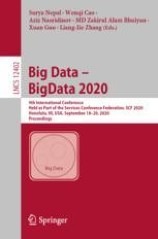
Big Data – BigData 2020; 9th International Conference, Held as Part of the Services Conference Federation, SCF 2020, Honolulu, HI, USA, September 18-20, 2020, Proceedings
Constitutes the proceedings of the 9th International Conference on Big Data, BigData 2020, held as part of SCF 2020, during September 18-20, 2020. The conference was planned to take place in Honolulu, HI, USA and was changed to a virtual format due to the COVID-19 pandemic. The 16 full and 3 short papers presented were carefully reviewed and selected from 52 submissions. The topics covered are Big Data Architecture, Big Data Modeling, Big Data As A Service, Big Data for Vertical Industries (Government, Healthcare, etc.), Big Data Analytics, Big Data Toolkits, Big Data Open Platforms, Economic Analysis, Big Data for Enterprise Transformation, Big Data in Business Performance Management, Big Data for Business Model Innovations and Analytics, Big Data in Enterprise Management Models and Practices, Big Data in Government Management Models and Practices, and Big Data in Smart Planet Solutions.
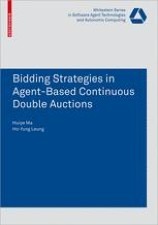
Bidding Strategies in Agent-Based Continuous Double Auctions
Presents a new bidding strategy for agents to adopt in CDAs and propose tools to enhance the performance of existing bidding strategies in CDAs. The superior performance of the new bidding strategy as well as the tools presented in this book are illustrated through extensive experiments.
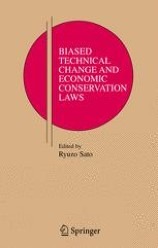
Biased technical change and economic conservation laws
Makes use of Lie groups to shed new light on the analysis of economic conservation laws. Economic conservation laws are not simply abstract concepts; this book shows that they are tools of empirical analysis that can be applied to such topics as analyses of macro performance and corporate efficiency.

Best diagnostic tools and supportive medication for cancer patients
Cancer is still a lethal disease despite the development of new effective therapies; therefore the purpose of our study was to improve the patient's outcome by looking for the best diagnostic tools, secondly to improve radiotherapy resistance since about 50% of all cancer patients are treated with it. The fir st par t of our study will be per formed in Alkhatib center and the selection of that hospital was upon its highly sensitive diagnostic tools, in which PET/ CT scan was playing a major role to improve survival as shown in few repor ts in our study, and it’s the only safe diagnostic tool for a per son who has a metal fragments after injury in the war which increased the number of such patients in our country dur ing the last decade. This diagnostic tool is based on FDGin which we can define the tumor by using sugar more than normal tissue.

Behavioural research for marketing : A practitioner's handbook
Provides market researchers and marketeers with the tools to better understand human behaviour by drawing upon social science theory from different schools of thought, including sociology, psychology and behavioural economics. It has practical examples throughout to help illustrate how to operationalise theory in market research and to underpin the way we understand how people think, behave, decide and make choices.
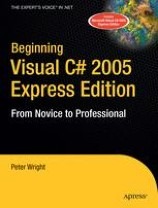
Beginning Visual C# 2005 Express ed. : From novice to professional
Wright took the same approach with this book that he did with the VB titles, and inside you'll find a fast–paced guide to the essentials to get you programming fast. You'll learn the C# language and the tools Visual C# 2005 Express provides. He covers everything from simple console programs to code that talks to the Internet, and even how to write your own database programs. Whatever your reasons for wanting to learn to program with C#, this book will get you where you want to be quickly, and hopefully with a smile on your face. So dive in and change the way you use computers forever.
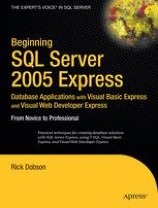
Beginning SQL Server 2005 Express database applications with Visual Basic Express and Visual Web Developer Express : From novice to professional
SQL Server 2005 Express is the database component of Microsoft's Express Suite of products. It is free of charge, inherits many (non-enterprise) features from SQL Server 2005, and comes complete with development and administration tools. As such, it is an ideal database for developers and administrators to use in prototype/evaluation projects. It is also a powerful development platform for database applications on nonprofit websites, e-commerce sites, and in small offices and departments.
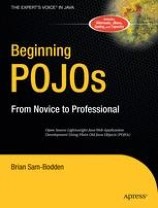
Beginning POJOs : Lightweight Java Web development using Plain Old Java Objects in Spring, Hibernate, and Tapestry
Beginning POJOs introduces you to open source lightweight web development using Plain Old Java Objects (POJOs) and the tools and frameworks that enable this. Tier by tier, this book guides you through the construction of complex but lightweight enterprise Java-based web applications. Such applications are centered around several major open source lightweight frameworks, including Spring, Hibernate, Tapestry, and JBoss (including the new lightweight JBoss Seam). This book is ideal if you're new to open source and lightweight Java. You'll learn how to build a complete enterprise Java-based web application from scratch, and how to integrate the different open source frameworks to achieve this goal.
Beginning jOOQ : Learn to Write Efficient and Effective Java-Based SQL Database Operations
Learn to use the jOOQ library to manage SQL database operations in Java and JVM applications. This book walks you through what JOOQ is, how to install and get started with it, and then gets you working with it. You will: Comparing equivalent features between Hibernate, JPA and jOOQ. Unlock the power of your SQL database with high performing, flexible and typesafe SQL queries. Seamlessly work with many different SQL database vendors without changing your code. Effortlessly generate Java code based on the content of your database. Write reactive SQL database access code with R2DBC. Integrating jOOQ into popular frameworks and platforms like Hibernate, Spring boot and Quarkus tools like IDEs. Testing jOOQ-based code with modern integration testing frameworks like TestContainers and Docker. Learn how to safely handle data access code within frameworks like the Java Persistence API (JPA)
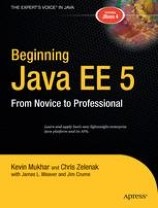
Beginning Java EE 5 : From novice to professional
Sun's new lightweight Java Enterprise Edition (EE) 5 is an extremely powerful platform for developing enterprise-level Java-based applications, primarily for the server. This book shows you how to harness that power, examining how the pieces of the new Java EE 5 platform fit together, including the redesigned annotations-driven EJB 3 spec as well as JavaServer Faces (JSF), integrated into the platform for the first time. Hands-on tutorials are also included, along with clear explanations and working code examples. You will grow to take the next step—from writing client-side desktop applications to writing enterprise applications. You will also learn how to use the individual APIs and tools in the Java EE 5 platform, and how to merge these to create your own enterprise applications.
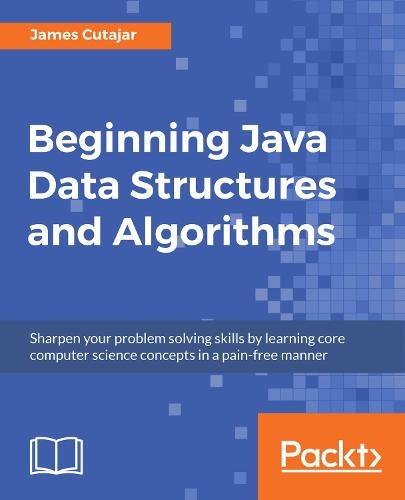
Beginning Java Data Structures and Algorithms : Sharpen your problem solving skills by learning core computer science concepts in a pain-free manner
Teaches you tools that you can use to build efficient applications. It starts with an introduction to algorithms and big O notation, later explains bubble, merge, quicksort, and other popular programming patterns. You’ll also learn about data structures such as binary trees, hash tables, and graphs. The book progresses to advanced concepts, such as algorithm design paradigms and graph theory. By the end of the book, you will know how to correctly implement common algorithms and data structures within your applications.
Beginning Java 17 Fundamentals : Object-Oriented Programming in Java 17
Learn the fundamentals of the Java 17 LTS or Java Standard Edition version 17 Long Term Support release, including basic programming concepts and the object-oriented fundamentals necessary at all levels of Java development. You will: Write your first Java programs with emphasis on learning object-oriented programming / How to work with switch expressions, value types (records), local variable type inference, pattern matching switch and more from Java 17 / Handle exceptions, assertions, strings and dates, and object formatting / Learn about how to define and use modules / Dive in depth into classes, interfaces, and inheritance in Java / Use regular expressions / Take advantage of the JShell REPL tool

Beginning IntelliJ IDEA : Integrated development environment for Java programming
Shows you how to leverage IntelliJ’s tools to develop clean, efficient Java applications. The last portion of the book focuses on application testing and deployment, and language- and framework- specific guidelines. After reading this book and working through its freely available source code, you'll be up to speed with this powerful IDE for today's Java development. You will: Use IntelliJ IDEA to build Java applications / Set up your IDE and project / Work with source code / Extend your Java application to data science and other kinds of applications / Test and deploy your application and much more
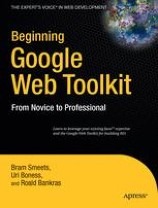
Beginning Google Web Toolkit : From novice to professional
The open source, lightweight Google Web Toolkit (GWT) is a framework that allows Java developers to build rich Internet applications (RIAs), more recently called Ajax applications, in Java. Typically, writing these applications requires a lot of JavaScript development. However, Java and JavaScript are very distinctively different languages (although the name suggests otherwise), therefore requiring a different development process. In Beginning Google Web Toolkit: From Novice to Professional, you'll learn to build rich, user–friendly web applications using a popular Java–based Ajax web framework, the Google Web Toolkit.
