



الصفحة 48
الصفحة 48

Effective entrepreneurial management : Strategy, planning, risk management, and organization
Provides a comprehensive overview of the essential issues in effective entrepreneurial management. It first introduces readers to the fundamentals of entrepreneurial management, the nature of entrepreneurial managers and business planning, before exploring the specific topics of creativity and innovation, risk management, entrepreneurial marketing and organization as well as financing. The authors then move to contemporary topics such as entrepreneurial growth strategies, e-commerce challenges, ethical and socially responsible entrepreneurial management, franchising, and managing entrepreneurial family ventures.

Effective communication
Gives you the tools to improve your communication in a business environment. Discover how to improve your communication skills by learning to understand your audience, communicate strategically and discover which delivery approach is right for you. You'll also develop confidence, learn to listen effectively and give and receive feedback. In a slim, portable format, Essential Managers Effective Communication gives you a practical "how-to" approach with step-by-step instructions, tips, checklists & "ask yourself" features showing you how to overcome barriers to communication choose the right medium for your message, and make an impact

Educational Theory in the 21st Century : Science, Technology, Society and Education
This book reviews the effects of the twenty-first century scientific-technological and social developments on the educational theory. The first part handles the subject, focusing on technology and educational philosophy. In the second part, the implications of new human and social conceptions towards the education paradigms are examined. In the chapters of the last part of the book, more practical dimensions of education are discussed. Transforming school designs, school management, learning-teaching approaches and teacher competencies are discussed in the context of broader social, cultural and technological changes.

Ecotoxicology, Ecological Risk Assessment and Multiple Stressors
The science of ecotoxicology and the practice of ecological risk assessment are evolving rapidly. Ecotoxicology as a subject area came into prominence in the 1960s after the publication of Rachel Carson's book on the impact of pesticides on the environment. The rise of public and scientific concern for the effects of chemical pollutants on the environment in the 1960s and 1970s led to the development of the discipline of ecotoxicology, a science that takes into account the effects of chemicals in the context of ecology. Until the early 1980s, in spite of public concern and interest among scientists, the assessment of ecological risks associated with natural or synthetic pollutants was not considered a priority issue by most government. However, as the years passed, a better understanding of the importance of ecotoxicology emerged and with it, in some countries, the progressive formalization of an ecological risk assessment process.

Ecosystem-Based Management, Ecosystem Services and Aquatic Biodiversity : Theory, Tools and Applications
Aquatic ecosystems are rich in biodiversity and home to a diverse array of species and habitats, providing a wide variety of benefits to human beings. Many of these valuable ecosystems are at risk of being irreversibly damaged by human activities and pressures, including pollution, contamination, invasive species, overfishing and climate change. Such pressures threaten the sustainability of these ecosystems, their provision of ecosystem services and ultimately human well-being.

Ecosystem Services for Well-Being in Deltas : Integrated Assessment for Policy Analysis
Answers key questions about environment, people and their shared future in deltas. It develops a systematic and holistic approach for policy-orientated analysis for the future of these regions. It does so by focusing on ecosystem services in the world’s largest, most populous and most iconic delta region, that of the Ganges-Brahmaputra delta in Bangladesh. The book covers the conceptual basis, research approaches and challenges, while also providing a methodology for integration across multiple disciplines, offering a potential prototype for assessments of deltas worldwide.

Ecosystem Function in Heterogeneous Landscapes
The book elucidates the challenges faced by ecosystem scientists working in spatially heterogeneous systems, relevant conceptual approaches used in other disciplines and in different ecosystem types, and the importance of spatial heterogeneity in conservation resource management. The distinguished authors discuss how how much heterogeneity needs to be taken into account for specific types of scientific and management issues. Their chapters cover the spectrum from proposing novel conceptual approaches to detailing the practical implications of heterogeneous landscapes for fire management, water management and conservation planning.

E-Content: Technologies and Perspectives for the European Market
Technologies develop rapidly and reach hurricane levels of velocity but quality E-Content and innovative applications lag behind. This book addresses the question how content industries change within a digital environment and what role information and communication technologies play in transforming the competitive landscape. The authors argue that post-industrial societies tend to pay substantial amounts for equipment and gadgets but invest far too little in the quality of the content. As a result, much effort is and has to be spent on the enhancement of E-Content.

Economics, Sustainability, and Natural Resources: Economics of Sustainable Forest Management
The economics of sustainability is much more complex than the neoclassical (Newtonian) economic approach to economic efficiency. Forest resources provide the ideal starting point for the economic analysis of sustainability. This book provides a systematic critique of neoclassical economic approaches and their limitations with respect to sustainability. Leading economists from different streams of economics discuss key economic aspects of sustainability and sustainable forest management including complexity, ethical issues, consumer choice theory, intergenerational equity, non-convexities, and multiple equilibria. This is the book which integrates different streams of economics – complexity theory, behavioral economics, post-Keynesian consumer choice theory, social choice theory, and non-convexities – and suggests the main features of Post-Newtonian economics.

Economics of Identity Theft : Avoidance, Causes and Possible Cures
This book discusses privacy as multi-dimensional, and then pulls forward the economics of privacy in the first few chapters. This book also includes identity-based signatures, spyware, and the placement of biometric security in an economically broken system, which results in a broken biometric system. The final chapters include systematic problems with practical individual strategies for preventing identity theft for any reader of any economic status. In conclusion, four startling previews of the future are written as scenarios.

Economics of Accounting : Performance Evaluation
This book Performance Evaluation is divided into four parts. Volume I contains Parts A through D, and the concepts developed in Part A are fundamental to both volumes. In Volume II, Part E initially focuses on optimal contracts in a single-agent /single-task/single-period setting, and explores how performance measure characteristics affect the principal’s expected payoff. Multiple performance measures (including the stock price) and multiple tasks are introduced, thereby creating settings in which the principal is concerned with both the level of incentives and the congruency of the incentives with his own preferences. Part F considers the impact of start-of-period private management information (with communication to the principal) and limited commitment in single-period settings. These analyses serve as a bridge to the multi-period models explored in Part G. These multi-period models permit exploration of the impact of inter-period consumption preferences and limited inter-period commitments on preferences with respect to the inter-period correlation and timing of performance reports. Part H concludes the book with an analysis of multi-agent contracting in settings in which agents may coordinate their actions to their mutual benefit, and may even engage in overt collusion.

Economics and Management of Networks : Franchising, Strategic Alliances, and Cooperatives
The book emphasizes research in economics and management of networks as a theory-driven field. The book presents new research results on efficiency and performance of franchising networks and joint ventures, as well as on entrepreneurship and strategic issues in franchising and cooperatives.

Economics and Management of Climate Change : Risks, Mitigation and Adaptation
Climate change is one of the biggest challenges for mankind. Although there is increasing evidence that climate change is already occurring, there is neither sufficient knowledge as to what extent climate change poses risks to societies and companies, nor about adequate strategies to cope with these risks. Bringing together an international group of scholars from environmental economics, political science and business, this book describes, analyses and evaluates climate change risks and responses of societies and companies. The book contributes to the question of how climate change can be mitigated by discussing efficient and effective design of mitigation measures, in particular emissions trading and clean development mechanism (CDM). Placing special emphasis on the impact of climate change risks on business, the book investigates in which way selected sectors of the economy are affected and what measures they can undertake to adapt to climate change risks.

E-Commerce and Web Technologies ; Vol. 3590 ; 6th International conference, EC-Web 2005, Copenhagen, Denmark, August 23-26, 2005, Proceedings
We welcome you to the 6th International Conference on E-Commerce and Web Technology (EC-Web 2005) held in Copenhagen, Denmark. It was held in conjunction with DEXA 2005. This conference was organized for the first time in Greenwich, UK, in 2000, and it has been able to attract an increasing number of participants and interest, reflecting the progress made in the field. As in the five previous years, EC-Web 2005 served as a forum that brought together researchers from academia and practitioners from industry to discuss the current state of the art in e-commerce and Web technologies.

Ecology, Planning, and Management of Urban Forests : International Perspective
Ecology, Planning, and Management of Urban Forests contains studies and perspectives on urban forests from a broad array of basic and applied scientific disciplines including ecosystem ecology, biogeochemistry, landscape ecology, plant community ecology, geography, and social science. The book contains contributions from experts in Asia, Europe, and North America, allowing the reader to evaluate methods and management that are appropriate for particular geographic, environmental, and socio-political contexts. Urban forests are also approached on regional and landscape scales to encompass more natural environments in and around cities, rather than within arbitrary municipal boundaries. The studies provided are intended to motivate scientists, planners, and managers to work together and to adopt a broader landscape ecology approach to urban forestry, and in so doing, better address the pressing needs for improving the quality of life in urban environments.

Ecology of Tidal Freshwater Swamps of the Southeastern United States
This book draws together the latest findings from investigators focusing on the hydrological processes, community organization, and stress physiology of freshwater, tidally influenced land-margin forests of the southeastern United States. It describes the land use history that led to the restricted distribution of these wetlands, and provides descriptions of the hydrology, soils, biogeochemistry, and physiological ecology of these systems, highlighting the similarities shared among tidal freshwater forested wetlands.
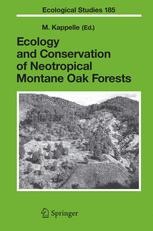
Ecology and Conservation of Neotropical Montane Oak Forests
Covers the range of natural and managed oak forests in the highlands of tropical America. Providing an understanding of ecological patterns and processes that determine the structure and functioning of these forests, this volume aims to serve as a basis for sustainable forest management and biodiversity conservation.

Ecological Risk Assessment for Chlorpyrifos in Terrestrial and Aquatic Systems in the United States
Reviews of Environmental Contamination and Toxicology attempts to provide concise, critical reviews of timely advances, philosophy and significant areas of accomplished or needed endeavor in the total field of xenobiotics, in any segment of the environment, as well as toxicological implications.

Ecological Responses to the 1980 Eruption of Mount St. Helens
The eruption of Mount St. Helens on May 18, 1980, had a momentous impact on the fungal, plant, animal, and human life from the mountain to the far reaches of the explosion's ash cloud and mudflows. Although this intense natural event caused loss of substantial life and property, it also created a unique opportunity to examine a huge disturbance of natural systems and their subsequent responses. Based on one of the most studied areas of volcanic activity, this book synthesizes the ecological research that has been conducted for twenty-five years since the eruption.
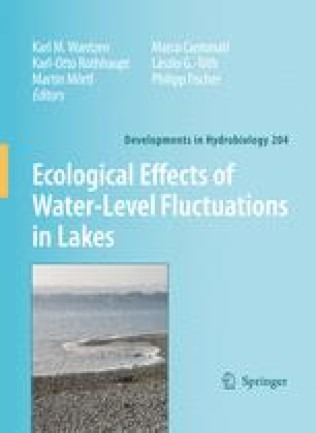
Ecological Effects of Water-Level Fluctuations in Lakes
It presents selected papers on the ecological effects of WLF in lakes, resulting from a workshop at the University of Konstanz in winter 2005. Issues addressed here include the extent of WLF, and analyses of their effects on different groups of biota from microorganisms to vertebrates. Applied issues include recommendations for the hydrological management of regulated lakes to reduce negative impacts, and a conceptual framework is delivered by an extension of the floodpulse concept for lakes. Current impacts on water use, including increasing demands on drinking and irrigation water, hydropower etc., and climate change effects on WLF make this book an essential resource for aquatic ecologists, engineers, and decision-makers dealing with the management of lake ecosystems and their catchments.
