



الصفحة 48
الصفحة 48

Diagnostic Nuclear Medicine
The present text, supplemented with many detailed and informative illustrations, represents an adjunct to the standard knowledge of diagnostic nuclear medicine and provides both the student and the professional with an overview of developments during the past decade.

Diagnosis and Treatment of Human Mycoses
Diagnosis and Treatment of Human Mycoses brings together globally-recognized mycoses experts to guide readers in the use of current knowledge in the field of medical mycology to manage those who suffer from fungal infections (mycoses). Often, diagnostic strategies and tests, including basic and directed culturing techniques, histopathology with standard and special stains, serological methods, and radiological studies all need to be considered and commonly combined to make the diagnosis of fungal infection. This volume first introduces and reviews these tools separately and then as they pertain to specific infections or groups of diseases. The volume consists of four parts. Parts I-III provide an overview of diagnostic and therapeutic tools, and part IV presents the human mycoses.Diagnosis and Treatment of Human Mycoses is meant to be a concise text that will provide the busy infectious disease, hematology–oncology, pulmonology, or critical care specialist a practical tool to diagnose and manage fungal infections. In addition, the depth of the material in the text will provide these and other medical specialists and trainees an excellent reference and learning resource.

Diagnosing and managing temporomandibular joint conditions
Aims to contribute to current knowledge in diagnosing and managing temporomandibular joint (TMJ) disease. Individual chapters cover imaging techniques, myofascial pain, minimally invasive techniques, and operative arthroscopy. The book includes two chapters on condylar head changes regarding condylar resorption and condylar hyperplasia. The book concludes with the issues of TMJ reconstruction with total joint replacement. This book is intended for dentists, oral surgeons, maxillofacial surgeons, ENT physicians, students, and anyone interested in TMJ disease.

Diabetes care at a glance
Guides students and practitioners through presentations, treatments, aims of care and the human side of living with diabetes. For readers it offers evidence based but practical information which underpin diabetes care. The principles of partnership, individualized and informed care are essential. This textbook illustrates these through examples and illustrations to offer students and practitioner's information, in an easily accessible format. To gain knowledge and awareness to deliver effective and timely care for people living with diabetes. There is no other textbook of this type available for student nurses, allied health care professionals and newly qualified practitioners. This is a one stop shop approach to aspects of diabetes care for the general health care practitioner to enable knowledge gain and awareness about diabetes care

Device Applications of Nonlinear Dynamics
This edited book is devoted specifically to the applications of complex nonlinear dynamic phenomena to real systems and device applications. While in the past decades there has been significant progress in the theory of nonlinear phenomena under an assortment of system boundary conditions and preparations, there exist comparatively few devices that actually take this rich behavior into account. "Device Applications of Nonlinear Dynamics" applies and exploits this knowledge to make devices which operate more efficiently and cheaply, while affording the promise of much better performance. Given the current explosion of ideas in areas as diverse as molecular motors, nonlinear filtering theory, noise-enhanced propagation, stochastic resonance and networked systems, the time is right to integrate the progress of complex systems research into real devices.

Developing Prosocial Communities Across Cultures
Skillfully combining psychological knowledge and humanitarian wisdom, Developing Prosocial Communities across Cultures shows how nurturing environments can be rooted in the common concerns of people and institutions, while giving readers the steps toward achieving this goal. Psychologist/activist Forrest Tyler emphasizes individuals’ collective responsibilities—to themselves, each other, and society—and describes a coordinated balance of discrete social changes brought about by civic action, policy changes initiated by officials, and collaboration between professionals and the community. Instructive examples from locales as varied as Colombia, Jordan, and the United States offer models from which readers can form unique, innovative solutions.

Developing BIM talent : A guide to the BIM body of knowledge with Metrics, KSAs, and learning outcomes
A systematic Building Information Modeling (BIM) framework features cutting-edge use cases and competencies for students and professionals pursuing BIM careers. Offers: A solid foundation and guidelines for educators and practitioners for starting or enhancing a BIM curriculum or training program Templates, expert interviews, and case studies that provide in-depth knowledge and lessons learned that can facilitate process changes and strategic action plans Strategies for standardizing emerging BIM job tasks, descriptions, and methods for benchmarking performance

Developing Ambient Intelligence ; Proceedings of the International Conference on Ambient Intelligence Developments (AmI.d’07)
The research papers included in the AmI.d proceedings are devoted to both theoretical and applied research, cover the most leading-edge research and contain contributions that have been formally reviewed and chosen by a selected International Program Committee. The contributions cover a wide range of AmI topics.

Detection and Disposal of Improvised Explosives
It including: Methods of detection of Improvised Explosives (IE). Methods of detection of Improvised explosives devices (IED). Disposal and safe handling of ID and IED. The treatment of detection methods may be divided in the following groups: Overview about the different methods; Trace- and vapor detection; Electromagnetic methods; Neutron methods; Laser techniques. Because of different definitions of Improvised Explosives the parti- pants of the workshop agreed after some discussions with the following definition: An Improvised Explosive (IE) can be any chemical compound or mixture capable of an explosive reaction. They are normally easily prepared by a knowledgeable layman under simple conditions. Components of IE are typically inorganic salts containing molecular bound oxygen like nitrates, chlorates or perchlorates etc. or organic compounds with nitro-, nitami- or nitrate-groups or peroxides. Admixtures of military or commercial explosive materials are also used. From the chemical point of view IE can be divided into the following types: Salts containing chemical groups with oxygen (like nitrates, chlorates or perchlorates etc.) in mixtures with combustible substances like carbon-hydrogen compounds.

Designing virtual reality systems : The structured approach
Virtual Reality (VR) is a field of study that aims to create a system that provides a synthetic experience for its users. Developing and maintaining a VR system is a very difficult task, requiring in-depth knowledge in many different disciplines, such as sensing and tracking technologies, stereoscopic displays, multimodal interaction and processing, computer graphics and geometric modeling, dynamics and physical simulation, performance tuning, etc. The difficulty lies in the complexity of having to simultaneously consider many system goals, some of which are conflicting.

Designing Ubiquitous Information Environments : Socio-Technical Issues and Challenges; IFIP TC8 WG 8.2 International Working Conference, August 1-3, 2005, Cleveland, Ohio, U.S.A.
The book brings in diverse perspectives on ubiquitous information environments, from computer-supported collaborative work, institutional perspective, diffusion of innovation, management, sociology, individual cognition, and software engineering. It also covers a variety of technologies that make up ubiquitous information environments including RFID, wireless grid, GPS, mobile phones, and wireless local area network. The papers cover many contexts of ubiquitous computing including personal use, library, automobile, healthcare, police, professional knowledge work, remote diagnostics of machines, and marketing, attesting to the wide range of potential of ubiquitous information environments.

Designing tall buildings : Structure as architecture
Advises you to consider the influence of a particular site's geology, wind conditions, and seismicity. Using this contextual knowledge and analysis, you can determine what types of structural solutions are best suited for a tower on that site. You can then conceptualize and devise efficient structural systems that are not only safe, but also constructible and economical. Sarkisian also addresses the influence of nature in design, urging you to integrate structure and architecture for buildings of superior performance, sustainability, and aesthetic excellence.

Designing sustainable and resilient cities : Small interventions for stronger urban food-water-energy management
Explores the link between the food-water-energy nexus and sustainability, and the extraordinary value that small tweaks to this nexus can achieve for more resilient cities and communities. Using data from Urban Living Labs in six participating cities (Eindhoven, Gdansk, Miami, Southend-on-Sea, Taipei and Uppsala) to co-define context-specific challenges, the results from each city are collated into an Integrated Decision Support System to guide and improve robust decision making on future urban development. The book presents contributions from CRUNCH, a transdisciplinary team of scholars and practitioners whose expertise spans urban climate modelling; food, water and energy management; the design of resilient public space; collecting better urban data; and the development of smart city technology. Whilst previous works on the food-water-energy nexus have focused on large, transnational cases, this book explores local ways to use the food-water-energy nexus to improve urban resilience.

Designing Organizations : 21st Century Approaches
The design of organizations has been an ongoing concern of management theory and practice over the past several decades. Over this time, there has been little change in the fundamental theory, principles and concepts of Organization Design (OD). Recently organizational life has changed dramatically with the advent of: new communication systems, adaptive mechanisms, information technology, knowledge management systems, innovation processes and more. This book systemically examines these developments and their impact on OD with contributions from leading scholars in the area. Also featured in the book are the practical issues with implementing OD in organizations. The individual chapters are organized into five sections: (1) Putting Contingency Theory in its Place, (2) Focus on Individuals Who Make up the Organization, (3) Innovation Processes and Organization Design, (4) Adaptation and Technology, and (5) Design for Performance. Each chapter examines aspects of the book’s threefold theme: (1) core issues in organization design, (2) emerging theoretical perspectives in OD, and (3) new developments and directions in OD. A special feature of each chapter is: 1) implications for theory, and 2) implications for practice.

Designing landscape architectural education : Studio ecologies for unpredictable futures
Asks designers and academic practitioners to describe their own work through an ecological lens, and then to articulate design approaches for developing new practices in landscape architecture teaching. Designing Landscape Architectural Education: Studio Ecologies for Unpredictable Futures, the Landscape Architecture Design Studio Companion serves as a resource for academic practitioners in the preparation and delivery of 'design-research studios' and students seeking guidance for design methodologies as a part of their landscape architectural education. It draws on the manifold issues of the climate crisis as a set of drivers to examine the utilisation of a range of innovative design approaches to address the current and future priorities of the discipline.
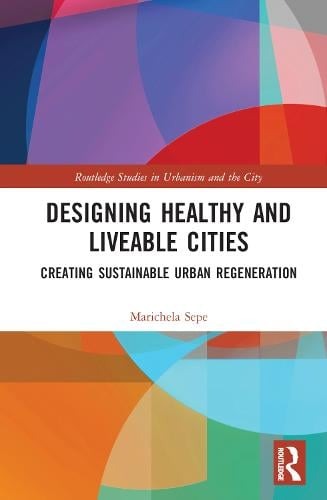
Designing healthy and liveable cities : Creating sustainable urban regeneration
Aim of this book is, after the definition of the field of investigation concerning sustainable regeneration trough topics such as resilience, adaptation, health and mixed connections, to illustrate the present-day approaches to the analysis and design of healthy places, and in particular the original Healthy Pl@ce Design method, flexible and repeatable in different contexts. The method aims at: identifying sustainable urban liveability and healthy and the factors which make places liveable and healthy from the user's point of view and identifying design interventions to enhance or create both urban liveability and health. Emblematic case studies carried out in Europe, USA and China - Bordeaux, Copenhagen, Hamburg, Madrid, Newcastle, Nice, Dublin, Vancouver and Wuhan - constitute the empirical part of the Book detailed with surveys, questionnaires, images and maps.

Designing Digital Work : Concepts and Methods for Human-centered Digitization
This book could well be the most comprehensive collection to date of integrated ideas on the elicitation, representation, integration and digitization of work processes and collaboration. The authors take a heavily human-centered approach while never losing sight of engineering aspects involved. Rooted in relevant theories, they present a set of practice-oriented tools and methods that will help bring work and work support into the hyper connected, data-driven era we are now entering.

Design to Value : The architecture of holistic design and creative technology
Design to Value is a commitment to process above all else. Well understood and applied in the manufacturing industries, its potential is only now starting to be realised in architecture, engineering and construction. It challenges designers to lead the way in creating more innovative and stakeholder-centric analyses, workflows, construction techniques and products. Through architectural thinking, value in the built environment can be maximised. Seeking to create deep and lasting impacts on industry, society and the planet, Design to Value rejects architecture’s current professional services model. The design and delivery stages of traditional procurement routes are not sustainable, and Design to Value outlines a new path for informed design processes.

Design Technology in Contemporary Architectural Practice
Offers rare insights about how these firms apply technology to purposefully disrupt and support their creative design processes in order to then explore how technology can be integrated on an organisational level. The resulting practice stories are loosely tied to four chapters that discuss how Design Technology corresponds to studio culture, collaboration and delivery protocols, business opportunities, knowledge sharing, staff empowerment, and more. Focused on cultural and organisational challenges and opportunities. This book benefits both the professional market (such as design firms reflecting on their technology use), as well as the academic context (with its critical reflection on the interface between design process and technology support). Stories from the following design firms are included: Coop Himmelb(l)au ; Foster + Partners ; Bjarke Ingels Group (BIG) ; Zaha Hadid Architects ; Diller Scofidio + Renfo ; Heatherwick Studio ; Morphosis Architects ; SO-IL ; Woods Bagot ; Herzog & de Meuron ; LASSA

Design process Improvement : A review of current practice
Intended for business leaders who want to understand the role of design management as a driver for commercial success; design managers who want to improve their company design procedures; designers who want to know how to design more efficiently and researchers who want to explore the field of design process improvement
