



الصفحة 48
الصفحة 48

Mechanics of Biological Tissue
The mechanics of biological tissues is a multidisciplinary and rapidly expanding area of research. This book highlights some important research directions that combine mechanical sciences with exciting new developments in biology. This collection of papers should be of interest to theoretical, computational and experimental researchers and doctoral students in the area of biomechanics and in related areas of engineering, biology and medicine.
Mechanics and Physics of Fracture : Multiscale Modeling of the Failure Behavior of Solids
Provides a comprehensive understanding of the macroscopic failure behavior of solids from the description of the microscopic failure processes and their coupling with the microstructure. Several fundamental questions were addressed: the relation between the microstructural features of materials and their fracture properties and crack trajectories; the role of damage mechanisms and non-linear deformations near the crack tip on the failure behavior of solids; and finally the role of dynamic inertial effects during fast fracture was more briefly evoked.

Mechanics and natural philosophy before the scientific revolution
This volume deals with a variety of moments in the history of mechanics when conflicts arose within one textual tradition, between different traditions, or between textual traditions and the wider world of practice. Its purpose is to show how the accommodations sometimes made in the course of these conflicts ultimately contributed to the emergence of modern mechanics.

Mechanics : From Newton's Laws to Deterministic Chaos
This updated and revised fourth edition covers all topics in mechanics from elementary Newtonian mechanics, canonical and rigid body mechanics to relativistic mechanics and nonlinear dynamics. In particular, symmetries and invariance principles, geometrical structures and continuum mechanics play an important role. This book will enable the reader to develop general principles from which equations of motions may be derived, to understand the importance of symmetries as a basis for quantum mechanics and to get practice in using theoretical tools and concepts that are essential for all branches of physics. The book contains numerous problems with complete solutions, and some practical examples.This will be appreciated in particular by students using the text to accompnay lectures on mechanics. The book ends with some historical remarks on important pioneers in mechanics.

Mechanical System Dynamics
This textbook gives a clear and thorough presentation of the fundamental principles of mechanical systems and their dynamics. It provides both the theory and applications of mechanical systems in an intermediate theoretical level, ranging from the basic concepts of mechanics, constraint and multibody systems over dynamics of hydraulic systems and power transmission systems to machine dynamics and robotics.

Mechanical Modelling and Computational Issues in Civil Engineering
In this edited book various novel approaches to problems of modern civil engineering are demonstrated. Experts associated within the Lagrange Laboratory present recent research results in civil engineering dealing both with modelling and computational aspects.
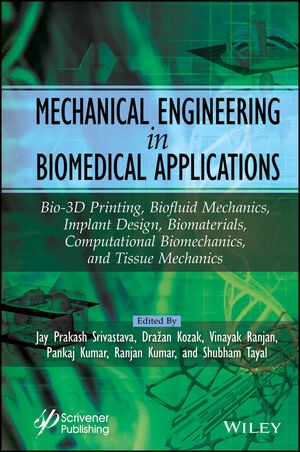
Mechanical engineering in biomedical application: bio-3D printing, biofluid mechanics, implant design, biomaterials, computational biomechanics, tissue mechanics
Explores the latest research and developments related to the interdisciplinary field of biomedical and mechanical engineering offering insights and perspectives on the research, key technologies, and mechanical engineering techniques used in biomedical applications.

Mechanical Behaviour of Engineering Materials : Metals, Ceramics, Polymers, and Composites
How do engineering materials deform when bearing mechanical loads? To answer this crucial question, the book bridges the gap between continuum mechanics and materials science. The different kinds of material deformation (elasticity, plasticity, fracture, creep, fatigue) are explained in detail. The book also discusses the physical processes occurring during the deformation of all classes of engineering materials (metals, ceramics, polymers, and composites) and shows how these materials can be strengthened to meet the design requirements. It provides the knowledge needed in selecting the appropriate engineering material for a certain design problem. The reader will thus learn how to critically employ design rules and thus to avoid failure of mechanical components.

Meccanica delle strutture e Controllo attivo strutturale: Modellistica di edifici, ponti, camini, strutture speciali
The basic texts of Structural Engineering, present in the literature, mostly give introductory examples. This text, however, after having given the disciplinary foundations, goes further to guide the reader in the construction of advanced mathematical models ... It is an unprecedented "compromise" between basic theory text and advanced text for advanced-professionals and researchers. Furthermore, the presence in the volume of "synoptic panels" and software cards gives the reader the possibility of always having at hand the foundations of a complex discipline.

Mécanique céleste et contrôle des véhicules spatiaux = Celestial mechanics and spacecraft control
The textbook contains two parts: Part 1 is an introduction to celestial mechanics, and part II is devoted to the control of cosmic vehicles motion.The book is written in a clear mathematical style-Definition-Proposition-Lemma-Theorem-Corollary-and is almost self contained.

Measuring, Monitoring and Modeling Concrete Properties ; An International Symposium dedicated to Professor Surendra P. Shah, Northwestern University, USA
Of ECF16 Chairman Emmanuel E. Gdoutos The "16th European Conference of Fracture. The present volume is devoted to the symposium on "Measuring, Monitoring and Modeling Concrete Properties" (MMMCP). ECF16 focused in all aspects of structural integrity with the objective of improving the safety and performance of engineering str- tures, components, systems and their associated materials.

Measuring Precipitation from Space : EURAINSAT and the Future
More than 20 years after the last book on the subject the worldwide precipitation community has produced a comprehensive overview of its activities, achievements, ongoing research and future plans. Measuring Precipitation from Space presents state-of-the-art rainfall estimation algorithms, validation strategies, precipitation modelling, and assimilation in numerical weather prediction models. Clouds and precipitation observations and modelling are addressed for the improvement of the rainfall product quality. Special attention is given to the applications to monitoring and forecasting weather events and to climate monitoring in a frame of growing public interest.

Measuring Methane Production from Ruminants
The world’s livestock sector is amidst a major transformation, fuelled by high demand for meat and milk, which is likely to double over the next two decades in developing countries. The challenge is to enhance animal productivity without adversely affecting the environment. A key to this is reducing methane emissions from ruminants. The major limitation to ruminant production in many tropical regions of Africa, Asia and Latin America, where a large proportion of the global ruminant population is located, is poor nutrition. The productivity of animals is restricted by the low nitrogen and high fibre content of the native grasses and crop residues, which form the basis of the diets in these regions. Animals on these types of diets emit more methane than animals fed better quality temperate forages. These methane emissions represent a loss of digestible energy to the animal (up to 15%) as well as a threat to the environment.The challenge is to devise nutritional strategies and identify dietary components, particularly from locally available plant resources, that reduce methane emissions.

Measuring human trafficking : Complexities and pitfalls
Measuring Human Trafficking needs to be read by scholars, professionals, and policymakers in the criminology and human rights fields. The ideas in this important volume can serve to improve the global knowledge base, strengthen coordination between agencies, and develop more effective solutions for combating this most pressing moral issue.

Measuring Entrepreneurship : Building a Statistical System
This volume provides a comprehensive review of the theoretical concepts and empirical models of entrepreneurship from a non-conventional perspective. Its main purpose is to contribute to the design of an efficient system of indicators of entrepreneurship and competitiveness. The existence of a gap between the theory of entrepreneurship and the methods and data available for testing its main propositions has been widely recognized. Hence, some of the most prestigious researchers have collaborated to review and develop the statistical sources, indicators and proxies currently available for empirical studies on the phenomena of entrepreneurship. The book thereby makes recent advances in the theory and application of the economics of entrepreneurship accessible to a wider audience, including policy makers, emphasizing data requirements to advance the future research agenda and to allow for a better design and monitoring of entrepreneurial policy.

Measuring emission of agricultural greenhouse gases and developing mitigation options using nuclear and related Techniques : Applications of nuclear techniques for GHGs
This book is an outcome of the collaboration between the Soil and Water Management & Crop Nutrition Section, Joint FAO/IAEA Division of Nuclear Techniques in Food and Agriculture, Department of Nuclear Sciences and Applications, International Atomic Energy Agency (IAEA), Vienna, Austria, and the German Science Foundation research unit DASIM (Denitrification in Agricultural Soils: Integrated control and Modelling at various scales) and other institutes.

Measurement Uncertainty : An Approach via the Mathematical Theory of Evidence
This text is the first to make full use of the mathematical theory of evidence to express the uncertainty in measurements. It gives an overview of the current standard, then pinpoints and constructively resolves its limitations through its unique approach. The text presents various tools for evaluating uncertainty, beginning with the probabilistic approach and concluding with the expression of uncertainty using random-fuzzy variables. The exposition is driven by numerous examples. The book is designed for immediate use and application in research and laboratory work.

Measurement Uncertainties in Science and Technology
At the turn of the 19th century, Carl Friedrich Gauß founded error calculus by predicting the then unknown position of the planet Ceres. Ever since, error calculus has occupied a place at the heart of science. In this book, Grabe illustrates the breakdown of traditional error calculus in the face of modern measurement techniques. Revising Gauß’ error calculus ab initio, he treats random and unknown systematic errors on an equal footing from the outset. Furthermore, Grabe also proposes what may be called well defined measuring conditions, a prerequisite for defining confidence intervals that are consistent with basic statistical concepts. The resulting measurement uncertainties are as robust and reliable as required by modern-day science, engineering and technology.

Measure, Topology, and Fractal Geometry
For the Second Edition of this highly regarded textbook, Gerald Edgar has made numerous additions and changes, in an attempt to provide a clearer and more focused exposition. The most important addition is an increased emphasis on the packing measure, so that now it is often treated on a par with the Hausdorff measure. The topological dimensions were rearranged for Chapter 3, so that the covering dimension is the major one, and the inductive dimensions are the variants. A "reduced cover class" notion was introduced to help in proofs for Method I or Method II measures. Research results since 1990 that affect these elementary topics have been taken into account. Some examples have been added, including Barnsley leaf and Julia set, and most of the figures have been re-drawn.

Measure Theory and Probability Theory
The book can be used as a text for a two semester sequence of courses in measure theory and probability theory, with an option to include supplemental material on stochastic processes and special topics.Prerequisites are kept to the minimal level of an understanding of basic real analysis concepts such as limits, continuity, differentiability, Riemann integration, and convergence of sequences and series. A review of this material is included in the appendix. The book starts with an informal introduction that provides some heuristics into the abstract concepts of measure and integration theory, which are then rigorously developed. The first part of the book can be used for a standard real analysis course for both mathematics and statistics Ph.D. students as it provides full coverage of topics such as the construction of Lebesgue-Stieltjes measures on real line and Euclidean spaces, the basic convergence theorems, L^p spaces, signed measures, Radon-Nikodym theorem, Lebesgue's decomposition theorem and the fundamental theorem of Lebesgue integration on R, product spaces and product measures, and Fubini-Tonelli theorems. It also provides an elementary introduction to Banach and Hilbert spaces, convolutions, Fourier series and Fourier and Plancherel transforms.
