



الصفحة 48
الصفحة 48

Legitimacy Needs as Drivers of Business Exit
A diversified firm’s withdrawal from a business unit, i.e. business exit, is a significant phenomenon in management practice. Although divestitures are highly relevant in practice, the acquisition of business units attracts much more attention in strategic management research. Carolin Decker develops and empirically applies a framework in which business exits serve the purpose of re-establishing a firm’s previously harmed legitimacy. She suggests four types of legitimacy needs that are to be satisfied with the divestiture of a business unit and the simultaneous pursuit of strategic reorientation. The author tests the theoretical framework with secondary data on 213 business exits. Her findings support the idea that legitimacy needs drive the likelihood of fit-enhancing business exits in divesting firms.
Learning in Economic Systems with Expectations Feedback
Recently economists have more and more focussed on scenarios in which agents' views of the world may be erroneous. These notes introduce the concept of perfect forecasting rules which provide best least-squares predictions along the evolution of an economic system.
Learning at speed : How to upskill and reskill your workforce at pace to drive business performance
Learning at Speed is a practical book which brings together the best from lean and agile methodologies to show how they can be applied to learning and development (L&D) to improve individual and organizational performance. This provides a people development framework which can be used to deconstruct a learning strategy and optimise each element for improved results. It shows how to identify learning barriers and possible solutions, leverage company data to understand learning needs and how to assess the most effective learning resources and delivery channels.
Learning Analytics : Using Talent Data to Improve Business Outcomes
Effective evaluation and measurement of learning and development initiatives is critical to maximise the impact of training, identify gaps for improvement and ensure that efforts are aligned to the business' needs. Learning Analytics outlines how analytical approaches can respond to these challenges, the types and benefits of technological solutions and how to ask the right questions of organizational data in order to build a learning organization that boosts performance and competitive advantage.
Lean Management for Small and Medium Sized Enterprises : Adapting Operations to Changing Business Environment
Provides a step-by-step guide to implementing lean at SMEs using an approach that has been tested and fine-tuned at over a hundred organizations across India, South East Asia and the Middle East. The book approaches Lean through an implementation project cycle flow and enables the reader to understand the imperative for Lean, how to diagnose current operations, how to plan and deploy Lean and shows a path for long-term sustenance.

Lean Business Systems and Beyond ; 1st IFIP TC 5 Advanced Production Management Systems Conference (APMS’2006), Wroclaw, Poland, September 18-20, 2006
Includes : foundations of computer science; software theory and practice; education; computer applications in technology; communication systems; systems modeling and optimization; information systems; computers and society; computer systems technology; security and protection in information processing systems; artificial intelligence; and human-computer interaction. Proceedings and post-proceedings of referred international conferences in computer science and interdisciplinary fields are featured.
Lean Brain Management : More Success and Efficiency by Saving Intelligence
Intelligence is wasted on problems that themselves have been caused by an excess of intelligence. Lean Brain Management strives toward uncompromising Lean Brain Quality. Lean Brain stands for consistent economization of intelligence in all realms of life: Intelligent systems will only be operated by unskilled workers. Education, universities, and schools would become obsolete. A week of training would be enough for virtually any job. ("You are now the physician for the measles in the State of Ohio. In response to phone calls, send this prescription.") Lean Brain is not aimed at dumbing down! Lean Brain can survive on just a very small amount of central intelligence. Potential savings amount to trillions! This is demonstrated using Germany as an example. With this book, Dueck presents a radical suggestion for world improvement. The desire to laugh infinitely about it will eventually segue into a collective rude awakening. The book contains concrete advice for managers to economize on intelligence, and is thus--in keeping with the theme--written in an easy-to-read fashion.
Leading Pharmaceutical Innovation : Trends and Drivers for Growth in the Pharmaceutical Industry
Pharmaceutical giants have doubled their investments in drug development in the past decade only to see new drug approvals remain constant. This book investigates and highlights a set of proactive strategies aimed at generating sustainable competitive advantage based on value-generating business practices. We focus on three sources of pharmaceutical innovation: new management methods in the drug development pipeline, new technologies as enablers for cutting-edge R&D, and new forms of cooperation and internationalization, such as open innovation in the early phases of R&D. Our findings are illustrated by cases from Europe, the US, and Asia.
Leading in a VUCA World : Integrating Leadership, Discernment and Spirituality
Brings together works by specialists from different disciplines and continents to reflect on the nexus between leadership, spirituality and discernment, particularly with regard to a world that is increasingly volatile, uncertain, complex, and ambiguous (VUCA). The book spells out, first of all, what our VUCA world entails, and how it affects businesses, organizations, and societies as a whole. Secondly, the book develops new perspectives on the processes of leadership, spirituality, and discernment, particularly in this VUCA context. These perspectives are interdisciplinary in nature, and are informed by e.g. management studies, leadership theory, philosophy, and theology.

Leading edge technologies in fashion innovation : Product design and development process from materials to the end products to consumers
Offers cutting-edge knowledge on various design and product development related technologies, and applications of these technologies in fashion. Further, it envisions the future of these technologies when designing and engineering apparel-related products.

Leadership today : Practices for personal and professional performance
Provides a clear understanding of leadership needs in today’s business world, explained within the scope of hard and soft leadership skills. It captures qualities and skills such as spirituality, empathy, moral behavior, mindfulness, empathy, problem solving, self-confidence, ambition, knowledge, global understanding, and information technology. This text explains and provides guidelines for the implementation of each skill and includes examples from contemporary and historical leaders inviting the reader to consider each quality and engage in self-reflection. This book deviates from excessive theoretical descriptions presenting a timely, hands-on approach to leadership.
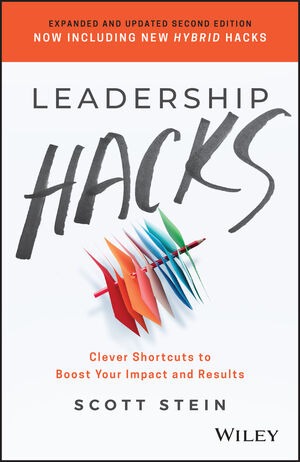
Leadership hacks : Clever shortcuts to boost your impact and results
Identify what distractions slow you down fast-track your productivity to do more in less time streamline delegation so your people perform faster learn the communication and technology shortcuts that get faster results create and lead a hybrid workforce that increases performance. Leadership Hacks shows you how to hack your day, shift your approach and boost your communication so you can lead in a more effective and efficient way, no matter where your team is.
Leadership and Performance in Public Sector Networks
Analyses two key aspects of network management in the public sector: leadership and performance. It investigates what integrative leadership is, and how it differentiates from leadership in single-agency structures. It also examines the performance of public interest networks by proposing an analytical framework that highlights which factors lead to high performance networks.
Leadership and Business Ethics ; 2nd ed.
Seeks to overcome the marginal status of business ethics in universities, business, and enterprise by demonstrating that virtue ethics is an important step in the direction of an adequate response to the leadership issue. This new edition of a popular work points to new ways of achieving an ever more urgent coalescence of ethics and business. It proposes practical advice and viable suggestions to business people on what is right and wrong in business. The volume makes a vital contribution in the area of education that should serve the ongoing development of top leaders.
Leadership and Business Ethics ; 1st ed.
Seeks to contribute to a more adequate coalescence of ethics and business with innovative models for such coalescence, for the mutual benefit of business ethicists, professors teaching in the undergraduate and MBA classroom, corporate executives, and businesspeople. While each of the contributions in this collection is distinct, each invites us to examine our own mind sets about corporate responsibility and the future of free enterprise as Western multinational corporations expand into a global economy. This collection of essays helps to refocus our conceptual work about commerce and business practices in this new century of global enterprise.
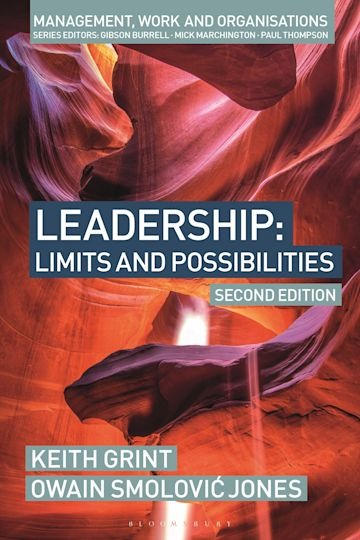
Leadership : Limits and possibilities
Leadership: Limits and Possibilities offers a critical discussion of leadership that draws upon a wide range of approaches, material and examples to demonstrate the complex and challenging role of leadership and through this debate suggests possible ways to improve as a leader. It is structured around 5 key aspects of leadership: person, product, position, process and purpose, providing a useful organizing framework. It combines theoretical discussions with lively examples to bring the subject alive.
Leadership
• Practical, “how-to” approach that teaches you the skills you need to run a project successfully. • New spreads on powerful leadership while working remotely. / • Step-by-step instructions, tips, checklists and “Ask yourself” features that show you how to make an impact / • Tables, illustrations, “in-focus” panels and real-life case studies that demonstrate and explain problem-solving, and how to build confidence and get results.

Lead Markets for Environmental Innovations
Often, the leadership in technological development is accompanied by a leadership in environmental policy. The book provides an analysis of lead markets for innovations such as fuel cells, photovoltaics, and others. Contributions of innovation economics, policy analysis and environmental economics are assessed regarding their potential to explain the leadership of single countries. The book depicts the policy frameworks that are favourable to the creation of such lead markets on the basis of theoretical considerations and case studies. Finally, recommendations for R and D policies, environmental and industrial policies are derived.

Le raisonnement bayésien : Modélisation et inférence = Bayesian reasoning : Modeling and inference
Describes in detail the practice of the Bayesian statistical approach using many examples chosen for their educational interest. The first part gives the general principles of statistical modeling making it possible to supervise but also to come to the aid of the imagination of the apprentice modeler. By examining examples of increasing difficulty, the reader forges the keys to building their own model. The second part presents the most useful calculation algorithms for estimating the unknowns of the model. Each inference method is presented and illustrated by numerous application cases.

Law and the Semantic Web : Legal Ontologies, Methodologies, Legal Information Retrieval, and Applications
As part of this objective, ICT (information and communication technologies) services should become available for every citizen, and for all schools, homes and businesses. The book you have in front of you is about Semantic Web technology and law. Law is something omnipresent; all citizens — at some points in their lives — have to deal with it. In addition, law involves a large group of professionals, and is a mul- billion business world wide. Information technology is important because it that can improve citizens’ interaction with law, as well as improve legal professionals’ work environment. Legal professionals dedicate a significant amount of their time to finding, reading, analyzing and synthesizing information in order to take decisions, and prepare advice and trials, among other tasks. As part of the “Semantic-Based Knowledge and Content Systems” Strategic Objective, the European Commission is funding projects to construct technology to make the Semantic Web vision come true. 1 The articles in this book are related to two current foci of the Strategic Objective : • Knowledge acquisition and modelling, capturing knowledge from raw information and multimedia content in webs and other distributed repositories to turn poorly structured information into machi- processable knowledge.
