



الصفحة 47
الصفحة 47

Blameworthy Belief : A Study in Epistemic Deontologism
Believing the wrong thing may sometimes have drastic consequences. The question as to when a person is not only ill-guided, but genuinely at fault for holding a particular belief is an important one: It touches upon the roots of our understanding of such notions as criminal negligence and moral responsibility. The answer to this question may influence the extent to which we are willing to submit each other to punishments ranging from mild resentment to harsh prison terms. This book presents an extensive effort to shed light on the conditions under which we may appropriately deem someone blameworthy for holding a particular belief. It regiments and unifies several debates within contemporary epistemology, ethics and legal scholarship. Finally, the book brings a new philosophical look on issues like our power to control beliefs and the extent and nature of foresight.

Biotechnology for Odor and Air Pollution Control
An international board of authors from universities, research institutes, and industries describe various biotechnological methods ranging from laboratory, to pilot evaluation and to full-scale process implementation. Topics include bioprocesses for the treatment of odors and air pollutants in wastewater treatment plants, rendering plants, chemical production facilities, and food and flavor manufacturing facilities. In addition to the basic microbiological and engineering aspects, the design, modeling and control of bioreactors are also presented.
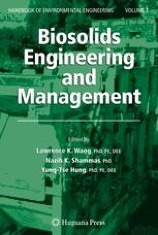
Biosolids engineering and management
Biosolids Engineering and Management, is a collection of methods of practical design, calculation and numerical examples that illustrate how organized, analytical reasoning can lead to the discovery of clear, direct solutions, especially in the areas of biosolids management, treatment, disposal and beneficial use. The book’s including sludge and biosolids transport, pumping and storage, sludge conversion to biosolids, chlorination, stabilization, regulatory requirements, costs, agricultural land application, landfill, ocean disposal, combustion, incineration and sludge treatment process selection.
Biosimilars : Regulatory, clinical, and biopharmaceutical development
Provides a comprehensive overview of the biosimilar regulatory framework, the development process and clinical aspects for development of biosimilars. The development path of a biosimilar is just as unique as a development path of a new drug, tailored by the mechanism of action, the quality of the molecule, published information on the reference product, the current competitive environment, the target market and regulatory guidance, and most importantly, the emerging totality of evidence for the proposed biosimilar during development.
Biopharmaceutical manufacturing progress, trends and challenges
Source of the latest innovative research and technical development in biomanufacturing systems. It is organised into 2 parts: 1) Manufacturing of recombinant therapeutic proteins (e.g. therapeutic antibodies, biosimilars/biogenerics) and 2) Manufacturing aspects of cell and gene therapy. Each with selected chapters on the following topics for both up- and downstream, such as: Advanced process strategies, especially continuous manufacturing, Advanced culture techniques, especially single-use systems, Process transfer, scale-up/scale-down models, Processing advances/Manufacturing productivity/efficiency, Model-assisted process understanding and development/Digital Twins, Process controls and analytics, Quality control, Quality by design, Facility design and full-scale commercial systems, manufacturing technology innovation.
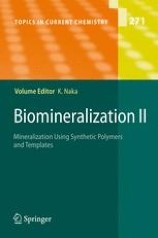
Biomineralization II : Mineralization Using Synthetic Polymers and Templates
In nature, biological organisms produce mineralized tissues such as bone, teeth, diatoms, and shells. Biomineralization is the sophisticated process of production of these inorganic minerals by living organisms. Construction of organic–inorganic hybrid materials with controlled mineralization analogous to those produced by nature has recently received much attention because it can aid in understanding the mechanisms of the biomineralization process and development of biomimetic materials processing. The biomineralization processes use aqueous solutions at temperatures below 100 ◦C and no toxic intermediates are produced in these systems. This series presents critical reviews of the present position and future trends in modern chemical research. The short and concise reports on chemistry are each written by world renowned experts. This series is still valid and useful after 5 or 10 years.
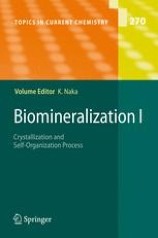
Biomineralization I : Crystallization and Self-Organization Process
The five chapters of Biomineralization, volume 1, provide a bridge between the mineralogy and the organic substrates that enable the mineral formation by organisms in nature and under laboratory conditions. The book is a most useful reference for all concerned with biomineralization and biogenic minerals.In nature, biological organisms produce mineralized tissues such as bone, teeth, diatoms, and shells. Biomineralization is the sophisticated process of production of these inorganic minerals by living organisms. Construction of organic–inorganic hybrid materials with controlled mineralization analogous to those produced by nature has recently received much attention because it can aid in understanding the mechanisms of the biomineralization process and development of biomimetic materials processing.
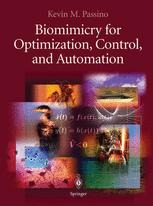
Biomimicry for Optimization, Control, and Automation
In this book, we focus onhowtousebiomimicryof the functionaloperationofthe “hardwareandso- ware” of biological systems for the development of optimization algorithms and feedbackcontrolsystemsthatextendourcapabilitiestoimplementsophisticated levels of automation. The primary focus is not on the modeling, emulation, or analysis of some biological system. The focus is on using “bio-inspiration” to inject new ideas, techniques, and perspective into the engineering of complex automation systems. There are many biological processes that, at some level of abstraction, can berepresentedasoptimizationprocesses,manyofwhichhaveasa basicpurpose automatic control, decision making, or automation.
Biomimetics for architecture & design : Nature - analogies - technology
Provides the readers with a timely guide to the application of biomimetic principles in architecture and engineering design. As a result of a combined effort by two internationally recognized authorities, the biologist Werner Nachtigall and the architect Göran Pohl, the book describes the principles which can be used to compare nature and technology, and at the same time it presents detailed explanations and examples showing how biology can be used as a source of inspiration and “translated” in building and architectural solutions (biomimicry). Even though nature cannot be directly copied, the living world can provide architects and engineers with a wealth of analogues and inspirations for their own creative designs. But how can analysis of natural entities give rise to advanced and sustainable design? By reporting on the latest bionic design methods and using extensive artwork, the book guides readers through the field of nature-inspired architecture, offering an extraordinary resource for professional architects, engineers, designers and urban planners, as well as for university teachers, researchers and students.

Biology and Control Theory : Current Challenges
Creating some links between control feedback and biology modeling communities based on similarities in modeling, observing and perceiving alive structures, and analyzing interconnections between biological structures and subsystems was the main objective of this volume. The idea of this book was conceived in the context mentioned above with the objective to help in claiming many of the problems for control researchers, starting discussions and opening interactive debates between the control and biology communities, and, finally, to alert graduate students to the many interesting ideas at the frontier between control feedback theory and biology.
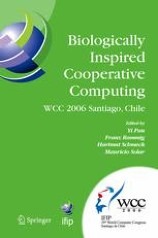
Biologically inspired cooperative computing ; IFIP 19th World Computer Congress, TC 10: 1st IFIP International Conference on biologically inspired cooperative computing, August 21-24, 2006, Santiago, Chile
The IFIP series publishes state-of-the-art results in the sciences and technologies of information and communication. The scope of the series includes: foundations of computer science; software theory and practice; education; computer applications in technology; communication systems; systems modeling and optimization; information systems; computers and society; computer systems technology; security and protection in information processing systems; artificial intelligence; and human-computer interaction.

Biological Invasions in South Africa
This book presents a comprehensive account of all aspects of biological invasions in South Africa, where research has been conducted over more than three decades, and where bold initiatives have been implemented in attempts to control invasions and to reduce their ecological, economic and social effects.

Biological Invasions in New Zealand
Man’s recent colonization of New Zealand has dramatically altered the resident biota and resulted in the introduction of numerous alien organisms to these once remote islands. In reverse, there is increasing evidence of a lesser known export of species to other regions of the world. This volume presents an in-depth review of the level and rate of such invasions, and investigates what controls the success of invaders and the consequences for ecosystems both on land and offshore. It provides invasion biologists everywhere with tests of current theories about those factors leading to the success of invaders as well as evaluating principles for understanding the nature of their impacts that form a solid basis for the effective management of biological invasions worldwide.
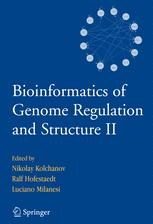
Bioinformatics of genome regulation and structure II
The conference was organized by the Laboratory of Theoretical Genetics, Institute of Cytology and Genetics, Siberian Branch of the Russian Academy of Sciences, Novosibirsk, Russia. The material covers the most recent topics in bioinformatics, including (i) regulatory genomic sequences: databases, knowledge bases, computer analysis, modeling, and recognition; (ii) large-scale genome analysis and functional annotation; (iii) gene structure detection and prediction; (iv) comparative and evolutionary genomics; (v) computer analysis of genome polymorphism and evolution; computer analysis and modeling of transcription, splicing, and translation; structural computational biology: structure- function organization of genomic DNA, RNA, and proteins; (vi) gene networks, signal transduction pathways, and genetically controlled metabolic pathways: databases, knowledge bases, computer analysis, and modeling; principles of organization, operation, and evolution; (vii) data warehousing, knowledge discovery and data mining; and (viii) analysis of basic patterns of genome operation, organization, and evolution.

Biochemistry
Biochemistry and the organization of cells -- Water : the solvent for biochemical reactions -- Amino acids and peptides -- The three-dimensional structure of proteins -- Protein purification and characterization techniques -- The behavior of proteins : enzymes -- The behavior of proteins : enzymes, mechanisms, and control -- Lipids and proteins are associated in biological membranes -- Nucleic acids : how structure conveys information -- Biosynthesis of nucleic acids : replication -- Transcription of the genetic code : the biosynthesis of RNA -- Protein synthesis : translation of the genetic message -- Nucleic acid biotechnology techniques -- Viruses, cancer, and immunology -- The importance of energy changes and electron transfer in metabolism -- Carbohydrates -- Glycolysis

Bevande analcoliche : Piacere, libertá, responsabilitá = Non-alcoholic drinks : Pleasure, freedom, responsibility
The increase in physical activity and responsible moderation in the intake of food and drinks represent the best strategy to control the phenomenon of obesity in our society.
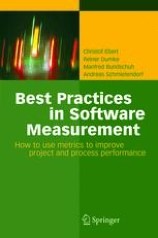
Best practices in software measurement : How to use metrics to improve project and process performance
Not everything that counts can be counted. Not everything that is counted counts. Albert Einstein This is a book about software measurement from the practitioner’s point of view and it is a book for practitioners. Software measurement needs a lot of practical guidance to build upon experiences and to avoid repeating errors. This book t- gets exactly this need, namely to share experiences in a constructive way that can be followed. It tries to summarize experiences and knowledge about software measurement so that it is applicable and repeatable. It extracts experiences and lessons learned from the narrow context of the specific industrial situation, thus facilitating transfer to other contexts. Software measurement is not at a standstill. With the speed software engine- ing is evolving, software measurement has to keep pace. While the underlying theory and basic principles remain invariant in the true sense (after all, they are not specific to software engineering), the application of measurement to specific contexts and situations is continuously extended. The book thus serves as a ref- ence on these invariant principles as well as a practical guidance on how to make software measurement a success.

Berufliche passagen im lebenslauf : berufsbildungs- und transitionsforschung in der Schweiz = Vocational passages in the CV : Vocational training and transition research in Switzerland
During the transition from school to work, important groundwork is laid that prepares the further course of a person's life. In addition, this volume presents new results from diverse transition research from all over Switzerland, which are based on various disciplines such as psychology, sociology, educational sciences or educational economics. For this purpose, theoretical foundations and empirical evidence for the analysis and control of significant passages in the life course are developed.
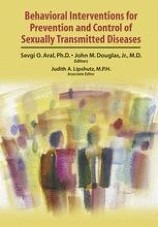
Behavioral interventions for prevention and control of sexually transmitted diseases
Before AIDS, the role of behavioral interventions in preventing transmission of sexually transmitted diseases was acknowledged in text books and journals but rarely promoted effectively in public health practice. Informed by a comprehensive knowledge of behavioral theory, intervention methods, and affected populations, the authors of this important book examine the central role of behavioral interventions in combating STDs. The book addresses the complexities and social contexts of human behaviors which spread STDs, the cultural barriers to STD education (ranging from conservative mores to "stay out of my bedroom" libertarianism), and the sociopolitical nuances surrounding treatment.

Behavioral finance and your portfolio : A navigation guide for building wealth
Designed for investors who are serious about maximizing their gains, in this book you’ll discover how to: ● Take control of your decision-making—even when challenging markets push greed and fear to intolerable levels ● Reflect on how to make investment decisions using data-backed and substantiated information instead of emotion and bias ● Counter deep-seated biases like loss aversion, hindsight and overconfidence with self-awareness and hard facts ● Identify your personal investment psychology profile, which you can use to inform your future financial decision making
