



الصفحة 46
الصفحة 46
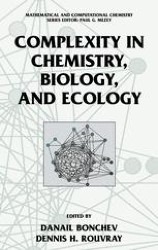
Complexity in chemistry, biology, and ecology
This book, written by an international team of experts, introduces the reader to various aspects of complexity theory and its applications. It illustrates the latest trends in science to go beyond the mechanistic Newtonian view of the world by shifting the focus to self-organization, adaptation, and emergent phenomena. The authors discuss these properties of complex systems in biology, ecology and chemistry along with the structure and interconnectedness of the "layers" of complexity. The qualitative description is complemented by a discussion of methods for complexity quantification. Networks are covered in detail as a universal language of the complex world.
Complex Scheduling
This book deals with such complex scheduling problems and methods to solve them. It consists of three parts: The ?rst part (Chapters 1 and 2) contains a description of basic scheduling models with applications and an introduction into discrete optimization (covering complexity, shortest path algorithms, linear programming, network ?ow algorithms and general optimization methods). In the second part (Chapter 3) resource-constrained project scheduling problems are considered. Especially, methods like constraint propagation, branch-a- bound algorithms and heuristic procedures are described. Furthermore, lower bounds and general objective functions are discussed.

Complex Numbers from A to … Z
It is impossible to imagine modern mathematics without complex numbers. Complex Numbers from A to . . . Z introduces the reader to this fascinating subject that, from the time of L. Euler, has become one of the most utilized ideas in mathematics.The exposition concentrates on key concepts and then elementary results concerning these numbers. The reader learns how complex numbers can be used to solve algebraic equations and to understand the geometric interpretation of complex numbers and the operations involving them.The theoretical parts of the book are augmented with rich exercises and problems at various levels of difficulty. A special feature of the book is the last chapter, a selection of outstanding Olympiad and other important mathematical contest problems solved by employing the methods already presented.The book reflects the unique experience of the authors. It distills a vast mathematical literature, most of which is unknown to the western public, and captures the essence of an abundant problem culture.
Complex Engineered Systems : Science Meets Technology
This volume examines the difficulties that arise in creating highly complex engineered systems and new approaches that are being adopted. Topics addressed range from the formal representation and classification of distributed networked systems to revolutionary engineering practices inspired by biological evolution. By bringing together the latest research in Complex Engineered Systems, this book sheds light on the current state and future course of this emerging field.

Communications and Multimedia Security ; Vol. 175 ; 8th IFIP TC-6 TC-11 Conference on Communications and Multimedia Security, Sept. 15-18, 2004, Windermere, The Lake District, United Kingdom
Communications and Multimedia Security is an essential reference for both academic and professional researchers in the fields of Communications and Multimedia Security. This state-of-the-art volume presents the proceedings of the Eighth Annual IFIP TC-6 TC-11 Conference on Communications and Multimedia Security, September 2004, in Windermere, UK. The papers presented here represent the very latest developments in security research from leading people in the field. The papers explore a wide variety of subjects including privacy protection and trust negotiation, mobile security, applied cryptography, and security of communication protocols. Of special interest are several papers which addressed security in the Microsoft .Net architecture, and the threats that builders of web service applications need to be aware of. The papers were a result of research sponsored by Microsoft at five European University research centers. This collection will be important not only for multimedia security experts and researchers, but also for all teachers and administrators interested in communications security.

Communicating European Research 2005 ; Proceedings of the Conference, Brussels, 14-15 November 2005
The book covers the main aspects of science and technology communication today and addresses topical questions such as: Is science journalism necessary at all? Should communication become one of the basic skills of scientists, as compulsory as thinking, testing and experimenting? Should our schools of the future put scientific literacy at the top of the science curriculum? Do we need science critics? Does the coverage of science in the media reflect the choice of the editors or does it accurately mirror the public’s interest? How does one capture the public’s attention when promoting science on local, commercial or entertainment radio? Why would we need standards in science communication? How can we remove any obstacles to communication among researchers and between researchers?
Clinical oral medicine and pathology
The book has been well received internationally by a wide audience of clinicians, including general dentists, oral surgeons, otolaryngologists, primary care physicians, nurse practitioners, dental hygienists, physician assistants, and dermatologists, and sales have been strong among students and post-graduate residents training in medical, dental, and allied health fields, supporting the versatility of this work and serving as testimony to its value in both the academic and private practice arenas. Several key updates and improvements have been made to the second edition. All informational content has been updated to ensure accuracy and relevance, particularly in the rapidly evolving fields of oncology and pharmacology. A new chapter has been added entitled "Oral Sequelae of Cancer and Cancer Therapy" which better organizes and consolidates previous content while expanding on topics such as targeted therapies and hematopoietic stem cell transplantation. Additional clinical images have been included throughout the book so that the full clinical spectrum of any given condition is well-represented. Furthermore, the print quality, as well as the positioning and layout of the clinical images has been improved for optimal utility. Lastly, the summary boxes that follow each condition have been reconfigured with color-coded icons for improved definition, ease of use and cross-referencing.

Clinical microbiology made ridiculously simple
Is a brief, clear, thorough, and updated approach to clinical microbiology, brimming with mnemonics, humor, summary charts, and illustrations. Topics include Ebola, AIDS, flesh-eating bacteria, mad cow disease, hantavirus, anthrax, smallpox, and tuberculosis; the latest antibiotics; pandemic flu, including H7N9; SARS-like coronavirus; hepatitis C treatment options; HIV diagnostics and approved HIV meds; Zika virus; measles; and a new chapter on the latest emerging infectious diseases and drug-resistant bacteria. The major update to this book is the addition of a new chapter on the SARS-COV-2 virus and COVID-19 disease, which delves into the nature of the virus such as infectivity within the body, transmission between individuals, timeline of infectivity, symptoms, risk factors, therapeutics, and vaccines approved for use.

Clinical metabolomics applications in genetic diseases
Helps readers discover the forefront of personalized medicine on clinical metabolomics and its applications in genetic diseases. This comprehensive guide offers a functional relationship map between cell components and genetic variations in various diseases, providing insights that can be applied to personalized medicine. Covers the latest developments in metabolomics for health, with practical guidance for clinical experts looking to advance their laboratory techniques and career. The metabolomics profile is a powerful tool that has revolutionized our understanding of the relationship between genetics, clinical readouts, and disease outcomes. By integrating metabolomics with genomics and clinical phenotypes, the authors have developed diagnostic and prediction models that have vastly improved patient outcomes and deepened the understanding of disease mechanisms.

Clinical guide to oral diseases
A concise reference on the common diseases encountered in daily practice. Presenting a large selection of clinical cases, this user-friendly resource covers a range of oral and perioral lesions located in hard and soft tissues of the mouth and neck, as well as oral manifestations of various systemic diseases. Nearly 300 high-quality color images complement succinct descriptions of clinical cases seen in both community and hospital care settings. Provides nearly 300 high-quality clinical photos and relevant questions to help lead readers to the proper diagnosis of common oral diseases Contains concise tables relevant to each chapter with a list of common oral lesions and conditions Offers MCQs of varying levels of difficulty to help readers test their knowledge in Oral Medicine Includes clinical flow charts according to the location and duration of oral lesions Incorporates the ICD-10 Codes of oral lesions and diseases
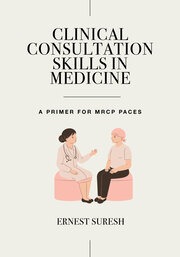
Clinical consultation skills in medicine : A primer for MRCP PACES
Follows the revised format of the Practical Assessment Clinical Examination Skills (PACES) exam conducted by the Royal College of Physicians in the UK, where ‘clinical consultation skills’ will be tested twice in two separate stations. Thus, coming closest to what doctors do in real life: obtain a structured history, perform a focussed examination and explain the problem to the patient in lay terms. This book takes readers through a rational approach to 63 common presenting symptoms or laboratory abnormalities in medicine. It is aimed at improving the clinical consultation skills of young doctors and preparing them for the new format of MRCP PACES
Clinical concepts and practical management techniques in dentistry
Deals with complete oral health, including prevention, treatment, and cure. This book provides readers with the latest updates on dental clinical concepts and practical management techniques. It is divided into four sections that contain in-depth chapters with concepts and techniques from the fields of oral medicine, periodontology, radiology, endodontics, restorative dentistry, dental trauma, and probability and sampling. It is a compendium of work by internationally recognized oral clinicians and public healthcare leaders in dentistry. It presents updates on some of the most pertinent issues within the practice of dentistry, such as regenerative endodontic procedures, the unique role of radiographs, recognition of child abuse, and dental statistics.

Clinical chemistry : Principles, techniques, and correlations ; 9th ed.
Keeps students at the forefront of what continues to be one of the most rapidly advancing areas of laboratory medicine with clear explanations that balance analytic principles, techniques, and correlation of results with coverage of disease states. The book not only demonstrates the how of clinical testing, but also the what, why, and when of testing correlations to help students develop the knowledge and interpretive and analytic skills they'll need in their future careers.
Clinical chemistry : principles, procedures, correlations ; 8th ed.
Demonstrates the how of clinical testing, and also the what, why, and when of testing correlations to help students develop the knowledge and interpretive and analytic skills they'll need in their future careers

Clinical Chemistry
Clinical Chemistry considers what happens to the body’s chemistry when affected by disease. It provides introductory coverage of the scientific basis for biochemistry tests routinely used in medicine - including tests for the assessment of organ function, diagnosis and monitoring disease activity and therapy efficacy. Each topic area begins with a concise description of the underlying physiological and biochemical principles and then applies them to patient investigation and management. The regular use of case histories helps further emphasise clinical relevance and chapter key points, as well as provide a useful starting point for examination revision.

Clinical Cases in Periodontics ; 2nd ed.
Clinical Cases in Periodontics offers: A thorough introduction to periodontic examination and diagnosis, including documentation, plaque, and non-plaque induced gingivitis A comprehensive exploration of non-surgical periodontal therapy, including local anatomic factors contributing to periodontal disease and local drug delivery Practical discussions of resective periodontal therapy, including gingivectomy and flap osseous surgery In-depth examinations of regenerative therapy, including the treatment of furcation and guided bone regeneration The latest advances in inter-disciplinary care, encompassing orthodontics, prosthodontics, and implant dentistry

Clinical cases in pediatric dentistry ; 2nd ed.
Features comprehensive updates to all 66 cases to include the latest diagnostic and treatment techniques. Each chapter also includes brand-new cases, for a total of 13 entirely new cases. The most current references to the literature, best practices, and evidence based clinical guidelines, plus new and updated self‐assessment questions with detailed answers and explanations, have been added to all the cases. Presents updated content, clinical guidelines, and references in existing cases, with thirteen brand new case scenarios Takes an easy-to-follow format, with patient history and diagnostics, questions, and answers, and explanations for each case Part of the "Clinical Cases" series applying both theory and practice to actual clinical cases Includes access to a companion website featuring additional case studies, charts, tables, web links, and the figures from the book in PowerPoint

Classification - the ubiquitous challenge ; Proceedings of the 28th annual conference of the Gesellschaft für Klassifikation e.V., University of Dortmund, March 9-11, 2004
This volume contains revised versions of selected papers presented duringthe 28th Annual Conference of the Gesellschaft f ̈ur Klassifikation (GfKl), theGerman Classification Society. contributed papers by authors from 18countries were presented at the conference in 52 parallel sessions representingthe whole field addressed by the title of the conference “Classification: TheUbiquitous Challenge”. Among these 52 sessions the VOC organized sessionson Mixture Modelling, Optimal Scaling, Multiway Methods, and Psychomet-rics with 18 papers. Overall, presentation of the papers in this volume is arranged in the fol-lowing parts:I. (Semi-)Plenary PresentationsII. Classification and Data AnalysisIII. Applications, andIV. Contest: Social Milieus in Dortmund

Classes of Finite Groups
Many group theorists all over the world have been trying in the last twenty-five years to extend and adapt the magnificent methods of the Theory of Finite Soluble Groups to the more ambitious universe of all finite groups. This is a natural progression after the classification of finite simple groups but the achievements in this area are scattered in various papers.Our objectives in this book were to gather, order and examine all this material, including the latest advances made, give a new approach to some classic topics, shed light on some fundamental facts that still remain unpublished and present some new subjects of research in the theory of classes of finite, not necessarily solvable, groups.
Civil Engineering Materials for Transportation Infrastructure
Includes the fundamental mechanical and physical properties of materials; properties, tests, and gradation designs of aggregates; production, composition, hydration, properties, and tests of lime and cement; composition, tests, and design of cement concrete; mechanisms, properties, and design of inorganic binder stabilized material; properties, tests, and grading of asphalt; composition, properties, tests, and designs of asphalt mixture; and properties, treatments, tests, and selections of steel.
