



الصفحة 45
الصفحة 45

Learning in cultural context : Family, peers, and school
What events take place at the intersection of cultural identity, education, and experience? How can they be measured, replicated? How can teachers use such personal phenomena to enhance student performance?

Learning from nature how to design new implantable biomaterialsis : From biomineralization fundamentals to biomimetic materials and processing routes ; Proceedings of the NATO Advanced Study Institute, held in Alvor, Algarve, Portugal, 13-24 October 2003
The demands upon the material properties largely depend on the site of application and the function it has to restore. Ideally, a replacement material should mimic the living tissue from a mechanical, chemical, biological and functional point of view.
Learning from data streams : Processing techniques in sensor networks
The book provides the reader with a comprehensive overview of stream data processing, including famous prototype implementations like the Nile system and the TinyOS operating system. The set of chapters covers the state-of-art in data stream mining approaches using clustering, predictive learning, and tensor analysis techniques, and applying them to applications in security, the natural sciences, and education.

Learning from clusters : A critical assessment from an economic-geographical perspective
Edited volumes run the danger of being a hotchpotch of contributions on a wide variety of topics. Here, we have explicitly focused on a central theme in contemporary economic geography and regional science, namely the relationship between learning, innovation and clustering. Internationally renowned scientists made both theoretical and empirical contributions to this volume. We think this book constitutes a broad palette of contemporary thinking and research on the relationship between spatial concentration and innovation and hope it will play a significant role in future debates on this issue.
Learning Diagnostic Imaging : 100 Essential Cases
Intended to provide medical students, residents of Radiology, and anybody else beginning to be involved in the radiological world, with a useful tool that gives them a quick and comprehensive overview of Radiology.

Learning Design : A Handbook on Modelling and Delivering Networked Education and Training
Put together contributions from members of the "Valkenburg Group", consisting of 33 experts deeply involved in e-learning and more specifically learning design. The result is a rich and lasting source of information for both e-learning course and tool developers, providing information about the specification itself, how to implement it in practice, what tools to use, and what pitfalls to avoid. The book not only reports first experiences, but also goes beyond the current state of the art by looking at future prospects and emerging applications.
Learning Classifier Systems in Data Mining
Just over thirty years after Holland first presented the outline for Learning Classifier System paradigm, the ability of LCS to solve complex real-world problems is becoming clear. In particular, their capability for rule induction in data mining has sparked renewed interest in LCS. This book brings together work by a number of individuals who are demonstrating their good performance in a variety of domains.

Learning Classifier Systems ; International Workshops, IWLCS 2003-2005, Revised Selected Papers
The work embodied in this volume was presented across three consecutive e- tions of the International Workshop on Learning Classi?er Systems that took place in Chicago (2003), Seattle (2004), and Washington (2005). The Genetic and Evolutionary Computation Conference, the main ACM SIGEvo conference, hosted these three editions.

Learning Classifier Systems ; 10th International Workshop, IWLCS 2006, Seattle, MA, USA, July 8, 2006 and 11th International Workshop, IWLCS 2007, London, UK, July 8, 2007, Revised Selected Papers
Constitutes the thoroughly refereed joint post-conference proceedings of two consecutive International Workshops on Learning Classifier Systems that took place in Seattle, WA, USA in July 2006, and in London, UK, in July 2007 - all hosted by the Genetic and Evolutionary Computation Conference, GECCO.The 14 revised full papers presented were carefully reviewed and selected from the workshop contributions. The papers are organized in topical sections on knowledge representation, analysis of the system, mechanisms, new directions, as well as applications.
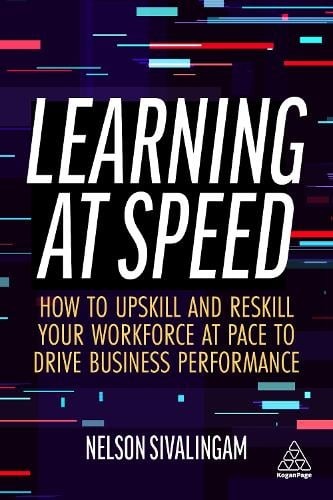
Learning at speed : How to upskill and reskill your workforce at pace to drive business performance
Learning at Speed is a practical book which brings together the best from lean and agile methodologies to show how they can be applied to learning and development (L&D) to improve individual and organizational performance. This provides a people development framework which can be used to deconstruct a learning strategy and optimise each element for improved results. It shows how to identify learning barriers and possible solutions, leverage company data to understand learning needs and how to assess the most effective learning resources and delivery channels.
Learning and Teaching for the Twenty-first Century : Festschrift for Professor Phillip Hughes
This book stresses learning and teaching, rather than teaching and learning. The contention of the contributors is that the focus in all educational endeavours should not be primarily on teachers and teaching, but on learners; how to best facilitate learning, in the most effective, enjoyable, relevant and cost-effective ways for learners, whether they be children, youth or adults. The focus is therefore on how learning can be enhanced, through effective teaching; and how individuals can be best prepared to be excellent teachers.

Learning and Intelligent Optimization ; 2nd International Conference, LION 2007 II, Trento, Italy, December 8-12, 2007. Selected Papers
The papers cover current issues of machine learning, artificial intelligence, mathematical programming and algorithms for hard optimization problems and are organized in topical sections on improving optimization through learning, variable neighborhood search, insect colony optimization, applications, new paradigms, cliques, stochastic optimization, combinatorial optimization, fitness and landscapes, and particle swarm optimization.

Learning and Adaption in Multi-Agent Systems ; 1st International Workshop, LAMAS 2005, Utrecht, The Netherlands, July 25, 2005, Revised Selected Papers
Contains selected and revised papers of the International Workshop on Lea- ing and Adaptation in Multi-Agent Systems (LAMAS 2005), held at the AAMAS 2005 Conference in Utrecht, The Netherlands, July 26. An important aspect in multi-agent systems (MASs) is that the environment evolves over time, not only due to external environmental changes but also due to agent int- actions. For this reason it is important that an agent can learn, based on experience, and adapt its knowledge to make rational decisions and act in this changing environment autonomously. Machine learning techniques for single-agent frameworks are well established. Agents operate in uncertain environments and must be able to learn and act - tonomously. This task is, however, more complex when the agent interacts with other agents that have potentially different capabilities and goals. The single-agent case is structurally different from the multi-agent case due to the added dimension of dynamic interactions between the adaptive agents. Multi-agent learning, i.e., the ability of the agents to learn how to cooperate and compete, becomes crucial in many domains. Autonomous agents and multi-agent systems (AAMAS) is an emerging multi-disciplinary area encompassing computer science, software engineering, biology, as well as cognitive and social sciences. A t- oretical framework, in which rationality of learning and interacting agents can be - derstood, is still under development in MASs, although there have been promising ?
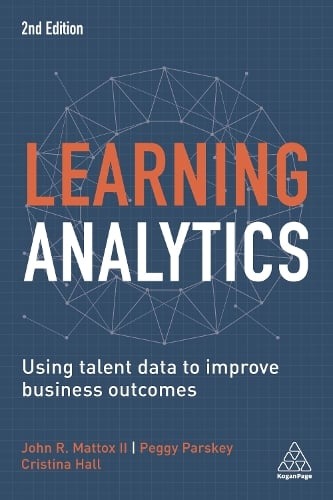
Learning Analytics : Using Talent Data to Improve Business Outcomes
Effective evaluation and measurement of learning and development initiatives is critical to maximise the impact of training, identify gaps for improvement and ensure that efforts are aligned to the business' needs. Learning Analytics outlines how analytical approaches can respond to these challenges, the types and benefits of technological solutions and how to ask the right questions of organizational data in order to build a learning organization that boosts performance and competitive advantage.

Learning About Particles - 50 Privileged Years
Embedded in an autobiographic framework, this book retraces vividly and in some depth the golden years of particle physics as witnessed by one of the scientists who made seminal contributions to the understanding of what is now known as the Standard Model of particle physics. Well beyond a survey of interest to historians of sciences and researchers in the field, this book is a must for all students and young researchers who have learned about the theoretical and experimental facts that make up the standard model through modern textbooks only. It will provide the interested reader with a first hand account and deeper understanding of the multilayered and sinuous development that finally led to the present architecture of this theory.
Learners in a Changing Learning Landscape: Reflections from a Dialogue on New Roles and Expectations
Today's learners face constant change. Adaptive learner expertise is key to their survival on a learning journey that lasts a lifetime. This requires new thinking of all actors in the learning environment. The fundamental process through which this book was created is an extended in-depth dialogue among researchers, lifelong learners, educators, and thinkers.

Large-Scale Scientific Computing ; 6th International Conference, LSSC 2007, Sozopol, Bulgaria, June 5-9, 2007. Revised Papers
The 6th International Conference on Large-Scale Scienti?c Computations (LSSC 2007) was held in Sozopol, Bulgaria, June 5–9, 2007. The conference was organized by the Institute for Parallel Processing at the Bulgarian Academy of Sciences in cooperation with SIAM (Society for Industrial and Applied Ma- ematics). Partial support was also provided from project BIS-21++ funded by the European Commission in FP6 INCO via grant 016639/2005. The conference was devoted to the 60th anniversary of Richard E. Professor Ewing is internati- ally well known with his contributions in applied mathematics, mathematical modeling, and large-scale scientific computations.

Language Technologies for the Challenges of the Digital Age ; 27th International Conference, GSCL 2017, Berlin, Germany, September 13-14, 2017, Proceedings
Constitutes the refereed proceedings of the 27th biennial conference of the German Society for Computational Linguistics and Language Technology, GSCL 2017, held in Berlin, Germany, in September 2017, which focused on language technologies for the digital age. The 16 full papers and 10 short papers included in the proceedings were carefully selected from 36 submissions. Topics covered include text processing of the German language, online media and online content, semantics and reasoning, sentiment analysis, and semantic web description languages.
Language Learning Motivation and L2 Pragmatic Competence
It presents an original study that not only enriches our knowledge of the feasibility of modern technology in collecting large-scale data related to pragmatic competence but also eminently connects L2 pragmatics more closely with mainstream second language acquisition research by focusing on the role of motivation in pragmatic learning.
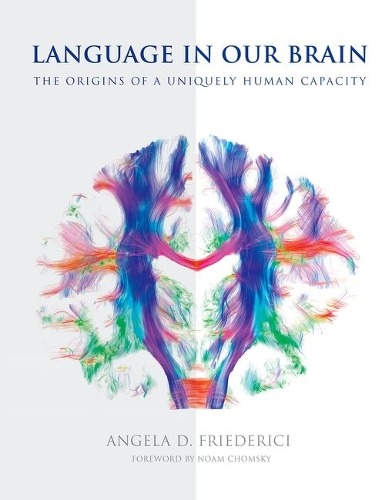
Language in our brain : The origins of a uniquely human capacity
Friederici describes the basic language functions and their brain basis; the language networks connecting different language-related brain regions; the brain basis of language acquisition during early childhood and when learning a second language, proposing a neurocognitive model of the ontogeny of language; and the evolution of language and underlying neural constraints. She finds that it is the information exchange between the relevant brain regions, supported by the white matter tract, that is the crucial factor in both language development and evolution.
