



الصفحة 45
الصفحة 45

Intelligent drugs : How AI is transforming healthcare
The progress of biotechnologies and artificial intelligence allowed the development of vaccines in less than a year, thus saving millions of human lives and preserving the global economy. The emergence of intelligent drugs is highlighted, with the promise of ultra-targeted, more effective, and safer treatments against a wide range of diseases. Personalized medicine then becomes realistic, with computer-designed drugs, perfectly adapted to each individual, tested on virtual patients before their real use. In the near future, thanks to AI, new drugs will improve physical performance, stimulate cognitive abilities, prevent diseases, and slow down aging.
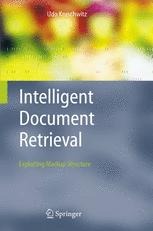
Intelligent Document Retrieval : Exploiting Markup Structure
Collections of digital documents can nowadays be found everywhere in institutions, universities or companies. Examples are Web sites or intranets. But searching them for information can still be painful. Searches often return either large numbers of matches or no suitable matches at all. Such document collections can vary a lot in size and how much structure they carry. What they have in common is that they typically do have some structure and that they cover a limited range of topics. The second point is significantly different from the Web in general. The type of search system that we propose in this book can suggest ways of refining or relaxing the query to assist a user in the search process. In order to suggest sensible query modifications we would need to know what the documents are about. Explicit knowledge about the document collection encoded in some electronic form is what we need. However, typically such knowledge is not available. So we construct it automatically.

Intelligent decision-making support systems : Foundations, applications and challenges
The book brings together up-to-date information on the theory and application of i-DMSS. Readers will learn about the foundations, architectures, methods and strategies for successfully designing, developing, implementing, and evaluating intelligent Decision-making Support Systems. Intelligent Decision-making Support Systems: Foundations, Applications and Challenges will be of value to researchers in AI and management studies interested in the latest thinking in decision-making, as well practising managers and consultants who are involved with putting advanced information technologies into practice in organisations. The Decision Engineering series focuses on the foundations and applications of tools and techniques related to decision engineering, and identifies their relevance in ‘engineering’ decisions. The series provides an aid to practising professionals and applied researchers in the development of tools for informed operational and business decision making, within industry, by utilising distributed organisational knowledge.

Intelligent cryptocurrency trading assistant
With blockchain being invented in 2008, cryptocurrencies have grown steadily through the years. Cryptocurrencies continue today to be an extremely interesting phenomenon. Having quickly achieved popularity and becoming very popular, cryptocurrencies continue to be a profitable investment tool, capable of generating huge profits on exchanges and transactions. Being a professional trader is not an easy task to achieve, a professional trader needs to observe and process multiple factors and events that affect the cryptocurrency market to make the right decision. What makes this process challenging is that some of the factors cannot be predicted or calculated but rather, their changes should be observed and comprehended, and an action should be taken in response quickly in order to maximize the profit or minimize the loss.

Intelligent Computing Everywhere
Intelligent Computing Everywhere investigates the relevance and relationship artificial intelligence maintains with "modern strands of computing" i.e. pervasive computing and ambient intelligence, bioinformatics, neuroinformatics, computing and the mind, non-classical computing and novel computing models, as well as DNA computing and quantum computing.

Intelligent Algorithms for Packing and Cutting Problem
Introduces intelligent solving algorithms for classical packing and cutting problem and their variants / Investigates novel methods, e.g. reinforcement learning algorithms, for rectangular and irregular packing problems / Presents practical engineering application cases in combination of theory and practice / investigates in detail the two-dimensional packing and cutting problems in the field of operations research and management science. It introduces the mathematical models and intelligent solving algorithms for these problems, as well as their engineering applications. Most intelligent methods reported in this book have already been applied in reality, which can provide reference for the engineers. The presented novel methods for the two-dimensional packing problem provide a new way to solve the problem for researchers interested in operations research or computer science. This book also introduces three new variants of packing problems and their solving methods, which offer a different research direction.
Intelligence and Security Informatics ; Vol. 3975 ; IEEE International Conference on Intelligence and Security Informatics, ISI 2006, San Diego, CA, USA, May 23-24, 2006.
In the past few years, intelligence and security informatics (ISI) research, which is concerned with the study of the development and use of advanced information te- nologies and systems for national and international security-related applications, has experienced tremendous growth and attracted substantial interest from academic - searchers in related fields as well as practitioners from both government agencies and industry. The ISI community is maturing, and a core set of research methodologies and technical approaches has emerged and is becoming the underpinning of ISI research.
Intelligence and security informatics ; Vol. 3495 : IEEE International Conference on Intelligence and Security Informatics, ISI 2005, Atlanta, GA, USA, May 19-20, 2005, Proceedings
Intelligence and security informatics (ISI) can be broadly defined as the study of the development and use of advanced information technologies and systems for national and international security-related applications, through an integrated technological, organizational, and policy-based approach. In the past few years, ISI research has experienced tremendous growth and attracted substantial interest from academic researchers in related fields as well as practitioners from both government agencies and industry. The first two meetings (ISI 2003 and ISI 2004) in the ISI symposium and conference series were held in Tucson, Arizona, in 2003 and 2004, respectively. They provided a stimulating intellectual forum for discussion among previously disparate communities: academic researchers in information technologies, computer science, public policy, and social studies; local, state, and federal law enforcement and intelligence experts; and information technology industry consultants and practitioners.
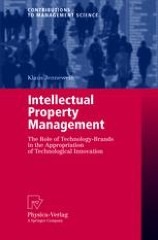
Intellectual Property Management : The Role of Technology-Brands in the Appropriation of Technological Innovation
The book investigates the interplay of brand equity and technological assets at the corporate level. In a grounded theory approach it develops a model of how companies in technology intensive industries can improve the appropriation of the returns of their intangible technological assets with the help of brand equity and thus improve their competitiveness. The theoretical discussions are supported by two extensive case studies on Bayer Aspirin and Cisco Systems as well as an extensive econometric analysis. The developed model points out how the strategic relevance of immaterial technological assets and brand equity develop along the technology-life-cycle and indicates how companies can, by an integrated technology and brand equity management, appropriate the returns of their initial technological advantage in the long-run. The implications of the findings for business companies as well as researchers are clearly revealed.

Intellectual Property in the Food Technology Industry : Protecting Your Innovation
Considering the effort and funding devoted to a company's success, understanding Intellectual Property rights patents, trade secrets, trademarks, and licensing is essential. Establishing appropriate internal policies from the outset can prevent companies from learning a costly and painful lesson in the courtroom. With Intellectual Property in the Food Technology Industry, currently the only book of its kind focusing specifically on the food industry, one will learn what to consider throughout the various creative phases of a product's lifespan from initial research and development initiatives through post-production.

Intel® Galileo and Intel® Galileo Gen 2 : API Features and Arduino Projects for Linux Programmers
ntel® Galileo and Intel® Galileo Gen 2: API Features and Arduino Projects for Linux Programmers provides detailed information about Intel® Galileo and Intel® Galileo Gen 2 boards for all software developers interested in Arduino and the Linux platform. The book covers the new Arduino APIs and is an introduction for developers on natively using Linux.

Integration of Insect-Resistant Genetically Modified Crops within IPM Programs
The goal of this book is to provide an overview on the role insect-resistant GM plants play in different crop systems worldwide. We hope that the book will contribute to a more rational debate about the role GM crops can play in IPM for food and fiber production.

Integration of Information for Environmental Security : Environmental Security - Information Security - Disaster Forecast and Prevention - Water Resources Management
Currently the necessary information exists in a multitude of forms and formats geographically and physically scattered over different countries, institutes and organisations, and are subject to widely different data policies and management schemes. Moreover, there is no complete and updated overview of the existing information, e.g. in the form of a metadata catalogue. As a result, integration of this information in case of emergencies has proven to be extremely difficult, if not impossible. Although in some cases, interesting and impressive "demonstrations" have been shown of the possibilities of the integration of information, for a number of reasons these have reached the "operational" stage.

Integration of AI and OR Techniques in Constraint Programming for Combinatorial Optimization Problems ; Vol.3524 : 2nd International Conference, CPAIOR 2005, Prague, Czech Republic, May 31 -- June 1, 2005
Intended primarily as a forum to focus on the integration and hybridization of the approaches of constraint programming (CP), arti?cial intelligence (AI), and operations research (OR) technologies for solving large-scale and complex real-life optimization problems. Therefore, CPAIOR is never far from industrial applications. The high number of submissions received this year, almost 100 papers, in witness to the interest of the research community in this conference. From these submissions, we chose 26 to be published in full in the proceedings. This volume includes summaries of the invited talks of CPAIOR: one from industry, one from the embedded system research community, and one from the operations research community.

Integration in Respiratory Control : From Genes to Systems
This volume comprises the proceedings of the 10th Oxford Conference held at Lake Louise, Alberta, Canada, in September, 2006. The volume will be of interest to clinicians working with patients with breathing disorders.
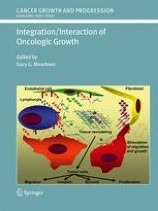
Integration / Interaction of Oncologic Growth
The present multi-volume Book Series, CANCER GROWTH AND PROGRESSION, encompasses the widest possible framework of cutting edge research in the field of neoplastic pathology and other integrated fields. The individual volumes in this series focus on the topics of highest scientific interest for basic and clinical researchers, pathologists, medical and surgical oncologists and allied multidisciplinary teams interested in the study of these aspects of neoplastic growth, progression and inhibition. The range of topics covered is extensive.

Integrating lifestyle medicine in cardiovascular health and disease prevention
Cardiovascular disease (CVD) is the leading cause of morbidity and mortality in the United States and around the world. Major risk factors for CVD result from poor lifestyle habits and practices, but the area of lifestyle medicine has emerged to help clinicians and their patients understand the power of positive lifestyle habits and actions.

Integrating lifestyle medicine for prediabetes, type 2 diabetes, and cardiometabolic disease
Provides clinical evidence for and a mechanistic understanding of the six pillars of lifestyle medicine. It guides the reader to identify opportunities for early intervention rather than focus on the diagnosis and treatment of the established disease. Interventions at earlier points have the potential to mitigate progression, prevent complications, reduce costs, and improve a patient’s overall health at all points in their lifetime.
Integrating Data Science and Earth Science : Challenges and Solutions
This book presents the results of three years collaboration between earth scientists and data scientist, in developing and applying data science methods for scientific discovery. The book will be highly beneficial for other researchers at senior and graduate level, interested in applying visual data exploration, computational approaches and scientifc workflows.
Integrated Water Resources Management and Security in the Middle East
Integrated Water Resources Management and Security in the Middle East brings together diverse voices relating to the critical issue of water management in one of the world’s most politically volatile areas: the Middle East. The book brings together Palestinian, Israeli, Jordanian and international expert opinions on creating a holistic and comprehensive view of water management challenges and strategies in an area of conflict and resource scarcity.The book takes security studies to the next level beyond military preparedness to address the security implications of the most fundamental of resources, that of water. Indeed, the book delves deeply into the underlying ideological underpinnings of various water regimes and possible opportunities for new decision-making models and regional cooperation.This book serves an important place in the scholarly literature on this topic for its breadth of participants and perspectives and its concrete steps forward. It moves the academic discourse beyond pointing fingers and toward constructive solutions and dialogue.
