



الصفحة 44
الصفحة 44
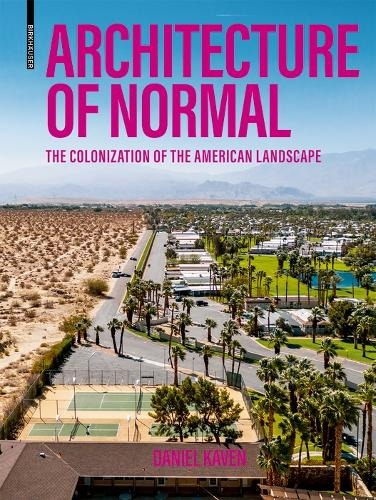
Architecture of normal : the colonization of the American landscape
Charts the patterns created by reigning modes of transportation and examines how people came to accept the bland, branded boxes lining America's streets and freeways as architecture. Beginning with a portrait of ambulatory Native American societies and the introduction of horses by the Spaniards, Kaven discusses the built environment shaped by trains, cars, planes and rockets, and looks toward a future architecture defined by autonomous cars and air taxis

Architecture of computing systems ; 34th International Conference, ARCS 2021, Virtual Event, June 7–8, 2021, Proceedings
This book constitutes the proceedings of the 34th International Conference on Architecture of Computing Systems, ARCS 2021, held virtually in July 2021. The 12 full papers in this volume were carefully reviewed and selected from 24 submissions. 2 workshop papers (VEFRE) are also included. ARCS has always been a conference attracting leading-edge research outcomes in Computer Architecture and Operating Systems, including a wide spectrum of topics ranging from fully integrated, self-powered embedded systems up to high-performance computing systems. It also provides a platform covering newly emerging and cross-cutting topics, such as autonomous and ubiquitous systems, reconfigurable computing and acceleration, neural networks and artificial intelligence. The selected papers cover a variety of topics from the ARCS core domains, including heterogeneous computing, memory optimizations, and organic computing.
Architecture of computing systems - ARCS 2008 ; 21st International Conference, Dresden, Germany, February 25-28, 2008. Proceedings
This book constitutes the refereed proceedings of the 21st International Conference on Architecture of Computing Systems, ARCS 2008, held in Dresden, Germany, in February 2008.

Architecture of computing systems - ARCS 2007 ; 20th International Conference, Zurich, Switzerland, March 12-15, 2007, Proceedings
The ARCS is reporting hi- quality results in computer architecture and operating systems research.It is also represent a - namic, evolving community that closely follows new research trends and topics. ARCS has evolved towards a strong focus on s- tem aspects of pervasive computing and self-organization techniques (organic and autonomic computing).

Architecture of computing systems - ARCS 2006 ; 19th International Conference, Frankfurt / Main, Germany, March 13-16, 2006, Proceedings
Technological progress is one of the driving forces behind the dramatic devel- mentofcomputersystemarchitecturesoverthe pastthreedecades.Eventhough it is quite clear that this development cannot only be measured by the ma- mum number of components on a chip, Moore’s Law may be and is often taken as a simple measure for the non-braked growth of computational power over the years. The more components are realizable on a chip, the more innovative and unconventional ideas can be realized by system architects. As a result, research in computer system architectures is more exciting than ever before. This book coversthe trends that shape the ?eld of computer system archit- tures.
Architecture of advanced numerical analysis systems: designing a scientific computing system using ocaml
Applies the functional OCaml programming language to numerical or computational weighted data science, engineering, and scientific applications. This book is based on the authors' first-hand experience building and maintaining Owl, an OCaml-based numerical computing library. You'll first learn the various components in a modern numerical computation library. Then, you will learn how these components are designed and built up and how to optimize their performance. After reading and using this book, you'll have the knowledge required to design and build real-world complex systems that effectively leverage the advantages of the OCaml functional programming language.
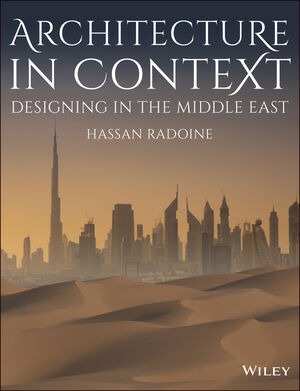
Architecture in context : Designing in the Middle East
Provides a foundation for understanding the critical context of architecture and design in this region. It does this by: presenting a practical overview of architectural know-how in the Middle East, and its potential for cultivating a sense of place introducing local architectural vocabularies and styles, and how they can still be reactivated in contemporary design exploring the cultural and contextual meaning of forms as references that may influence contemporary architecture discussing important discourses and trends in architecture that allow a rethinking of the current global/local dichotomy.

Architecture for residential care and ageing communities : Spaces for dwelling and healthcare
A guide to the planning, architecture, and design of schools that are healthy, stimulating, and will conserve energy and resources. Written with the needs of architects, construction professionals, educators, and school administration in mind, the book provides a road map for sustainable planning, design, construction, and operations.
Architecture description languages ; IFIP TC-2 workshop on architecture description languages (WADL), World Computer Congress, Aug. 22-27, 2004, Toulouse, France
These proceedings record the papers presented at the Workshop onArchitecture Description Languages held in the city of Toulouse in thesouth of France.The aim of an ADL (Architecture Description Language) is to formallydescribe software and hardware architectures. Usually, an ADL describescomponents, their interfaces, their structures, their interactions (structureof data flow and control flow) and the mappings to hardware systems. Amajor goal of such descriptions is to allow analysis with respect to severalaspects like timing, safety, reliability, ...
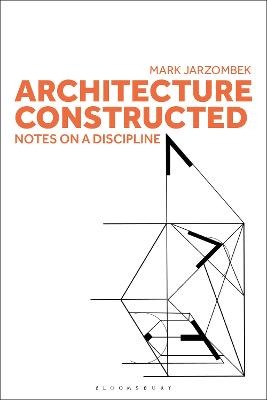
Architecture constructed : Notes on a discipline
In this book, acclaimed architectural theorist Mark Jarzombek examines this tension head-on, and uses it to rethink the nature of the history of architecture. He reveals architecture to be a troubled, interconnected realm, incomplete and unstable, where labor, craft, and occupation are the ‘invisible’ complements to the work of the architect.
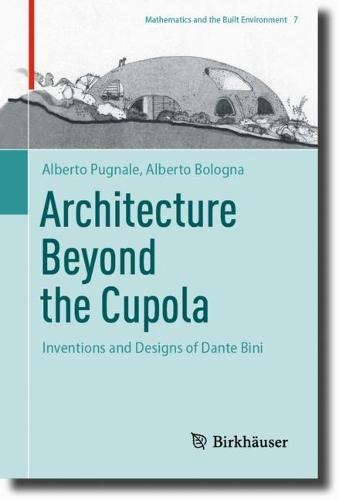
Architecture beyond the cupola : Inventions and designs of Dante Bini
This book reviews Dante Bini’s inventions and designs, focusing on his form-resistant Binishell and other pneumatic construction systems. Dante Bini’s double profile of architect and builder underpins the narrative of the entire book. It is used to analyse the evolution of the early reinforced-concrete Binishell patent into a variety of automated construction systems based on the use of air. Dante Bini has always been quite proactive in promoting his work and disseminating the results of his experimentations and achievements via journal articles, conference presentations and public talks.
Architecture and the novel under the Italian fascist regime
The book is divided into seven chapters, which in turn analyze the interconnections between the novel and architecture in theory and in practice. The first six chapters cover debates on State art, on the novel and on architecture, as well as their historical development and their unfolding in key journals of the period. The last chapter offers a detailed analysis of some important novels and buildings, which have in practice realized some of the key principles articulated in the theoretical disputes.
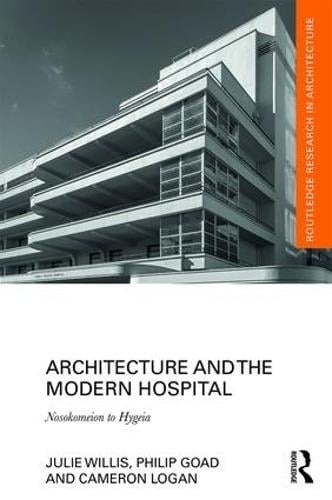
Architecture and the modern hospital : Nosokomeion to Hygeia
Explores the rapid evolution of hospital design in the twentieth century, analysing the ways in which architects and other specialists reimagined the modern hospital. It examines how the vast expansion of medical institutions over the course of the century was enabled by new approaches to architectural design and it highlights the emerging political conviction that physical health would become the cornerstone of human welfare.
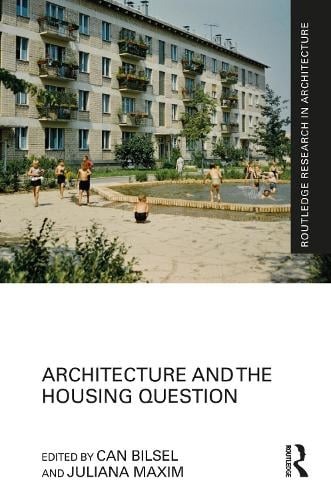
Architecture and the housing question
Examines how the design and provision of housing around the world have become central both to competing political projects and to the architecture profession. How have architects acting as housing experts helped alleviate or enforce class, race, and gender inequality? What are the disciplinary implications of taking on shelter for the multitude as an architectural assignment and responsibility? The book features essays in the historiography of architecture and the housing question, and a collection of historical case studies from Belgium, China, France, Ghana, the Netherlands, Kenya, the Soviet Union, Turkey, and the United States.
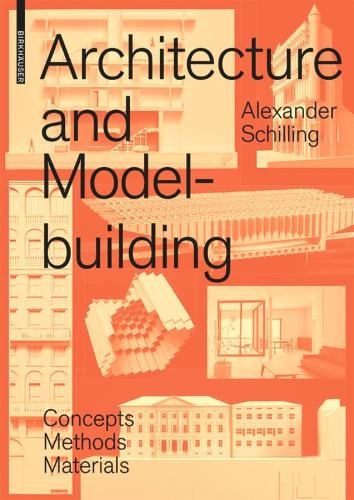
Architecture and modelbuilding : Concepts, methods, materials
Provides in-depth information Numerous practical tips, clear explanations, concrete examples Aims and Scope Architectural models are used at various stages of a project. As working models they support the design process: they are made up from time to time using simple materials, such as cardboard, without any attempt at accuracy, and continue to be adjusted and added to as the ideas and the design progress. The point here is to swiftly check a design idea, to allow it to be continued or dismissed. Presentational models are more involved; at this stage the design has been completed and the purpose of the model is to convey the ideas to the potential user in a clear and easy-to-understand way.
Architecture and design for industry 4.0 : Theory and practice
The book is structured into three sections (research, practice, and technologies), with the goal of creating a new framework useful for widespread awareness necessary to initiate technology transfer processes for the benefit of the public sector, universities, research centers, and innovative companies, and a new professional figure capable of controlling the entire process is essential. Thus, the book chapters arouse a series of relevant topics such as computational and parametric design, performance-based architecture, data-driven design strategies, parametric environmental design and analysis, computational and parametric structural design and analysis
Architecture and Collective Life
Addresses the changing nature of public life alongside an analysis of changes in the architectural profession. Contains thought-provoking chapters from some of the disciplines' leading thinkers and draws together new research that helps us to look again at the question of urban development. Focuses on the link between architecture, urban theory and societal ideas.
Architecture and agriculture : A rural design guide
Presents architectural guidelines for buildings designed and constructed in rural landscapes by emphasizing their connections with function, culture, climate, and place. Following on from the author’s first book Rural Design, the book discusses in detail the buildings that humans construct in support of agriculture. By examining case studies from around the world including Australia, China, Japan, Norway, Poland, Japan, Portugal, North America, Africa and the Southeast Asia it informs readers about the potentials, opportunities, and values of rural architecture, and how they have been developed to create sustainable landscapes and sustainable buildings for rapidly changing rural futures.
Architecture : the whole story
From ancient and classical masterpieces to contemporary, cutting-edge buildings, architecture has defined our world throughout history. Drawing its examples from all around the globe, Architecture: The Whole Story is a richly illustrated and comprehensive account of the architects, plans, designs and constructions that over the centuries have most engaged our minds, inspired our imaginations and raised our spirits. For everyone who has ever wished for greater insight into the art of building design, Architecture: The Whole Story provides the analytical tools to appreciate to the fullest the variety of architectural achievement and the built environment in the world.
Architecture : Form, Space, and Order ; 5th ed.
Distills complex concepts of design into a clear focus and brings difficult abstractions to life. It explains form and space in relation to light, view, openings, and enclosures and explores the organization of space, and the elements and relationships of circulation, as well as proportion and scale. In addition, the text's detailed illustrations demonstrate the concepts presented and reveal the relationships between fundamental elements of architecture through the ages and across cultures.
