



الصفحة 41
الصفحة 41
A Practical Introduction to PSL
Practical Introduction to PSL is primarily targeted to hardware designers and verification engineers who plan to use PSL. This book is also of interest to students of temporal logic. The formal semantics of PSL are included as an appendix, and bibliographical notes include pointers to some of the main theoretical works.
A Practical Guide for SystemVerilog Assertions
SystemVerilog language consists of three very specific areas of constructs - design, assertions and testbench. This guide shows how to use the language to solve real verification problems. It examines how to verify complex protocols and memories using SVA with seeral examples.
A Portrait of State-of-the-Art Research at the Technical University of Lisbon
This book contains the edited version of the invited lectures that were delivered by prominent researchers at UTL. This book brings together in a review manner a comprehensive summary of high quality research contri- tions across basic and applied sciences. The contributing papers are organized around the following major areas: – Emergent areas (Nanosciences, Quantic Computations and Infor- tion, Risk and Volatility in Financial Markets); – Basic Sciences (Mathematics, Physics, Chemistry and Materials); – Social Sciences, Economics and Management Sciences; – Life Sciences and Biotechnology; – Engineering and Technologies – Nature, Environment and Sustainability; – Public Health, Food Quality and Safety; – Health and Sport Sciences; – Urbanism, Transports, Architecture, Arts and Design.
A Modern Introduction to Probability and Statistics : Understanding Why and How
A Modern Introduction to Probability and Statistics has numerous quick exercises to give direct feedback to the students. In addition the book contains over 350 exercises, half of which have answers, of which half have full solutions. A website at www.springeronline.com/1-85233-896-2 gives access to the data files used in the text, and, for instructors, the remaining solutions. The only pre-requisite for the book is a first course in calculus; the text covers standard statistics and probability material, and develops beyond traditional parametric models to the Poisson process, and on to useful modern methods such as the bootstrap.
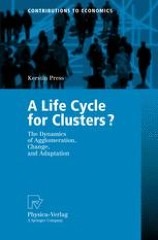
A life cycle for clusters? : The dynamics of agglomeration, change, and adaption
The phenomenon of non-random spatial concentrations of firms in one or few related sectors (clusters) is intensively debated in economic theory and policy. The euphoria about successful clusters however neglects that historically, many thriving clusters did deteriorate into old industrial areas. This book studies the determinants of cluster survival by analyzing their adaptability to change in the economic environment. Linking theoretic knowledge with empirical observations, a simulation model (based in the N/K method) is developed, which explains when and why the cluster's architecture assists or hampers adaptability. It is found that architectures with intermediate degrees of division of labour and more collective governance forms foster adaptability. Cluster development is thus path dependent as architectures having evolved over time impact on the likelihood of future survival.

A First Course in Statistics for Signal Analysis
This essentially self-contained, deliberately compact, and user-friendly textbook is designed for a first, one-semester course in statistical signal analysis for a broad audience of students in engineering and the physical sciences. The emphasis throughout is on fundamental concepts and relationships in the statistical theory of stationary random signals, explained in a concise, yet fairly rigorous presentation.
3rd Kuala Lumpur International Conference on Biomedical Engineering 2006 ; Biomed 2006, 11-14 December 2006, Kuala Lumpur, Malaysia
The Kuala Lumpur International Conference on Biomedical Engineering (Biomed 2006) was held from 11 to 14 December 2006 at the Palace of the Golden Horses, Kuala Lumpur, Malaysia. This international conference was jointly organised by the Department of Biomedical Engineering, University of Malaya, Malaysia; Department of Biomedical Engineering, Inje University, Korea; and Malaysian Society of Medical and Biological Engineering. The papers presented at Biomed 2006 cover the following areas: artificial intelligence, biological effects of non-ionising electromagnetic fields, biomaterials, biomechanics, biomedical sensors, biomedical signal analysis, biotechnology, clinical engineering, human performance engineering, imaging, medical informatics, medical instruments and devices, physiological modelling, simulation, and control, prostheses and artificial organs, regulations and organisations, rehabilitation engineering, telemedicine, tissue engineering, and virtual reality in medicine.
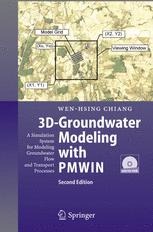
3D-groundwater modeling with PMWIN : A simulation system for modeling groundwater flow and transport processes
Along with a companion full-version software (PMWIN), this text offers an integrated simulation system. PMWIN comes with a professional graphical user-interface, supported models and programs and several other useful modeling tools. The graphical user-interface allows one to create and simulate models.

3D diagnosis and treatment planning in orthodontics : an atlas for the clinician
A wide-ranging guide to modern diagnostics and treatment planning in orthodontics, which are mandatory prior to the initiation of any type of comprehensive treatment. The importance of three-dimensional (3D) imaging techniques has been increasingly recognized owing to the shortcomings of conventional two-dimensional imaging in some patients, such as those requiring complex adult treatment and those with temporomandibular joint dysfunctions or sleep disturbances.
