



الصفحة 40
الصفحة 40

Drug interactions in infectious diseases : Mechanisms and models of drug interactions
Provides a comprehensive review of basic clinical pharmacology with a focus on metabolism and transporter-mediated drug interactions. The chapters address materials that cannot be retrieved easily in the medical literature, including materials focused on the complex interrelationship of acute infection, inflammation, and the risk of drug interactions in the Drug-Cytokine chapter. The Food-Drug and Herb-Drug interactions chapters remain definitive resources. A new chapter on in vitro modeling of drug interactions is included along with updates on design and data analysis of clinical drug interaction studies. Authoritative discussion of models for regulatory decision-making on drug-drug interactions provides the necessary framework to aid antimicrobial drug development. This concise review of the mechanisms and models of drug interactions provides important insights to health care practitioners as well as scientists in drug development

Drug design : A conceptual overview
The newer research areas in pharmaceutical sciences, particularly molecular modeling and simulations, prompted a more efficient drug discovery process. Informatics integrated with pharmaceutical sciences (cheminformatics and bioinformatics) became an essential component of drug research. Drug informatics such as genomics and proteomics assists in the Rational Drug Design (RDD). This emerging discipline is known as “Computer-Aided Drug Design" (CADD), which has profound application in RDD. The advanced and adequate practice in drug design informatics is essential for pharmacy graduates. Hence, a companion for acquiring knowledge on these concepts is vital. The students of B. Pharmacy, M. Pharmacy (Pharmaceutical Chemistry, Pharmacology, and Pharmaceutics), biotechnology, biomedical engineering and other interdisciplinary fields may find this book as a reference guide.
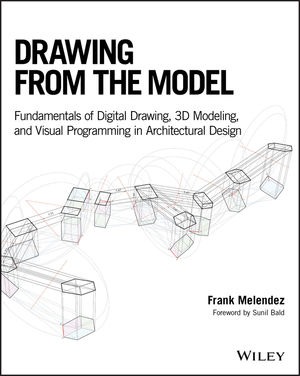
Drawing from the model : Fundamentals of digital drawing, 3D modeling, and visual programming in architectural design
Bridges traditional and contemporary methods of creating architectural design drawings and 3D models through digital tools and computational processes.

Domain-driven design with Java, a practitioner's guide : create simple, elegant, and valuable software solutions for complex business problems
Helps you as a developer and architect to put your knowledge to work in order to create elegant software designs that are enjoyable to work with and easy to reason about. You'll begin with an introduction to the concepts of domain-driven design and discover various ways to apply them in real-world scenarios. You'll also appreciate how DDD is extremely relevant when creating cloud native solutions that employ modern techniques such as event-driven microservices and fine-grained architectures. As you advance through the chapters, you'll get acquainted with core DDD's strategic design concepts such as the ubiquitous language, context maps, bounded contexts, and tactical design elements like aggregates and domain models and events. You'll understand how to apply modern, lightweight modeling techniques such as business value canvas, Wardley mapping, domain storytelling, and event storming, while also learning how to test-drive the system to create solutions that exhibit high degrees of internal quality.

Domain Modeling and the Duration Calculus : International Training School, Shanghai, China, September 17-21, 2007, Advanced Lectures
The book presented provide competent coverage of software security, domain modeling of software engineering, and duration calculus for real time systems - originating from lectures of leading experts in these fields from Europe and Asia.It addressed in detail are: development of real-time systems, domain engineering using abstract modeling, the area of duration calculus, and formal methods like language description using the operational semantics approach.

Domain Decomposition Methods in Science and Engineering XVII
This volume contains a selection of papers presented at the 17th International Conference on Domain Decomposition Methods in Science and Engineering held at St. Wolfgang / Strobl, Austria, July 3 - 7, 2006. Domain decomposition is an active, interdisciplinary research area concerned with the development, analysis, and implementation of coupling and decoupling strategies in mathematical and computational models. Domain decomposition techniques provide efficient tools for treating problems in all Computational Sciences. The reader will become familiar with the newest domain decomposition technologies and their use for modeling and simulating of complex problems from different fields of applications.

DNA Computing ; 13th International Meeting on DNA Computing, DNA13, Memphis, TN, USA, June 4-8, 2007, Revised Selected Papers
This book constitutes the thoroughly refereed postproceedings of the 13th International Meeting on DNA Computing, DNA 13, held in Memphis, TN, USA, June 4-8, 2007.

Diversity and Evolution of Butterfly Wing Patterns : An Integrative Approach
is book facilitates an integrative understanding of the development, genetics and evolution of butterfly wing patterns. To develop a deep and realistic understanding of the diversity and evolution of butterfly wing patterns, it is essential and necessary to approach the problem from various kinds of key research fields such as “evo-devo,” “eco-devo,” ”developmental genetics,” “ecology and adaptation,” “food plants,” and “theoretical modeling.”
Distributed network systems : From concepts to implementations
This textbook covers both theoretical and practical aspects of distributed computing. It describes the client-server model for developing distributed network systems, the communication paradigms used in a distributed network system, and the principles of reliability and security in the design of distributed network systems. Based on theoretical introductions, the book presents various implementation strategies and techniques for building distributed network systems, including examples in TCP/IP communications, the use of remote procedure call and remote method invocation techniques, and the development of web-based applications, distributed databases, and mobile computing systems.
Distributed computing and networking ; 8th International conference, ICDCN 2006, Guwahati, India, December 27-30, 2006, Proceedings
VI realm between distributed computing and networking, namely, Modeling Biological Networks, Network Security, Algorithmic Issues in Wireless Sensor Networks, and Optical Networking. This was made possible by the efforts of the Tutorial Chairs, Sr- har Iyer and Pinaki Mitra. The Organizing Committee worked hard to ensure that the participants enjoyed a comfortable stay and the technical meetings proceeded as smoothly as possible.

Distributed computing and Internet Technology ; 1st International Conference, ICDCIT 2004, Bhubaneswar, India, December 22-24, 2004, Proceedings
Taming the Dynamics of Disributed Data - DISTRIBUTED COMPUTING -- Data in Your Space -- Enabling Technologies for Harnessing Information Explosion -- Fair Leader Election by Randomized Voting -- An Efficient Leader Election Algorithm for Mobile Ad Hoc Networks -- Distributed Balanced Tables: A New Approach - Performance Evaluation of Gigabit Ethernet and SCI in a Linux Cluster -- Performance Evaluation of a Modified-Cyclic-Banyan Based ATM / IP Switching Fabric -- A Scalable and Robust QoS Architecture for WiFi P2P Networks -- NEC: Node Energy Based Clustering Protocol for Wireless Sensor Networks with Guaranteed Connectivity,and other
Distributed computing – IWDC 2005 ; 7th International Workshop, Kharagpur, India, December 27-30, 2005, Proceedings
This book constitutes the refereed proceedings of the 7th International Workshop on Distributed Computing, IWDC 2004, held in Kharagpur, India in December 2005. The 28 revised full papers and 33 revised short papers presented together with 5 invited keynote talks were carefully reviewed and selected from 253 submissions. The papers are organized in topical sections on theory of distributed computing, sensor networks, fault tolerance, optical networks, peer-to-peer networks, wireless networks, network security, grid and networks, middleware and data management, mobility management, and distributed artificial intelligence.

Distributed Autonomous Robotic Systems 7
This book collects papers selected by an international program committee for presentation at the 8th International Symposium on Distributed Autonomous Robotic Systems. What makes this book distinctive is the emphasis on using multiple robots and on making them autonomous, as opposed to being teleoperated.

Distributed Autonomous Robotic System 6
DARS is now a well-established conference that gathers every two years the main researchers in Distributed Robotics systems. Even if the field is growing, it has been maintained a one-track conference in order to enforce effective exchanges between the main researchers in the field. It now a well-established tradition to publish the main contributions as a book from Springer. There are already 5 books entitled "Distributed Autonomous Robotic Systems" 1 to 5.
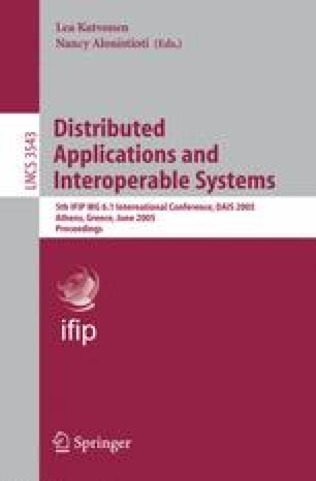
Distributed applications and interoperable systems ; Vol. 3543 ; 5th IFIP WG 6.1 International conference, DAIS 2005, Athens, Greece, June 15-17, 2005, Proceedings
ThisvolumecontainstheproceedingsoftheIFIPWG6. 1InternationalWorking Conference on Distributed Applications and Interoperable Systems V held in Athens, Greece, on June 15–17, 2005. The conference program presented the state of the art in research concerning distributed and interoperable systems. The emergence of 4th-generation c- munication systems, the evolution of Internet technologies, the convergence of telecom and datacom, wireless and ?xed communication systems and appli- tions pave the path for ubiquitous service and application provision. Innovative solutions are required for the development, implementation and operation of distributed applications in complex IT environments full of diversity and h- erogeneity. Today, the emerging wide spectrum of distributed systems.

Distributed Applications and Interoperable Systems ; 7th IFIP WG 6.1 International Conference, DAIS 2007, Paphos, Cyprus, June 6-8, 2007, Proccedings
This book presented context-awareness, adaptation, mobility, distributed applications and peer-to-peer computing, all of which relate to the sustainability of distributed applications and integrated systems.

Distributed and Parallel Systems : From Cluster to Grid Computing
This book devoted to general algorithmic aspects of parallel and distributed computing and grid computing. This book includes a good overview of recent advances in various aspects of parallel and distributed computing. This volume also includes various crucial questions tied to the infrastructure and advanced problems and challenges of grid computing.

Disruptive trends in automation technology
The industrial sector is being transformed by the convergence of information technology and operational technology. The latter is another name for automation technology and covers established systems such as supervisory control and data acquisition (SCADA), programmable logic controllers (PLC), fieldbuses, and automation and control systems. As this technology is connected to the Internet and 5G networks, some monitoring, control, and analytic functionalities are deployed to the edge or cloud, and researchers are challenged to ensure the security, dependability, real-time performance, and maintainability of the resulting systems. The big data that is accessible from these systems create opportunities for artificial intelligence applications that can further disrupt the established practices in the automation domain.

Discrete Geometry for Computer Imagery ; 14th IAPR International Conference, DGCI 2008, Lyon, France, April 16-18, 2008. Proceedings
This book constitutes the refereed proceedings of the 14th IAPR TC-18 International Conference on Discrete Geometry for Computer Imagery, DGCI 2008, held in Lyon, France, in April 2008.

Direct and Large-Eddy Simulation VI ; Proceedings of the Sixth International ERCOFTAC Workshop on Direct and Large-Eddy Simulation, held at the University of Poitiers, September 12-14, 2005
this workshop addressed numerous theoretical and physical aspects of transitional and turbulent flows. At an applied level it contributed to the solution of problems related to energy production, transportation and the environment. Since the prediction and analysis of fluid turbulence and transition continues to challenge engineers, mathematicians and physicists, DLES-6 covered a large range of topics, from the more technical ones like numerical methods, initial and inflow conditions, the coupling of RANS and LES zones, subgrid and wall modelling to topics with a stronger focus on flow physics such as aero-acoustics, compressible and geophysical flows, flow control, multiphase flow and turbulent combustion, to quote only a few.
