



الصفحة 40
الصفحة 40
Chemistry and Safety of Acrylamide in Food
Specifically covered are the following aspects: exposure from the environment and the diet; biomarkers of exposure; risk assessment; epidemiology; mechanism of formation in food; biological alkylation of amino acids, peptides, proteins, and DNA by acrylamide and its epoxide metabolite glycidamide; neurotoxicity, reproductive toxicity, and carcinogenicity; protection against adverse effects; and possible approaches to reducing levels in food. Cross-fertilization of ideas among several disciplines in which an interest in acrylamide has developed, including food science, pharmacology, toxicology, and medicine, will provide a better understanding of the chemistry and biology of acrylamide in food, and can lead to the development of food processes to decrease the acrylamide content of the diet.
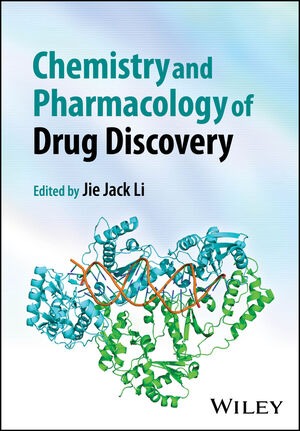
Chemistry and pharmacology of drug discovery
Illustrates how chemistry, biology, pharmacokinetics, and a host of disciplines come together to produce successful medicines, discussing a total of 20 drugs that are all FDA-approved post 2021. Cover Infectious Disease, Cancer Drugs, CNS Drugs, and Miscellaneous Drugs. Each chapter covers background material on the drug class and/or disease indication and key aspects relevant to the discovery of the drug, including structure-activity relationships, pharmacokinetics, drug metabolism, efficacy, and safety.

Chemicals as Intentional and Accidental Global Environmental Threats
The book contains fields of ecology, chemistry, medicine, epidemiology, public health, toxicology, risk assessment, environmental protection and management, modelling, environmental remediation technologies came together to discuss the chemicals threats for the global environment. The intentional or accidental release of chemicals into environment poses a global threat to public health and security.

Chemical Signals in Vertebrates 11
Presents the proceedings of "Chemical Signals in Vertebrates 11", hosted by the University of Liverpool and held July 25 - 28, 2006 at the University of Chester in the United Kingdom. Chemical Signals in Vertebrates 11 contains the latest research on chemical communication relevant to vertebrates, particularly focusing on new research since the last meeting in 2003. Topics covered include chemical ecology, biochemistry, behavior and neurobiology of both the main olfactory and vomeronasal systems of vertebrates, from amphibia to mammals including humans. A broad range of taxonomic groups and topics are discussed, including sections on new directions in semiochemistry, olfactory response and function, recognition within species, sexual communication, maternal-offspring communication, communication between species, and applications for zoo animal enrichment and pest control. The volume is dedicated to the memory of Dr. Bets Rasmussen and includes a special tribute chapter on her ground-breaking research on elephant communication.
Chemical Sensors : An Introduction for Scientists and Engineers
Research in the area of chemical and biochemical sensors and the development of respective applications is still growing rapidly. In the last decade it has become evident that the successful development of chemical and biochemical sensors resistant to the harsh conditions in the various routine applications calls for a cooperation between chemists and engineers.Thus, this book aims at instructing researcher and practitioners in both disciplines in a strictly systematic, interdisciplinary and practice-oriented way about the basic technology of chemical and biochemical sensors. This concise volume bridges the gap between the different "ways of thinking" in chemistry, physics and engineering

Chemical Reactor Modeling : Multiphase Reactive Flows
Chemical Reactor Modeling closes the gap between Chemical Reaction Engineering and Fluid Mechanics. It presents the fundamentals of the single-fluid and multi-fluid models for the analysis of single- and multiphase reactive flows in chemical reactors with a chemical reactor engineering rather than mathematical bias.
Chemical product formulation design and optimization : methods, rechniques, and case studies
A team of renowned technologists and engineers delivers a practice guide to chemical product design. Offering real-world case studies for disinfectant formulation, the optimization of defined media, and the formulation of biocomposites, the book contains introduction to the current product design process. A practical approach to the essentials of product design, related statistical techniques and optimization, patents, green chemistry and gives real life case studies.
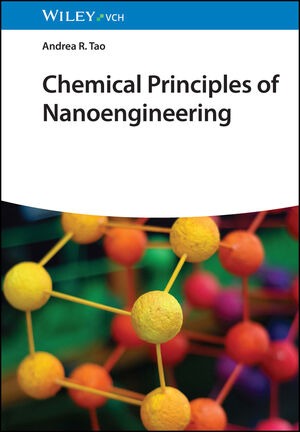
Chemical principles of nanoengineering
Nanomaterials, which possess at least one dimension lower than 100 nanometers, are increasingly at the forefront of technological and chemical innovation. The properties of these uniquely minute materials give them distinctive applications across a huge range of industries and research fields. It is therefore critical that the next generation of engineers and materials scientists understand these materials, their chemical properties, and how they form bonds

Chemical Kinetics and Reaction Dynamics
Chemical Kinetics and Reaction Dynamics brings together the major facts and theories relating to the rates with which chemical reactions occur from both the macroscopic and microscopic point of view. This book helps the reader achieve a thorough understanding of the principles of chemical kinetics and includes: *Detailed stereochemical discussions of reaction steps / *Classical theory based calculations of state-to-state rate constants / *A collection of matters on kinetics of various special reactions such as micellar catalysis, phase transfer catalysis, inhibition processes, oscillatory reactions, solid-state reactions, and polymerization reactions at a single source. / The growth of the chemical industry greatly depends on the application of chemical kinetics, catalysts and catalytic processes.

Chemical Genomics ; Vol.58 : Small Molecule Probes to Study Cellular Function
Chemical genomics is a highly interdisciplinary and very exciting field of research both in academics and in the life sciences industry.Various aspects of the interface between chemistry and biology are covered in this volume, such as chemogenomics efforts in the pharmaceutical industry, diversity-oriented synthesis, chemogenomic approaches to the study of cell function, screening technologies, and natural products as tools in chemical biology.

Chemical Evolution and the Origin of Life
Up to now, we do not have a generally accepted theory about the origin of life and about the process of development of life, we only have a great number of - to some extent even contradictory – hypotheses. Meanwhile there came up some scientific findings beyond thought only a few years ago.Horst Rauchfuss is comparing the different theories from the view of the latest results and is giving an exciting and easy understandable insight into the present state of research.
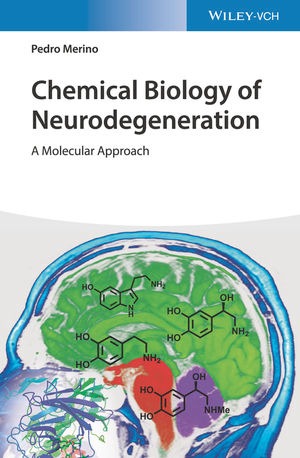
Chemical Biology of Neurodegeneration : A Molecular Approach
This book focuses on the main actors involved in neurodegenerative disorders at a molecular level, and places special emphasis on structural aspects and modes of action. Drawing on recent data on enzyme structure, mode of action, and inhibitor design, it describes?from a biochemical point of view?the six most important neurotransmitter systems and their constituent enzymes and receptors. Misfolding and aggregation of proteins within the brain is also covered.
Chemical Biology and Drug Discovery
Gives the reader, through the specific selection of chemical-biological techniques and concepts, the necessary tools to be able to develop new ways of thinking and thus new therapeutic options in the complex field of chemical biology and drug development. The stated aim of this book is to provide concrete solutions and inspiration to students, (post)graduate students, and experienced scientists at universities as well as in industry in their problems.
Chemical and functional properties of food components
Described the contents of food raw materials and products, the chemistry/biochemistry of food components, as well as the changes occurring during post-harvest storage and processing affecting the quality of foods. Discusses the role of chemical compounds in the structure of raw materials and the formation of different attributes of food quality, including nutritional value, safety, and sensory properties. It contains four new chapters: “Non-Protein Nitrogenous Compounds”; “Prooxidants and Antioxidants in Food”; “Non-Nutritive Bioactive Compounds in Food of Plant Origin”; and “Analytical Methods Used for Assessing the Quality of Food Products.”
Chemical and clinical applications of tempol : A marvelous molecule
A comprehensive and authoritative exploration of Tempol (4-Hydroxy-TEMPO), an exceptional chemical compound with diverse applications in both scientific research and medical practice. This book delves into Tempol's unique properties, mechanisms of action, and its potential role in combating oxidative stress-related disorders. Includes a chapter devoted to the safe handling, storage, and disposal of Tempol in compliance with pharmaceutical regulations. The authors pay particular attention to pharmaceutical regulations in the industry.

Charge Migration in DNA : Perspectives from Physics, Chemistry, and Biology
Charge migration through DNA has been the focus of considerable interest in recent years. A deeper understanding of the nature of charge transfer and transport along the double helix is important in fields as diverse as physics, chemistry and nanotechnology. It has also important implications in biology, in particular in DNA damage and repair. This book presents contributions from an international team of researchers active in this field.
Characterization of Polymer Surfaces and Thin Films
Comprehensive characterization of surfaces and interfaces is essential to relate surface and thin film properties to micro structure and molecular origin, which is, on the other hand, the key to technological control and improvement of materials. This volume cover a representative spectrum of surface sensitive techniques and their application to polymer surface and thin film characterization as well as recent examples of technologically relevant materials and process development.
Characterization of Pharmaceutical Nano- and Microsystems
Offers readers a full understanding of the basic physicochemical characteristics, material properties and differences between micro- and nanosystems. It explains how and why greater experience and more reliable measurement techniques are required as particle size shrinks, and the measured phenomena grow weaker.
Characterization of Corrosion Products on Steel Surfaces
It is well known that corrosion products, i.e. rust, on iron and steel surfaces cannot be assigned a typical crystallographic structure with long-range order. In fact, the structure of rust is considered to be very complicated, and some forms of rust are assigned to the amorphous state for this reason. Accurate information about the atomic-scale structure of rust is important to shed light on corrosion mechanisms of metallic materials. And, since life of steel structures is often dominated by environmental degradation or corrosion of the surface, the structure of the rust formed on iron and steel surfaces during prolonged exposure to air is of great interest. This book describes the fundamental aspects of materials characterization for the ferric oxyhydroxides formed on steel surfaces.

Characterization II
Molecular Sieves - Science and Technology covers, in a comprehensive manner, the science and technology of zeolites and all related microporous and mesoporous materials. Authored by renowned experts, the contributions to this handbook-like series are grouped together topically in such a way that each volume deals with a specific sub-field. Volume 5 complements Volume 4 (Characterization I) in that it is devoted to the characterization of molecular sieves by a variety of non-spectroscopic techniques (Characterization II). Thus, Volume 5 comprises Chemical Analysis, Thermal Analysis, Pore-Size Characterization by Molecular Probes, Characterization by 129Xe NMR, Coke Characterization, Synthesis and Characterization of Isomorphously Substituted Molecular Sieves.
