



الصفحة 4
الصفحة 4

Environmental and Microbial Relationships
After the publication of Volume IV in 1997, the introduction of molecular methods into ecology led to significant new findings. Emphasizing these advances, the chapters for the second edition have been completely updated and revised. This volume provides insight into current research on fungal populations and communities. It focuses on fungal responses to the physical environment, interactions with other fungi, microorganisms and invertebrates, the role of fungi in ecosystem processes such as decomposition and nutrient cycling, and aspects of biogeography and conservation. Several chapters deal with various applications in, e.g. biological pest control, natural products discovery, and the degradation of toxic organic compounds. This is an invaluable source of information both for scientists who wish to update their knowledge of current progress and for graduate students interested in obtaining a first overview of this field of research.

Encyclopedia of Molecular Pharmacology
It provides rapid access to information on molecular pharmacology for research scientists, clinicians and advanced students. With the A-Z format of over 2,000 entries, around 350 authors provide a complete reference to the area of molecular pharmacology. The book combines the knowledge of classic pharmacology with the more recent approach of the precise analysis of the molecular mechanisms by which drugs exert their effects. Short keyword entries define common acronyms, terms and phrases. In addition, detailed essays provide in-depth information on drugs, cellular processes, molecular targets, techniques, molecular mechanisms, and general principles.

Electronic Irradiation of Foods : An Introduction to the Technology
Electronic Irradiation of Foods describes all the key aspects of electron accelerator technology in detail. It emphasizes the physical science and technology aspects of food irradiation using machine sources of ionizing radiation. The book provides significant technical depth for interested workers and present descriptive, introductory material that should help demystify technology for businessmen to make informed choices regarding important investments decisions.Introductory chapters summarize the effects of ionizing radiation on biological organisms and the organic compounds comprising foods, and give an overview of the food irradiation process. Subsequent chapters cover the details of the electron beam and x-ray energy deposition, electron accelerator technologies, beam scanning systems, material handling systems, shielding design, and process control considerations. Important appendices cover radiation dosimetry, induced radioactivity, and ozone generation.

Electrochemistry of Immobilized Particles and Droplets
Immobilizing particles or droplets on electrodes is a novel and most powerful technique for studying the electrochemical reactions of three-phase systems. It gives access to a wealth of information, ranging from quantitative and phase analysis to thermodynamic and kinetic data of electrode processes. Three-phase electrodes with immobilized droplets provide information on the electrochemistry of redox liquids and of compounds dissolved in inert organic liquids. Such measurements allow the determination of the Gibbs energies of the transfer of cations and anions between immiscible solvents, and thus make it possible to assess the hydrophobicity of ions – a property that is of great importance for pharmaceutical applications, biological studies, and for many fields of chemistry.The monograph gives, for the first time, a comprehensive overview of the results published in more than 300 papers over the last 15 years. The experiments are explained in detail, applications from many different fields are presented, and the theoretical basis of the systems is outlined.

Echinodermata
Members of the phylum Echinodermata are among the most familiar marine invertebrates. Forms such as the sea star have become virtually a symbol of sea life. Used in ancient oriental medicine as a source of bioactive compounds, sea cucumbers, sea stars and sea urchins are now used for the extraction and purification of cytotoxic, haemolytic, antiviral, antifungal, antifouling, antimicrobial and even anti-tumoural activities.

Drugs and nutrients : The interactive effects
Devoted to the effects of food and of nutrient intake on the disposition of foreign compounds, and discusses effects of drugs on nutrition. It is intended for nutritionists and clinical investigators concerned with interpretation of aberrant effects of therapeutic drugs.

Drugs Affecting Growth of Tumours
During recent years the field of effective anticancer agents has substantially increased. The use of chemotherapy has been accepted as a standard therapy for an expanding number of tumour types and stages, while many new agents are being investigated when standard therapy is lacking or failing. Apart from new targets for anticancer agents, attention is also focused on improving efficacy and tolerability of existing compounds. This topical volume provides an up-to-date overview of clinically relevant data on anticancer agents, and is not only intended for those working as a medical doctor with cancer patients, but also for medical researchers and students. The different classes of anticancer drugs are described by international authorities on the various topics.

Drug Targets in Kinetoplastid Parasites
The book contains 12 chapters contributed by eminent scientists working in this field. The articles deal mainly with two aspects: visual identification of targets and identification of therapeutic agents.Several targets like kDNA replication machinery, purine salvage pathway, purine and pyrimidine biosynthetic pathway, histone deacetylase, DNA topoisomerases, membrane transporter proteins, glycoproteins and glycolipids are discussed in this book. Since current treatments for kinetoplastid parasitic diseases are far from ideal, there is an urgent and genuine need to develop newer compounds as antiparasitic drug candidates. Therefore evelopment of some lead compounds against these parasites as well as drug resistance are also included in this book. Moreover the vast amount of information generated after publication of the "Trytrip" genome sequence now makes possible several new approaches for target identification and discovery of therapeutic agents. This book is an outcome of the contributions of many scientists working in this important area.

Drug delivery via nasal route
Over the past 10 years, the interest in intranasal drug delivery has increased. The objective of this research is to summarize recent developments on intranasal administration for local and systemic delivery, as well as for CNS indications. Nasal delivery offers many advantages over standard systemic delivery systems, nevertheless, there are still formulation limitations and side effects to be optimized. Intranasal drug delivery in the field of drug development is an interesting delivery route for the treatment of neurological disorders. Systemic approaches often fail to efficiently supply the CNS with drugs. This research describes the anatomical, histological and physiological basis and summarizes currently approved drugs for administration via intranasal delivery. Further, the research focuses on advantages and disadvantages of intranasal applied compounds and discusses formulation aspects that need to be considered for drug development.

DNA Binders and Related Subjects
advances in technology and the application of new methods to outstanding problems have played a major part in the development of ideas about drug-nucleic acid recognition. The field has undergone an explosive diversification as wider and wider problems became accessible to study using the new ideas and techniques. This volume reflects that diversification by offering accounts of selected areas that illustrate recent advances in the study of ligand–nucleic acid binding over disparate areas of the subject. There are chapters dealing specifically with the invention and application of new methodology, and a particularly thoughtful essay on the interpretation of X-ray diffraction data which may not be as straightforward as is often imagined. Other chapters illustrate the diversity and complexity of drug-DNA binding from several perspectives, referring to particular groups of related compounds or the potential attractions of the less-preferred DNA major groove as a target for nucleotide sequence recognition by ligands.

Detection and Disposal of Improvised Explosives
It including: Methods of detection of Improvised Explosives (IE). Methods of detection of Improvised explosives devices (IED). Disposal and safe handling of ID and IED. The treatment of detection methods may be divided in the following groups: Overview about the different methods; Trace- and vapor detection; Electromagnetic methods; Neutron methods; Laser techniques. Because of different definitions of Improvised Explosives the parti- pants of the workshop agreed after some discussions with the following definition: An Improvised Explosive (IE) can be any chemical compound or mixture capable of an explosive reaction. They are normally easily prepared by a knowledgeable layman under simple conditions. Components of IE are typically inorganic salts containing molecular bound oxygen like nitrates, chlorates or perchlorates etc. or organic compounds with nitro-, nitami- or nitrate-groups or peroxides. Admixtures of military or commercial explosive materials are also used. From the chemical point of view IE can be divided into the following types: Salts containing chemical groups with oxygen (like nitrates, chlorates or perchlorates etc.) in mixtures with combustible substances like carbon-hydrogen compounds.

Dangerous Pollutants (Xenobiotics) in Urban Water Cycle
The book focused on evaluation of impact of xenobiotics in the whole Urban Water Cycle are an interdisciplinary task which has a rising concern these days. Xenobiotics includes both inorganic elements like heavy metals, metalloids and man-made organic compounds such as pesticides, surfactants, solvents, fragrances, flavours, and pharmaceuticals as well as endocrine dis- pters.

Dangerous of Pharmaceutical Waste From Hospitals and Homes on Human and Environment
The occurrence of pharmaceuticals in environment originating from hospitals and household waste has received increased scientific attention during the last decades because more than 100 different drugs have been detected in the aquatic environment at concentrations from the nanogram (ng) to the μg/l range. This research talk about improper disposal of pharmaceutical waste, impacts of some drugs included in like metals, endocrine disruptors, and various compounds that are dangerous for aquatic and human lives. The safe disposal and management of pharmaceutical waste. The origin of this problem begin due to lack of awareness about this issues beside there is no training or courses for pharmacists and people work in medical departments on pharmaceutical waste management during their academic studies.in addition, this research also talk about how to reduce the amount of pharmaceuticals waste and environmentally friendly and cost-effective ways for handling this waste, beside increase the awareness to overcome this problem.

Current Developments in Solid-state Fermentation
Over the period of last two decades, there has been significant resurgence in solid-state fermentation due to the numerous benefits it offers, especially in the engineering and environmental aspects. SSF has shown much promise in the development of several bioprocesses and products. This resurgence gained further momentum during the last 5-6 years with the developments in fundamental and applied aspects. A good deal of information has been generated in published literature and patented information. Several commercial ventures have come up based on SSF in different parts of the world. The contents are organized into four parts: Part 1 deals with the General and Fundamentals aspects of SSF; Part 2 deals with the production of bulk chemicals and products such as enzymes, organic acids, spores and mushrooms in SSF; Part 3 is on the use of SSF for specialty chemicals such as gibberellic acid, antibiotics and other pharmaceutically valuable secondary metabolites, pigments, and aroma compounds; Part 4 deals with the use of SSF miscellaneous application such as SSF for food and feed applications, agro-industrial residues as substrates in SSF and the production of silage and vermicompost.

Cosmeceuticals as Game Changers in the Cosmetic Industry
Objectives of this work is to compare conventional cosmetics to biotechnology derived cosmeceuticals in terms of skin anti-aging, skin color modulation and hair growth, and to find out which is of greater overall performance. Research revealed superiority of cosmeceuticals to classical cosmetics as it was found that many classical cosmetic agents used for aesthetical purposes posed a certain level of either ineffectiveness, for the reason that the effect did not treat the cause of the problem and was merely temporary and external, or harmfulness because of proposed potential health risks and adverse effects. Whereas cosmeceuticals presented promising novel mechanisms and compounds for a deeper, more thorough remedy.

Conducting Polymers : A New Era in Electrochemistry
The discovery of polymers with variable conductivity brought forth a paradigmatic change in chemistry and in other branches of science and technology. Electrochemistry has played a central role in the preparation, characterization and application of these new materials. This book is a systematic survey of the knowledge accumulated in this field in the last thirty years. It includes thermodynamic aspects, the theory of the mechanism of charge transport processes, the chemical and physical properties of these compounds, the techniques of characterization, the chemical and electrochemical methods of synthesis as well as the application of these systems. The book contains a compilation of the polymers prepared so far and covers the relevant literature.
Materials Syntheses : A Practical Guide
Materials syntheses are generally more complex than syntheses of inorganic or organic compounds, and specific characterization methods play a more important role. Materials synthesis protocols often suffer from unclarities, irreproducibility, lack in detail and lack in standards. The need to change this situation is the main motivation for this book. A number of detailed protocols has been collected, ranging from organic polymers to carbonaceous and ceramic materials, from gels to porous and layered materials and from powders and nanoparticles to films. Preparation methods include intercalation and flux methods, sol-gel processing, templating methods for porous materials, sonochemistry or spray pyrolysis.
Marine Organic Matter : Biomarkers, Isotopes and DNA
The oceans contain a great biodiversity of marine organisms. They include a rich variety of unusual genes and biochemistries and hence a diverse array of organic compounds ranging from colourful carotenoids and chlorophylls to lipids with structures ranging from the simple to the complex. This volume brings together ten chapters on the occurrence and identification of the lipid biomarkers and of pigments in marine waters. It describes how they can be used in conjunction with stable isotopes and molecular biology to ascertain the sources and fate of organic matter (both natural and pollutant) in the sea and underlying sediments. The authors are each experts in their field and the chapters provide both an overview of the state-of-the-art and knowledge gaps together with abundant detail to satisfy the needs of specialists and non-specialists alike.
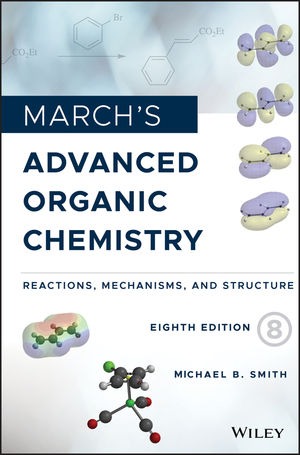
March's Advanced Organic Chemistry : Reactions, Mechanisms, and Structure
The opening chapters of March's Advanced Organic Chemistry deal with the structure of organic compounds and discuss important organic chemistry bonds, fundamental principles of conformation, and stereochemistry of organic molecules, and reactive intermediates in organic chemistry. Further coverage concerns general principles of mechanism in organic chemistry, including acids and bases, photochemistry, sonochemistry and microwave irradiation. The relationship between structure and reactivity is also covered.
Low-cost methods for molecular characterization of mutant plants : Tissue desiccation, DNA extraction and mutation discovery : Protocols
Offers low-cost and rapid molecular assays for the characterization of mutant plant germplasm. Detailed protocols are provided for the desiccation of plant tissues; the extraction of high-quality DNA for downstream applications; the extraction of single-strand-specific nucleases for single nucleotide polymorphism; and small insertion/deletion discovery using standard agarose gel electrophoresis. The methods described can be applied in any laboratory equipped for basic molecular biology and do away with the need for expensive freezers and toxic organic compounds.
