



الصفحة 4
الصفحة 4
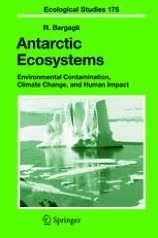
Antarctic ecosystems : Environmental contamination, climate change, and human impact
This volume provides an overview of climate change data, its effects on the structure and functioning of Antarctic ecosystems, and the occurrence and cycling of persistent contaminants. It discusses the unique physico-chemical characteristics of the Antarctic environment, ecophysiological adaptations of terrestrial and marine organisms, the transfer of contaminants in pelagic and neritic food chains and the possible consequences for animals at higher trophic levels.
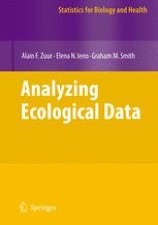
Analysing Ecological Data
This book provides a practical introduction to analysing ecological data using real data sets collected as part of postgraduate ecological studies or research projects. The first part of the book gives a largely non-mathematical introduction to data exploration, univariate methods (including GAM and mixed modelling techniques), multivariate analysis, time series analysis (e.g. common trends) and spatial statistics. The second part provides 17 case studies, mainly written together with biologists who attended courses given by the first authors. The case studies include topics ranging from terrestrial ecology to marine biology.
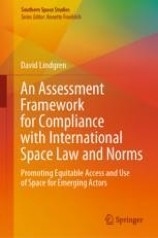
An assessment framework for compliance with international space law and norms : Promoting equitable access and Use of space for emerging actors
proposes a framework for assessing countries’ levels of compliance with international space law and norms. It begins by exploring the development of two movements – the evidence-based policymaking and programming movement, and the rise of ratings and rankings research – and their growth across various disciplines. The analysis suggests that such efforts are useful in gauging the behavior of countries in space according to how well they adhere to existing space law and norms. To date, there is no comprehensive, periodic, and systematic measure of countries’ efforts to comply with space law and norms; this work endeavors to fill that gap by offering a framework in which to assess compliance.
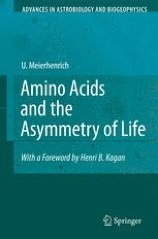
Amino acids and the asymmetry of life : Caught in the act of formation
This book describes how the basic building blocks of life, the amino acids, formed. After a comprehensible introduction into stereochemistry, the author addresses the inherent property of amino acids in living organisms, namely the preference for left-handedness. What was the cause for violation of parity of amino acids in the emergence of life on Earth? All the fascinating models proposed by physicists, chemists and biologist are vividly presented including the scientific conflicts.
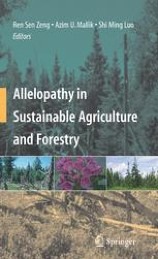
Allelopathy in Sustainable Agriculture and Forestry
This book reports on the latest advances in allelopathy through the contributions of leading scientists in the field. The book addresses the history of allelopathy, the science of allelochemicals, and the application of allelopathy in agriculture and forestry. An emphasis on both methodology and application makes Allelopathy a truly practical reference for scientists, researchers and students of plant science, agriculture, forestry, terrestrial ecology and environmental science.
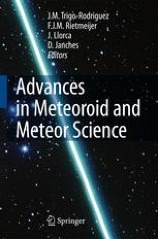
Advances in Meteoroid and Meteor Science
This volume is a compilation of articles that summarize the most recent results in meteor, meteoroid and related fields presented at the Meteoroids 2007 conference held at the impressive CosmoCaixa Science Museum in Barcelona, Spain. The conference took place between the 11th and the 15th of June and was organized by the Institute of Space Sciences (Consejo Superior de Investigaciones Científicas, CSIC) and the Institut d'Estudis Espacials de Catalunya (IEEC). Researchers in meteor science and supporting fields representing more than 20 countries participated at this international conference.
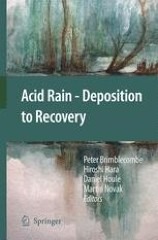
Acid Rain - Deposition to Recovery
Acid rain is still with us. Although it is a problem that people have worked diligently to solve, there are still many problem areas throughout the world. In reality the focus of acid rain research has shifted, and this book adds new vision to the topic. It contains papers, selected from Acid Rain 2005, the 7th International Conference on Acid Deposition, that take a broad perspective of the issues, emphasizing a number of themes: - the emission, concentration and deposition of pollutants / - nitrogen and trace elements in ecosystems and their effects on forests, water and soil / - studies of material damage and recovery - critical loads / The book is aimed at scientists and researchers who are working in the area of acid rain and its effects, and on nutrient cycling. This latest research will be of value to those concerned with the mitigation of acid rain effects.
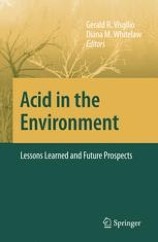
Acid in the Environment : Lessons Learned and Future Prospects
This book is the result of a conference held biannually at the Goodwin-Niering Center for Conservation Biology and Environmental Studies at Connecticut College.is a collection of essays that blends the research findings and the policy analyses of individuals from different academic disciplines with the positions advanced by representatives of NGOs. Acid in the Environment: Lessons Learned and Future Prospects presents a broad approach to the study of acid deposition, exposing readers with a scientific background to significant policy issues and those with a policy orientation to important ecological impacts. The book raises important questions that will serve as a springboard for discussion between diverse groups of teachers and students, concerned citizens and legislators, and scientists and policy makers.
About Life : Concepts in Modern Biology
This book uses modern biological knowledge to tackle the question: "What distinguishes living organisms from the non-living world?" In the first few chapters, the authors draw on recent advances in cell and molecular biology to develop an account of the "living state" that applies to all organisms, but only to organisms. Subsequent chapters use this account to explore questions about evolution, the origin of life and the possibility of extraterrestrial life. Towards the end of the book the authors consider human evolution, intelligence and the extent to which our species can be regarded as biologically unique. About Life is written as far as possible in non-technical language; all scientific terms are explained straightforwardly when they are introduced. It is aimed at the general, non-specialist reader, but the novel approach that it takes to general issues in biology will also interest students of the life sciences.
