



الصفحة 4
الصفحة 4

Nanobiotechnology of Biomimetic Membranes
Nanobiotechnology of Biomimetic Membranes focuses on biomimetic membranes. The application of nanotechnology principles and methodology to problems in biotechnology provides an exciting new discipline that will generate a revolution of novel applications, across many disciplines. This valuable new title offers an international perspective on the development of biotechnology applications.

Nano- and Micromaterials
The future focus of nanotechnology will be on realizing new functions over greater scales. This book describes the creation of nano- and microscale structures and functions by controlling temperature, light, pressure, or carrier injections. It covers novel nano-integration technologies such as quantum-well devices possilbe by utilizing, for example, the self-organization of surface nanostructures and optically or pressure-induced phase transitions, micro machines using microstereolithography, as well as new techniques of laser spectroscopy and new computational methods for estimating atomic and electronic structures and their functions on the nano- and microscales.

Multi-processor system-on-chip 1 : Architectures
covers the key components of MPSoC: processors, memory, interconnect and interfaces. It describes advance features of these components and technologies to build efficient MPSoC architectures. All the main components are detailed: use of memory and their technology, communication support and consistency, and specific processor architectures for general purposes or for dedicated applications.

Multimodal Technologies for Perception of Humans ; International Evaluation Workshops CLEAR 2007 and RT 2007, Baltimore, MD, USA, May 8-11, 2007, Revised Selected Papers
This book constitutes the thoroughly refereed joint post-workshop proceedings of two co-located events: the Second International Workshop on Classification of Events, Activities and Relationships, CLEAR 2007, and the 5th Rich Transcription 2007 Meeting Recognition evaluation, RT 2007, held in succession in Baltimore, MD, USA, in May 2007.The workshops had complementary evaluation efforts; CLEAR for the evaluation of human activities, events, and relationships in multiple multimodal data domains; and RT for the evaluation of speech transcription-related technologies from meeting room audio collections.
Multimodal Technologies for Perception of Humans ; 1st International Evaluation Workshop on Classification of Events, Activities and Relationships, CLEAR 2006, Southampton, UK, April 6-7, 2006, Revised Selected Papers
This book constitutes the thoroughly refereed post-proceedings of the First International CLEAR 2006 Evaluation Campaign and Workshop on Classification of Events, Activities and Relationships for evaluation of multimodal technologies for the perception of humans, their activities and interactions. The workshop was held in the UK in April 2006.
Multimedia technology and enhanced learning ; 2nd EAI International conference, ICMTEL 2020, Leicester, UK, April 10-11, 2020, Proceedings, Part II
This two-volume book constitutes the refereed proceedings of the Second International Conference on Multimedia Technology and Enhanced Learning, ICMTEL 2020, held in Leicester, United Kingdom, in April 2020. Due to the COVID-19 pandemic all papers were presented in YouTubeLive. The 83 revised full papers have been selected from 158 submissions. They describe new learning technologies which range from smart school, smart class and smart learning at home and which have been developed from new technologies such as machine learning, multimedia and Internet of Things.

Multimedia Technology and Enhanced Learning ; 2nd EAI International Conference, ICMTEL 2020, Leicester, UK, April 10-11, 2020, Proceedings, Part I
This two-volume book constitutes the refereed proceedings of the Second International Conference on Multimedia Technology and Enhanced Learning, ICMTEL 2020, held in Leicester, United Kingdom, in April 2020. Due to the COVID-19 pandemic all papers were presented in YouTubeLive. The 83 revised full papers have been selected from 158 submissions. They describe new learning technologies which range from smart school, smart class and smart learning at home and which have been developed from new technologies such as machine learning, multimedia and Internet of Things.

Multimedia security : Algorithm development, analysis and applications (algorithms for intelligent systems)
Provides an insight about various techniques used in multimedia security and identifies its progress in both technological and algorithmic perspectives. In the contemporary world, digitization offers an effective mechanism to process, preserve and transfer all types of information. The incredible progresses in computing and communication technologies augmented by economic feasibility have revolutionized the world. The availability of efficient algorithms together with inexpensive digital recording and storage peripherals have created a multimedia era bringing conveniences to people in sharing the digital data that includes images, audio and video. The ever-increasing pace, at which the multimedia and communication technology is growing, has also made it possible to combine, replicate and distribute the content faster and easier, thereby empowering mankind by having a wealth of information at their disposal.

Multimedia Forensics
Media forensics has never been more relevant to societal life. Not only media content represents an ever-increasing share of the data traveling on the net and the preferred communications means for most users, it has also become integral part of most innovative applications in the digital information ecosystem that serves various sectors of society, from the entertainment, to journalism, to politics. Undoubtedly, the advances in deep learning and computational imaging contributed significantly to this outcome. The underlying technologies that drive this trend, however, also pose a profound challenge in establishing trust in what we see, hear, and read, and make media content the preferred target of malicious attacks.

Multifunctional Barriers for Flexible Structure : Textile, Leather and Paper
The intent of this book is to give a complete overview of the present state of the art of flexible barrier materials such as textile, paper and leather, including methods for barrier evaluation. It will be of interest to readers in industries, consumers, and members of the scientific community. The scope of the field is clearly delineated here for the first time, and it deals with a number of specific topics such as barrier to fire, antibacterial properties, resistance to waves (electrostatic, electromagnetic, acoustics), anti-odor, etc. combined with characterization techniques as well as material nanotechnology.

Multi-dimensional Approaches Towards New Technology : Insights on Innovation, Patents and Competition
This open access edited book captures the complexities and conflicts arising at the interface of intellectual property rights (IPR) and competition law. To do so, it discusses four specific themes: (a) policies governing functioning of standard setting organizations (SSOs), transparency and incentivising future innovation; (b) issue of royalties for standard essential patents (SEPs) and related disputes; (c) due process principles, procedural fairness and best practices in competition law; and (d) coherence of patent policies and consonance with competition law to support innovation in new technologies.

Multiagent System Technologies ; Vol. 4196 ; 4th German Conference, MATES 2006, Erfurt, Germany, September 19-20, 2006, Proceedings
This book constitutes the refereed proceedings of the 4th German Conference on Multiagent Systems Technologies, MATES 2006, co-located with Net.ObjectDays (NoDe 2006). The 15 revised full papers presented were carefully reviewed and selected from 52 submissions. The papers are organized in topical sections on agent communication and interaction, applications and simulation, agent planning, agent-oriented software engineering, as well as trust and security.

Multiagent System Technologies ; Vol. 3550 : 3rd German Conference, MATES 2005, Koblenz, Germany, September 11-13, 2005, Proceedings
After two successful MATES conferences in Erfurt 2003 and 2004, the 3rd G- man conference on Multi-agent System Technologies (MATES 2005) took place in Koblenz, Germany, in September 2005, and was co-located with the 28th German Conference on Arti?cial Intelligence (KI 2005). Building onotheragent-related events in Germany in the past, and organized by the GI German Special Interest Group on Distributed Arti?cial Intelligence, the MATES conference series aims at promoting the theory and applications of agents and multiagent systems. In corporating the 9th International Workshopon Cooperative Information Agents (CIA 2005), the topics of interest for MATES 2005 also covered the ?elds of intelligent information agents and systems for the Internet and the (Semantic) Web. As in recent years, MATES 2005 provided a distinguished, lively and int- disciplinary forum for researchers, users, and developers of agent technology, to present and discuss the latest advances of research and development in the area of autonomous agents and multiagent systems. Accordingly, the topics of MATES 2005 covered the whole range from the theory to applications of age- and multiagent technology. The technical program included a total of 24 sci- ti?c talks, and demonstrations of selected running agent systems, and both the MATES 2005 Best Paper and the CIA 2005 System Innovation awards.

Multiagent System Technologies ; 6th German Conference, MATES 2008, Kaiserslautern, Germany, September 23-26, 2008. Proceedings
This book constitutes the refereed proceedings of the 6th German Conference on Multiagent Systems Technologies, MATES 2008, held in Kaiserslautern, Germany, in September 2008 - co-located with the 31st German Conference on Artificial Intelligence, KI 2008.The 16 revised full papers presented together with 2 invited talks were carefully reviewed and selected from 35 submissions. The papers present and discuss the latest advances of research and development in the area of autonomous agents and multiagent systems ranging from theoretical and methodological issues to applications in various fields.
Multiagent System Technologies ; 5th German Conference, MATES 2007, Leipzig, Germany, September 24-26, 2007, Proceedings
The papers are organized in topical sections on engineering multi-agent systems, multi-agent planning and learning, multi-agent communication, interaction, and coordination, multi-agent resource allocation, multi-agent planning and simulation, as well as trust and reputation.
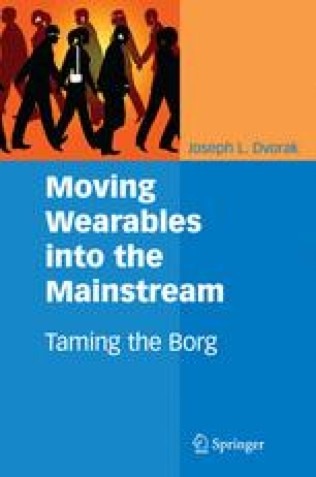
Moving Wearables into the Mainstream : Taming the Borg
Moving Wearables into the Mainstream also introduces concepts such as Operational Inertia that form a mindset conducive to designing wearables suitable for broad adoption by consumers. This book provides insight into legal and cultural issues potentially unfamiliar to research engineers, as well as a broad discussion of technologies underlying wearable devices.Moving Wearables into the Mainstream is designed for a professional audience of practitioners and researchers in industry. This volume is also suitable as a secondary advanced-level text or reference book for students in computer science and electrical engineering.

Moving Millions : Transport Strategies for Sustainable Development in Megacities
The Alliance for Global Sustainability is an international partnership among four of the leading scienti?c and technological universities worldwide: • The Massachusetts Institute of Technology (MIT-AGS); • The University of Tokyo (UT); • The Swiss Federal Institute of Technology (ETH); and • The Chalmers University of Technology. Created in 1997, the AGS today brings together hundreds of university scientists, engineers, and social scientists to address complex issues that lie at the intersection of environmental, economic, and social policy goals. Since its inception, the AGS has promoted and supported multidisciplinary research teams drawn from its partner institutions. Working on critical issues in sustainability across several ?elds encompassing energy and climate, mobility, urban systems, water and agriculture, cleaner technologies, public policy, and communications, these teams have developed a signi?cant body of new knowledge.

Mouse controller using electroencephalography (EEG) device
The growing technologies related to neuroscience has to lead many innovative applications, most importantly Electroencephalography, or EEG for short. This field of study has become recently a trend that many companies around the world have started to enter the race of conquering the brain and controlling everything from a mouse controller to the whole human body. This project aims to help disabled people use a computer with ease and simplicity without needing to use their hands, or anything really, which they can achieve by wearing a headset or get someone to put it on them. The headset is designed to read brain activities and send it to a computer program to understand where the user wants to move the mouse cursor on the computer screen using an Artificial Intelligence model. This project helps further researches in this field which pushes the technology even further from where it is now. The device designed for this project can be repurposed pretty easily to serve many different applications other than controlling a mouse.

Mosquito Ecology : Field Sampling Methods
The purpose of this book is in keeping with the original vision of Professor Service to describe the methods and rationale for sampling mosquitoes, with particular emphasis on the ecology and behaviour of those species that play a role as vectors of human and animal diseases and infections. The book is designed to serve as a practical reference for field entomologists and mosquito control specialists and describes the sampling methods and available trapping technologies and tools for the collection of all life-stages of mosquitoes, from egg to adult. It also describes the techniques available for data analysis and discusses ecological principles of relevance to the study of field populations of mosquitoes. While concentrating primarily on mosquitoes, many of the techniques described are suitable for the study of other Diptera, including Ceratopogonidae, Chironomidae, Simuliidae, Phlebotominae, etc.

Molecular Pharmacognosy
This book discusses the application of molecular biology in resource science and authentication of traditional Chinese medicine (TCM). It also reviews the latest developments in pharmacognosy, introduces new perspectives and insights, discusses the hotspots and focuses in the field of molecular pharmacognosy, and predicts new directions of study. In the last five years, the technologies and scope of molecular pharmacognosy have constantly expanded and evolved. As such, this new edition includes extra content, such as the molecular phylogeography of medicinal plants, functional genome of medicinal plants, and synthetic biology of active compounds. Elucidating the concept, theory, and methodology of molecular pharmacognosy, it promotes the full use of the newly developed technologies and methodologies within the framework of molecular pharmacognosy to solve problems in the field.
