



الصفحة 4
الصفحة 4

DevOps Tools for Java Developers : Best Practices from Source Code to Production Containers
Explore software lifecycle best practices Use DevSecOps methodologies to facilitate software development and delivery Understand the business value of DevSecOps best practices Manage and secure software dependencies Develop and deploy applications using containers and cloud native technologies Manage and administrate source control repositories and development processes Use automation to set up and administer build pipelines Identify common deployment patterns and antipatterns Maintain and monitor software after deployment

Developing Services for the Wireless Internet
This book is for developers of wireless Internet services. It addresses the technical issues that can get in the way of the production of a successful service: variability of terminals, unstable technology, incomplete testing environment, variable bandwidth and quality of service. Useful techniques and methods when handing these issues are proposed using two case studies: a mobile game and a mobile trading service.

Design, user experience, and usability interaction design ; 9th International Conference, DUXU 2020, Held as Part of the 22nd HCI International Conference, HCII 2020, Copenhagen, Denmark, July 19–24, 2020, Proceedings, Part I
This book constitutes the refereed proceedings of the 9th International Conference on Design, User Experience, and Usability, DUXU 2020, held as part of the 22nd International Conference on Human-Computer Interaction, HCII 2020, in Copenhagen, Denmark, in July 2020. The conference was held virtually due to the COVID-19 pandemic. From a total of 6326 submissions, a total of 1439 papers and 238 posters has been accepted for publication in the HCII 2020 proceedings. The 40 papers included in this volume were organized in topical sections on UX design methods, tools and guidelines, interaction design and information visualization, and emotional design.

Critical Success Factors of Offshore Software Develpment Projects : The Perspective of German-Speaking Companies
In an effort to cut costs and re-focus on their core competences, The author develops a model that comprises 29 critical success factors which are classified into four distinct groups: internal suitability, internal management, external suitability, and external management factors. With regard to the developed model, both the implementation of an online survey and the conduction of two in-depth case studies show that the external management factors are particularly relevant for the successful implementation of an offshore software development project and that the perception of the individual critical success factors greatly depends on the company perspective.

COTS-Based software systems ; 4th International Conference, ICCBSS 2005, Bilbao, Spain, February 7-11, 2005, Proceedings
The theme “Build and Conquer” : software development is an engineering discipline, and not an artistic expression. Once we are ready to “build” our software systems using pieces previously builtin (similar to any other technology manufacturer), we will be able to “conquer” the software engineering process. If we take a look at other engineering disciplines such as car manufacturing, house appliances or aeronautics, we see that the final products are built through the integration of multiprovider commercial components. These components are successfully integrated and constitute an important part of the final product. Most software-related organizations still build software from scratch, omitting thousands of ready-built commercially available software components that could be used very effectively during the development phase. This year ICCBSS moves to Europe for the first time since the first conference took place in Orlando, FL, USA in 2002. The conference scope has enlarged over the years to include the Open Source community and Web Services technologies. so many of the characteristics of COTS are also applied to Open Source and Web Services.

Coordination models and languages ; 9th International Conference, COORDINATION 2007, Paphos, Cyprus, June 6-8, 2007, Proceedings
he volume examines how to increase modularity, simplify reasoning, and ultimately enhance today's software development by exploring the spectrum of languages, middleware, services, and algorithms. The papers are organized in topical sections on middleware, logic programming, formal approaches, concurrency, components and services, as well as MANets.

Coordination models and languages ; 23rd IFIP WG 6.1 International Conference, COORDINATION 2021, Held as Part of the 16th International Federated Conference on Distributed Computing Techniques, DisCoTec 2021, Valletta, Malta, June 14–18, 2021, Proceedings
This book constitutes the refereed proceedings of the 23rd IFIP WG 6.1 International Conference on Coordination Models and Language, COORDINATION 2021, held in Valletta, Malta, in June 2021, as part of the 16th International Federated Conference on Distributed Computing Techniques, DisCoTec 2021. The 15 regular papers, 2 short papers, and 1 tutorial paper presented in this book were carefully reviewed and selected from 31 submissions. COORDINATION provides a well-established forum for the growing community of researchers interested in coordination models and languages, architectures, verification and implementation techniques necessary to cope with the complexity induced by the demands of today's software development.

Contemporary Empirical Methods in Software Engineering
This book presents contemporary empirical methods in software engineering related to the plurality of research methodologies, human factors, data collection and processing, aggregation and synthesis of evidence, and impact of software engineering research. The individual chapters discuss methods that impact the current evolution of empirical software engineering and form the backbone of future research.

Concepts and Semantics of Programming Languages 2 : Modular and Object-oriented Constructs with OCaml, Python, C++, Ada and Java
Explores the syntactical constructs of the most common programming languages, and sheds a mathematical light on their semantics, providing also an accurate presentation of the material aspects that interfere with coding. Presents an original semantic model, collectively taking into account all of the constructs and operations of modules and classes: visibility, import, export, delayed definitions, parameterization by types and values, extensions, etc. The model serves for the study of Ada and OCaml modules, as well as C header files. It can be deployed to model object and class features, and is thus used to describe Java, C++, OCaml and Python classes.

Concepts and Semantics of Programming Languages 1 : A Semantical Approach with OCaml and Python
Explores the syntactical constructs of the most common programming languages, and sheds a mathematical light on their semantics, while also providing an accurate presentation of the material aspects that interfere with coding. It is dedicated to functional and imperative features. Included is the formal study of the semantics of typing and execution; their acquisition is facilitated by implementation into OCaml and Python, as well as by worked examples. Data representation is considered in detail: endianness, pointers, memory management, union types and pattern-matching, etc., with examples in OCaml, C and C++. The second volume introduces a specific model for studying modular and object features and uses this model to present Ada and OCaml modules, and subsequently Java, C++, OCaml and Python classes and objects.
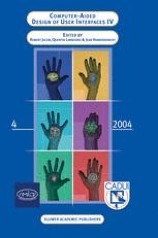
Computer-Aided Design of User Interfaces IV
Computer-Aided Design of User Interfaces IV gathers the latest research of experts, research teams and leading organisations involved in computer-aided design of user interactive applications supported by software, with specific attention for platform-independent user interfaces and context-sensitive or aware applications. This includes: innovative model-based and agent-based approaches, code-generators, model editors, task animators, translators, checkers, advice-giving systems and systems for graphical and multimodal user interfaces. It also addresses User Interface Description Languages. This books attempts to emphasize the software tool support for designing user interfaces and their underlying languages and methods, beyond traditional development environments offered by the market. It will be of interest to software development practitioners and researchers whose work involves human-computer interaction, design of user interfaces, frameworks for computer-aided design, formal and semi-formal methods, web services and multimedia systems, interactive applications, and graphical user and multi-user interfaces.
Managed Software Evolution
This book presents the outcomes of the “Design for Future – Managed Software Evolution” .The different lifecycles of software and hardware platforms lead to interoperability problems in such systems. Instead of separating the development, adaptation and evolution of software and its platforms, as well as aspects like operation, monitoring and maintenance, they should all be integrated into one overarching process. Accordingly, the book is split into three major parts, the first of which includes an introduction to the nature of software evolution, followed by an overview of the specific challenges and a general introduction to the case studies used in the project. The second part of the book consists of the main chapters on knowledge carrying software, and cover tacit knowledge in software evolution, continuous design decision support, model-based round-trip engineering for software product lines, performance analysis strategies, maintaining security in software evolution, learning from evolution for evolution, and formal verification of evolutionary changes. In turn, the last part of the book presents key findings and spin-offs. The individual chapters there describe various case studies, along with their benefits, deliverables and the respective lessons learned. An overview of future research topics rounds out the coverage.

Making Globally Distributed Software Development a Success Story : International Conference on Software Process, ICSP 2008 Leipzig, Germany, May 10-11, 2008 Proceedings
This volume contains papers presented at the International Conference on Software Process (ICSP 2008) held in Leipzig, Germany, during May 10-11, 2008. ICSP 2008 was the second conference of the ICSP series. The theme of ICSP 2008 was “Making Globally Distributed Software Development a Success Story. ” Software developers work in a dynamic context of frequently changing technologies and with limited resources. Globally distributed development teams are under ev- increasing pressure to deliver their products more quickly and with higher levels of qu- ity. At the same time, global competition is forcing software development organizations to cut costs by rationalizing processes, outsourcing part of or all development activities, reusing existing software in new or modified applications, and evolving existing systems to meet new needs, while still minimizing the risk of projects failing to deliver.
Machine learning approach for cloud data analytics in IoT
Covers the multidimensional perspective of machine learning through the perspective of cloud computing and Internet of Things ranging from fundamentals to advanced applications. Elucidates some of the best practices and their respective outcomes in cloud and fog computing environments. It focuses on all the various research issues related to big data storage and analysis, large-scale data processing, knowledge discovery and knowledge management, computational intelligence, data security and privacy, data representation and visualization, and data analytics. The featured technologies presented in the book optimizes various industry processes using business intelligence in engineering and technology. Light is also shed on cloud-based embedded software development practices to integrate complex machines so as to increase productivity and reduce operational costs. The various practices of data science and analytics which are used in all sectors to understand big data and analyze massive data patterns are also detailed in the book.

Logic-Based Program Synthesis and Transformation ; 17th International Symposium, LOPSTR 2007, Kongens Lyngby, Denmark, August 23-24, 2007, Revised Selected Papers
Contains a selectionofthe the paperspresentedatthe 17thInter- tional Symposium on Logic-Based Program Synthesis and Transformation, that was held in Kongens Lyngby, Denmark, August 23-24,2007. LOPSTR thus traditionally solicits papers in the areas of: specification, synthesis, verification, transformation, analysis, optimization, composition, security, reuse, applications andtools, component-baseds of tware development, software architectures, age- based software development and program refnement. Formal proceedings are produced only after the symposium, so that authors can incorporate this feed back in the published papers.

Logic Based Program Synthesis and Transformation ; Vol. 3901 ; 15th International Symposium, LOPSTR 2005, London, UK, September 7-9, 2005, Revised Selected Papers
This book constitutes the thoroughly refereed post-proceedings of the 15th International Symposium on Logic Based Program Synthesis and Transformation, LOPSTR 2005, held in September 2005. The papers are organized in topical sections on tools for program development, program transformations, and software development and program analysis.
JavaScript data structures and algorithms : An Introduction to understanding and implementing core data structure and algorithm fundamentals
Combines clear explanations of data structure and algorithm theory with practical code samples, examples and exercises, all specifically relevant to JavaScript Provides background information on object-oriented programming and native JavaScript concepts to help understand how everything fits together Illustrates how these theoretical computer science concepts ties back to practical applications in software engineering

Component-Based Software Testing with UML
Component-based software development regards software construction in terms of conventional engineering disciplines where the assembly of systems from readily-available prefabricated parts is the norm. Because both component-based systems themselves and the stakeholders in component-based development projects are different from traditional software systems, component-based testing also needs to deviate from traditional software testing approaches. Gross first describes the specific challenges related to component-based testing like the lack of internal knowledge of a component or the usage of a component in diverse contexts. He argues that only built-in contract testing, a test organization for component-based applications founded on building test artifacts directly into components, can prevent catastrophic failures like the one that caused the now famous ARIANE 5 crash in 1996. This book is the first comprehensive treatment of the intricacies of testing component-based software systems. With its strong modeling background, it appeals to researchers and graduate students specializing in component-based software engineering. Professionals architecting and developing component-based systems will profit from the UML-based methodology and the implementation hints based on the XUnit and JUnit frameworks.
Component-Based Software Development for Embedded Systems : An Overview of Current Research Trends
Embedded systems are ubiquitous. They appear in cell phones, microwave ovens, refrigerators, consumer electronics, cars, and jets. Some of these embedded s- tems are safety- or security-critical such as in medical equipment, nuclear plants, and X-by-wire control systems in naval, ground and aerospace transportation - hicles. With the continuing shift from hardware to software, embedded systems are increasingly dominated by embedded software. Embedded software is complex. Its engineering inherently involves a mul- disciplinary interplay with the physics of the embedding system or environment. Embedded software also comes in ever larger quantity and diversity. The next generation of premium automobiles will carry around one gigabyte of binary code. The proposed US DDX submarine is e?ectively a ?oating embedded so- ware system, comprising 30 billion lines of code written in over 100 programming languages. Embedded software is expensive. Cost estimates are quoted at around US$15– 30 per line (from commencement to shipping). In the defense realm, costs can range up to $100, while for highly critical applications, such as the Space Shuttle, the cost per line approximates $1,000. In view of the exponential increase in complexity, the projected costs of future embedded software are staggering.
Business modeling and software design ; 10th International Symposium, BMSD 2020, Berlin, Germany, July 6-8, 2020, Proceedings
This book constitutes the refereed proceedings of the 10th International Symposium on Business Modeling and Software Design, BMSD 2020, which took place in Berlin, Germany, in July 2020. BMSD is a leading international forum that brings together researchers and practitioners interested in business modeling and its relation to software design. Particular areas of interest are: Business Processes and Enterprise Engineering; Business Models and Requirements; Business Models and Services; Business Models and Software; Information Systems Architectures and Paradigms; Data Aspects in Business Modeling and Software Development; Blockchain-Based Business Models and Information Systems; IoT and Implications for Enterprise Information Systems.
