



الصفحة 4
الصفحة 4

Innovations in robot mobility and control
The most important aspects of this book is that the principles and models introduced in the text are all field-tested, and thus can readily be used in solving real world problems, such as factory automation, disposal of nuclear wastes, landmine clearing and computerized surgery.

Innovations in Hybrid Intelligent Systems
Hybrid Artificial Intelligence Systems (HAIS) combines symbolic and sub-symbolic techniques to construct more robust and reliable problem solving models. This volume focused on "Hybrid Artificial Intelligence Systems" contains a collection of papers that were presented at the 2nd International Workshop on Hybrid Artificial Intelligence Systems, held in 12 - 13 November, 2007, Salamanca, Spain. This carefully edited book provides a comprehensive overview of the recent advances in the hybrid intelligent systems and covers a wide range of application areas, including data analysis and data mining, intelligent control, pattern recognition, robotics, optimization, etc. The book is aimed at researchers, practitioners and postgraduate students who are engaged in developing and applying advanced intelligent systems principles to solving real-world problems.

Innovations in Applied Artificial Intelligence ; 18th International Conference on Industrial and Engineering Applications of Artificial Intelligence and Expert Systems, IEA/AIE 2005, Bari, Italy, June 22-24, 2005, Proceedings
The contributions oriented to the technological aspects of AI and the quality of the papers are witness to a research activity clearly aimed at consolidating the theoretical results that have already been achieved. The c- ference program also included two invited lectures, by Katharina Morik and Roberto Pieraccini. Many people contributed in different ways to the success of the conference and to this volume. The authors who continue to show their enthusiastic interest in applied intelligence research are a very important part of our success. We highly appreciate the contribution of the members of the Program Committee, as well as others who reviewed all the submitted papers with eficiency and dedication.

Information Storage : A Multidisciplinary Perspective
Examines some of the underlying processes behind different forms of information management, including how we store information in our brains, the impact of new technologies such as computers and robots on our efficiency in storing information, and how information is stored in families and in society.

Information Processing with Evolutionary Algorithms : From Industrial Applications to Academic Speculations
The last decade of the 20th century has witnessed a surge of interest in num- ical, computation-intensive approaches to information processing. The lines that draw the boundaries among statistics, optimization, arti cial intelligence and information processing are disappearing, and it is not uncommon to nd well-founded and sophisticated mathematical approaches in application - mains traditionally associated with ad-hoc programming. Heuristics has - come a branch of optimization and statistics. Clustering is applied to analyze soft data and to provide fast indexing in the World Wide Web. Non-trivial matrix algebra is at the heart of the last advances in computer vision. The breakthrough impulse was, apparently, due to the rise of the interest in arti cial neural networks, after its rediscovery in the late 1980s. Disguised as ANN, numerical and statistical methods made an appearance in the - formation processing scene, and others followed. A key component in many intelligent computational processing is the search for an optimal value of some function. Sometimes, this function is not evident and it must be made explicit in order to formulate the problem as an optimization problem. The search - ten takes place in high-dimensional spaces that can be either discrete, or c- tinuous or mixed. The shape of the high-dimensional surface that corresponds to the optimized function is usually very complex. Evolutionary algorithms are increasingly being applied to information processing applications that require any kind of optimization.

Informatics in Control, Automation and Robotics II
Informatics in Control, Automation and Robotics II is a collection of the best papers presented at the 2nd International Conference on Informatics in Control, Automation and Robotics (ICINCO). The purpose of ICINCO was to bring together researchers, engineers and practitioners interested in the application of informatics to Control, Automation and Robotics.

Informatics in Control, Automation and Robotics I
The present book includes a set of selected papers from the first “International Conference on Informatics in Control Automation and Robotics” (ICINCO 2004), held in Setúbal, Portugal, from 25 to 28 August 2004. The conference was organized in three simultaneous tracks: “Intelligent Control Systems and Optimization”, “Robotics and Automation” and “Systems Modeling, Signal Processing and Control”. The book is based on the same structure.

Informatics in Control Automation and Robotics : Selected Papers from the International Conference on Informatics in Control Automation and Robotics 2006
The present book includes a set of selected papers from the 3rd “International Conference on Informatics in Control Automation and Robotics” (ICINCO 2006), held in Setúbal, Portugal, 1-5 August 2006.

Industrial Robots Programming : Building Applications for the Factories of the Future
Industrial Robots Programming focuses on designing and building robotic manufacturing cells, and explores the capabilities of today’s industrial equipment as well as the latest computer and software technologies. Special attention is given to the input devices and systems that create efficient human-machine interfaces, and how they help non-technical personnel perform necessary programming, control, and supervision tasks.

Inconsistency tolerance
Inconsistency arises in many areas in advanced computing. Often inconsistency is unwanted, for example in the specification for a plan or in sensor fusion in robotics; however, sometimes inconsistency is useful. Whether inconsistency is unwanted or useful, there is a need to develop tolerance to inconsistency in application technologies such as databases, knowledge bases, and software systems. To address this situation, inconsistency tolerance is being built on foundational technologies for identifying and analyzing inconsistency in information, for representing and reasoning with inconsistent information, for resolving inconsistent information, and for merging inconsistent information. The idea for this book arose out of a Dagstuhl Seminar on the topic held in summer 2003. The nine chapters in this first book devoted to the subject of inconsistency tolerance were carefully invited and anonymously reviewed. The book provides an exciting introduction to this new field.

Impact of artificial intelligence on organizational transformation
Covers the areas like artificial intelligence & its impact on professions, as well as machine learning algorithms and technologies. The context of applications of AI in business process innovation primarily includes new business models, AI readiness and maturity at the organizational, technological, financial, and cultural levels. The book has extensive details on machine learning and the applications such as robotics, blockchain, Internet of Things. Also discussed are the influence of AI on financial strategies and policies, human skills & values, procurement innovation, production innovation, AI in marketing & sales platforms.

Image Processing : Dealing with Texture ; 2nd ed.
Updates the classic work on texture analysis theory and methods without abandoning the foundational essentials of this landmark work. Like the first, the new edition offers an analysis of texture in digital images that are essential to a diverse range of applications such as: robotics, defense, medicine and the geo-sciences. Designed to easily locate information on specific problems, the text is structured around a series of helpful questions and answers. Updated to include the most recent developments in the field, many chapters have been completely revised including: Fractals and Multifractals, Image Statistics, Texture Repair, Local Phase Features, Dual Tree Complex Wavelet Transform, Ridgelets and Curvelets and Deep Texture Features. The book takes a two-level mathematical approach: light math is covered in the main level of the book, with harder math identified in separate boxes.

Hybrid Systems: Computation and Control ; 10th International Workshop, HSCC 2007, Pisa, Italy, April 3-5, 2007, Proceedings
Constitutes the refereed proceedings of the 10th International Conference on Hybrid Systems: Computation and Control, HSCC 2007, held in Pisa, Italy in April 2007.

Human-Like Biomechanics : A Unified Mathematical Approach to Human Biomechanics and Humanoid Robotics
The book contains six Chapters and an Appendix. The first Chapter is an Introduction, giving a brief review of mathematical techniques to be used in the text. The second Chapter develops geometrical basis of human-like biomechanics, while the third Chapter develops its mechanical basis, mainly from generalized Lagrangian and Hamiltonian perspective. The fourth Chapter develops topology of human-like biomechanics, while the fifth Chapter reviews related nonlinear control techniques. The sixth Chapter develops covariant biophysics of electro-muscular stimulation. The Appendix consists of two parts: classical muscular mechanics and modern path integral methods, which are both used frequently in the main text.
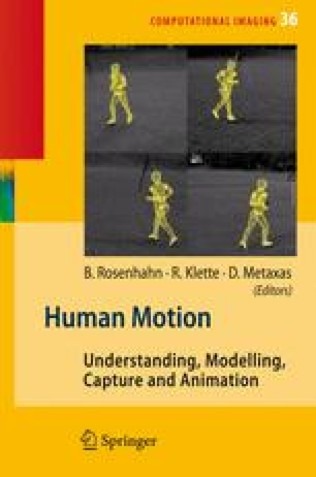
Human motion : Understanding, modeling, capture and animation
Edward Muybridge (1830–1904) is known as the pioneer in motion capt- ing with his famous experiments in 1887 called “Animal Locomotion”. Since then, the feld of animal or human motion analysis has grown in many dir- tions. However, research and results that involve human-like animation and the recovery of motion is still far from being satisfactory. Progress in human motion analysis depends on empirically anchored and grounded research in computer vision, computer graphics, and biomechanics. This book is based on a June 2006 workshop held in Dagstuhl, Germany. This workshop brought together for the frst time researchers from the afo- mentioned disciplines.
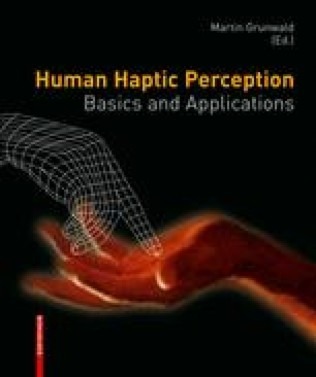
Human Haptic Perception : Basics and Applications
Active touch perception – also known as haptic perception – is of primary importance for the planning, direction and execution of everyday actions. This most complex of human sensory systems is gaining ever more importance for various scientific disciplines as well as practical industrial applications.In this book an international team of 80 authors presents a comprehensive collection of writings on both aspects of research on human haptic perception. After a theoretical and historical introduction, the chapters are dedicated to neurophysiological basics as well as the psychological, clinical and neuropsychological aspects of haptic perception. Results of studies into human haptic perception in the fields of virtual haptics and robotics are also included. In the final section, contributions from the applied and industrial sectors illustrate the practical uses of knowledge about the human sense of touch.
Haptics: Science, Technology, Applications ; 12th International Conference, EuroHaptics 2020, Leiden, The Netherlands, September 6–9, 2020, Proceedings
This book constitutes the proceedings of the 12th International Conference on Human Haptic Sensing and Touch Enabled Computer Applications, EuroHaptics 2020, held in Leiden, The Netherlands, in September 2020.

Handbook of modern sensors. physics, designs, and applications
Presents a comprehensive and up-to-date account of the theory (physical principles), design, and practical implementations of various sensors for scientific, industrial, and consumer applications. This latest edition focuses on the sensing technologies driven by the expanding use of sensors in mobile devices. These new miniature sensors will be described, with an emphasis on smart sensors which have embedded processing systems. The chapter on chemical sensors has also been expanded to present the latest developments.
Handbook of Geometric Computing : Applications in Pattern Recognition, Computer Vision, Neuralcomputing, and Robotics
Many computer scientists, engineers, applied mathematicians, and physicists use geometry theory and geometric computing methods in the design of perception-action systems, intelligent autonomous systems, and man-machine interfaces. This handbook brings together the most recent advances in the application of geometric computing for building such systems, with contributions from leading experts in the important fields of neuroscience, neural networks, image processing, pattern recognition, computer vision, uncertainty in geometric computations, conformal computational geometry, computer graphics and visualization, medical imagery, geometry and robotics, and reaching and motion planning. For the first time, the various methods are presented in a comprehensive, unified manner.
Handbook of cardiac anatomy, physiology, and devices
Because of rapid growth in the medical device industry-which today enjoys revenues as large as those of the automobile industry-as well as in our understanding of cardiac disease processes, biomedical engineers must cope with a rising tide of highly complex information. In Handbook of Cardiac Anatomy, Physiology, and Devices, leading experts from the University of Minnesota's renowned Lillehei Heart Institute and scientists from Medtronic, Inc. have compiled a concise-yet detailed and comprehensive-reference source on the anatomic features, underlying physiologic mechanisms, and treatments for diseases of the heart. Here, active bioengineers working on cardiac devices will find the complete critical background they need to understand cardiac pacing, defibrillation, cardiac repair using stem cell therapy, robotics, less invasive cardiac surgery, biventricular pacing, cardiac bioenergetics, and more. Insightful chapters address animal models for cardiac research, cardiac mapping systems, heart valve disease, ventricular assist devices, and genomics-based tools and technology.
