



الصفحة 4
الصفحة 4

Distant Worlds : Milestones in Planetary Exploration
Peter Bond provides an overview of key, unmanned missions, chapter by chapter, to planets in the twentieth century. He tells the story of the mission planners and engineers who, working mostly in the background, made these unprecedented achievements in scientific exploration possible.

Dictionary of Minor Planet Names : Addendum to Fifth ed.: 2006 - 2008
Dictionary of Minor Planet Names, Fifth Edition, is the official reference for the field of the IAU, which serves as the internationally recognised authority for assigning designations to celestial bodies and any surface features on them. It provides authoritative information about the basis for all names of minor planets.

Dictionary of Minor Planet Names : Addendum to Fifth ed. : 2003 - 2005
The Dictionary of Minor Planet Names, fifth Edition, is the official reference for the field of the IAU, which serves as the internationally recognised authority for assigning designations to celestial bodies and any surface features on them. The accelerating rate of the discovery of minor planets has made this Addendum to this established compendium necessary. It covers all newly published names from the period 2003-2005 as well as corrections and amendments to earlier editions.

Diapause in Aquatic Invertebrates : Theory and Human Use
Contributors to this new book are leaders in the field of diapause studies, and many authors were participants at a recent workshop on diapause in aquatic invertebrates (Pallanza, Italy 2003). The book consists of two major parts, as indicated in its title: Phenomenology of diapause and significance of this adaptation in scientific and practical uses. Application to newly developing areas such as cultivation of live food, like rotifers or Artemia, in modern aquaculture is covered, as are aspects of diapause that promote the colonization of new environments by facilitating the passive transport of resting stages of invasive species. Creation of artificial ecosystems outside of the Earth’s biosphere using dormant propagules becomes an actual possibility as humankind develops plans to colonize our nearest planets.

Design to Value : The architecture of holistic design and creative technology
Design to Value is a commitment to process above all else. Well understood and applied in the manufacturing industries, its potential is only now starting to be realised in architecture, engineering and construction. It challenges designers to lead the way in creating more innovative and stakeholder-centric analyses, workflows, construction techniques and products. Through architectural thinking, value in the built environment can be maximised. Seeking to create deep and lasting impacts on industry, society and the planet, Design to Value rejects architecture’s current professional services model. The design and delivery stages of traditional procurement routes are not sustainable, and Design to Value outlines a new path for informed design processes.

Creating Resilient Futures : Integrating Disaster Risk Reduction, Sustainable Development Goals and Climate Change Adaptation Agendas
This excellent text recognises that efforts towards improving development outcomes must work in concert with strategies which promote planetary health and support the transition to a sustainable and climate-resilient future.

Creating and Enhancing Digital Astro Images
Digital imaging is now available to all amateur astronomers at a reasonable price. The advent of CCDs, DSLRs and – perhaps most significantly – webcams mean today’s astronomers can make colorful planetary or deep-sky images of breathtaking beauty. The results obtained with even modest equipment can be spectacular, but of course they depend crucially on the computer processing of the images after they have been captured. Enhancing Digital Images is not just an introduction to image processing, it is a deeply practical, comprehensive and fully illustrated in-depth guide to using a digital camera, performing image reduction and undertaking image enhancement – all without jargon or math. Here is everything you need to know about processing digital astronomical images, regardless of whether you are experienced or a relative beginner!

Cost-effective energy efficient building retrofitting : Materials, technologies, optimization and case studies
The building sector is responsible for high energy consumption and its global demand is expected to grow as each day there are approximately 200,000 new inhabitants on planet Earth. The majority of electric energy will continue to be generated from the combustion of fossil fuels releasing not only carbon dioxide, but also methane and nitrous oxide. Energy efficiency measures are therefore crucial to reduce greenhouse gas emissions of the building sector. Energy efficient building retrofitting needs to not only be technically feasible, but also economically viable. New building materials and advanced technologies already exist, but the knowledge to integrate all active components is still scarce and far from being widespread among building industry stakeholders.

Coronal Mass Ejections
This volume offers a comprehensive and integrated overview of our present knowledge and understanding of Coronal Mass Ejections (CMEs) and their descendants, Interplanetary CMEs (ICMEs). It results from a series of workshops held between 2000 and 2004. An international team of about sixty experimenters involved e.g. in the SOHO, ULYSSES, VOYAGER, PIONEER, HELIOS, WIND, IMP, and ACE missions, ground observers, and theoreticians worked jointly on interpreting the observations and developing new models for CME initiations, development, and interplanetary propagation. The book provides researchers active in space physics with an overview of the current understanding of CMEs and ICMEs, and their effects in the heliosphere. It also provides the advanced graduate student with introductory material on this active field of research.

Continental Scientific Drilling : A Decade of Progress, and Challenges for the Future
Scientific drilling is an indispensable tool of modern Earth science - search, as it provides the only means of obtaining direct information on processes operating at depth. Drilling allows for the determination of - situ properties of solid materials and fluids and permits testing of hypot- ses and models derived from surface observations. In addition, drill holes may be used as a natural laboratory for experiments and as observatories for long-term monitoring of on-going active processes. Earth drilling, therefore, plays a critical role in scientific research directed towards - proved understanding of the workings of our planet and has a key role in solving urgent socio-economic problems. As a rule, drilling projects are an integral component of major geosci- tific research programs, comprising comprehensive pre-site investigations, accompanying laboratory studies, the drilling phase itself, and consecutive measurements and tests in the drill hole. Such drilling programs are costly and thus only realizable to a limited extent. International cost sharing, the optimal utilization of all available resources, the incorporation of inter- tional leading experts, and the application of the existing know-how, as well as the selection of an optimal drilling location (“World Geological Site”), are thus essential elements of an international scientific drilling p- gram.

Comets and the Origin and Evolution of Life
Nine years after the publication of Comets and the Origin and Evolution of Life, one of the pioneering books in Astrobiology, this second edition revisits the role comets may have played in the origins and evolution of life. Recent analyses of Antarctic micrometeorites and ancient rocks in Australia and South Africa, the continuing progress in discovering complex organic macromolecules in comets, protostars and interstellar clouds, new insights into organic synthesis in comets, and numerical simulations of comet impacts on the Earth and other members of the solar system yield a spectacular wealth of new results.

Comets : Nature, Dynamics, Origin, and their Cosmogonical Relevance
The book covers the most recent ideas about the nature and dynamics of comets, including a thorough discussion on Oort cloud dynamics which has not received due attention in other books on the subject. It also discusses the most relevant aspects of the physics and chemistry of comet nuclei, highlighting their importance as relics of the protoplanetary disk and, perhaps, as carriers of water and organics that permitted the development of life on Earth. The book contains several tables with useful data, and an ample bibliography covering the most recent work as well as some historical key contributions to the subject. It may be suitable as a textbook for graduate students with some basic knowledge of celestial mechanics and astrophysics, as well as a consult book for comet researchers, or researchers from other related fields willing to start working on comets, or get an updated view of the subject.

Cold Aqueous Planetary Geochemistry with FREZCHEM : From Modeling to the Search for Life at the Limits
At the core of the technical chapters is the FREZCHEM model, initially developed over many years by one of the authors to quantify aqueous electrolyte properties and chemical thermodynamics at subzero temperatures. FREZCHEM, of general relevance to biogeochemists and geochemical modelers, cold planetary scientists, physicochemists and chemical engineers, is subsequently applied to the exploration of biogeochemical applications to solar systems bodies in general, and to speculations about the limits for life in cold environments in particular.

Coastal Fluxes in the Anthropocene : The Land-Ocean Interactions in the Coastal Zone Project of the International Geosphere-Biosphere Programme
In global coastal zones, the major fabric of goods and services for human welfare as well as global changes are extraordinarily visible. They are shaped by natural Earth systems processes on a planetary scale, which are reflected in a continuously adapting coastal environment. Now, in the "Anthropocene", human society is a greater catalyst for change - impacting and modifying coastal processes. This book synthesizes knowledge on coastal and riverine material fluxes, biogeochemical processes and indications of change, and the human influence, before looking at future research and management needs. It is a milestone rather than a destination on the journey which continues under the new International Geosphere-Biosphere Programme (IGBP), the International Human Dimensions Programme on Global Environmental Change (IHDP) and the LOICZ II (Land-Ocean Interactions in the Coastal Zone) Project.

Clocks in the Sky : The Story of Pulsars
In this book, Geoff McNamara explores the history, subsequent discovery and contemporary research into pulsar astronomy. The story of pulsars is brought right up to date with the announcement in 2006 of a new breed of pulsar, Rotating Radio Transients (RRATs), which emit short bursts of radio signals separated by long pauses. These may outnumber conventional radio pulsars by a ratio of four to one. Geoff McNamara ends by pointing out that, despite the enormous success of pulsar research in the second half of the twentieth century, the real discoveries are yet to be made including, perhaps, the detection of the hypothetical pulsar black hole binary system by the proposed Square Kilometre Array - the largest single radio telescope in the world.
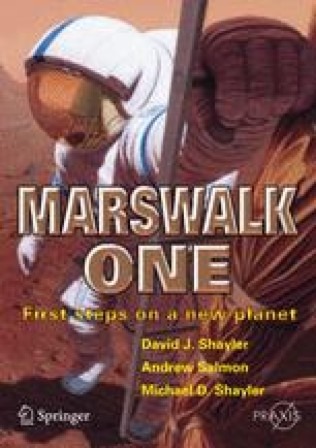
Marswalk One : First Steps on a New Planet
MARSWALK ONE: First Steps on a New Planet addresses the question of why we should embark on a journey to Mars, documenting what the first human crew will do when they place their feet in the red dust of the planet. The book also addresses why we need to carry out these tasks and, more importantly, what a human crew could achieve that an automated mission could not. Understanding the clear benefits of sending a human crew to the surface of Mars, and how these benefits can be seen back on Earth, is the key to sustained long-term public and political support for the programme in terms of cash and commitment. The book accepts that the journey will be made, but does not specify precisely when. Flight time, and how to get to and from the planet are discussed briefly, to understand why the suggested duration spent at Mars is reasonable. The main objective of the work is to look at what science will be done on the surface – supported by orbital operations – and what hardware and technology will be employed to achieve the mission objectives. This analysis is drawn from previous experiences in manned and unmanned space programmes, including Apollo, Skylab, Salyut/Mir, Shuttle and ISS, Viking, Luna/Lunokhod, and recent Mars missions such as Pathfinder and Global Surveyor.
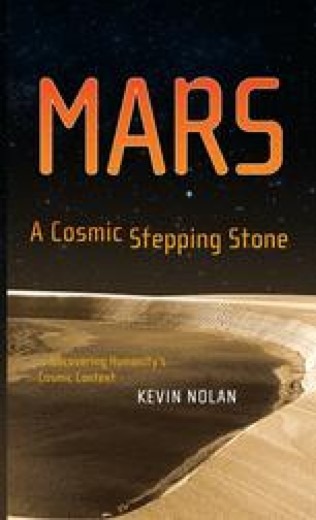
Mars, A Cosmic Stepping Stone : Uncovering Humanity’s Cosmic Context
The questions of our origin and cosmic abundance of life are among the compelling facing humanity. For all of the difficulties facing us however, the planet Mars may act as a cosmic stepping stone in uncovering the answers. This book examines these issues in one of the comprehensive treatments about Mars and our legacy of engagement with it.
Marine Biotechnology I
Oceans, which occupy up to two thirds of the surface of our planet, were not really approached from scientific point of view until the second half of the 19th century and even the 20th with regard to microbial and unicellular life. Today, the importance of marine biodiversity has been fully recognized. It is, indeed, one of the aspects which, over the two past decades, have made a major contribution to our knowledge and vision of the living planetThis volume of Advances in Biochemical Engineering/Biotechnology illustrates several topics in line with the following broad objectives: thinking ofmarine biotechnology as the controlled production and use of marine organisms and molecules for useful purposes, firstly by exploring aspects of marine biodiversity and exploitation of biomass, then considering the identification, production and processing of marine products.
Management of Transboundary Rivers and Lakes
As it circulates in the atmosphere, in the rivers, lakes, soil, rock, and in the oceans, it is the major conveyer of va- ous chemical substances and of energy, and it can also be called as the blood of the ecosystems of this planet. But at the same time water is interwoven in the va- ous functions of the nature and the human society in countless ways which makes water one of the most complicated challenges of the mankind today.Human beings are exploiting and enjoying, but at the same time polluting and deteriorating, the waters in various ways and water is equally important to the - man socio-economic system as it is to the nature. It may sound a bit anecdotal to say that water obeys no borders, but that is true; the hydrologic cycle with its r- ers, river basins, lakes, aquifers, rainfalls, oceans, etc., cross administrational b- ders without any passport control. River and lake basins are in most cases very different from the administrational borders that the human beings have set up.
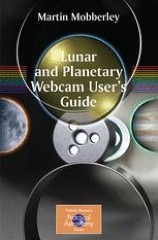
Lunar and Planetary Webcam Users Guide
In the Lunar and Planetary Webcam User’s Guide Martin Mobberley de-mystifies the jargon of webcams and computer processing, and provides detailed hints and tips for imaging the Sun, Moon and planets with a webcam. He looks at each observing target separately, describing and explaining all specialised techniques in context.
