



الصفحة 4
الصفحة 4

Expert C# 2005 Business Objects
Rockford Lhotka started writing his Business Objects books in 1996, and over the years, he's become one of the world's foremost authorities on building distributed object-oriented systems. His industry-standard VB .NET Business Objects book not only addresses changes in .NET 2.0 and Visual Studio 2005, but also reflects substantial enhancements and improvements to the CSLA .NET Framework and how it can be used to create enterprise-level .NET applications. The depth of Rockford's thinking now influences developers across language boundaries. With this book, you can learn directly from the expert whose framework has become universally accepted and respected.

Event Structure and the Left Periphery : Studies on Hungarian
This book provides substantial new results in a novel field of research examining the syntactic and semantic consequences of event structure. The studies of this volume examine the hypothesis that event structure correlates with word order, the presence or absence of the verbal particle, the [+/- specific] feature of the internal argument, aspect, focusing, negation, and negative quantification, among others. The results reported concern the telicising vs. perfectivizing role of the verbal particle; the syntactic and semantic differences of verbs denoting a delimited change, and those denoting creation or coming into being; evidence of viewpoint aspect in a language with no morphological viewpoint marking; the aspectual role of non-thematic objects; the source of the ‘exhaustive identification’ function of structural focus; the interaction of negation and aspect etc.

Enabling things to talk : Designing IoT solutions with the IoT architectural reference model
The Internet of Things (IoT) is an emerging network superstructure that will connect physical resources and actual users. It will support an ecosystem of smart applications and services bringing hyper-connectivity to our society by using augmented and rich interfaces. Whereas in the beginning IoT referred to the advent of barcodes and Radio Frequency Identification (RFID), which helped to automate inventory, tracking and basic identification, today IoT is characterized by a dynamic trend toward connecting smart sensors, objects, devices, data and applications. The next step will be “cognitive IoT,” facilitating object and data re-use across application domains and leveraging hyper-connectivity, interoperability solutions and semantically enriched information distribution.

Effective Computational Geometry for Curves and Surfaces
Computational geometry emerged as a discipline in the seventies and has had considerable success in improving the asymptotic complexity of the solutions to basic geometric problems including constructions of data structures,convex hulls, triangulations, Voronoi diagrams and geometric arrangements as well as geometric optimisation. The goal of this book is to take into consideration the multidisciplinary nature of the problem and to provide solid mathematical and algorithmic foundations for effiective computational geometry fo rcurves and surfaces. This book covers two main approaches. In a first part, we discuss exact geometric algorithms for curves and s- faces. We revisit two prominent data structures of computational geometry, namely arrangements (Chap. 1) and Voronoi diagrams (Chap. 2) in order to understand how these structures, which are well-known for linear objects, behave when de?ned on curved objects.

Dynamical Vision ; ICCV 2005 and ECCV 2006 Workshops, WDV 2005 and WDV 2006, Beijing, China, October 21, 2005, Graz, Austria, May 13, 2006, Revised Papers
Classical multiple-view geometry studies the reconstruction of a static scene - served by a rigidly moving camera. However, in many real-world applications the scene may undergo much more complex dynamical changes. For instance, the scene may consist of multiple moving objects (e.g., a trafic scene) or arti- lated motions (e.g., a walking human) or even non-rigid dynamics (e.g., smoke, fire, or a waterfall). In addition, some applications may require interaction with the scene through a dynamical system (e.g., vision-guided robot navigation and coordination). To study the problem of reconstructing dynamical scenes, many new al- braic, geometric, statistical, and computational tools have recently emerged in computer vision, computer graphics, image processing, and vision-based c- trol.

Dynamic Vision for Perception and Control of Motion
The book uniquely details an approach to real-time machine vision for the understanding of dynamic scenes, viewed from a moving platform that begins with spatio-temporal representations of motion for hypothesized objects whose parameters are adjusted by well-known prediction error feedback and recursive estimation techniques. A coherent and up-to-date coverage of the subject matter is presented, with the machine vision and control aspects detailed, along with reports on the mission performance of the first vehicles using these innovative techniques built at Munich. Pointers to the future development and likely applications of this hugely important field of research are presented.

Dynamic Analysis of Petri Net-Based Discrete Systems
Design of modern digital hardware systems and of complex software systems is almost always connected with parallelism. For example, execution of an object-oriented p- gram can be considered as parallel functioning of the co-operating objects; all modern operating systems are multitasking, and the software tends to be multithread; many complex calculation tasks are solved in distributed way. But designers of the control systems probably have to face parallelism in more evident and direct way. Controllers rarely deal with just one controlled object. Usually a system of several objects is to be controlled, and then the control algorithm naturally turns to be parallel. So, classical and very deeply investigated model of discrete device, Finite State Machine, is not expressive enough for the design of control devices and systems. Theoretically in most of cases behavior of a controller can be described by an FSM, but usually it is not convenient; such FSM description would be much more complex, than a parallel specification (even as a network of several communicating FSMs).

Double & Multiple Stars, and How to Observe Them
The first part of Jim Mullaney’s book provides a comprehensive review of the different classes of double and multiple systems, along with a look at the astrophysics of these objects. This is followed by a detailed guide for amateur astronomers, describing how to observe them – using a variety of different techniques – and outlining how to record the observations.In one book, here is all you need to observe double and multiple stars, and to understand the systems you are looking at.

Distributed computing ; Vol. 4167 ; 20th International Symposium, DISC 2006, Stockholm, Sweden, September 18-20, 2006, Proceedings
DISC, the International Symposium on DIStributed Computing, is an annual forum for presentation of research on all facets of distributed computing, inc- ding the theory, design, analysis, implementation, and application of distributed systems and networks. The 20th anniversary edition of DISC was held on S- tember 18-20, 2006, in Stockholm, Sweden. There were 145 extended abstracts submitted to DISC this year, and this - lume contains the 35 contributions selected by the Program Committee and one invited paper among these 145 submissions.

Distributed computing ; Vol. 3724 ; 19th International conference, DISC 2005, Cracow, Poland, September 26-29, 2005, Proceedings
This book constitutes the refereed proceedings of the 19th International Conference on Distributed Computing, DISC 2005, held in Cracow, Poland, in September 2005. The 32 revised full papers selected from 162 submissions are presented together with 14 brief announcements of ongoing works chosen from 30 submissions; all of them were carefully selected for inclusion in the book. The entire scope of current issues in distributed computing is addressed, ranging from foundational and theoretical topics to algorithms and systems issues and to applications in various fields.

Distributed Computing ; 22nd International Symposium, DISC 2008, Arcachon, France, September 22-24, 2008. Proceedings
This book constitutes the refereed proceedings of the 22nd International Symposium on Distributed Computing, DISC 2008, held in Arcachon, France, in September 2008.

Distributed Computing ; 21st International Symposium, DISC 2007, Lemesos, Cyprus, September 24-26, 2007, Proceedings
This book covers all current issues in distributed computing, including theory, design, analysis, implementation, and application of distributed systems and networks.
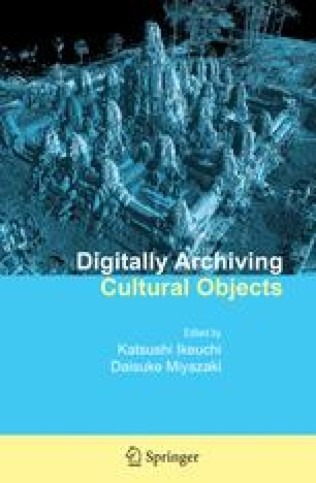
Digitally Archiving Cultural Objects
Digitally Archiving Cultural Objects describes thorough research and methods for preserving cultural heritage objects through the use of 3D digital data. These methods were developed through using computer vision and computer graphics technologies.

Digital Noise Monitoring of Defect Origin
Digital Noise Monitoring of Defect Origin is for both academics and professionals in the fields of engineering, biological sciences, physical science, and automation with particular emphasis on power engineering, oil-and-gas extraction, and aviation among others. The focus of the book is on determining defect origins. The author divides the process into the stages of monitoring the defect origin, identification of the defect and its stages, and control of the defect. The significance of this work is also connected to the possibility of using the noise as a data carrier for creating technologies that detect the initial stage of changes in objects.

Digital Libraries : Research and Development; 1st International DELOS Conference, Pisa, Italy, February 13-14, 2007, Revised Selected Papers
This book presented similarity search, architectures, personalization, interoperability, evaluation, miscellaneous, preservation, video data management, 3D objects, and peer to peer.

Digital Design of Nature : Computer Generated Plants and Organics
The reproduction of nature via computer has fascinated scientists in computer graphics and artists ever since synthetic imaging was thought possible. This book illustrates and exemplifies methods for the creation of artificial plant models, and the application of these methods within areas such as simulation, virtual reality, botany, landscaping, and architecture.The models are combined to create gardens, parks, and even entire landscapes.The range of creating representational forms reaches from deceptively authentic looking pictures to abstract presentations. In addition, with similar methods organic objects can be produced, changed, and animated.

Difference Equations : From Rabbits to Chaos
Difference equations are models of the world around us. From clocks to computers to chromosomes, processing discrete objects in discrete steps is a common theme. Difference equations arise naturally from such discrete descriptions and allow us to pose and answer such questions as: How much? How many? How long? Difference equations are a necessary part of the mathematical repertoire of all modern scientists and engineers.The book cover the basics of difference equations and some of their applications in computing and in population biology. Each chapter leads to techniques that can be applied by hand to small examples or programmed for larger problems. Along the way, the reader will use linear algebra and graph theory, develop formal power series, solve combinatorial problems, visit Perron—Frobenius theory, discuss pseudorandom number generation and integer factorization, and apply the Fast Fourier Transform to multiply polynomials quickly.

Diagrammatology : An investigation on the borderlines of phenomenology, ontology, and semiotics
Diagrammatology investigates the role of diagrams for thought and knowledge. Based on the general doctrine of diagrams in Charles Peirce's mature work, Diagrammatology claims diagrams to constitute a centerpiece of epistemology. The book reflects Peirce's work on the issue in Husserl's contemporanous doctrine of "categorial intuition" and charts the many unnoticed similarities between Peircean semiotics and early Husserlian phenomenology. Diagrams, on a Peircean account, allow for observation and experimentation with ideal structures and objects and thus furnish the access to the synthetic a priori of the regional and formal ontology of the Husserlian tradition.

Deepfake detection = اكتشاف التزييف العميق
In the rapidly evolving era of artificial intelligence, addressing the escalating threats of deepfake technology becomes a necessity because of the increasing sophistication of AI algorithms in generating deceptive content, and since it threatens the integrity of information across diverse data. The main objective is to build a sophisticated AI-driven system to detect different types of deepfake in text, audio, and images. In English text deepfake detection, multiple pre-trained tokenizers have been used, but XLNET and BERT stand out with identifying objects outside the dataset with an accuracy of 0.9809 and both have been generalized & trained using LSTM. In Arabic text deepfake detection, Arabert has been trained using LSTM which led with an accuracy of 99.53% by generalizing the model. Both English and Arabic datasets have been generated to enhance the accuracy and effectiveness of the models. Audio deepfake detection has been generalized too, using Random Forest with an accuracy of 98.259%.

Database Schema Evolution and Meta-Modeling ; 9th International Workshop on Foundations of Models and Languages for Data and Objects FoMLaDO/DEMM 2000 Dagstuhl Castle, Germany, September 18-21, 2000 Selected Papers
The Ninth International Workshop on Foundations of Models and Languages for Data and Objects (FoMLaDO) took place in Dagstuhl Germany, Sept- ber 18{21, 2000. The topic of this workshop was Database schema Evolution and Meta-Modeling; this FoMLaDO Workshop was hence assigned the acronym DEMM 2000.
