



الصفحة 4
الصفحة 4

Data Processing in Precise Time and Frequency Applications
The book describes the data processing at various levels: design of the time and frequency references, characterization of the time and frequency references, applications involving precise time and/or frequency references. The metrological properties stability, accuracy and reproducibility are defined and the processes leading to their characterization are shown.

DARPA Grand Challenge : The Great Robot Race
The goal of the new series of Springer Tracts in Advanced Robotics (STAR) is to bring, in a timely fashion, the latest advances and developments in robotics on the basis of their significance and quality. It is our hope that the wider dissemination of research developments will stimulate more exchanges and collaborations among the research community and contribute to further advancement of this rapidly growing field. The volume edited by Martin Buehler, Karl Iagnemma and Sanjiv Singh presents a unique and extensive collection of the scientific results by the teams which took part into the DARPA Grand Challenge in October 2005 in the Nevada desert. This event reached an incredible peak of popularity in the media, the race of the century like someone called it! The Grand Challenge demonstrated the fast growing progress - ward the development of robotics technology, as it showed the feasibility of using mobile robots operating autonomously in real world scenarios.
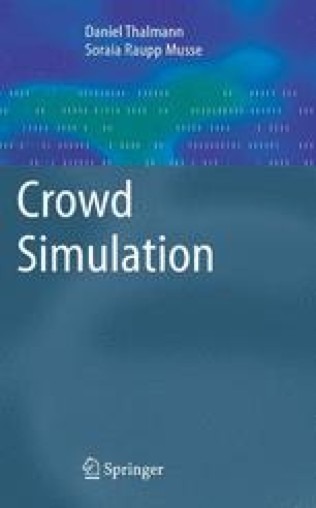
Crowd Simulation
Focuses on methods and techniques for crowd simulation, filling the gap in the professional literature. This survey covers topics that include Modelling of Populations; Virtual Human Animation; Behavioural Animation of Crowds; and, Crowd Rendering and Populated Environments.

Cosmetic dermatology : products and procedures
Provides a highly-illustrated, clinical guide to the full range of cosmetic skin treatments. Bringing together experts from research, industry, surgery and practice, it is structured in four distinct parts for easy navigation by the busy clinician:Basic Concepts - giving an overview of the physiology pertinent to cosmetic dermatology and the delivery systems by which treatments can take effect;Hygiene Products - evaluating cleansing and moisturising products;Adornment - looking at aesthetic techniques such as cosmetics, nail protheses and hair treatment;Antiaging - ie, injectables, resurfacing and skin contouring techniques, and the rapidly growing area of Cosmeceuticals.

Conceptual Modeling - ER 2005
Conceptual modeling is fundamental to any domain where one must cope with complex real-world situations and systems because it fosters communication - tween technology experts and those who would bene?t from the application of those technologies. Conceptual modeling is the key mechanism for und- standing and representing the domains of information system and database - gineering but also increasingly for other domains including the new “virtual” e-environmentsandtheinformationsystemsthatsupportthem.Theimportance of conceptual modeling in software engineering is evidenced by recent interest in “model-drivenarchitecture”and“extremenon-programming”.Conceptualm- eling also plays a prominent rolein various technical disciplines and in the social sciences. The Annual International Conference on Conceptual Modeling (referred to as the ER Conference) provides a central forum for presenting and discussing current research and applications in which conceptual modeling is the major emphasis.
Computer-Aided Design of User Interfaces IV
Computer-Aided Design of User Interfaces IV gathers the latest research of experts, research teams and leading organisations involved in computer-aided design of user interactive applications supported by software, with specific attention for platform-independent user interfaces and context-sensitive or aware applications. This includes: innovative model-based and agent-based approaches, code-generators, model editors, task animators, translators, checkers, advice-giving systems and systems for graphical and multimodal user interfaces. It also addresses User Interface Description Languages. This books attempts to emphasize the software tool support for designing user interfaces and their underlying languages and methods, beyond traditional development environments offered by the market. It will be of interest to software development practitioners and researchers whose work involves human-computer interaction, design of user interfaces, frameworks for computer-aided design, formal and semi-formal methods, web services and multimedia systems, interactive applications, and graphical user and multi-user interfaces.

Computer Vision Systems ; 2nd International Workshop, ICVS 2001 Vancouver, Canada, July 7-8, 2001 Proceedings
Computer Vision has reached a level of maturity that allows us not only to p- form research on individual methods and system components but also to build fully integrated computer vision systems of signi cant complexity. This opens a number of new problems related to system architecture, methods for system synthesis and veri cation, active vision systems, control of perception and - tion, knowledge and system representation, context modeling, cue integration, etc. By focusing on methods and concepts for the construction of fully integrated vision systems, ICVS aims to bring together researchers interested in computer vision systems. Similar to the previous event in Las Palmas, ICVS 2001 was organized as a single-track workshop consisting of high-quality.
Computer vision and graphics ; International Conference, ICCVG 2004, Warsaw, Poland, September 2004, Proceedings
The objectives of the ICCVG are: presentation of current research topics and d- cussions leading to the integration of the community engaged in machine vision and computer graphics, carrying out and supporting research in the ?eld and ?nally pro- tion of new applications. The ICCVG is a continuation of the former International Conference on Computer Graphics and Image Processing called GKPO, held in Poland every second year in May since 1990, organized by the Institute of Computer Science of the Polish Academy of Sciences, Warsaw.

Computer vision : Algorithms and applications
Explores the variety of techniques used to analyze and interpret images. It also describes challenging real-world applications where vision is being successfully used, both in specialized applications such as image search and autonomous navigation, as well as for fun, consumer-level tasks that students can apply to their own personal photos and videos. Suitable for an upper-level undergraduate or graduate-level course in computer science or engineering, this textbook focuses on basic techniques that work under real-world conditions and encourages students to push their creative boundaries. Its design and exposition also make it eminently suitable as a unique reference to the fundamental techniques and current research literature in computer vision.

Clinical Pharmacology for Prescribing
Provides key points of basic pharmacology to explain drug actions / Shows clear relationship between pathophysiology and prescribing / Illustrations explain pharmacological mechanisms / Practical prescribing boxes highlight therapies for common conditions / 'Prescribing warnings' help readers to avoid adverse reactions and minimise side effects / Clear links to current medical guidelines throughout / Clear consistent structure in every chapter helps navigation and learning
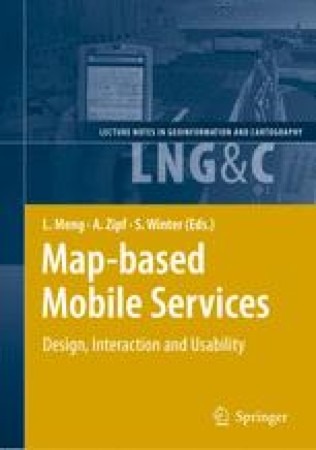
Map-based Mobile Services : Design, Interaction and Usability
It addresses methods and techniques for topics that range from design and rendering, context modelling, personalisation, multimodal interaction to usability test. Instead of striving for a seamless coverage of all essential theoretical and technical issues with an equal depth and extent, we attempt to pinpoint a number of research highlights and representative development activities at universities, research institutions and so- ware industry. The operational prototypes and platforms reported in the book are on the one hand outcome and feasibility proof of various approaches. On the other hand, they serve as a new starting point for the refinement of user interfaces and iterative usability tests.
Machine Learning and Robot Perception
Presents some of the most recent research results in the area of machine learning and robot perception. The chapters represent new ways of solving real-world problems. This book will appeal to researchers, senior undergraduate/postgraduate students, application engineers and scientists.

Location- and Context-Awareness ; Vol. 3479 ; First International Workshop, LoCA 2005, Oberpfaffenhofen, Germany, May 12-13, 2005, Proceedings
The workshop was organized by the Institute of Communications and Navigation of the German Aerospace Center (DLR) in Oberpfa?enhofen, and the Mobile and Distributed Systems Group of the University of Munich. During the workshop, novel positioning algorithms and location sensing techniques were discussed, comprising not only enhancements of singular systems, like positioning in GSM or WLAN, but also hybrid technologies, such as the integration of global satellite systems with inertial positioning. Furthermore, improvements in sensor technology, as well as the integration and fusion of sensors, were addressed both on a theoretical and on an implementation level. Personal and confidential data, such as location data of users, have p- found implications for personal information privacy. Thus privacy protection, privacy-oriented location-aware systems, and how privacy aspects the feasibility and usefulness of systems were also addressed in the workshop.

Les prothèses tricompartimentaires du genou de première intention : Techniques opératoires. Problèmes et solutions = Primary tricompartmental knee replacement : Surgical techniques, problems, and solutions
It seems difficult and presumptuous to want to write a book on total knee replacement. There are many quality works dealing with this subject. The knee prosthesis has, from its origin, particularly in the United States, given rise to considerable studies in all directions: biomechanical, physiological, biological and industrial. Our goal is to offer the youngest a book of simple knowledge without pretension of completeness or prejudice as to long debated subjects (conservation or not of the posterior cruciate ligament, cement or without cement, resurfacing or not of the patella, fixed plate or mobile platform, etc.), and to give practical advice based on our experience. Why limit yourself to first-line tricompartmentals? Because it is the most common solution to the usual degenerative knee problems. In addition, unicompartment and revision prostheses will be the subject of further literature. Everyone knows that to put a knee prosthesis model, and therefore to a system. However, it is important to be able to keep your freedom of analysis in order to maintain your freedom of choice. You have to know how to put on a knee prosthesis without compromise or fanaticism. Convictions are more dangerous enemies of truth than lies. Nietzsche

Lasers, Clocks and Drag-Free Control : Exploration of Relativistic Gravity in Space
Over the next decade the gravitational physics community will benefit from dramatic improvements in many technologies critical to testing gravity. Highly accurate deep space navigation, interplanetary laser communication, interferometry and metrology, high precision frequency standards, precise pointing and attitude control, together with drag-free technologies, will revolutionize the field of experimental gravitational physics. The centennial of the general theory of relativity in 2015 will motivate a significant number of experiments designed to test this theory with unprecedented accuracy.
Knowledge and Information Visualization : Searching for Synergies
The basic ideas underlying knowledge visualization and information vi- alization are outlined. In a short preview of the contributions of this volume, the idea behind each approach and its contribution to the goals of the book are outlined. 2 The Basic Concepts of the Book Three basic concepts are the focus of this book: "data", "information", and "kno- edge". There have been numerous attempts to define the terms "data", "information", and "knowledge", among them, the OTEC Homepage "Data, Information, Kno- edge, and Wisdom" (Bellinger, Castro, & Mills, see http://www.syste- thinking.org/dikw/dikw.htm): Data are raw. They are symbols or isolated and non-interpreted facts. Data rep- sent a fact or statement of event without any relation to other data. Data simply exists and has no significance beyond its existence (in and of itself). It can exist in any form, usable or not. It does not have meaning of itself.

Keyhole Approaches in Neurosurgery : Vol. I Concept and surgical technique
Offers a detailed systematic overview of the different approaches for minimally invasive craniotomies. After a description of the historical development of the particular craniotomy, each chapter illustrates the anatomical construction of the target region and the surgical approach itself with artistic illustrations and photographs of human cadaver dissections.

Case-Based Reasoning Research and Development ; 7th International Conference on Case-Based Reasoning, ICCBR 2007 Belfast Northern Ireland, UK, August 13-16, 2007 Proceedings
It presented along with three invited talks. The sections address all aspects of case-based reasoning, featuring original theoretical research, applied research, and applications with practical, social, environmental, and economic significance.

Bluetooth based indoor location positioning system for mobile robot navigation
Positioning objects has been an important topic since it’s needed to locate people, guide them to a certain place, and assist companies and organizations with their assets management. Great applicational opportunities emerge based on the inquiry of Received Signal Strength Indicator (RSSI). In this research, a positioning system using Bluetooth RSSI is proposed for indoor applications. First, RSSI values are inquired multiple times and the average is taken at multiple points of different distances from the transmitters. Then the distance is determined by the variations of RSSI values respectively to distance variations. Finally, a triangulation algorithm is used to calculate the current location of the receiver.

Behavioral finance and your portfolio : A navigation guide for building wealth
Designed for investors who are serious about maximizing their gains, in this book you’ll discover how to: ● Take control of your decision-making—even when challenging markets push greed and fear to intolerable levels ● Reflect on how to make investment decisions using data-backed and substantiated information instead of emotion and bias ● Counter deep-seated biases like loss aversion, hindsight and overconfidence with self-awareness and hard facts ● Identify your personal investment psychology profile, which you can use to inform your future financial decision making
