



الصفحة 4
الصفحة 4
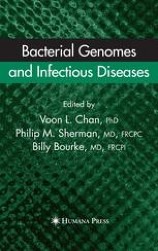
Bacterial Genomes and Infectious Diseases
This book imparts fundamental knowledge on the structure, organization, and evolution of bacterial genomes. The value and power of comparative genomics and proteomics, bioinformatics, microarrays, and knockout animal models in analyzing genomes, bacteria-host interactions and disease are demonstrated. Also discussed are the genomes of virulent and nonvirulent strains and species, origin and evolution of pathogens, different models of bacteria-host interactions, and diseases mechanisms.

Animal cell technology : Basic & applied aspects ; Proceedings of the 7th Annual Meeting of the Japanese Association for animal cell technology (JAACT), Nagoya, Japan, November 15-18, 2004
This book contains the proceedings of the 17th Annual and International Meeting of the Japanese Association for Animal Cell Technology (JAACT) that was held in Nagoya, Japan from November 15 to 18, 2004. This volume gives the readers a complete review of present state-of-the-art in Japan and other countries where this field is well advanced. The Proceedings will be useful for the cell biologists, biochemists, molecular biologists, immunologists, biochemical engineers and other disciplines related to animal cell culture, working in either academic environments or in industries of biotechnology and pharmacy.
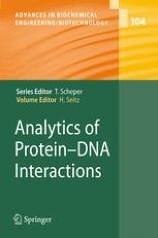
Analytics of Protein-DNA Interactions
This book covers trends in modern biotechnology. All aspects of this interdisciplinary technology, where knowledge, methods and expertise are required from chemistry, biochemistry, microbiology, genetics, chemical engineering and computer science, are treated. More information as well as the electronic version is available at springer.com.
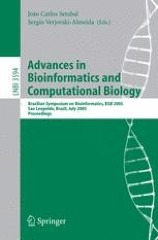
Advances in bioinformatics and computational biology ; 1st Brazilian symposium on bioinformatics, BSB 2005, Sao Leopoldo, Brazil, July 27-29, 2005, Proceedings
This book constitutes the refereed proceedings of the Brazilian Symposium on Bioinformatics, BSB 2005, The 15 revised full papers and 10 revised extended abstracts presented together with 3 invited papers were carefully reviewed and selected from 55 submissions. The papers address a broad range of current topics in computational biology and bioinformatics.
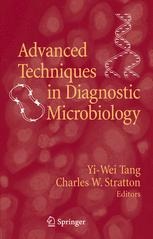
Advanced Techniques in Diagnostic Microbiology
The book is divided into two sections. The first techniques section covers the principles and characteristics of techniques ranging from rapid antigen testing, to advanced antibody detection, to in vitro nucleic acid amplification techniques, and to nucleic acid microarray and mass spectrometry. Sufficient space is assigned to cover different nucleic acid amplification formats that are currently being used widely in the diagnostic microbiology field. Within each technique, examples are given regarding its application in the diagnostic field. Commercial product information, if available, is introduced with commentary in each chapt
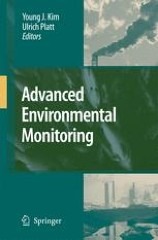
Advanced Environmental Monitoring
This book deals with recent developments and applications of environmental monitoring technologies, with emphasis on optical and biological methods that are rapidly progressing through the integration of emerging technologies from various disciplines.

A Guide to Methods in the Biomedical Sciences
A Guide to Methods in the Biomedical Sciences gives a basic description of common methods used in research. This is not intended to be a methods book. Rather, it is intended to be a book that outlines the purpose of the methods described, their limitations and provide alternative approaches as appropriate. Thousands of methods have been developed in the various biomedical disciplines and those covered in this book represent the basic, essential and most widely used methods in several different disciplines. The historical background (including some interesting anecdotes) leading to the development of ground-breaking techniques are described, especially those that significantly advanced the field of biomedical research. Advances that earned their inventors prestigious Nobel Prizes are emphasized. The book is divided into six sections, highlighting selected methods in protein chemistry, nucleic acids, recombinant DNA technology (including forensic based methods), antibody-based techniques, microscopy and imaging, and the use of animals in biomedical sciences.
